 |
|
Hello and welcome back to What I’m Hearing+, the smarter attorney uncle in the otherwise average-intelligence WIH family. Today I’m en route from Toronto to New York, and Eriq Gardner is here with a fascinating peek under the hood of CNN, via a story that a network fact-checker admitted was “full of holes like Swiss cheese.” Plus: Yet more defamation troubles for Netflix, this time involving uber-documentarian Alex Gibney. Take it away, Eriq…
|
|
|
- A.I. faces the music: It’s been a tumultuous week in the world of law and order, with Hunter Biden’s surprise guilty plea and the Department of Justice’s crackdown on an alleged Russian influence campaign run through two media executives. Amid these headline-grabbers, don’t overlook a groundbreaking indictment against Michael Smith, whom the feds accuse of fraudulently generating at least $1.3 million in streaming music royalties by using A.I. to create thousands of songs, and then using an army of bots to stream those songs over and over.
It’s a first-of-its-kind fraud case, which is to say that if Smith retains a decent defense lawyer, it’s probably vulnerable to a counterattack. Prosecutors are relying heavily on the claim that Smith was violating streaming platform policies, with the contention that A.I. technology helped conceal his activities. Okay, but is that a crime? The whole thing reminds me of click fraud cases from a generation ago, which were rarely prosecuted because courts struggled with the technology involved, and didn’t always end in prosecutorial triumph. Just ask your chatbot about Fabio Gasperini.
Of course, this case delves into the nuances of the music industry, such as how streamers pay out a fixed portion of their revenue to songwriters, and how rights organizations collect money and then disburse royalties based on song popularity. Meaning, Smith may have gamed the system, but the streamers weren’t the victims. Rather, it was other musicians whose songs were being enjoyed by real people, not bots, who were robbed. Along the way, there seem to have been several misrepresentations by Smith, including what he allegedly told financial institutions, which does increase the possibility of conviction. I’ll keep an eye on this one and provide updates as necessary.
- Wasserman legal oddities: In a week rife with unusual cases—Johnson & Johnson, the entertainment law firm, representing a client who’s suing Johnson & Johnson, the pharmaceutical company; attorneys from the Johnny Depp-Amber Heard trial clashing over who invented Flamin’ Hot Cheetos; X-Men ’97 creator Beau DeMayo taking to OnlyFans to announce he’s suing Marvel for alleged attempts to muzzle him—perhaps the strangest case involves Republik Sports founder Rafa Nieves, the agent to MLB stars like Salvador Pérez and José Ramírez.
Nieves is locked in a legal tussle with his former employer, Casey Wasserman’s Wasserman Media Group, over contractual obligations which he alleges contain an unlawful non-compete. After losing in arbitration, Nieves is appealing to the Los Angeles Superior Court—not an easy win, but not entirely impossible when there’s evidence of arbitrator bias.
Which brings us to the allegedly biased (in Nieves’ mind) arbitrator, Joshua Javits. Midway through a nine-day hearing, according to Nieves, Javits mentioned offhand that one of his family members was represented by WMG. Intrigued, Nieves dug around and claimed he discovered that a Javits family member was, or had been, in a relationship with a musician in Billie Eilish’s band. (The multiple Grammy winner left WMG last month for WME.) Nieves also unearthed multiple connections between the Javits family, once a fixture in New York political circles, and the Wasserman family, a fixture in Hollywood circles, as descendants of movie mogul Lew Wasserman. To bolster his case that the two families are thick as thieves, Nieves even submitted a photo of Lew and Javits’ parents attending the 1967 premiere of A Countess From Hong Kong (notable as Charlie Chaplin’s last film).
Thin? Well, would Ari Gold give up so easily? Needless to say, WMG contends that family connections don’t merit overturning an arbitration decision. A crucial hearing is coming up on September 24.
|
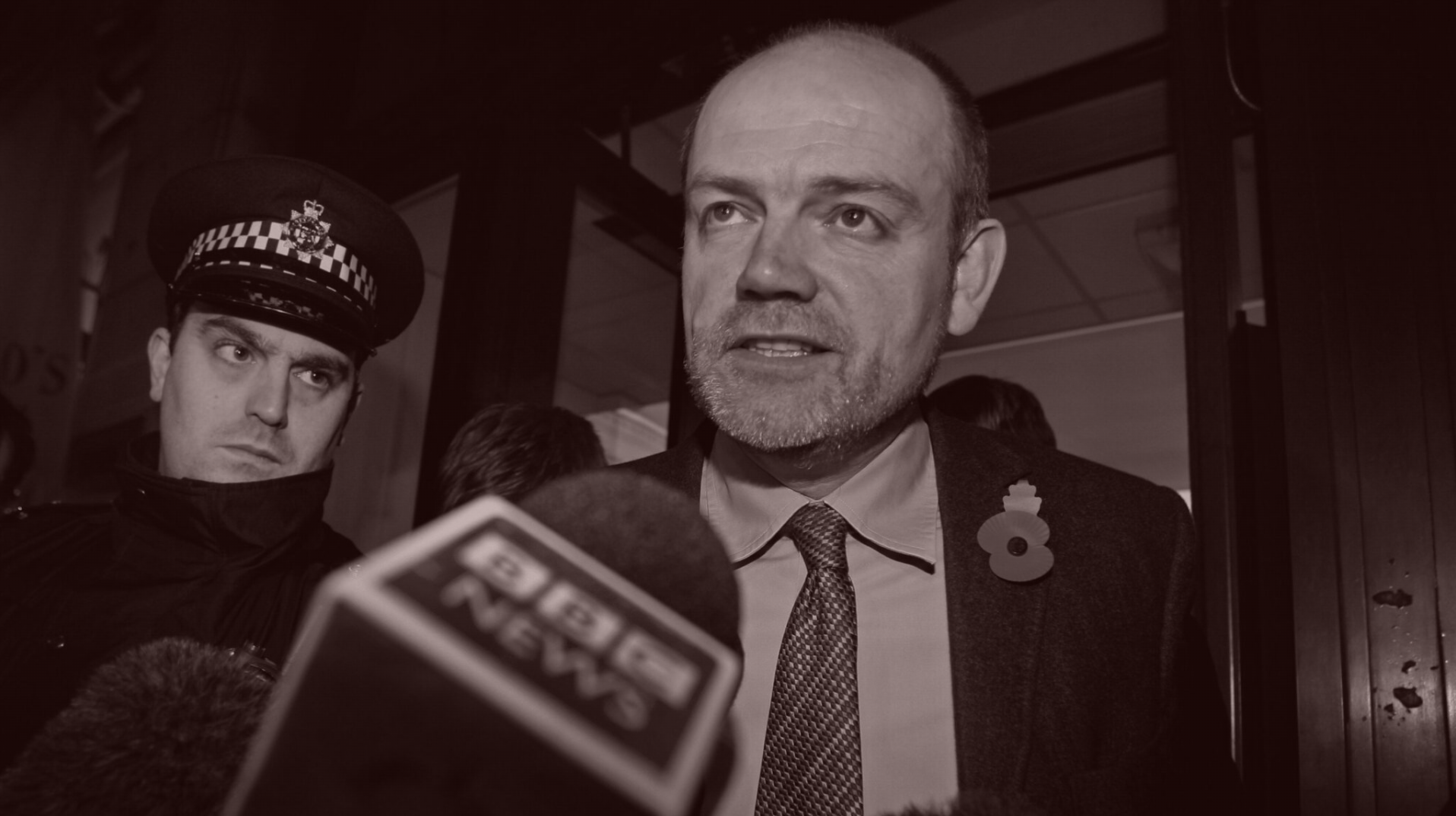 |
| Netflix on Trial & CNN’s Financial Colonoscopy |
| Republican-appointed judges are greenlighting a surge of defamation cases against the likes of CNN, Netflix, ABC News, and Media Matters, revealing everything from private communications to the most sensitive internal documents. |
|
|
|
| A few days ago, in the midst of an otherwise low-profile defamation case, a Florida judge sent a jolt through CNN’s executives offices when he ordered the news network to cough up a mountain of sensitive financial records—balance sheets, credit lines, internal valuations for a potential sale, you name it. At a hearing to discuss the matter, Charles Tobin, CNN’s lawyer, visibly bristled at the ruling. “This is pretty expansive,” he grimaced, processing an October 11 deadline to comply with Panama City Judge William Scott Henry’s sweeping directive. “This upends our plans internally,” he lamented.
Why the deep dive into CNN’s finances? It goes back to a November 11, 2021, segment on The Lead With Jake Tapper, when reporter Alex Marquardt detailed how, following President Joe Biden’s withdrawal from Afghanistan and the collapse of the government, panicked locals turned to private contractors to help them flee the country. One such contractor was Zachary Young, a Navy veteran whose firm was charging people hefty fees—sometimes tens of thousands of dollars—to escape the Taliban. Asked about these prices, Young explained that availability was limited and demand was high. “That’s how economics works, unfortunately,” he said, reportedly.
The CNN interview with Young segued into a segment on “black markets,” a narrative jump that prompted Young to sue CNN, alleging that this framing portrayed him as exploiting Afghanis during a crisis. That’s subjective, of course, but discovery in the case has been less than flattering for CNN. Internal communications reveal that CNN staffers referred to Young as a “shitbag,” and that they hoped to “nail this Zachary Young mfucker.” Meanwhile, CNN’s so-called Triad system, consisting of fact-checkers and legal review, was pumping out feedback that the TV segment was “80 percent emotion, 20 percent obscured fact” and “full of holes like Swiss cheese.”
CNN’s attempts to dismiss the case, by arguing that the report was filled with non-actionable ambiguity and opinion, have fallen flat. The network is staring down a January trial where, crucially, Young has won a green light to seek punitive damages. Accordingly, Young’s attorneys will soon be receiving documents to assess CNN’s net worth, so they can argue before a jury just how big a penalty Young should receive. The judge has also ordered a deposition for Jake Tapper, who will likely have to disclose his salary and contract negotiations.
CNN has lost one bid to appeal, meaning the network may appear in court before Judge Henry, a Ron DeSantis appointee. At Thursday’s hearing, the judge was unmoved by Tobin’s concern about the burden on CNN, saying, “I want to keep us on track for January.” |
|
|
| The courtroom drama for CNN is symptomatic of a broader surge of defamation lawsuits and of media companies encountering increased judicial hostility in Republican strongholds. Earlier this summer, for example, Judge Cecilia Altonaga, a Bush appointee, rejected ABC News’s motion to dismiss a defamation suit brought by Donald Trump in March after anchor George Stephanopoulos overstated that Trump had been found liable for rape against E. Jean Carroll. (The verdict was for sexual abuse.) More recently, Judge Reed O’Connor (another Bush appointee) gave a green light to Elon Musk’s X Corp. to pursue Media Matters for allegedly misrepresenting the platform’s brand safety issues. O’Connor didn’t even bother with Media Matters’ argument that X had admitted the gist of its reporting was true.
This tougher terrain is not just a problem for traditional news outlets. Consider Netflix, which has become a veritable magnet for libel cases, and is now embroiled in more defamation litigation than all of the top cable news outlets combined. You’ve heard, of course, about the streamer’s legal headaches over hits such as Making a Murderer, When They See Us, The Queen’s Gambit, and Baby Reindeer, but there’s yet another compelling case—still flying under the radar—which offers clues to where things may be heading.
In 2021, Tonya Barina sued Netflix over an episode of Dirty Money, Alex Gibney’s docuseries about financial corruption. The particular segment probed the guardianship system, which was in the news following Britney Spears’ conservatorship saga. The episode explored how guardians can misuse their authority, using as an example Barina’s management of the estate of an elderly Texas millionaire named Charlie Thrash. Barina claimed the episode was defamatory, and the courts rejected Netflix’s defense that Dirty Money merely critiqued the system broadly and wasn’t specifically targeting Barina. Netflix also asserted that it held no responsibility for accurate and opinionated statements from individuals quoted in the episode. But an appeals court, pointing out that “Lie, Cheat, Steal” was the title of the show’s theme song, concluded that the program had indeed insinuated that Barina exploited Thrash.
Netflix has been trying to get the Texas Supreme Court to reverse this result ever since, warning of a profound chilling effect and contesting a new, slippery-slope interpretation of Texas law which states that journalists can be held liable even when accurately reporting third-party allegations, if they themselves seem to endorse those allegations. Despite Netflix picking up amicus support from journalists like Lawrence Wright and Jane Mayer, and filmmakers including Richard Linklater and Judd Apatow, Texas’s high court declined to intervene. Netflix got word late last month, potentially forcing the streamer to trial not long after CNN’s own legal showdown in January.
It’s possible that in the home stretch of the presidential election, Trump brings some of this up. When he was president, Trump didn’t make many actual changes to libel law, but his attacks on the media changed the atmosphere, maybe influencing judges—especially those he or his allies appointed—to be more receptive to libel claims. As a result, the gist of what’s published is increasingly measured for its suggestion of falsity rather than for its substantial truth. As these cases show, it can be dangerous to imply exploitation. And so while some are focusing on whether the Supreme Court will change the actual malice standard for public figures, the bigger threat may be what’s going on right now in lower courts.
The judicial system’s new readiness to entertain lengthy and costly defamation suits, based on nuanced interpretations of a media outlet’s content, means it might be time for the industry to come up with a new defensive plan. That’s just how the law works, unfortunately. |
|
|
| Interesting stuff. Thanks to Eriq, and I’ll see you on Thursday.
Matt
|
|
|
|
| FOUR STORIES WE’RE TALKING ABOUT |
 |
|
 |
| NYFW Epiphanies |
| Relaying the euphoria surrounding Pieter Mulier’s show. |
| LAUREN SHERMAN |
|
 |
| Full Nielsen |
| Digging into a NFL ratings micro-scandal. |
| JOHN OURAND |
|
 |
|
|
|
|
|
 |
|
|
|
Need help? Review our FAQs
page or contact
us for assistance. For brand partnerships, email ads@puck.news.
|
|
You received this email because you signed up to receive emails from Puck, or as part of your Puck account associated with . To stop receiving this newsletter and/or manage all your email preferences, click here.
|
|
Puck is published by Heat Media LLC. 227 W 17th St New York, NY 10011.
|
|
|
|