 |
|
Welcome back to What I’m Hearing+, live from Brooklyn.
Tonight, just ahead of earnings season and the inevitable questions about the future of streaming for Netflix, Disney, and Warner Bros. Discovery, I’m taking a closer look at one of Hollywood’s favorite head-scratchers: Peacock. Most of the industry has written off NBCUniversal’s direct-to-consumer play, but hidden among the bright feathers are some vital lessons for Wall Street and streaming execs, alike.
But first…
- A telling ‘SNL’ moment: Saturday Night Live isn’t hard to find. Beyond NBC or Peacock, its sketches proliferate on YouTube, Instagram, X, and TikTok. But it’s a monetization headache: While the content is tailor-made for A.D.D. internet consumers, converting those audiences into full-episode viewers is a puzzle without a clear solution. That challenge became more evident following Saturday’s Ryan Gosling-hosted episode, which instructed viewers to watch a follow-up to Gosling’s deeply adored—and deeply memed—Avatar Papyrus font sketch from 2017 on YouTube, Instagram, or X.
A few years ago, this kind of sketch would have received high placement within the show. Some SNL diehards have argued it was cut for time, but you don’t take the follow-up to one of the most adored Gosling SNL sketches and cut it because of time. Sending the audience on a wild goose chase to a third-party app to find the sketch—with the hope that viewers would then share the content directly from those sources—not only limits audience awareness about the rest of the show, but also trains these platforms’ algorithms to recommend more SNL content (old and new) to fans seeking out the digital exclusive.
Is this strategy something Lorne Michaels whipped up on purpose? I doubt it. It’s hard to imagine that NBCUniversal wants to send even more people to YouTube, which accounts for nearly 10 percent of all streaming viewing on TV sets in America, per Nielsen. But finding ways to leverage YouTube to broaden the show’s reach, while increasing advertising revenue splits from these third-party platforms, is still more beneficial to SNL than not making it available anywhere. Fighting for a TV audience may be a losing battle, but SNL can still remain a giant on the internet.
|
 |
| Peacock’s M&A Endgame |
| How many streamers is too many? This quarter’s earnings season may finally hold the magical clue. |
|
|
|
| It may only be Tuesday, but trust me, the Veuve-Clicquot is on ice in Los Gatos as earnings season commences. Analysts are using words like “blowout” in anticipation of Netflix’s subscriber numbers. Things are also looking up for Warner Bros. Discovery’s Max, which is now technically profitable, and for Disney+, which has narrowed its losses to below $150 million and plans to cross into the black this year. (This is not investment advice.)
Alas, then there’s Peacock. The NBCUniversal streamer hemorrhaged $825 million last quarter, less than its billion-dollar loss during the same period in 2022, but somehow more than the streaming losses over at Paramount+, which will almost certainly be sold or mutilated before it reaches profitability.
Sure, there are positive signs at Peacock. Its subscriber base has grown by at least 1 million every quarter since Q3 2022, more than doubling over the past two years. Along with Apple TV+, Peacock is one of two streamers in the U.S. to have seen customer satisfaction increase annually since 2022, according to research firm Whip Media. Peacock’s churn rate has also decreased from around 9 percent in late 2021 to around 7 percent as of late 2023, according to Antenna. Meanwhile, big events like the NFL wild card game and WrestleMania XL have raised the platform’s profile, while series like Ted and The Traitors have landed on Nielsen’s Top 10 originals streaming chart, pitting Peacock against Netflix and Max, which typically dominate.
But the question remains whether any of this progress will matter in the long run. Most analysts believe the average household will eventually subscribe to no more than three streamers as services merge and prices increase. Netflix has a lock on one of those positions, rivaling electricity and water as a veritable utility, while Disney+, Prime Video, and Max are well-positioned to fight for the final two slots globally.
Peacock and NBCU executives have dismissed this philosophizing and declared that they’re pleased with the momentum. Indeed, a significant Madison Avenue ad executive recently told me that his clients would rather spend on Peacock, an AVOD-first platform where they can reach a larger number of young consumers in the U.S. than on Netflix’s smaller ad-tier. But neither analysts on the Street nor in the Hills view Peacock as a candidate to join the Final Three. Peacock, many would argue, is merely being spruced up for an inevitable merger with another player, such as Par+—especially if Apollo’s Marc Rowan gets his hands on Paramount Global and starts selling off assets.
Is it premature to count Peacock out? Does it become an arms dealer, licensing to other streamers? Or do its sports rights, Universal movies, and Comcast financial backing give it an unexpected boost to go the distance? We’ll have to wait for the answer. But Peacock’s momentum offers a number of crucial lessons for Hollywood and Wall Street—as well as for other direct-to-consumer entertainment companies trying to navigate their own existential crises. |
|
|
| Most television can be sorted into one of two distinct formats: event programming and content reserves. The networks have always carried both. NFL games and State of the Union addresses sat nestled among new episodes of Law & Order, Survivor, soap operas, Colbert, Kimmel, Fallon, and reruns of archive programming. Even amid the rise of cable and satellite and the endless minting of new channels to stuff into the pay TV bundle, broadcast networks maintained their reach and remained the steady heartbeat of television.
Individual streaming services are ecosystems unto themselves, but we think of each offering as its own channel. We say, “I watched it on Netflix,” or, “It’s on Peacock,” the same way we used to say, “It’s on ABC,” or “You’ve got to check out the new Bravo show.” But whereas these networks were destinations for specific programming—NBC’s “Must See TV” Thursday lineup of Friends, Frasier, Seinfeld, and ER in the ’90s is still the high bar in Burbank—most streaming platforms feel like collections of random titles that don’t adhere to the one-two principle of events and reserves.
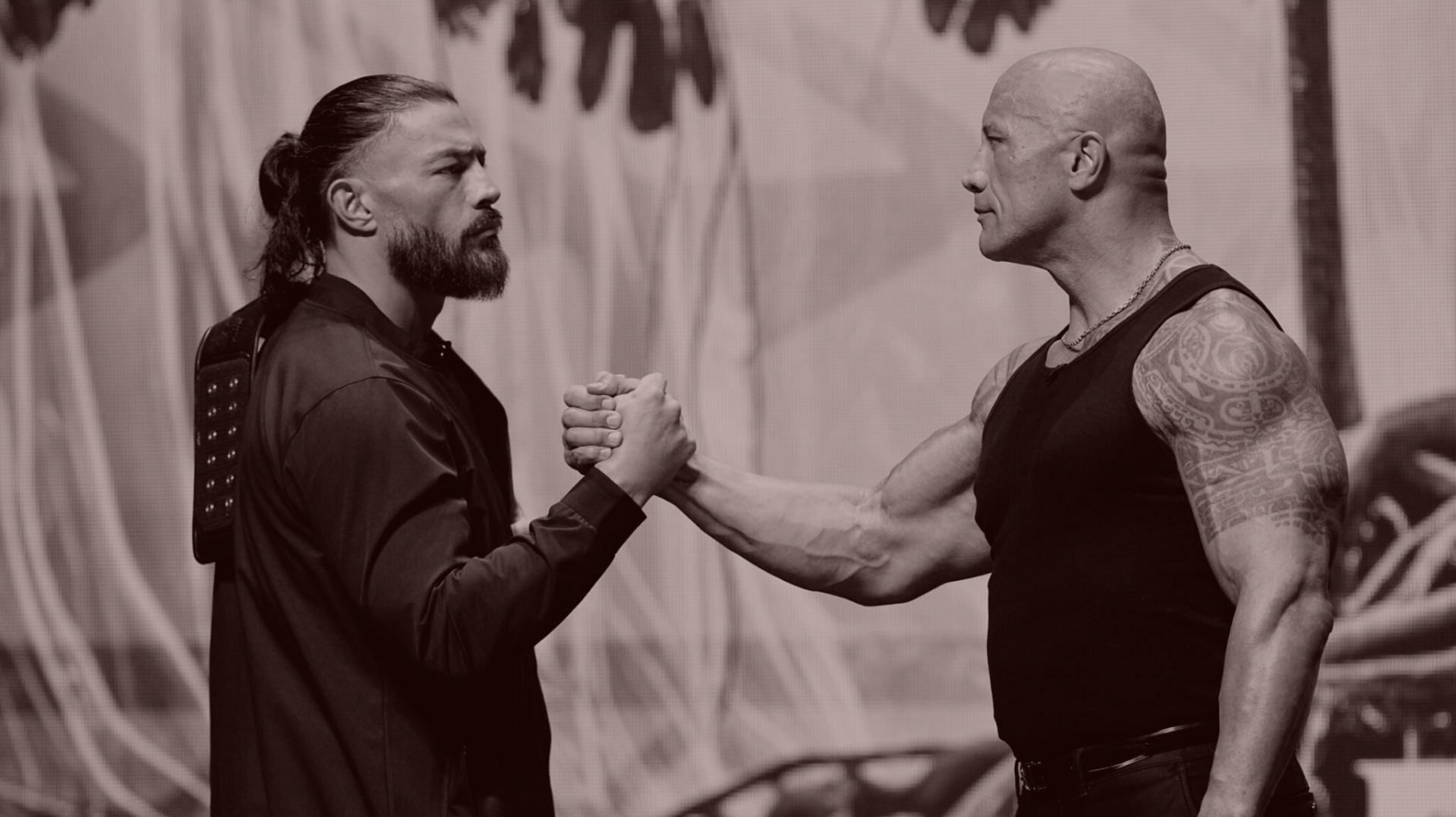
With Peacock, however, NBCUniversal seems to have returned to the network philosophy as a framework for subscriber acquisition and churn reduction—hoping, on some level, to build a brand and platform that, like the networks in the cable era, will be more resistant to disruption. The NFL’s wild card game, which attracted more than 25 million viewers to Peacock, happened 30 days before Oppenheimer debuted on the platform. Oppenheimer debuted 30 days before the Harry Potter movies returned. Potter arrived just before WrestleMania XL. You get the picture…
Of particular interest is how Universal Pictures separates its Pay 1 rights, and how Peacock benefits. Films appear on Peacock after their theatrical premieres, oftentimes following a digital rental window, and stay on the platform for four months. Then, live-action films depart for Prime Video for 10 months before returning to Peacock. (Animated film Pay 1 rights are split between Peacock and Netflix on the same schedule.) Unlike Disney, which is taking its films from theaters to PVOD to Disney+, where they exist in perpetuity, NBCU is making a more concentrated bet. The company assumes that theatrical films will offer the majority of their value—attracting new subscribers and retaining at-risk profiles—during their first four months on the platform. Then, regardless of performance at the theater or on Peacock, they’ll be monetized on Amazon/Netflix, providing guaranteed revenue to Universal, which means more cash flowing in to make more theatrical bets.
It’s a smart strategy. Peacock uses new content to train audiences to open the app expecting something big, like all other streamers, but doesn’t sacrifice the key revenue streams that have benefited the larger company for decades. Is it enough to survive the next era of competition? |
|
|
| To its credit, Peacock understands that consumers moving from linear to digital still want a variety of programming options—it’s only the financial model that’s shifted, not overall tastes. In the pay TV era, of course, executives didn’t have to worry about churn, per se. But the simplest way to keep viewers engaged (and their credit cards on autopay) these days isn’t so different from what worked in the past: a balanced offering of live event programming (which drives new signups and boosts engagement during select periods) with a satisfying slate of filler content (multi-season procedurals, an extensive movie library) to keep up engagement after an event is over. Apple TV+, Disney+, and Paramount+ have struggled during that in-between period, but Peacock has started to figure it out.
Just look at the data. More than 70 percent of all NFL wild card game sign-ups were still subscribed to Peacock 30 days after the event, according to Antenna. That’s slightly lower than the nearly 80 percent of subscribers who maintain their accounts after 30 days across all other months in 2023, but it’s a rather significant retention factor given the unique reason people signed up in the first place—something that all major streaming players with legacy channels and key sports league executives have been curious about. Some of the top shows during this period were WWE Raw and The Voice, alongside Brooklyn Nine-Nine (also enjoying a resurgence on Netflix), Law & Order: SVU, House, Yellowstone, and Chicago Fire. Newcomers like The Traitors and Ted have shown the strongest demand growth week-over-week, meaning the shows are finding their audiences and keeping them. In fact, streaming audience demand share for Peacock increased from 7.6 percent in Q1 2023 to 8.8 percent in Q4, according to Parrot Analytics, where I work as director of strategy.
Earlier this year, during the company’s Q4 earnings call, Comcast president Mike Cavanagh noted that NBCUniversal is focusing on Peacock’s domestic growth, choosing to license titles internationally (which keeps operational spend low by not supporting multiple digital ventures outside of the U.S.), and focusing on maintaining the “reach and relevance between linear and digital as we look several years down the road.” Conversely, Warner Bros. Discovery, which currently collects about 80 percent of its revenue from the domestic market, is focusing its ambitions on Latin America and Europe, while Disney is prioritizing streaming growth and profitability above all else. Despite all the strong traction NBCUniversal is seeing with Peacock, it’s not looking to play the same game of dominance as its competitors; it’s almost trying to remain small (executives would prefer a word like nimble) while its competitors fight to be the face of television’s new era.
So where does that leave Peacock—a worthy investment or a division that still lost nearly $825 million last quarter at an average revenue per user of $10? On one hand, NBCU’s stance lends credence to the whispers in Philadelphia that the rush into streaming was ill-advised, and that finding ways to protect significant revenue drivers—including broadcast and cable programming—is better than throwing everything at streaming. On the other hand, it exemplifies why Peacock may not be long for this world, at least in its current form. If Peacock is seen as an “also” within Comcast, are consumers, themselves, supposed to think about it any differently long-term? |
|
|
| If we consider Peacock’s trajectory through the familiar lens of the S-curve—you know, the chart that accounts for early adopters, followed by those who jump in after it finds its groove, trailed by the skeptics who eventually come in from the cold—things appear more tenuous. Sure, Peacock succeeds at engaging consumers with event programming and a deep reserve of catalog content, but its originals business hasn’t caught up with its competitors. And its advantages might soon dissipate if new movies and TV shows, along with sports, are what bridge people’s willingness to continue spending. Eventually, Disney will integrate an ESPN OTT offering into its Disney+ and Hulu bundle; Netflix is picking up Raw; Amazon is investing heavily in sports; and free, ad-supported platforms like Tubi are picking up engagement via the type of content reserves that exist at services like Peacock.
Many of these problems might sort themselves out if Peacock merges with a competitor like Par+: Parrot data suggests that a combined offering would increase overall demand share to just over 16 percent, putting it in second place behind Netflix—along with the strongest corporate demand share, meaning titles owned by NBCUniversal and Paramount Global no matt which platform they appear on (i.e., Suits on Netflix). Arguably, the realistic path forward for NBCU is to go back to being a seller. While that may seem like admitting defeat, Peacock has at least extracted vital lessons in consumer behavior that other streaming wars combatants can lean on in five years’ time, when they’re slugging it out in a much less crowded field. |
|
|
|
| FOUR STORIES WE’RE TALKING ABOUT |
|
|
|
|
|
 |
|
|
|
Need help? Review our FAQs
page or contact
us for assistance. For brand partnerships, email ads@puck.news.
|
|
You received this email because you signed up to receive emails from Puck, or as part of your Puck account associated with . To stop receiving this newsletter and/or manage all your email preferences, click here.
|
|
Puck is published by Heat Media LLC. 227 W 17th St New York, NY 10011.
|
|
|
|