 |
|
Welcome back to What I’m Hearing+, your extra Tuesday dose of Puck’s private email devoted to the entertainment industry. I’m still processing the news that Ben and J.Lo—sorry, Paramount and Skydance—are back on again, weeks after they called it splitsville despite a fully negotiated merger. The “preliminary agreement” is now New York Times official, but given the constantly shifting whims of Shari Redstone and the apparent inability of David Ellison to quit her, that means this will probably all fall apart and reemerge a few more times, maybe before the holiday weekend ends. Happy Fourth!
In the meantime, our labor expert, Jonathan Handel, has a take on the new IATSE crew workers deal that prevented a summer strike, and Eriq Gardner has a smart analysis of Hollywood’s silence on the TikTok ban. Take it away, guys…
|
|
|
- Redstone vs. retirees: Shari Redstone’s apparent decision today to sell National Amusements to David Ellison, giving his Skydance Media control of Paramount, adds intrigue to an under-the-radar yet high-stakes trial scheduled to open in a Delaware court on July 24. Rhode Island, whose state pension fund owns Paramount shares, has been pushing to pry open the entertainment giant’s ledger for texts and emails between Redstone and members of the board.
Rhode Island’s lawyers claim that Redstone might have played fast and loose with her fiduciary duties, dangling M&A opportunities to pad her personal fortunes at the expense of shareholders. Today’s news will certainly boost the state’s position, especially as it looks at other rejected offers for Paramount. In response to the bid for the company’s books and records, Paramount’s lawyers at Simpson Thacher counter that the company is entitled to some “business strategy immunity” to veil the details of their innermost conversations and protect potential transactions. They paint Rhode Island as a voyeur, claiming the state “seeks a live look into the boardroom during a reportedly active deal process, and that is impermissible and potentially harmful to Paramount.”
If the trial goes forward, it could offer a rare glimpse into the anatomy and legality of dealmaking almost as it is happening, given that a special board committee still needs to approve Redstone’s pact with Ellison. Plus, what unfolds in the courtroom could offer a peek at shareholder litigation to come and maybe even influence Paramount’s future course.
- MSNBC on the docket: NBCUniversal is also heading to trial, thanks to a quiet June 26 court ruling in Georgia. The plaintiff is Dr. Mahendra Amin, an obstetrician gynecologist who found himself in the crosshairs of an MSNBC story after a nurse at an immigration detention center in Irwin County, Georgia, raised the alarm over the high rate of hysterectomies. The whistleblower dubbed Amin the “uterus collector.” Rachel Maddow, Chris Hayes, and Nicolle Wallace covered the allegations, which were later investigated by a U.S. Senate subcommittee, which found that “detainees held by the Department of Homeland Security … were subjected to unnecessary, invasive and often nonconsensual gynecological surgical procedures,” according to Georgia Democratic Sen. Jon Ossoff.
In September 2021, Dr. Amin filed a defamation lawsuit against NBC, saying he performed only two medically necessary hysterectomies on immigrant women and demanding $30 million in damages. Lawyers for NBC argued their client is protected by fair report privilege, which gives journalists the right to publish fair and accurate reports about government proceedings.
Last week, U.S. District Court Judge Lisa Godbey Wood rejected NBC’s contention, ruling that an email from a whistleblower falls short of being part of an administrative proceeding. The judge, a George W. Bush appointee, also pointed out that a jury could reasonably conclude that NBC should have been more skeptical of the whistleblower’s accusation that Amin was overseeing “mass hysterectomies,” given that the network found evidence of only two. The judge also noted that Hayes, for one, “discounted the whole thing” before he went on national television and compared the situation to Nazi Germany or the Jim Crow South. Indeed, the judge added, NBC’s actions might rise to actual malice. On the other hand, in the summary judgment opinion, Wood conceded that a jury could find the other way—that NBC didn’t act with actual malice because, among other things, there was evidence that the network’s journalists ultimately believed the accusations, and other news organizations were also reporting the story. A trial date has not been set.
- Will Live Nation skip town?: Yesterday I went over the NFL Sunday Ticket verdict with John Ourand, which brought to mind a former member of the Susman Godfrey legal team who participated in the huge antitrust case but won’t be sharing in what could be a multibillion-dollar reward: Arun Subramanian, who is now a federal judge in New York after his Senate confirmation last year.
If Subramanian’s name sounds familiar, it could be because he’s involved in a different antitrust case, overseeing the government’s attempt to break up Live Nation-Ticketmaster. Now, I don’t know if Live Nation is concerned that its future could be determined by a former plaintiff’s lawyer—appointed to the bench by Joe Biden, no less—but the company is submitting a motion to transfer the case from Subramanian’s court in New York to D.C., arguing the government’s allegations call for an interpretation of an original consent decree that was put in place to allow the merger to go forward back in 2010 under Obama. At a hearing last week, Subramanian expressed his tentative opinion that the motion to relocate would be unsuccessful, but said he’d allow Live Nation to brief him before deciding.
|
| And now, here’s Jonathan Handel with insider details on the IATSE deal… |
|
|
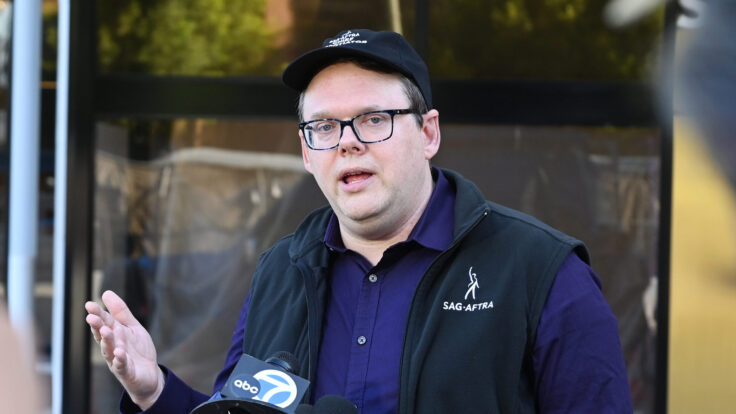
| To no one’s surprise, the crew union IATSE reached a deal last week without a strike—something that neither labor nor management could have stomached after last year’s dual writers’ and actors’ walkouts. The union, led by international president Matthew D. Loeb, achieved key gains on basic wages, streaming residuals, and artificial intelligence as IATSE and the AMPTP studio and streamer alliance renewed two main pacts, the Basic Agreement (Los Angeles area) and the Area Standards Agreement (the rest of the U.S. besides New York), as well as a host of craft-specific deals.
As expected, IATSE achieved the same wage increases in the B.A. and A.S.A. as SAG-AFTRA did last year in its TV/theatrical agreements: 7 percent in the first contract year, 4 percent in year two, and 3.5 percent in year three. For the B.A., IATSE garnered new streaming residuals in SVOD and AVOD to help fund the health plan, and a bonus residual equal to 100 percent of the SVOD residual for high-performing shows, to help fund the pension plan. That bonus formula sounds like it mirrors what SAG-AFTRA achieved, though we don’t know the exact details yet. Key points: As before, IATSE residuals always go to the pension and health plans, not the individual worker; and there are no residuals under the A.S.A., also as before.
I anticipated that IATSE would achieve these residuals when, several months ago, the American Federation of Musicians finally won streaming residuals for musicians—which do get paid to individuals—after an almost decade-long struggle to obtain what the directors, writers, and actors started receiving in 2014. The AFM is the weakest of the Hollywood unions, so their achievement foreshadowed the outcome of the much stronger IATSE.
The AFM also achieved generative A.I. protections, along much the same terms as what SAG-AFTRA won in its TV/theatrical and sound recording agreements, which suggested that IATSE would win gains in this realm, too. The mystery was always going to be what exactly IATSE would achieve. Here, the B.A. and A.S.A. provisions achieved are identical.
The key protection in this area is that an employee cannot be required to provide prompts for an A.I. system in any manner that results in the displacement of any covered employee. Other provisions include: a worker’s use of A.I. is covered work if it was required by the employer; a worker must be paid a kit rental fee if they use their own A.I. system; with “very limited exceptions,” the employer must negotiate with the union over any impact the use of A.I. may have upon employees; the employer can prohibit an employee’s use of A.I. (similar to a provision in the WGA agreement); a committee will develop A.I. skills training programs; and employers will indemnify employees from liability due to the use of A.I.
In addition, scanning of employees cannot be a condition of employment. SAG-AFTRA was unable to achieve this, but it’s not immediately obvious why a below-the-line worker would be scanned in any case.
The IATSE deal thus seeks to bend A.I. toward augmenting, and not displacing, human labor. It’s unclear whether Teamsters Local 399 will be able to square that same circle: They’re in negotiations with the AMPTP ahead of a July 31 expiration, and a key concern is once again A.I.—not generative A.I. but autonomous vehicles, which threaten to displace the drivers who haul film and TV equipment just as surely as Waymo’s driverless cars plying the streets of Los Angeles may imperil the livelihoods of Uber, Lyft, and taxi drivers.
The IATSE pact is expected to ratify within the month, but a Teamsters deal, though likely, just might prove more elusive. Would the drivers strike an already battered and bruised industry? Probably not—but I’m not quite ready to exhale, either. |
 |
| Why Won’t Hollywood Speak Up for TikTok? |
| Despite its free speech history, Hollywood isn’t joining the First Amendment challenges to the U.S. government’s TikTok ban. A deep dive into why studio heads, producers, and writers might be making the wrong call. |
|
|
|
| Once upon a time, Hollywood was the gallant defender of the controversial and the incendiary—from pornographers to foul-mouthed comedians, from animal abusers to anonymous provocateurs. The studio heads, producers, and writers stood behind the First Amendment, driven by the fear that they might be next on the chopping block. But when scholars, racial justice groups, and other advocates filed amicus briefs last week challenging the new federal law that could ban TikTok, the entertainment industry was conspicuously absent.
The silence of the Motion Picture Association, the Writers Guild of America, and other interest groups isn’t due to indifference to the TikTok legislation. Any time 170 million Americans are consuming entertainment content, Hollywood is paying attention. (For those just tuning in, the law, signed earlier this year by Biden, requires that Chinese firm ByteDance divest ownership of TikTok, possibly by selling the platform to a U.S. company.)
Why is Hollywood sitting out what could be a landmark First Amendment case? The refrain from industry people I’ve talked with seems to be, It’s not our fight. Despite internal debates about whether to submit amicus briefs by the June 27 deadline, those in favor of taking a stand were overruled by decision-makers who felt this battle wasn’t worth their political capital. Sure, once the issue inevitably ends up before the Supreme Court, Hollywood’s calculations may shift. For now, however, the industry is opting for discretion over principle. |
|
|
| Hollywood’s detachment from the TikTok battle merits a deeper look, but first: Does it truly matter if interest groups like the MPA speak up? It’s true, appellate courts are awash with friend-of-the-court briefs, many verging on the superfluous, and it’s equally clear that many justices are growing wary of interlopers.
Yet, I certainly think it does matter, particularly when someone can speak from a privileged position of experience. Hollywood’s own battle with censorship is a narrative rich with lessons. Recall the era when the Supreme Court denied free speech to motion pictures, leading an industry besieged by moral zealots to self-impose a severe censorship code. The so-called Hays Code didn’t only apply to nudity and profanity; it banned portrayals of slavery, childbirth, and even clerical satire. Filmmakers, chafing under these constraints, eventually revolted, an epic chapter in film history that Hollywood often references in amicus briefs, like the one 15 years ago when California attempted to restrict the sale of violent video games to minors.
Amicus briefs are also valuable when the case’s primary party lacks widespread sympathy. While few may empathize with ByteDance and its Chinese government puppeteers, reminding American jurists that the domestic entertainment industry has a stake in this outcome would highlight the overarching importance of the First Amendment. Plus, it isn’t even necessary to support TikTok. One can argue for the TikTok creators who have filed their own legal challenge. And if that’s still too much, anyone can file an amicus brief, technically supporting neither side, but stating some interest nonetheless.
Hollywood’s decision to remain on the sideline stems in part from a general unease about the Chinese government, who controls the TikTok algorithm, and how ByteDance is or isn’t safeguarding user data. Just as some executives might legitimately think twice before downloading the app onto their personal phones, there’s a palpable discomfort in rallying around the free speech rights of a company under suspicion—especially one whose ownership is based in a country that bans American apps and movies without a second thought. Also: Just because we don’t know the precise basis for the Biden administration’s national security concerns doesn’t mean they’re unfounded.
Based on my conversations, however, Hollywood’s reluctance to speak up for TikTok may have as much to do with old-fashioned rivalry. The app’s explosive growth and low overhead is capturing the youth demo that the entertainment industry covets. And despite increased lobbying, TikTok hasn’t built strong alliances, or supported others in their political and legal fights, rendering it somewhat of an outsider.
The perspective that TikTok is less friend than foe might change. Not long ago, Google was enemy number one for movie studios, which encouraged attorneys general across the country to investigate the web giant for not doing more to censor illegal content. Recently, however, the MPA signed an amicus brief objecting to states like Texas and Florida targeting digital platforms, like Google’s YouTube, for moderating content. Incidentally, that very case, Netchoice v. Paxton, was decided yesterday by the Supreme Court and amounted to a victory for Google’s editorial discretion. So things can certainly change.
In the meantime, Hollywood has its own priorities on the policy front, including everything from copyright issues to artificial intelligence. Given this overall landscape, why would Hollywood risk antagonizing lawmakers who overwhelmingly support the TikTok ban?
Still, I’m frankly puzzled that industry veterans can’t see how a TikTok ban could boomerang and harm Hollywood’s core interests. What’s to prevent Beijing from retaliating against American intellectual property interests? What’s to stop a future Washington administration from using the precedent to curtail Hollywood’s free speech rights? Remember the repercussions Disney faced from Florida Gov. Ron DeSantis after opposing the “Don’t Say Gay” bill? It wasn’t that long ago! And Donald Trump, who’s leading in the polls, is promising to wield the Justice Department like a personal hammer. We should know by now how that movie is likely to end. |
|
|
| That’s it for today. Remember, What I’m Hearing is off Thursday. Have a great Fourth, we’ll see you Monday.
Matt |
|
|
|
| FOUR STORIES WE’RE TALKING ABOUT |
|
|
|
|
|
 |
|
|
|
Need help? Review our FAQs
page or contact
us for assistance. For brand partnerships, email ads@puck.news.
|
|
You received this email because you signed up to receive emails from Puck, or as part of your Puck account associated with . To stop receiving this newsletter and/or manage all your email preferences, click here.
|
|
Puck is published by Heat Media LLC. 227 W 17th St New York, NY 10011.
|
|
|
|