 |
|
Welcome back to What I’m Hearing+, your Tuesday supplement of entertainment industry enlightenment mixed with legal insights. Congrats to off-Broadway’s newest producer, Shari Redstone, whose venture, a play called Job, should in no way be confused with the vanity, money-pit theater-producing efforts of Logan Roy’s son Connor on Succession, even if Shari’s play is set in the world of tech/media… and stars a Succession actor… and, okay I’ll stop. Eriq Gardner is back to take over this space, and he’s got a preview of the litigation involving the Paramount sale to Skydance, as well as some potentially bad news for Warner Discovery…
|
|
|
- Sun Valley elegy for Zaslav: Warner Bros. Discovery C.E.O. David Zaslav likely won’t be toasting J.D. Vance as Trump’s running mate. Days after Zaz said at Sun Valley that he preferred only that the 2024 winner was friendly to “deregulation, so companies can consolidate,” he now faces a Republican ticket that is potentially hostile to Hollywood M&A. Vance, a former venture capitalist turned self-described populist, has loudly supported the Department of Justice’s vigorous crackdown on Big Tech, even calling for the dismantling of Google. Earlier this year, Vance praised F.T.C. chief and deal nemesis Lina Khan as “one of the few people in the Biden administration that I think is doing a pretty good job.”
Would Vance cause trouble for transactions involving Warner Bros. Discovery? It’s too early to tell, though it’s wise to remember that the situation for Big Business could always get worse. Did you know antitrust law includes the seldom-invoked possibility of criminal prosecutions?
- The A.I. sneak attack: The political world is attuned to other matters, understandably, so I can’t blame anyone who missed last week’s rollout of the COPIED Act, a proposed law that would put guardrails around generative A.I. content. Sponsored by Sens. Maria Cantwell and Marsha Blackburn, the bill is supported by many entertainment and media groups, including SAG-AFTRA, the Recording Academy, the National Association of Broadcasters, the News/Media Alliance, and on and on—basically every major industry trade group except the Motion Picture Association. It’s somewhat dumbfounding that Hollywood studios appear to be on the outside of the bipartisan proposal, but this is more evidence that Disney’s Bob Iger and OpenAI’s Sam Altman are closer to teammates than legal foes. (An M.P.A. rep says they’re reviewing the bill.)
Passage likely isn’t imminent, but the proposals are provocative, particularly after the Supreme Court curbed the authority of federal agencies. To wit: The COPIED Act would put content authentication in the hands of bureaucrats by directing the National Institute of Standards and Technology to work on the issues of watermarking and synthetic content detection. The bill would expand enforcement activity by giving the F.T.C. and state A.G.s the authority to sue digital platforms for copyright abuses, and give content owners an additional year to bring their own cases. And most controversially, it attempts to clarify the illegality of using someone’s copyrighted content, without their consent, to train an A.I. system. Maybe that explains the hesitancy of Hollywood studios to endorse the bill.
- Watson found guilty: Carlos Watson’s defiant strategy of maintaining he never lied about revenue at Ozy Media while pinning the blame on his lieutenant Samir Rao for the misreported numbers, and his bold attacks on Brooklyn federal prosecutors for leaning on Rao’s testimony, has spectacularly failed to sway the jury. Today, Watson was convicted of securities fraud and now faces the possibility of up to 37 years behind bars. During the exhaustive trial, which lasted a couple months, his defense team vociferously criticized what they perceived as judicial bias. The jury’s extended deliberations might have momentarily given rise to hopes of a different outcome, and Watson will now take his case that he was railroaded to an appeals court.
- Salad days for Newman’s Own: Paul Newman would have turned 100 next year, but don’t hold your breath for any splashy centennial merch. A Connecticut judge has issued a striking injunction that bans the licensing of Newman’s image on all non-food products. At the heart of the dispute is Newman’s Own, the charitable organization founded by the late actor, which is fighting with his daughters. They’re angry the foundation reduced the annual amount it allocates to them for philanthropy, as well as the charity’s push to brand more than just salad dressings and frozen pizzas. In a preemptive strike before a full trial this December, the sisters convinced Superior Court Judge Sheila Ozalis that their father had intended for his likeness to be used strictly on food items, as stipulated in his trust.
Newman’s Own is now seeking an immediate appeal and, in a provocative move, clarity from the court on whether the order halts current entertainment licenses. Should this drama escalate, it could mean that classics like Butch Cassidy & the Sundance Kid, The Color of Money, and Slap Shot might start vanishing from streaming platforms. I’d hardly expect that outcome, but you never know.
- Libel, Inc.: Camille Vasquez, the Brown Rudnick partner who represented Johnny Depp in his successful defamation case against Amber Heard, is back on the beat. On July 12, she brought a case representing The Deb co-producers Amanda Ghost and Gregor Cameron against actress-filmmaker Rebel Wilson, who directed the film before a dispute erupted over writing credit. In the past, such disagreements might have led to a contractual showdown and eventually a negotiated split, but with Vasquez steering the ship, the producers are dragging Wilson into Los Angeles Superior Court over claims of defamation on Instagram. Wilson allegedly accused the producers of embezzling funds and Ghost of sexually harassing the film’s lead actress. Despite the animosity, The Deb has just been selected to close the Toronto International Film Festival.
Meanwhile, Vasquez is also playing defense. On July 10, her client, celebrated film and television composer Danny Elfman, was sued for libel following remarks he allegedly made to Rolling Stone. The musician Nomi Abadi alleges Elfman defamed her by denying he had engaged in acts of sexual harassment, including a lurid incident where he allegedly placed his bodily fluids in a martini glass to present to her. Interestingly, Abadi’s legal charge is led by Eric George, who initially represented Heard against Depp, although he exited before Vasquez’s involvement. Nevertheless, with Vasquez on the opposite side, it seems the tables have turned.
- And speaking of defamation…: Netflix just hired Latham & Watkins attorney Marvin Putnam to defend the Baby Reindeer suit brought by “real life Martha” Fiona Harvey. If I had to rank the top 10 litigators in entertainment, Putnam would make the cut, so this is definitely a sign that the streamer is taking this case very seriously.
|
 |
| Skydances With Wolves |
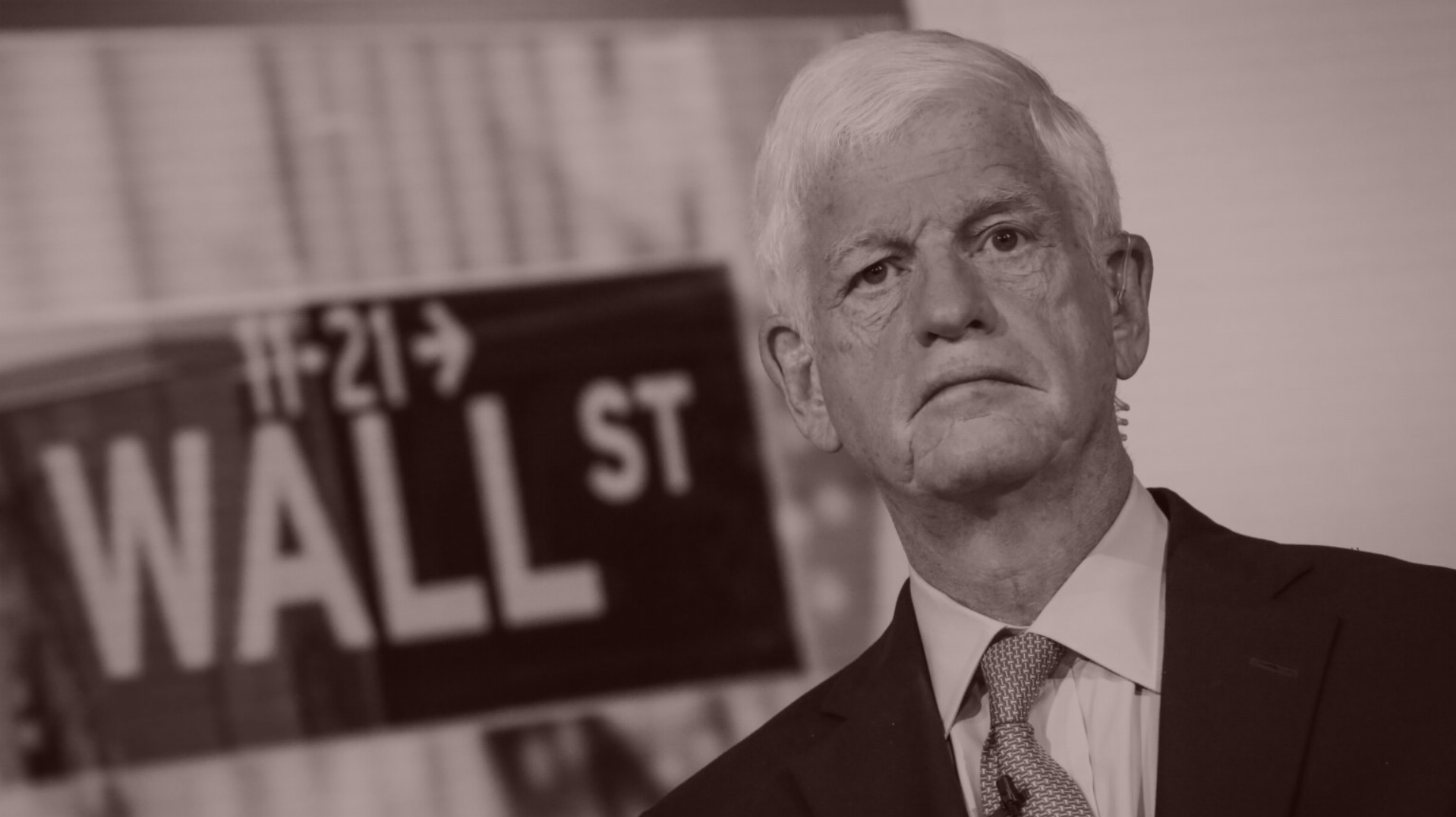
| David Ellison’s $8 billion takeover of Paramount is already facing legal challenges, including a new suit from Mario Gabelli, the long-suffering Paramount shareholder who is now questioning whether Shari’s sweetheart deal was just a little too rich. Here, Gabelli explains his beef. Plus: there’s another unexpected wrinkle in the deal. |
|
|
|
| David Ellison is one step closer to taking full control of Paramount Global, but the legal drama has only begun. There will be shareholder lawsuits, of course, including at least one that is already threatening to spill intimate details from inside the Paramount boardroom. And then there is the legal action brought last week by Mario Gabelli, Paramount’s largest voting shareholder outside of the Redstone family, who is seeking access to the company’s books and records—“Operation Fishbowl,” he’s calling it—to interrogate whether Shari’s sweetheart deal was a little too sweet.
Gabelli told me on Friday that he suspects the Ellison takeover isn’t entirely kosher. He’s not opposed to paying a premium to a controlling shareholder, but he’s concerned with how Shari’s shares are being valued, possibly setting the stage for more legal battles. “I understand why she got a billionaire to come in,” Gabelli told me, mentioning Shari’s financial strains after a dividend cut by Paramount’s board. “But it’s got to be fair to everyone.”
Gabelli rang me up just as the markets closed, following our email exchange about the trend of investors challenging controlling shareholders. It’s a topic with which he’s all too familiar: Gabelli previously backed a lawsuit over Shari’s forced merger of CBS and Viacom, which he claimed was designed to protect her floundering Viacom investment. (The suit settled for $122.5 million early last year.) More recently, he’s been lingering in the background of the Skydance negotiations, occasionally pushing for a higher premium for Paramount’s Class A shareholders. In the end, Gabelli secured the option of cashing out at $23 per share or rolling over nonvoting stock into New Paramount. So why is he making noises now?
Interestingly, Gabelli hinted that a conversation he once had with Shari’s father, Sumner Redstone, may have led to the dual-class share structure at Paramount Global’s predecessor companies. He also urged me to examine past deals by controlling shareholders. “Most of them carry a nut,” he said, referring to the premiums paid to controllers, seemingly at peace with the concept. “But how much is fair?” |
|
|
| Shareholder suits at Paramount have always felt like a foregone conclusion, but the influence of these potential battles on the negotiations has been surprising. After all, the litigious Redstones are practically part of the furniture in Wilmington. And in the high-stakes game of billion-dollar deals, occasionally shelling out $122.5 million of “Fuck you, now go away” money is part of the playbook, right?
Well, a few pivotal developments emerged while the Skydance acquisition was cooking, perhaps shaping Redstone’s legal calculus and leading her to secure at least some protection from shareholder litigation. (RedBird Capital’s Gerry Cardinale told my partner William D. Cohan that his firm and Skydance are “stepping up to cover her first dollar up to a certain amount.”) First, in late January, Delaware Chancellor Kathaleen McCormick voided Elon Musk’s $55 billion Tesla pay deal, criticizing the board’s proximity to Musk when it gave him that massive compensation package back in 2018. Then, in April, the Delaware Supreme Court handed down a significant ruling regarding Barry Diller’s IAC/InterActiveCorp’s separation from Match Group, emphasizing that fairness in such transactions, not just “business judgment,” must become the scrutiny standard unless the board committee is wholly independent.
These rulings are part of a broader Delaware trend of taking a hard look at the machinations of controlling shareholders—even as more corporations adopt dual-class structures. The legal climate has ravenous plaintiff’s lawyers smelling blood, pushing some companies to consider reincorporating in more favorable jurisdictions—though, ideally, not moving just to placate a controlling shareholder.
Amid these shifting winds, Redstone began insisting on indemnification while exploring strategies to shield her dealings from legal scrutiny. Paramount, for instance, used an independent special committee to assess potential transactions, although the committee’s credibility may have been dented when some of its members resigned in April. Shari also toyed with the idea of securing approval from a majority of non-Redstone voting shareholders—so basically, Gabelli—but ended up not backstopping the Skydance deal this way. Alas, the current plan is to entertain competing offers during a 45-day “go-shop” period and then confront shareholder lawsuits as they come, with Ellison and Cardinale footing the tab.
Notably, there was one other option—which Columbia Law professor Eric Talley brought up when I asked him about the matter. The Paramount and Skydance teams could have waited a few weeks and then entered into a bunch of side deals to take the heat off Redstone. You see, in reaction to how corporations are rethinking Delaware, given the anti-controller rulings, the state is set to amend its corporate law to validate stockholder governance agreements, potentially granting more power to figures like Shari Redstone—or David Ellison. Some legal scholars argue that once Delaware Governor John Carney signs the amendments into law in a few weeks, it’ll basically mean the end of boardroom governance and shareholder input as we know it. In any event, those steering the Paramount deal chose not to play this potentially controversial ace card.
Instead, Paramount appears on course to defend Skydance’s takeover. Fortunately for them, with substantial legal precedents still favoring controllers who negotiate premiums on their shares, and the special committee’s review in place, the burden will likely fall to suing investors to demonstrate the unfairness of the transaction. And if no one steps up to top Ellison during the go-shop period, litigious shareholders may find it difficult to prevail on claims of breached fiduciary duties. Nonetheless, the landscape is ripe for shareholder attorneys to give it a shot, especially now that Redstone’s indemnification has been widely publicized. Plus, just because a lawsuit might fail doesn’t mean there won’t be embarrassing or troublesome disclosures along the way. Some defendants might even pay to avoid that pain. |
|
|
| Just as Gabelli dialed my number, I received notification of another significant, yet unreported, development: A Delaware judge had denied Paramount’s request to postpone a crucial July 24 trial. This revolves around the Rhode Island state pension fund’s demand, enacted via its treasurer, to access Redstone’s texts and emails, which Paramount wanted to delay responding to until after the go-shop period concluded.
Rhode Island, whose pension fund holds a stake in Paramount, has been aggressively seeking disclosures under the theory that Redstone is usurping the company’s M&A opportunities for personal benefit. It’s a much broader suspicion than the one that Gabelli is investigating, and focuses on forgone deals with the likes of Apollo and Byron Allen. A few weeks ago, when the Skydance deal faltered over indemnification issues, Paramount claimed the issue was moot and argued for the freedom to pursue transactions without shareholder oversight. Following the announcement of the Skydance deal on July 7, Paramount sought to delay the trial, claiming that producing financial records or discussing ongoing developments during the go-shop period could compromise the deal. Rhode Island countered by questioning how exactly these actions would pose a risk, and the judge sided with them.
This sets the stage for an extraordinary trial amid a pivotal merger in the entertainment industry. A Paramount shareholder will attempt to persuade the Court of Chancery of a credible suspicion of misconduct, aiming to secure the necessary documents for a thorough investigation. While this trial won’t by any means settle whether Redstone acted wrongfully, it promises an interesting discussion around her fiduciary duties and the fairness of the merger. Plus, it could shape Paramount’s interactions with other shareholders—including, of course, Gabelli—who are also on the prowl. |
|
|
| That’s it for today, big thanks to Eriq. I’ll be back on Thursday…
Matt |
|
|
|
| FOUR STORIES WE’RE TALKING ABOUT |
 |
|
 |
| Burberry Blues |
| Charting the uphill battle for new C.E.O. Joshua Schulman. |
| LAUREN SHERMAN |
|
 |
|
 |
|
|
|
|
|
 |
|
|
|
Need help? Review our FAQs
page or contact
us for assistance. For brand partnerships, email ads@puck.news.
|
|
You received this email because you signed up to receive emails from Puck, or as part of your Puck account associated with . To stop receiving this newsletter and/or manage all your email preferences, click here.
|
|
Puck is published by Heat Media LLC. 227 W 17th St New York, NY 10011.
|
|
|
|