 |
|
Happy Monday, I’m Eriq Gardner.
|
|
Welcome back to The Rainmaker, a private email about money, power, fame, and, most of all, the lawyers behind it all.
This week, I’m honing in on the Hollywood front: labor strife, A.I., crypto, Microsoft M&A, plus Bob Iger, Fran Drescher, Lina Khan, Robert Kennedy Jr., Gary Gensler, Tucker Carlson, and more.
Was this email forwarded to you? Click this link to subscribe.
First up…
|
|
|
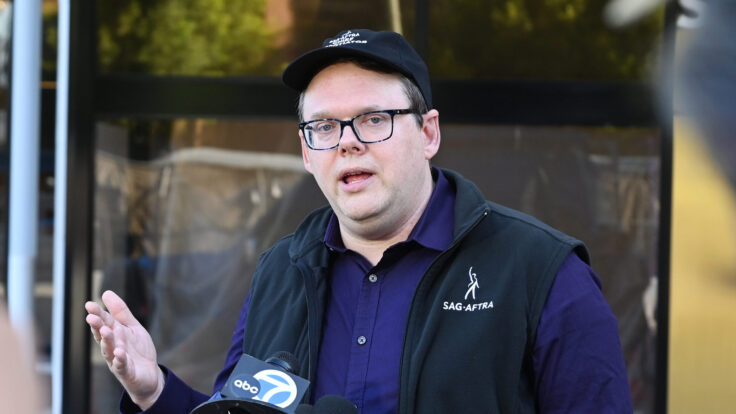
| A few days ago, I tuned in to watch the historic announcement of the first Hollywood actors’ strike in 43 years. What particularly caught my attention was a jolting remark from Duncan Crabtree-Ireland, SAG-AFTRA’s chief negotiator, who claimed that the studios had demanded the authority to scan the faces of background performers and then control their likenesses “for the rest of eternity,” with the ability to use digital replicas “in any project they want with no consent and no compensation.”
Unsurprisingly, this Hollywood version of the Faustian bargain—take a day job with Netflix for a couple hundred bucks, and be enslaved by studio A.I. until kingdom come—quickly went viral, prompting the studio-side publicists to rush into damage control: They clarified that studios were only interested in obtaining a background performer’s image and likeness for specific projects, not eternal ownership.
And why would anyone think otherwise? Hollywood studios are nothing if not rapacious, but we’re talking about extras in movies and TV shows. Not to besmirch the talents of these background actors, but why exactly would a studio need to secure the rights to a non-famous person’s face? If studios were so desperate, they could simply license random faces from, let’s say, Mark Zuckerberg. (You did read Threads’ terms of use before surrendering your soul, right?) If anything, there might be a revenue opportunity for the studios where movie fans pay to have their own faces incorporated into films.
Nevertheless, background actors, who were once represented by the Screen Extras Guild, now represent a substantial portion of SAG-AFTRA, which is why you’re seeing their concerns front and center. Everyone in Hollywood is familiar with the internal divisions between the guild’s ruling class—a group of moderates, led by Fran Drescher, under the Unite for Strength banner—and the more ideological wing led by Matthew Modine, called Membership First. For now, Drescher and her allies command loyalty from the rank and file, and both factions are represented on the negotiating committee. But nobody should lose sight of the tens of thousands of background performers, who have been regularly courted by Membership First over the years. For them, the A.I. issue is existential.
Can any labor deal with AMPTP save them? I’m skeptical, but it makes sense why Crabtree-Ireland gave them a special shout-out at the press conference—politics are at play. The industry is undergoing an unsettling metamorphosis, and there are tens of thousands of day-rate actors who don’t wish to be forgotten. Even if they’re in the background now and very well could fade away. |
|
|
- What Would Bobby Think?: At a recent press dinner hosted by Robert F. Kennedy Jr., chaos reigned as attendees witnessed screaming, farting, and the presidential candidate suggesting that Covid may have been “ethnically targeted” to spare the Jews. Meanwhile, when he’s not breaking bread with reporters, R.F.K. Jr. is suing them. He’s currently fighting an antitrust case against The Washington Post, the BBC, AP, and Reuters for ganging together in a misinformation-fighting consortium called the “Trusted News Initiative.” He alleges the project constitutes a group boycott of alternate viewpoints on vaccines that led to them being censored by social media platforms.
R.F.K. Jr. recently steered the case to Terry Doughty, the same Louisiana federal judge who earlier this month shocked legal observers by ordering Biden officials to stop communicating with social media platforms about moderating vaccine content. This past week, the news companies came out swinging against Kennedy, ridiculing the New York-based lawyer for having no legitimate reason to bring the case in Louisiana. They also fault him for previously telling this same judge that Biden was to blame for social media censorship whereas now, he’s saying it’s the news media. Pick one!
- Snitches Don’t Always Get Riches: This libel suit from Ray Epps, a Trump supporter who Tucker Carlson theorized was an undercover agent for the F.B.I. during the Jan. 6 insurrection, is getting a ton of hype. The New York Times said the case could be “Fox’s next Dominion” while Joe Scarborough commented, “If I’m representing Fox News, I’m saying, ‘Get your checkbook out and start writing.’”
But not so fast… There are entire categories of statements (including racial misidentification and suggestions of homosexuality) that courts have deemed incapable of being defamatory, and accusing someone of secretly working with law enforcement is one. There’s a ton of old cases that Fox News will surely cite to beat this suit. One fun example: A suit against Tupac Shakur over a rap song that suggested the plaintiff was working as an undercover federal informant. The judge responded, “A false statement must hold the plaintiff up to ridicule or scorn in the minds of ‘right-thinking persons’; those who would think ill of one who legitimately cooperates with law enforcement officials are not such persons.” Could that precedent change?
- Wet Hot Regulatory Summer: Joe Biden is having a pretty awful month in courts. From a huge setback for Gary Gensler’s S.E.C. on the crypto front (see the Ripple ruling) to a significant defeat for Lina Khan’s F.T.C. in a huge merger case, federal judges are dealing blows to some bold regulatory efforts. Plus, the Biden administration is still seething after the Supreme Court, in one of its biggest opinions this past term, struck down a student loan forgiveness plan under the Major Questions Doctrine, the notion that Congress must delegate authority before agencies enact significant policies. Of course, Biden is trying again on the student loan front, and he’s just tipped the Equal Employment Opportunity Commission towards the Democrats after the confirmation of Kalpana Kotagal, renowned for co-authoring Hollywood’s “inclusion rider.” The Federal Communications Commission appears to be his next trophy.
And speaking of Lina Khan… |
 |
| Iger’s M&A Wiggle Room |
| Lina Khan, Biden’s wunderkind antitrust impresario, was long considered an M&A spoilsport. But Microsoft’s successful workaround in its attempted acquisition of Activision may pave a path for Iger to sell off ABC, ESPN, and much more. |
|
|
|
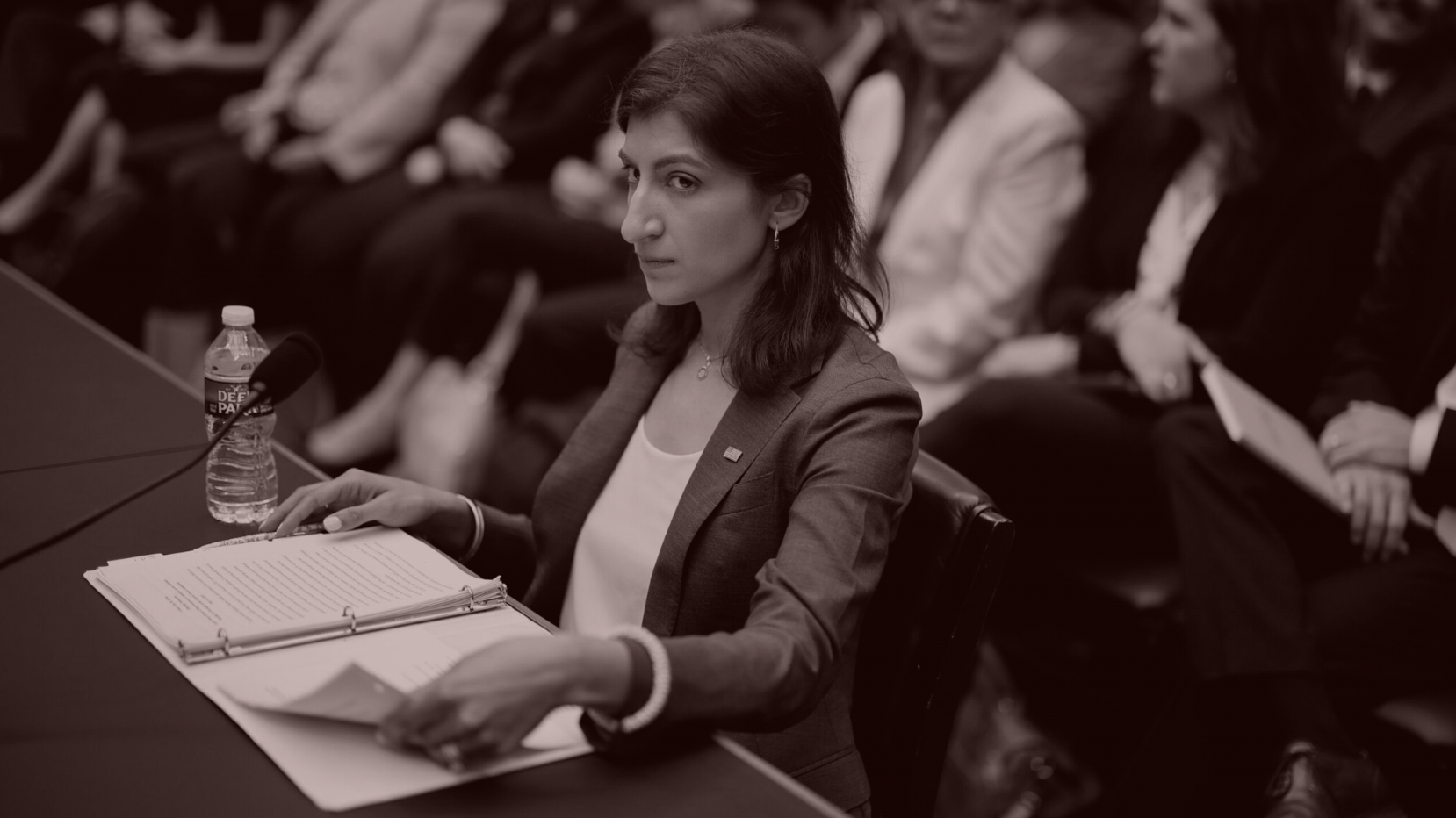
| It’s somewhat ironic that Lina Khan, the brilliant 34-year-old progressive antitrust expert and presumed corporate dragon slayer, would end up presiding over one of the most aggressive, adventuresome periods of corporate consolidation. That’s not entirely her fault, of course, despite the taunting of Republicans during a prickly oversight hearing on Thursday. But there’s no doubt that her reign as F.T.C. chair has coincided with a new M&A playbook that corporate lawyers are using to outwit regulators.
The centerpiece of this evolving strategy—seen most recently in mergers like Illumina/Grail, UnitedHealth/Change Healthcare, and Assa Abloy/Spectrum Brands—is known as “litigating the fix.” In short, the move is for the acquiring company to proactively address any possible antitrust concerns by proposing divestitures, for example, or by committing to side deals that would preserve competition. Voila, now the burden is on the regulatory agency, not the company, to justify why those concessions aren’t sufficient.
Consider Microsoft’s $69 billion acquisition of Activision, which both the F.T.C. and foreign regulators tried to shut down. Instead, Microsoft deftly maneuvered in front of the complaint by granting Nintendo a ten-year license to Activision’s flagship video game franchise, Call of Duty, and extending a similar offer to Sony’s Playstation (which was finally accepted on Sunday). This masterstroke effectively allayed any concerns that Judge Jacqueline Scott Corley may have had about Microsoft depriving rival gaming platforms of access to the title. Last week, she denied the F.T.C.’s request for a preliminary injunction, which would have stopped the deal from closing.
Of course, Khan swiftly sought an emergency order from the Ninth Circuit, arguing that Microsoft’s Call of Duty side deals shouldn’t have influenced Corley’s analysis. According to the F.T.C., those remedies have not undergone thorough vetting or market analysis—and anyway, the judge should have first considered whether the agency has raised serious legal questions and marshaled compelling evidence, not whether the company has offered remedies. The government expressed frustration that Corley gave more weight to Microsoft’s moves than to its own theories, effectively raising the bar on merger enforcement.
But Microsoft’s legal team, led by Beth Wilkinson, outplayed the F.T.C., leaving them scrambling last week to make their counterargument. And in the end, the Ninth Circuit refused to intervene before the deadline in the merger agreement. The agency may now attempt to force a divestiture, but the momentum is all on Microsoft’s side. Even worse for Khan, the playbook for how to defeat her agency’s regulatory efforts is now out in the open. The Biden administration, which came out swinging on antitrust, is stuck on the back foot. |
|
|
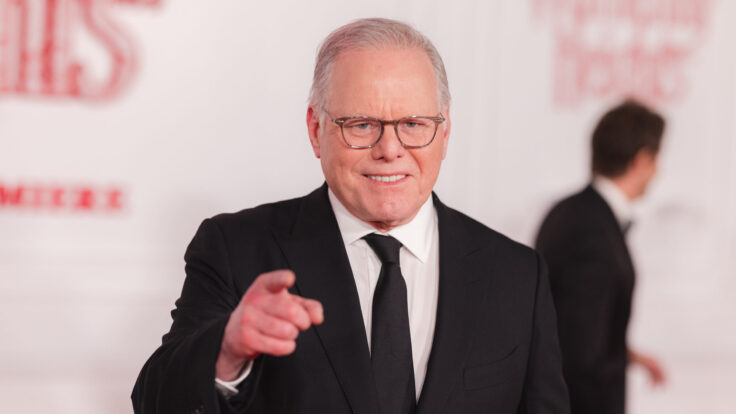
| The entertainment industry, which spent the past few years treading gingerly around the Biden administration, seems to have picked up on the sentiment that bigtime M&A is back on the table. Just as Khan was handed a monumental setback in court, Bob Iger seized the spotlight in an interview with CNBC’s David Farber , teasing the possibility of selling ABC and exploring a strategic partnership for ESPN. Wall Street dealmakers have also been eyeing a potential combination of Warner Bros. Discovery and Comcast’s NBCUniversal, in 2024, or even a sale of CNN, as my partners Bill Cohan and Dylan Byers have reported.
But has the M&A landscape really changed, or are lawyers and dealmakers just high on Khan’s recent failures? Well, it’s complicated. For decades, the government deliberately shied away from challenging vertical mergers between a distributor and a supplier. That changed in the past five years, with regulators daring to confront two huge ones: AT&T/Time Warner and Microsoft/Activision. They faltered in blocking both. Although the legal theories behind these cases differed (the former focused on potential bargaining friction in cable TV land, the latter on foreclosure in the videogame sphere), the strikingly similar outcomes suggest that judges won’t simply genuflect to theoretical market concerns. And let’s face it, proving future harm can be tough!
From the sound of it, Justice Department antitrust chief Jonathan Kanter won’t be deterred from challenging anti-competitive vertical mergers. But it does seem like there is real hope, after the AT&T and Microsoft rulings, that even a mega-merger like, say, Apple-Disney could be defensible, despite its staggering scale. And who’s to say that concessions won’t come into play? Notably, Iger raised the possibility of licensing more of Disney’s movies and TV shows to third parties in that CNBC interview, a particularly intriguing prospect given the recent scrutiny of Microsoft’s ability and incentive to withhold Call of Duty for itself.
Horizontal mergers, which are tie-ups between direct competitors, are trickier terrain. Kanter already tasted success in thwarting the $2.1 billion sale of Simon & Schuster to Penguin Random House, convincing a judge that consolidation in the publishing industry would harm authors. Any deal that results in fewer buyers of labor services would likewise face intense scrutiny. That doesn’t bode well for any deal that would reduce the number of studios or content streamers. (Sorry, Shari Redstone.) Of course, if a giant like Disney wishes to offload assets like ABC or FX to one of its competitors, the details would matter.
Yes, Disney would still have to contend with the Federal Communications Commission if it tries to shed its broadcast assets. For years, the agency has been deadlocked with two Democrats and two Republicans, and has waned in influence as M&A activity largely shifts from linear to digital. But Iger’s comments come at a critical juncture, with Democrats on the cusp of finally gaining control of the F.C.C. after Biden withdrew Gigi Sohn’s nomination and put forward Anna Gomez, who appears poised to a favorable vote in the Senate. Assuming Gomez is confirmed in the coming days, she’ll wield influence over the fate of ownership rules like the Dual Network Rule (prohibiting one company from owning two major networks) and the transfer of any broadcast license. |
|
|
That’s all for this edition. Same bat time, same bat station next week.
Eriq |
|
|
|
| FOUR STORIES WE’RE TALKING ABOUT |
|
|
|
|
|
 |
|
|
|
Need help? Review our FAQs
page or contact
us for assistance. For brand partnerships, email ads@puck.news.
|
|
You received this email because you signed up to receive emails from Puck, or as part of your Puck account associated with . To stop receiving this newsletter and/or manage all your email preferences, click here.
|
|
Puck is published by Heat Media LLC. 227 W 17th St New York, NY 10011.
|
|
|
|