|
|
Happy Monday. I’m Eriq Gardner.
|
|
Welcome back to The Rainmaker, my weekly private email focused on the most significant legal maneuvering inside Hollywood, Silicon Valley, Washington, and Wall Street.
This week’s email includes a big revelation: The Bill Murray behavior that led to the shutdown of a movie, the woman who accused him—and the terms of the settlement as he attempted to make things right.
But first…
|
- As we await word on whether Elon Musk and Twitter can finally come to terms on a trial-averting deal for the company’s acquisition, keep in mind that Musk has two more trials waiting for him in the coming months, regardless. On Nov. 14, in Delaware Court of Chancery, Musk and the rest of the Tesla board will face shareholder claims that they breached their fiduciary duties by approving a pay package for him—including $56 billion in potential stock options—that are alleged to be excessive. Then, a couple months later, in a federal civil case in San Francisco, Musk will face more Tesla shareholders over his 2018 tweet in which he claimed to have “funding secured” to take the automaker private at $420 a share. In that latter case, shareholders and Musk’s team recently filed trial briefs. (See here and here.)
- The Washington Post is not done dealing with Felicia Sonmez, the reporter who was fired after relentlessly tweeting criticism of the paper’s leadership. (I wrote about the situation a few months ago.) The News Guild recently asked a federal judge to order the Post into arbitration over its claim that she was terminated without just cause. The case also involves Paul Farhi, a media reporter who was suspended after detailing some internal Post drama that the paper claims jeopardized colleague safety. The News Guild believes this also needs to be arbitrated. (Read its motion for judgment here.)
- I’m going to keep an eye on Real Housewives star Bethenny Frankel’s attempt to lead a class action against TikTok. The suit alleges her name and voice were used to peddle unauthorized goods. The complaint, which you can read here, is a bit messy, but comes from an attorney with a strong reputation—Morgan & Morgan partner John Yanchunis. More importantly, it clearly has designs to overcome a Section 230 defense by asserting that the publicity rights of social media influencers are a form of intellectual property. That’s a promising avenue for the plaintiffs, and a subject I wouldn’t be surprised to see eventually get to the Supreme Court.
- If the Republicans take back the House in this year’s midterms, might the G.O.P. leadership agenda include testifying at a civil trial? Former California congressman Devin Nunes is suing Esquire owner Hearst and journalist Ryan Lizza (now at Politico) over a “defamatory hit piece” about the Nunes family farm, which allegedly employed undocumented immigrants. Nunes is claiming $75 million in reputational harm, which led Lizza to dig into how Donald Trump hired Nunes to run Truth Social, his media platform. Recently, Nunes named 27 Republican politicians, including Rep. Kevin McCarthy and Rep. Jim Jordan, as potential trial witnesses.
- At a combative deposition last month where, among other things, Nunes alleged witness tampering by the other side (and hinted about referring the matter to the Justice Department), Nunes said, “[McCarthy] knows my family… he knew that they moved to Iowa, he knew that there was no secret… he was Republican leader so he would have been the one that had to, you know, verify that that information was not true.” (Read full transcript.) On Friday, Lizza brought a motion to stop Nunes from calling the Republicans to the witness stand and “trying to turn [the] trial in this matter into a political circus.”
- You probably heard about Angelina Jolie’s counterclaims against Brad Pitt. I discussed her allegations of abuse on Matt Belloni’s podcast, The Town. But did you catch the Pitt camp’s amended “denial”? This one belongs in the Hall of Fame of Lawyerly Statements: “Brad has accepted responsibility for what he did but will not for things he didn’t do.” Wait, what? Did he choke his kid or not?
And now… |
|
|
| Hollywood is a vastly different place than it was five years ago, before the fall of Harvey Weinstein and the rise of the #MeToo movement. This week alone, Weinstein, Danny Masterson, Kevin Spacey, and Paul Haggis are all on trial facing various allegations of sexual misconduct. Next month, Universal Pictures is releasing She Said, a major film starring Carey Mulligan and Zoe Kazan as Megan Twohey and Jodi Kantor, the New York Times journalists who first exposed Weinstein’s history of sexual abuse. But the conversation surrounding bad behavior in the movie business—still defined by big egos and power imbalances, lewd humor and boundary-crossing—remains unfinished, particularly when it comes to #MeToo offenses that fall short of Weinstein-level sins.
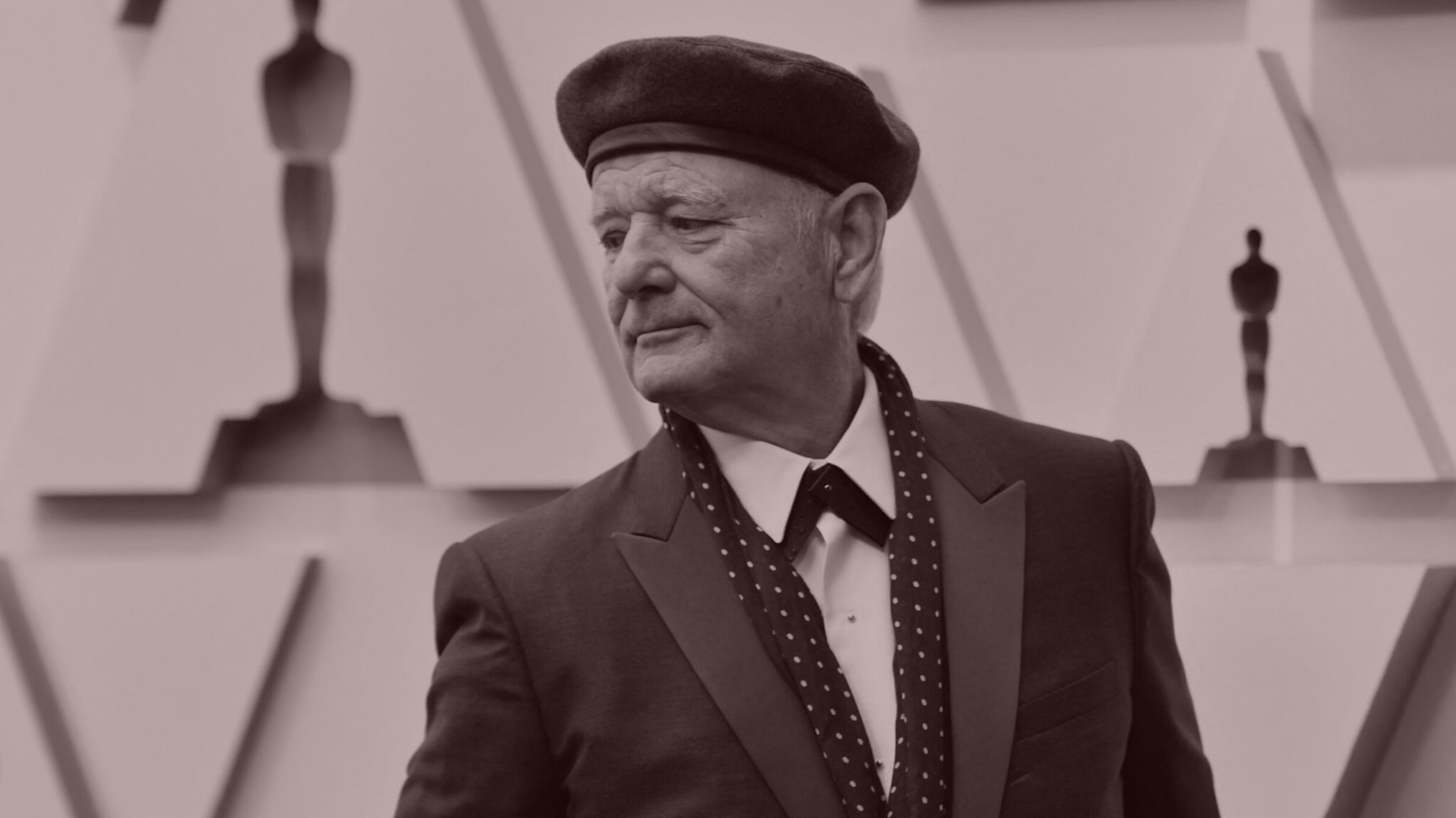
That brings us to the complicated case of Bill Murray. A few years ago, the 72-year-old star was being hailed as a “secular saint,” a cross-generational icon as admired for his off-screen joie de vivre as for his unexpectedly satisfying career arc. Then came the April shoot for Being Mortal, the directorial debut of Aziz Ansari (himself an early controversially borderline #MeToo figure). On the set, Murray was said to have engaged in “inappropriate behavior” that caused Disney’s Searchlight unit to abruptly shut down production.
What happened, exactly? Well, nobody revealed that, not even to the crew on the film. Without going into details, Murray told a CNBC interviewer, “I did something I thought was funny, and it wasn’t taken that way… The world’s different than it was when I was a little kid.”
Since then, Being Mortal has languished in purgatory, and neither Searchlight nor Ansari has said whether the under-$20 million film will move forward. Murray, too, is also in a kind of purgatory. Has he been canceled? Well, since few know what actually happened, how can anyone even have that conversation?
The details of Murray’s alleged transgression, which I’ve now learned from multiple sources, may help to provide clarity. On the set, Murray was particularly friendly with one female production staffer. (I’m withholding her name, although it’s not actress Keke Palmer, as has been speculated.) This much younger woman, Murray felt, had been flirting with him. So at one moment when the two were in close proximity near a bed that was part of the production, Murray started kissing her body and straddling her. It was perhaps an unclear bit of physical comedy, but one that was unannounced. She couldn’t move because he outweighed her, she alleged. Then, he kissed her on the mouth, although when he did so, both Murray and the woman were wearing masks, owing to Covid protocols. Murray later said that he was just being jestful, but the woman interpreted his actions as entirely sexual. She was horrified.
The woman made a complaint about what had occurred. A second staffer also witnessed the incident and lodged a report, too. This traveled up the chain at Disney, I’m told. Eventually, Searchlight, in an unsigned memo, informed the cast and crew that production was being suspended, although the reason and the nature of what had happened was withheld. (A Searchlight rep wasn’t available to comment.)
Murray felt miserable, a source close to the actor told me, not just at what he thought was a miscommunication, but also at how one moment had caused his co-workers to essentially lose their jobs. He resolved to remedy the situation, and engaged the production staffer in mediation. The staffer, who shared Murray’s desire to finish the film, was represented in the proceeding by attorney Shawn Holley at Kinsella Weitzman, who declined to comment. David Nochimson, Murray’s lawyer, also wouldn’t comment.
After some time, Murray and the woman came to a settlement: The actor paid her just north of $100,000, according to sources, and she agreed to maintain confidentiality. Notably, the deal included another component besides a non-disclosure agreement: The woman agreed to waive any legal claims she might make against the producers of Being Mortal, including Searchlight and Disney. |
|
|
| Murray hoped this resolution—including the Disney waiver—would be enough to restart production. But that hasn’t happened, for a number of reasons that speak to how Hollywood has changed in the #MeToo era. Sometimes, stars are replaced (e.g. Spacey in Fox’s All the Money in the World, or Louis C.K. in Universal’s The Secret Lives of Pets 2); sometimes the movie just comes out and everyone pretends the canceled star isn’t in it (Armie Hammer in Disney’s Death on the Nile); and sometimes the project is simply scrapped (e.g. Brett Ratner’s Milli Vanilli biopic). Being Mortal, which Ansari adapted from Atul Gawande’s nonfiction book about end-of-life care, and which co-stars Seth Rogen, was about half-shot. Yet it looks like it’s headed toward cancellation rather than a reshoot.
The primary stumbling block for Ansari is Searchlight itself. There was a time when the specialty studio was Fox Searchlight, owned by Rupert Murdoch, who tends to care less if his media properties are controversial. (Especially if it regularly scoops up Oscars, as Searchlight has for everything from Slumdog Millionaire to 12 Years a Slave to Nomadland). But Murdoch sold Searchlight in 2017 along with his other Fox movie assets to Disney. And while the division still enjoys plenty of creative latitude to chase awards, Disney tends not to tolerate this sort of controversy—especially when box office is so challenged for specialty movies, and the “win” here is likely landing a prize-winner on Hulu. Disney C.E.O. Bob Chapek has been particularly guardful of the company’s image since the “Don’t Say Gay” controversy in Florida, which turned the Mouse House into a culture war lightning rod. The last thing Chapek needs is to be charged with progressive hypocrisy.
Murray and his reps may have believed that they could save Being Mortal by getting the woman to release any claims against Disney. Yes, there are occasions when a settlement is all that’s necessary. After all, Rust is apparently moving forward after Alec Baldwin and producers struck a deal with the family of Halyna Hutchins, the cinematographer killed on the set. But that was an accidental shooting. This Murray situation is different—and clearly, the problem isn’t merely legal.
That said, there could be a fresh arbitration ahead. A pay-or-play deal typically mandates that a star be compensated whether or not a project moves forward. I’m told that Murray didn’t have such an arrangement for Being Mortal, which means he isn’t entitled to a full paycheck. But Searchlight can’t just walk away from its contractual obligations. This could trigger a quiet legal fight over whether the studio would be justified in terminating the deal.
Perhaps with that in mind, Disney has allowed Ansari to shop Being Mortal to prospective buyers. So far, there’s been no word of any takers. |
|
|
| The Supreme Court recently opened its doors again to visitors, but thankfully, the justices will continue to stream live audio of its hearings. (Remember when they said that doing this would lead to societal collapse?) That gives us all a chance to tune in on Wednesday to Andy Warhol Foundation v. Lynn Goldsmith, a copyright dispute between a magazine photographer and the artist’s estate which I wrote about earlier in the year. The big issue for the justices is how to determine when a work of art makes “transformative” use of copyrighted source material. Is a distinctive aesthetic sensibility enough or must the secondary artist’s purpose transcend the original’s meaning and message? The answer isn’t wholly determinative of whether something is fair use under copyright law, but what the justices will soon say will play an outsized role in the analysis about what’s in and out of bounds.
For those looking for a warm-up act, let me recommend listening to the Second Circuit hearing from a couple weeks ago in Vans, Inc. v. MSCHF Product Studio. This one’s a trademark case, not a copyright one, but nevertheless involves a fascinating discussion about whether an artistic message can overcome an allegation of intellectual property infringement. Do audiences need to understand the message? What if the art is sold? And so forth. Also, for true art aficionados, watch for that René Magritte reference. |
|
|
| When I first started covering Hollywood 15 years ago, there were two figures that gripped the psyche of this industry town and shaped my conception of its key players, for better or worse. One was Anthony Pellicano, the private investigator who I wrote about in July. The other was Nikki Finke, the founder of Deadline Hollywood, whose death at 68 was just announced. I don’t think I ever admired her, but I did appreciate her aggressiveness, especially at a time when journalism had grown stodgy and was being disrupted by new online players ranging from Gawker to Politico.
Finke undisputedly changed the reporting enterprise, too—though with some truly terrifying tactics, she did so at real cost. As Matt Belloni writes below in this must-read piece, she was a “terrorist.” Indeed, looking back, it’s not surprising that her stardom flashed bright but ever so briefly. One can only get away with the things she was getting away with for just so long. Finke was smart enough to cash out when she could. R.I.P. |
The Dark Legacy of Nikki Finke
Finke presented herself as a no-bullshit reporter who kept Hollywood moguls honest, and we all found her copy completely irresistible. But she perverted the profession by blackmailing sources, often targeting the weak, and weaponizing the internet to push her bile—and her own agenda.
By Matthew Belloni
My last of probably hundreds of testy exchanges with Nikki Finke over the years occurred about a year ago, in my Twitter DMs, just as we were launching Puck. “You should return to lawyering,” she wrote me. “More money and steady work. Journalism is a dead profession.”
Not exactly in line with the image Finke cultivated during her seven years at Deadline.com as a journalistic crusader, the only person with balls big enough to stand up to the Hollywood moguls and speak truth—or her version of it—to the powerful. She had actually sent me many messages like that when I was editor of The Hollywood Reporter, cynical tirades about how nothing in media mattered and the only thing she was proud of was that she had convinced the car-racing heir Jay Penske to pay her more than $10 million for Deadline in 2009....
Continue reading Matt’s column online |
|
|
| Send comments, tips, and your best Nikki Finke stories to eriq@puck.news |
|
|
|
| FOUR STORIES WE'RE TALKING ABOUT |
 |
| Dalio’s Bridgewater Exit |
| Notes on the interminable Elon-Twitter debacle, Dalio’s legacy, and a Summers prophecy. |
| WILLIAM D. COHAN |
|
 |
|
 |
| Elon Media Hatred |
| Jon Kelly and Peter discuss the extraordinary contempt for Musk in the media. |
| PETER HAMBY & JON KELLY |
|
 |
| MSNBC Murmurs |
| A conversation encircling Semafor's pre-launch buzz, Licht’s vision, and more. |
| DYLAN BYERS |
|
|
|

|
|
|
| You received this message because you signed up to receive emails from Puck
Was this email forwarded to you?
Sign up for Puck here
Sent to
Unsubscribe
Interested in exploring our newsletter offerings?
Manage your preferences
Puck is published by Heat Media LLC
227 W 17th St
New York, NY 10011
For support, just reply to this e-mail
For brand partnerships, email ads@puck.news |
|
|