 |
|
Happy Monday, I’m Eriq Gardner.
|
|
Welcome back to The Rainmaker, a private email about how those in power are staying out of legal trouble. (Was this email forwarded to you? Click this link to subscribe.)
In this week’s edition, a deep dive on the fallout from the Fox-Dominion settlement: who’s really paying the $787.5 million penalty, the mystery funding behind Rupert Murdoch’s next legal headache, and why CNN’s own libel troubles may be worse than media coverage suggests.
But first…
- Tucker Carlson is out at Fox News, Don Lemon is out at CNN, and guess what? I hear the former cable TV news rivals are represented by the same attorney—Bryan Freedman, who will now be pushing for a generous exit package for each. Freedman, of course, is still representing Chris Cuomo in an arbitration over his own CNN exit more than a year ago. Cue the legal fireworks ahead.
- It was good to see so many of my fellow reporters in Wilmington this past week for the Dominion trial (or almost-trial), but I wonder if we’ll have fewer opportunities to gather there in the future. That’s because Delaware is quickly losing its status as the place where businesses want to incorporate. Once enticed by its tax advantages, privacy, and the reputable Court of Chancery, corporations are now being courted by other states, particularly Nevada, which just poached Elon Musk’s Twitter. The corporate exodus has gotten so crazy that now shareholders are even suing over these moves. Check out this very ironic complaint filed on Friday by TripAdvisor shareholders.
- Legal developments are moving quickly on the A.I. front, with Universal Music Group demanding streaming services block a song featuring A.I.-generated vocals imitating Drake and The Weeknd. (Grimes, seeing an opportunity, is offering to split 50 percent royalties for any successful A.I. song that uses her voice.) Meanwhile, in a must-watch class action over generative A.I., Midjourney Inc. is asking a federal court to dismiss claims by visual artists that say the software illegally appropriated their work. The company faults the artists for failing to identify which copyrighted works in particular were used to train its A.I. system. Read the motion here.
|
|
|
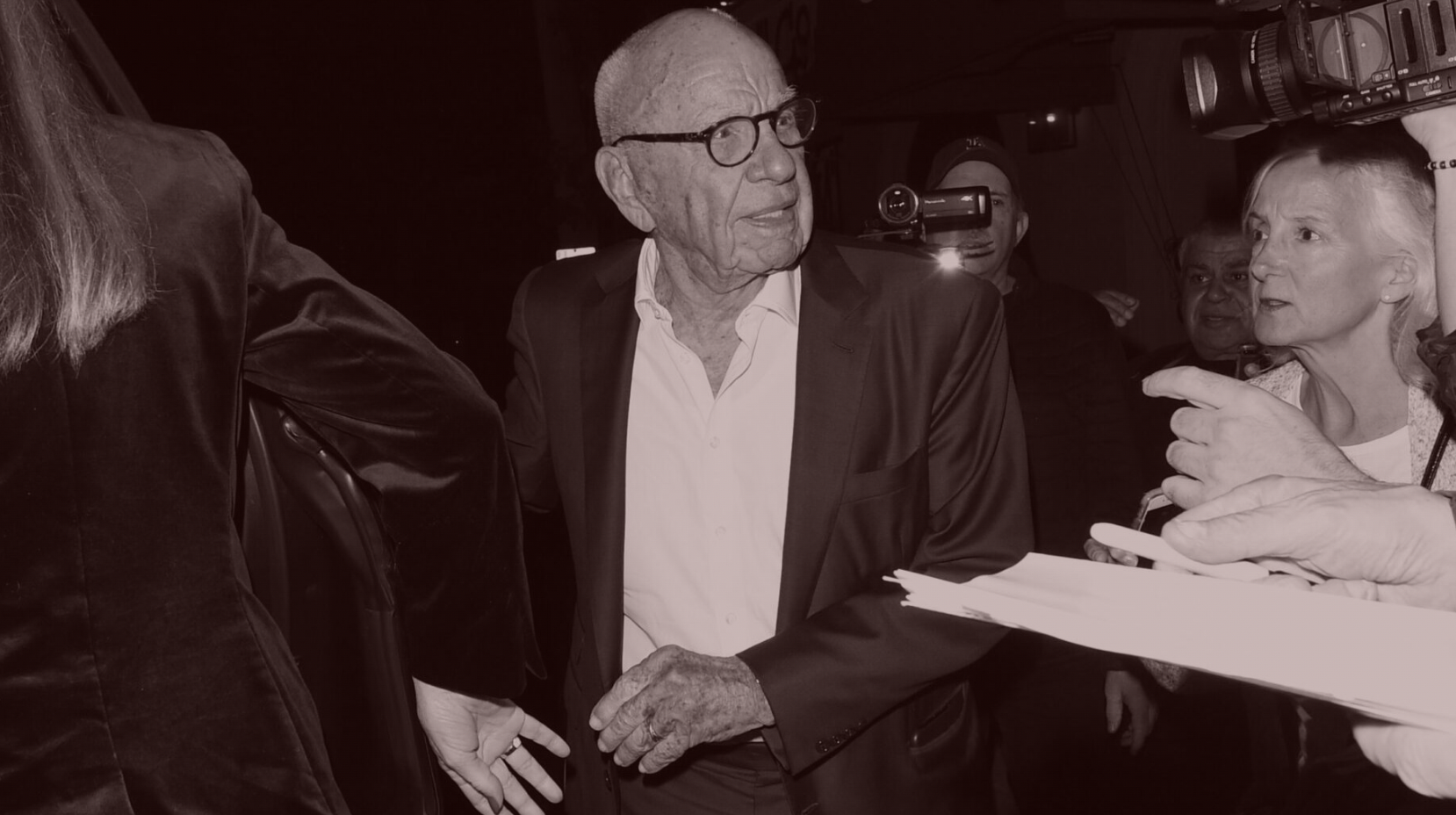
| Even with inflation, $787.5 million can buy a lot these days: a Caribbean island, Super Bowl tickets for 80,000 close friends, or even your way off the witness stand if you happen to be the head of a right-wing cable news network being sued over election conspiracies. But will Rupert Murdoch’s media company really be $787.5 million poorer after settling with Dominion? After inspecting the 8-K that Fox Corp. filed with the S.E.C., I suspect that Fox’s insurers may be picking up a good chunk of the tab.
Fox wouldn’t comment, of course, so I turned to the next best authority—Cameron Stracher, a savvy media law veteran who was formerly the general counsel at the National Enquirer’s parent company, which saw quite a few libel lawsuits in its heyday. Stracher, who now counsels the Daily Mail, among others, confirmed my hunch that Fox had an ulterior financial motivation to avoid making any kind of apology as part of the settlement. After all, most insurers explicitly carve out reimbursement when defamatory statements are published with actual malice. “Given that Fox did not admit that its actions were intentional—only that it recognized the judge’s finding that it made false statements, which could have been made negligently or inadvertently—I would think its insurers would have to cover the settlement,” Stracher told me.
There are almost certainly hundreds of millions of dollars riding on this technicality. As I previously noted, the fact that Fox’s parent company was dragged into the case could trigger Fox Corp.’s wrap-around umbrella policy, providing a lot more coverage than typical E&O (errors & omissions) insurance. Perhaps we’ll see separate litigation on this front soon. Insurers tend to fight rather than pay up when something novel happens. But the fact that Fox’s lawyers, led by Winston & Strawn, were able to negotiate a settlement in which Fox didn’t admit to any malicious conduct could provide the company with much more leverage.
And while Fox’s rivals may be reveling in the company’s misfortunes right now, they could soon be in for their own nasty surprise regarding who will bear the brunt of this settlement. As an insurance broker in the media business suggested to me, such a large settlement will almost certainly result in higher premiums across the industry—a sentiment that Stracher shared. “I certainly think it will raise everyone’s [insurance] rates, just as a hurricane or natural disaster will raise homeowner’s rates,” he noted. Not only will Fox Corp. be able to take a tax writeoff on the settlement, the insurance impact will be borne by MSNBC and CNN, too.
Nevertheless, Fox will certainly be paying a real price for this defamation battle that goes beyond the headline settlement figure. The deposition transcripts, text messages, and other fruits of discovery will now be public domain, continuing to embarrass the network and providing a roadmap for future plaintiffs looking to establish Fox’s actual malice. There will also be shareholder lawsuits against the Murdochs, for not preventing the reporting of falsehoods, and against the corporation at large, for downplaying the impact of this scandal. That could lead to further discovery and, eventually, demands for structural reforms. |
| Funding a Fox News Takedown? |
|
| Meanwhile, Fox also has to contend with Smartmatic—the other voting machine company suing for $2.7 billion in damages, an extraordinary number based on some cryptic calculation about lost business in foreign countries. Fox has long suspected that someone has been secretly bankrolling Smartmatic, and has spent months in court pushing for details about its litigation financing. Fox even convinced a New York judge to order Smartmatic to reveal details about its benefactor. But as it turns out, there’s no mystery patron, after all. On Friday, Smartmatic’s lawyer Erik Connolly told Reuters columnist Alison Frankel that Smartmatic had no third-party funder, meaning that Fox had been on a wild goose chase all along.
The absence of a hidden Murdoch foe probably increases the odds that Smartmatic will eventually settle, as Dominion did. In the latter case, Dominion actually turned down offers for litigation funding, according to my sources, and instead came to an arrangement where its Susman lawyers accepted a discounted rate in return for a share of the winnings. In the end, Dominion made the rational business decision to take $787.5 million without an apology. Smartmatic, of course, has to come down from a much higher damages target—$2.7 billion, compared to the $1.6 billion that Dominion teased—but in litigation, these figures tend to be nothing more than posturing anyway. As I told my partners Dylan Byers and Tina Nguyen last week, I’d be surprised if Smartmatic doesn’t settle. Really, the only thing that made me a little uncertain was the possibility of a patron pulling the strings.
When a third-party funder is in play, after all, it can change the calculus about whether the case gets to trial. That’s especially true when the litigation funder has a spiteful agenda. Just look at Peter Thiel, the libertarian billionaire who surreptitiously funded the Hulk Hogan suit against Gawker because he hated the gossip site and wanted to bulldoze it. (And he succeeded.) The same thing is now playing out on the left, where we just learned that Democratic mega-donor Reid Hoffman has been secretly helping to bring E. Jean Carroll’s sex abuse and defamation suit against Donald Trump to trial. Murdoch is fortunate not to be facing this type of motivated opponent. Had that been the case, $787.5 million wouldn’t set the market for a reprieve from a witness stand grilling; it might merely buy some time.
But this issue of mystery lawsuit backers raises a side issue. After the blockbuster Dominion settlement, I found myself wondering whether financially-minded litigation funders—those gunning for an investment return—might now be enticed to front money for more libel actions. So I reached out to Burford Capital C.E.O. Christopher Bogart—whose company has staked billions of dollars to prop up antitrust lawsuits, bankruptcy claims, and one massive case against Argentina—to find out whether the news had swayed his thinking at all.
Nope, Bogart said. “The size of the settlement says more about not wanting to go to trial than it does about actual damages,” he told me. The Fox News situation isn’t “reliably predictable and thus they don’t make for good investment opportunities,” he added. “We focus on cases where there is less corporate emotion and where the parties are just fighting over money.” |
| We Need to Talk About CNN |
|
| Finally, while Smartmatic v. Fox News is now front and center, the next big media libel trial might actually be Dr. Michael Black’s suit against CNN, over its reporting about infant deaths at St. Mary’s Medical Center. I wrote about the seven-year-old case last September, and it continues to fly way under the radar, despite the fact that the plaintiff is targeting nine-figure in damages and lucked out with Florida judge Richard Oftedal, who has arguably been just as hostile to CNN as Delaware Superior Court judge Eric Davis was to Fox. (Not coincidentally, a couple of the lawyers on Dominion’s legal team are also representing Black.)
On a summary judgment motion, CNN is making one last push to avoid a trial over its reporting, on Anderson Cooper’s show, that claimed the hospital’s heart surgery mortality rate was “three times the national average”—a figure that Black insists is terribly misleading because it doesn’t adjust for the risk in the procedures performed. CNN is sticking to its guns, telling Oftedal that “babies were dying at an alarming rate, and St. Mary’s was trying to keep all of that secret,” and “try as he might, Dr. Black cannot get around that basic and damning truth.” CNN insists that its statistical methodology and opinionated analysis aren’t actionable, but the judge has rejected those arguments before so there’s not much reason to expect better fortunes CNN now. That said, the network is concurrently before a Florida appeals court to review the judge’s decision last year to allow Black to seek punitive damages. Maybe Chris Licht and the network’s parentco, Warner Bros. Discovery, will get lucky.
It’s possible this could go to trial before the year is up, but given the plodding pace of litigation in Florida, which rivals New York’s courts in their tortoise-like pace, I wouldn’t bet my insurer’s money nor my secret financier’s cash on the exact timing. |
|
|
| That’s it for today. The week ahead figures to be a busy one. As mentioned, Carroll v. Trump will be going to trial. A couple doors down in that same Manhattan courtroom, Ed Sheeran faces his own jury over copyright claims related to “Thinking Out Loud.” Over on the west coast, the retrial against Danny Masterson over alleged rapes is underway. And in D.C., we may get a verdict in the criminal case against Fugees rapper Pras Michel, one of The Rainmaker’s most popular litigants, accused of conspiring in a foreign influence campaign.
Meanwhile, I’ll be keenly watching Hollywood as the entertainment industry attempts to avert a writers strike. With a week to go until the expiration of the Writers Guild of America’s agreement with producers, the buzz on these negotiations hasn’t been positive. Will a miracle happen? Email me your thoughts and tips at eriq@puck.news. |
|
|
|
| FOUR STORIES WE’RE TALKING ABOUT |
 |
| Tom Cruise Index |
| A list of the movie stars audiences crave most. |
| MATTHEW BELLONI |
|
 |
|
 |
| Pity City Postcards |
| Springtime for I.P.O.s, jitters in P.E. land, and an unfortunate rant. |
| WILLIAM D. COHAN |
|
 |
| Bidenland Travelogues |
| A Biden inner circle denizen on the re-election, Hunter, DiFi, and more. |
| TARA PALMERI |
|
|
|
|
|
 |
|
|
|
Need help? Review our FAQs
page or contact
us for assistance. For brand partnerships, email ads@puck.news.
|
|
|
|
Puck is published by Heat Media LLC. 227 W 17th St New York, NY 10011.
|
|
|
|