 |
|
Happy Monday, I’m Eriq Gardner.
|
|
Welcome back to The Rainmaker, a private email about how those in power are navigating the legal realm. (Was this email forwarded to you? Click this link to subscribe.)
In this week’s edition, A.I. is coming for lawyers. I’ll detail a new case that’s full of surprises. Also, the media trial of the century, a possible copyright reckoning for a big-name star, and defamation by meme.
But first…
|
|
|
- Why did Delaware Superior Court judge Eric Davis delay Dominion v. Fox? It’s likely related to his order last week to reopen discovery after Fox was scolded for withholding evidence. Also, shortly before the announced delay, Fox filed a motion asking for clarification about what it could and couldn’t argue at trial. In short, everyone involved needed more time. While speculation about the unexplained holdup has centered on settlement, the parties are still well apart, I hear, and lawyers are fully expecting to move forward with opening statements tomorrow morning. Meanwhile, Wilmington has been overtaken by media reporters—The Washington Post alone has three dozen people working on the story—who are now just interviewing each other and planning on besieging the local tavern at happy hour.
- Meanwhile, the Dominion case seems pretty straightforward compared to the spectacular, $100 million libel suit recently brought by chess grandmaster Hans Niemann against world champion Magnus Carlsen. I’ll spare you the details, but the case explores whether a defamation claim has been properly stated over a meme. Specifically, one that repurposes a scene from The Avengers. Would a reasonable viewer see Niemann as Thanos, a villain that supposedly cheats? Here’s the motion to dismiss.
- Perhaps the media could be a tad more inquisitive about why superstar singer-songwriter Ed Sheeran is really in New York hanging out at a “lawyers’ pub” and pulling stunts in the subway where there just so happen to be multiple cameras around. In fact, Sheeran is in NYC to face a jury on April 24 on claims that he infringed the copyright to Marvin Gaye’s “Let’s Get It On” (co-written by the plaintiff’s father). I’m not saying the tabloids need to provide a deep dive on copyright law, but when marveling at the singer’s sudden local presence, let’s maybe not say, “Whatever controversy finds Ed tends to be the good kind.” What’s the next headline, that Sheeran turned up at a Marvin Gaye listening party?
|
|
|
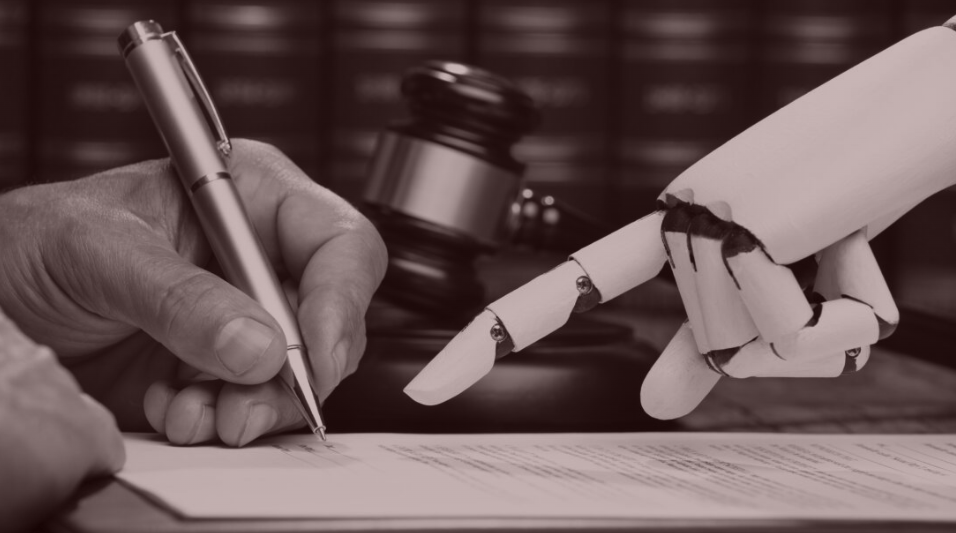
| Earlier this year, amid the explosion of excitement surrounding ChatGPT, an intriguing A.I. startup called DoNotPay caught my eye. Founder Joshua Browder announced that he had created “the world’s first robot lawyer,” which would soon debut in court, whispering instructions through Bluetooth-connected AirPods to help users beat parking tickets. Then, suddenly, the experiment was canceled. Blaming “threats from State Bar prosecutors,” Browder pivoted to building a web plugin to help file complaints over everything from robocalls to unauthorized data collection.
DoNotPay has since been hit with lawsuits that accuse Browder of being an A.I.-hyping Elizabeth Holmes whose technology is as phony as Theranos. While one New York judge refused to order Browder to immediately hand over his code to investigators, a federal case is now pending in San Francisco that claims DoNotPay is deceptively holding itself out as a licensed attorney. This putative consumer class action is led by top plaintiffs lawyer Jay Edelson. “DoNotPay denies the false allegations,” said a spokesperson for Browder, who has hired the prestigious tech firm Wilson Sonsini. “It is unsurprising that a lawyer who has made hundreds of millions is suing an A.I. service that costs $18 for ‘unauthorized practice of law.’”
Indeed, it’s easy to wonder, as I initially did, whether this is a classic case of attorneys protecting their turf. If so, the DoNotPay suit represents an early taste of what could eventually become an avalanche of litigation from triggered doctors, dentists, even truck drivers, using occupational licensing requirements as a way to hold back the bots from taking their jobs.
But after talking with Edelson, I began to wonder if there’s something more going on here. Edelson, who has won billions of dollars in class actions against the likes of Facebook, Apple, Google, and Amazon over a multi-decade career, has a deeper knowledge than most about the intersection of technology and the law. And his views on the future of A.I. in the legal world were not at all what I expected to hear. |
|
|
| Every job, in every sector, will be impacted by A.I. But the law, with high hourly rates for often straightforward and replicable tasks, seems very vulnerable. Perhaps as a result, new technologies have faced serious resistance. Just look at LegalZoom, the online tech services company that launched in 2001 and was immediately besieged with lawsuits. In reality, the website didn’t do much more than treat legal documents as if they were Mad Libs, with boilerplate wills and trademark applications. Nevertheless, many state bars dragged LegalZoom into court for the alleged unauthorized practice of law.
Now that ChatGPT-4 has passed the bar exam, is history about to repeat itself? Maybe. Edelson told me that he’s impressed by the promise of technologies like ChatGPT (and this week’s rage, AutoGPT), and believes that A.I. will no doubt play an important role in the legal community, although even the most advanced bot isn’t ready for the courtroom just yet. “It will reduce the need for the jobs that lawyers are doing but in a good way,” he said. “The way I see how the legal world will soon work is that the lawyer will be reviewing the work of the A.I. to make sure everything is right. Writing a will, for example, is pretty boilerplate. A.I. is decently capable at doing the first draft.”
Edelson’s problem with DoNotPay is more nuanced. He professes to be worried that Browder’s technology isn’t up to snuff and will give A.I. a bad rap. “This will backfire in ways [Browder] doesn’t understand,” said Edelson, mentioning the possibility, for instance, that someone may use the system to file a lawsuit and then get sanctioned by a judge for not properly following up. “People will be trained to understand that A.I. is junk.”
I had a chat with Browder and gave him a chance to defend the technology, but he didn’t want to speak on the record. Nevertheless, the British-born 26-year-old previously told other news outlets how, as an undergraduate at Stanford, he began writing his program after speaking to traffic lawyers to identify the most common reasons that parking tickets get overturned. He then dropped out of school and raised millions from investors like Andreessen Horowitz, and his company has touted successfully challenging at least 175,000 parking tickets and saving $5 million in fines. On social media, he’s boasted of also helping to initiate more than a 1,000 small claim lawsuits against the bankrupt crypto bank Celsius Network. Notably, he’s spoken at Stanford Law about whether robo-lawyers are delivering legal advice.
Edelson isn’t impressed. He jokes about how he’ll soon ask a judge to enjoin further tech development from Stanford drop-outs, a list that also includes Elon Musk and the aforementioned Holmes. |
|
|
| I might have harbored some skepticism about the sincerity of Edelson’s concerns. But then he told me about “Chattie,” the artificial intelligence system that was specially designed for Edelson’s practice. Edelson PC is an unusually forward-thinking firm, with a reputation for hip offices (e.g. indoor volleyball court and golf simulators) and even hipper cases. These days, when one of the firm’s few dozen lawyers takes on the tech industry—for example, a right of publicity class action filed earlier this month in California (read here), targeting a deepfake app that allows users to swap faces with actors in popular movies and TV shows—they can use Chattie, their own in-house large language model, to deliver insights about relevant case law. Chattie, which has its own page on the Edelson PC website and has been given the official title of Chief Happiness Officer, “assures everyone that it has no intention of trying to take over the world, Matrix-style.”
Cute or creepy, Chattie is evidence that some lawyers are at least beginning to incorporate A.I. into their practices, despite ChatGPT’s propensity for spitting out fake facts about made-up cases. Indeed, Edelson told me that he’s already used his A.I. for drafting demand letters, plus other tasks. “I’ll say to Chattie, ‘Give me 10 different options’ to do something,” he said.
His comments reflect a fundamental difference in how Edelson and Browder are treating A.I. One sees it as a tool for licensed attorneys to make themselves more efficient while the other treats it as a potential legal service provider itself, or at least, an aid for those representing themselves in court. How long will the distinction hold?
It’s also pretty ironic, of course, that in this potentially important case over the unauthorized practice of law, it’s the real lawyer who’s turning to A.I. for assistance, while the robo-lawyer and its creator are leaning on a white shoe law firm, Wilson Sonsini, for salvation (from unspecified monetary damages). Even ChatGPT couldn’t have made up a more fitting fate. Trust me. I asked.
And now for one final note… |
|
|
| Sean Penn thought he had victory a few weeks ago at the National Labor Relations Board. But his attorney Mathew Rosengart is now convinced that Biden appointees at the federal agency are out to stick it to his star client—even if they have to rig a win. “This case has become a case study of an overzealous agency run amok,” Rosengart told me.
The dispute traces to the early days of the Covid pandemic, when Penn’s charitable organization, CORE, began helping people in disadvantaged communities respond to the health crisis. In July 2020, his group turned Dodger Stadium into the largest testing site in the nation, and a few months later, at Los Angeles mayor Eric Garcetti’s direction, it became a mass vaccination site. That’s when a New York Times reporter visited, prompting a couple anonymous readers identifying as CORE staffers to leave comments on the news site about “working 18 hour days, 6 days a week” with “a shipping container on site that is a designated space for overworked staff to go cry in.”
Soon, Penn emailed staff. It was a 2,000-plus word missive that stood up for Garcetti and talked about what was at stake, but the N.L.R.B’s. focus has become the actor’s pointed note that “any among us who don’t find themselves built in this way for the mission at hand, any of us who don’t recognize our inherent duty to prop each other up, any of us who might find themselves predisposed to a culture of complaint, have a much simpler avenue than broad-based cyber whining. It’s called quitting.”
Was Penn flouting labor law by implicitly threatening employees for concerted activity to improve the workplace? This question treads on a hot legal issue for Biden’s N.L.R.B. appointees, who have been attempting to push the law toward protecting organizing where the “impression of a reasonable employee” is more important than an employer’s intent or free speech. At a hearing a few weeks ago, however, Administrative Law Judge Lisa Ross stated her conclusion that Penn’s letter shouldn’t be interpreted as a threat but rather a “rallying cry for employees to focus on the larger mission of CORE, and if they cannot handle that, to voluntarily withdraw from [Penn’s] mission.”
Before Ross has even issued a written opinion, the N.L.R.B.’s general counsel is seeking an appeal, which has got Rosengart hot under the collar. In an April 12 motion to strike (read here), he lays into “a clear abuse of prosecutorial discretion” and “abusive conduct” at the government agency that he alleges includes an improper attempt to get Ross reassigned off this case. The general counsel’s office responds that the charge is “baseless.”
The appeal may have been slightly premature, but if or when it does move forward, the matter will head to higher-ups within the N.L.R.B. Given that the agency has been swinging in a pro-worker direction under Biden, there’s a pretty good chance that Ross’s decision gets overturned before heading to a federal appellate court.
Rosengart, probably best known these days for extricating Britney Spears from her conservatorship, says he’s ready. Penn has instructed him to refuse any settlement. “And if that means taking the case all the way to the Supreme Court, we would relish it,” he added.
If you’re not a bot and got something to say, email me at eriq@puck.news. |
|
|
|
| FOUR STORIES WE’RE TALKING ABOUT |
 |
|
 |
| Plepler’s Prophecy |
| News and notes from private equity, Zazworld, and media. |
| WILLIAM D. COHAN |
|
 |
|
 |
|
|
|
|
|
 |
|
|
|
Need help? Review our FAQs
page or contact
us for assistance. For brand partnerships, email ads@puck.news.
|
|
|
|
Puck is published by Heat Media LLC. 227 W 17th St New York, NY 10011.
|
|
|
|