 |
|
Happy Monday, I’m Eriq Gardner.
|
|
Welcome back to The Rainmaker, a private email about money, power, fame, and, most of all, the law. Today I’m breaking down the latest drama surrounding Hunter Biden’s laptop. Trust me, the spectacle is only just beginning.
Also this week: Sam Bankman-Fried, Donald Trump, Lina Khan, Ari Emanuel, Russell Brand, George Soros, and important court rulings on A.I. and diversity. Let’s dive in…
|
|
|
- S.B.F. Hiccups: The trial of Sam Bankman-Fried, which begins tomorrow, seems likely to be somewhat chaotic, given Judge Lewis Kaplan’s not entirely coherent pre-trial decisions. Take his Sunday ruling regarding an advice-of-counsel defense, which I detailed a couple weeks ago. Since Bankman-Fried hasn’t spelled out his arguments or offered evidence, Kaplan demanded advance notice for any attempt to blame FTX’s former lawyers for his alleged misdeeds. This seems like a recipe for trial interruptions. We’ll see, but I expect there will be more than a few issues necessitating mid-trial briefing outside of the jury’s presence.
- Trump in New York: Meanwhile, just a couple blocks away, the trial over Donald Trump’s business empire carries a whiff of anticlimax. Last week, Justice Arthur Engoron handed a significant victory to New York Attorney General Letitia James when he agreed that Trump had fraudulently inflated the value of his assets. Although the trial ostensibly revolves around the penalties, Engoron has already revoked Trump’s business license, and it’d be somewhat surprising if the trial doesn’t conclude with him giving James the rest of her wish list, including $250 million. Perhaps the most intriguing aspect is Trump’s appearance. Will he testify? Hold a political rally on the courtroom steps? He’s certainly not showing up for shits and giggles.
|
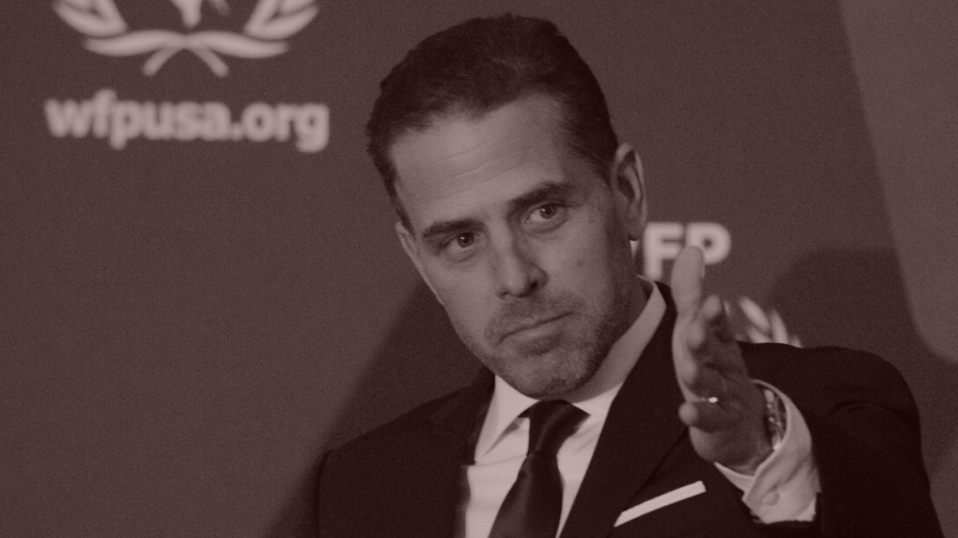 |
| The Hunter Biden Revenge Tour |
| Inside a new set of lawsuits that the president’s troubled son is waging against his nemeses—Rudy, a former Trump White House official, etcetera—all in an attempt to win back his good name. |
|
|
|
| The saga of Hunter Biden’s laptop is a perfect Rorschach test for America’s divided politics. For several years, half the country has been captivated by its salacious contents, while the other half cringes whenever the topic arises, or has ignored it altogether. Personally, I’ve always leaned to the latter camp—that is, until just this past week, when the president’s son led me down the proverbial rabbit hole.
The drama began in 2019 when Hunter failed to retrieve his laptop from a Delaware repair shop. Mac Isaac, the shop’s owner, began snooping around the device as he watched Fox News rail about Hunter’s shady dealings in Ukraine. Amazed by his findings, Isaac reached out to the F.B.I., then got in contact with various Congressional staffers, and finally—and most explosively—alerted the office of Rudy Giuliani, then representing Donald Trump. As copies of the hard drive started circulating—Steve Bannon alerted The New York Post—the laptop’s secrets began to seep into public: correspondence related to Hunter’s foreign business dealings, risqué sex and drug videos, bank statements, psychiatric reports, etcetera.
Four years and one impeachment inquiry later, we’re only now getting to the courtroom showdowns over what happened. Earlier this year, Isaac sued Biden, CNN, Politico, and Congressman Adam Schiff for defaming him when they insinuated that the “laptop from hell,” as the New York Post put it, was part of a Russian disinformation campaign. A few months later, Hunter countersued.
In short, Isaac’s lawyers believe he was well within his legal rights to inspect the laptop and disseminate its contents thanks to the repair authorization form that Hunter signed, which stipulated that the equipment would be considered “abandoned” after a 90-day notification period. Hunter’s team argues that Delaware law necessitates a court application to seize abandoned property and that Isaac invaded his privacy.
Anyway, that’s not the legal dispute that drew me in. Instead, my interest was piqued by a new set of lawsuits from Hunter, who is accusing Guiliani and his lawyer, Davidoff Hutcher partner Robert Costello, as well as former Trump White House staffer Garrett Ziegler, of “hacking into, tampering with, manipulating, copying, disseminating, and generally obsessing over data” from his devices. (Separately, Hunter has filed a lawsuit in D.C. against the Internal Revenue Service after tax agents began discussing his confidential information.)
The complaints, filed last week, raise provocative questions about the scope of the Computer Abuse and Fraud Act, which Congress passed in the 1980s following the release of the movie Wargames. (Lawmakers were haunted by visions of teenage hackers leading us into nuclear war…) After all, while this federal statute has occasionally been tested, there’s still uncertainty over what constitutes an illegal computer intrusion—and it’s fair to say that the courts have never seen anything like this Hunter laptop scandal.
For starters, most of the individuals trafficking in Hunter’s old sexts didn’t actually break into his laptop. Not precisely. Instead, they were sent copies of the data, and told they could look, even if that authorization didn’t come from its rightful owner. And while the complaint alleges that Giuliani spent many hours hacking and manipulating data before going on podcasts to brag about the files in his possession, does anyone really believe he’s some sort of cyber virtuoso? Maybe they all engaged in a conspiracy, but this case hardly seems like a slam-dunk. |
|
|
| The timing of Hunter’s legal revenge tour is head-scratching. The president’s son is facing felony gun charges, an ongoing tax investigation, and he’s under the spotlight as Republicans attempt to impeach his father in the middle of a high-stakes election. Is it truly wise for Hunter to expose himself to civil discovery in these circumstances?
But Hunter and his team—legal luminary Abbe Lowell, former Clinton operative David Brock, Hollywood lawyer and close advisor Kevin Morris, and former White House aide Michael LaRosa, among others—seem to believe that it’s high time to push back against the deluge of negative coverage. And they’re betting that he can be vindicated in the legal arena, particularly by focusing on the manipulation of laptop data to remind folks not to trust everything they hear on Fox News. (I remain skeptical that this is a prudent course of action. Again, discovery…)
Lowell, co-chair of the white collar practice at Winston & Strawn, is the go-to lawyer for Washington figures in trouble. His client list is a hall of fame of political scandals, including John Edwards, Robert Menendez, Jack Abramoff, Jared Kushner, and even a return engagement for Menendez this past week. Lowell’s tenacity and ability to navigate both sides of the political aisle have been on display since his days as chief minority counsel to the House of Representatives during the impeachment of Bill Clinton.
Of course, Lowell knows better than most how difficult it is to pursue hacking in court. A few years back, he represented Jamal Benomar, a Moroccan diplomat who Trump donor and lobbyist Elliott Broidy accused of being the “mastermind” of a Qatari plot to hack and leak his emails to various media outlets. In fact, I distinctly recall being one of the reporters who were offered these documents exposing how Broidy and his associates—including Nickie Lum Davis, whom Lowell also represented—were embroiled in a multi-million dollar effort to influence the U.S. Department of Justice to drop cases related to the misappropriation of Malaysia’s 1MDB public fund.
Lowell got Benomar out of the jam by asserting diplomatic immunity. The state of Qatar was itself deemed to have sovereign immunity from Broidy’s civil litigation. Meanwhile, in 2020, Broidy pleaded guilty to a conspiracy to violate the Foreign Agents Registration Act. (Broidy was a casualty, of sorts, of the 2017 crisis between Qatar and its neighbors, who were blockading Qatar with Trump’s support. On Trump’s last day in office, Broidy, whose business had $200 million in contracts to help the U.A.E., received a presidential pardon.)
Since then, however, Broidy has embarked on a vengeance tour akin to Hunter Biden’s, tracking down the American public relations consultants he alleges helped the Qataris pull off their hack-and-smear campaign. And Lowell’s work on the Broidy case is also back in the news. Last month, Broidy settled with one of those consultants, Joey Allaham, who then disclosed to Broidy that the Qataris, with Lowell’s assistance, employed subterfuge to keep evidence under wraps. For example, Lowell apparently once had the Qataris cover Allaham’s legal expenses so he wouldn’t talk, even though Allaham’s former attorney was concerned it could look like bribery. Broidy is now seizing on Lowell’s old emails and pushing for a forensic examination to determine whether his legal targets evaded discovery rules. That’s led to new battles over sovereign immunity and attorney-client privilege.
Hunter Biden can only hope his own legal journey will be smoother than Broidy’s. While there are no sovereign immunity issues to contend with in his own case, it’s safe to say that targeting individuals like the embattled and unpredictable Giuliani won’t make for any straightforward endeavor. Moreover, with all sorts of side issues looming over Hunter, Lowell may have to maneuver through underhanded attempts to use these cases for side projects. It could get complicated. As the saying goes, what goes around comes around. |
|
|
- Can an Atlanta-based V.C. fund continue to operate a grant program exclusively for companies owned by Black women? The question arises due to the Supreme Court recently halting the use of race as a decision factor in university admissions, but the answer may hinge on whether charitable giving is deemed to be an expressive activity that’s protected by the First Amendment. See a district court’s opinion last week, which was then followed by an 11th Circuit order that temporarily blocks the V.C. fund from closing the application windows on grants.
- While the spotlight has been on authors, artists, and other creators suing over the use of their works to “train” A.I. systems, it appears that the first trial in this arena will revolve around a dispute involving an A.l. startup that scraped court opinion summaries from Westlaw. A Delaware judge has just ruled that a jury must address issues such as substantial similarity and fair use. You can find the full opinion here.
- Lina Khan is like Phillies slugger Kyle Schwarber. The batting average isn’t pretty and there’s quite a lot of strikeouts. But taking big swings can also lead to an impressive slugging percentage. If she leads the Federal Trade Commission to a win against Amazon, that’d be a grand slam home run for her. Read the complaint.
- At a California appeals court, Endeavor suffered a setback with an insurer regarding losses stemming from the Covid-19 pandemic. However, it’s worth noting there’s an issue related to “direct physical loss or damage to property” that’s currently awaiting resolution by the Supreme Court in a separate dispute. In the meantime, C.E.O. Ari Emanuel will read in the appellate opinion how he could have hired cleaners to easily wipe away the virus from the surfaces of his company’s offices.
- The attorney general in the U.K. has issued a warning to media outlets that publishing material about Russell Brand, the actor-comedian accused of sexual misconduct, could amount to contempt of court. Pretty shocking act of censorship even from a regime like the U.K. known to not always tolerate free expression.
- We’ve reached the stage of the Smartmatic libel lawsuit where Fox News looks to compel discovery from George Soros. While the arguments are largely secret, this looks to be tied to whether the billionaire is funding the case.
|
|
|
| That’s it for today. As always, I love hearing feedback so don’t be shy. Your replies go directly to my inbox. |
|
|
|
| FOUR STORIES WE’RE TALKING ABOUT |
|
|
|
|
|
 |
|
|
|
Need help? Review our FAQs
page or contact
us for assistance. For brand partnerships, email ads@puck.news.
|
|
You received this email because you signed up to receive emails from Puck, or as part of your Puck account associated with . To stop receiving this newsletter and/or manage all your email preferences, click here.
|
|
Puck is published by Heat Media LLC. 227 W 17th St New York, NY 10011.
|
|
|
|