Welcome to The Varsity, our thrice-weekly private email on the titans who run the sports media industrial complex. I’m making a pilgrimage to the new pope’s alma mater tomorrow morning to move my daughter back for the summer. There’s a ton of excitement on the Villanova campus today about Leo XIV. I wonder how much tuition is gonna go up now…
I’m also headed up to New York early next week for the network upfronts, where I hope to see many of you in your springtime best. The main storyline I’ll be following: How are recession fears affecting advertisers who have spent years falling over themselves to buy into sports? Make sure you throw some spare change into Marchand’s guitar case in the lobby. And speaking of the upfronts, today my partner Dylan Byers has a piece on what to expect from ESPN and NBCU.
In the meantime, I’m hearing murmurs that conversations have advanced regarding the future of NBA TV. NBA execs insist that a final decision hasn’t been made yet, but the idea of ending Warner Bros. Discovery’s co-management is still on the table. If the NBA elects to take the cable channel in-house, it would be a stunning development. (For the record, WBD no longer oversees other NBA digital properties like League Pass or the app.) More soon…
🚨 Pod alert: Ahead of the upfronts, one of the most prolific sports buyers in the ad business will join The Varsity this Sunday to preview what we should all expect from the selling season. Jeremy Carey is the chief investment officer at Optimum Sports, a division of the advertising behemoth Omnicom Group, and our conversation will post just before the upfronts commence in earnest. Meanwhile, make sure you listen to my recent conversation with ESPN’s MLB insider Jeff Passan, who offered a clear-eyed view of the storm clouds hanging over the league as it prepares for labor and media negotiations.
Reminder: Did you see Julia Alexander’s terrific piece on the future of skinny bundles in The Varsity yesterday? Her brilliant, data-driven analysis is only available on Puck’s Inner Circle tier. To access all of Julia’s work for The Varsity, click here to upgrade. If you don’t, the machines will replace you!
|
Player of the Week: Brett Yormark
|
|
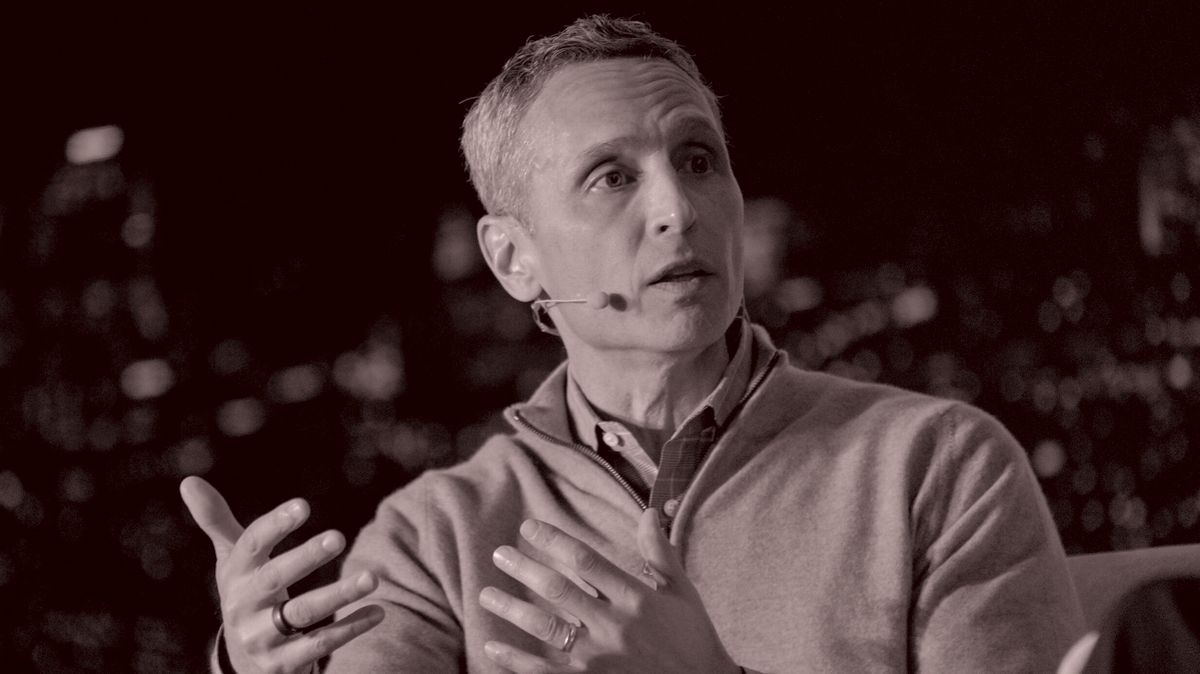
Conference commissioners typically rise through the college ranks, so Brett Yormark was quite an out-of-the-box pick when the Big 12 appointed him to the top job in 2022. After all, Yormark was a former Roc Nation and Brooklyn Sports & Entertainment executive. But he immediately made moves to solidify the conference following the departure of Texas and Oklahoma to the SEC. Yormark also beat the Pac-12 to an existential media deal, and then took four of the Pac-12’s teams. The Big 12 rewarded Yormark this week with a three-year extension, which keeps him in the commissioner’s chair through 2030.
|
Down to the J.V.: Mike Whan
|
|
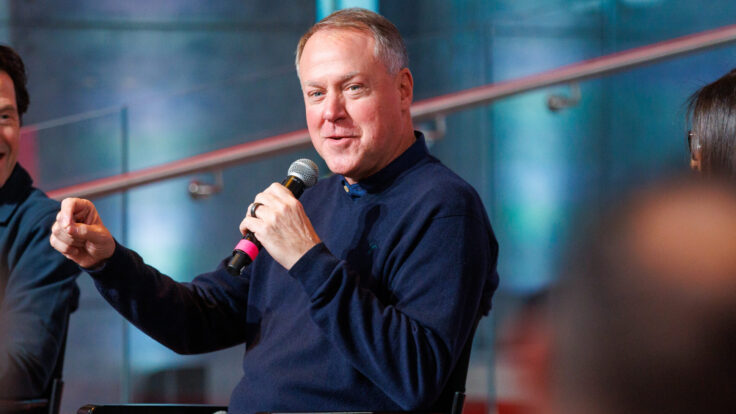
It’s still early, but the USGA is running into a tighter market for its events—a problem that C.E.O. Mike Whan will soon countenance as he prepares for the possibility of life after the current NBC deal, which expires in 2026. Given the implosion of the cable business, it’s hard to imagine the USGA would relegate their marquee events—the men’s and women’s U.S. Opens—to the cable bundle. The U.S. Open has always felt perfectly at home on broadcast.
But the networks have gotten the yips lately: Fox couldn’t make the financials work when it carried USGA events; ABC doesn’t have golf; CBS already has a lot of PGA Tour golf events and doesn’t need it; and the USGA wasn’t able to close a deal with NBC within the exclusive negotiating window—though the two sides are obviously still talking. That leaves the streamers, which have the money, but probably not the appetite. There’s still more than a year left before the contract expires, so the organization has time to figure something out. But right now, the market looks like the 17th at Sawgrass.
|
|
|
|
A MESSAGE FROM OUR SPONSOR
|
The game will never be the same. The luxurious, powerful, and fully electric BMW i7. Learn more at
BMWUSA.com
|
|
|
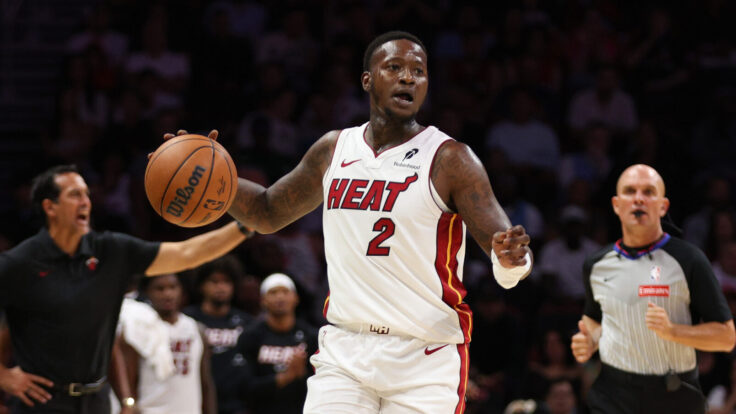
- Kushner buys Heat stake: I’m hearing that Thrive Capital’s Josh Kushner quietly bought a small stake in the Miami Heat late last year. Back in 2019, the venture capital boychik—and husband to Karlie Kloss… and younger brother of Jared—bought a 2.5 percent stake in the Memphis Grizzlies, which he sold to buy less than 5 percent of the Heat. Of course, Carnival cruise ship mogul Micky Arison bought the Heat back in 1995 for around $70 million, and has maintained a relatively small ownership structure. That’s what makes Kushner’s investment notable. Kushner, only 39, owns a home in Miami.
- WBD vs. Disney: It seems like Disney and Warner Bros. Discovery have divergent sports strategies, judging by their earnings calls this week. Disney, with its stagnant $191 billion market cap, is going all in—marching forward with its fall launch of an ESPN-branded direct-to-consumer product (with a name to be unveiled next week), a fusillade of rights packages, and the double-barrelled deployment of Fubo and Hulu + Live TV. Meanwhile, David Zaslav said on WBD’s earnings call that his company’s future is in owning I.P. in entertainment, like Superman, Batman, and Game of Thrones. This sounds commensurate with a company that has a $22 billion market cap—and, yes, a $60 billion enterprise value when you include the $38 billion in debt that Zaz and his C.F.O. Gunnar Wiedenfels continue to service—and acquired the media rights to the French Open and some Mountain West football games after losing the NBA.I called up MoffettNathanson’s Robert Fishman to make sense of this dichotomy. “The future sports strategy from each company has, in part, been dictated by their financial flexibility,” he said. “We saw that play out in how they each approached the NBA rights renewal. ESPN’s renewal of the NBA—along with its portfolio of other premium sports rights assets in the U.S.—will allow Disney to lean into sports as a differentiating asset with their streaming strategy. WBD is looking to use their own international and regional sports rights more as a differentiator. More broadly, we’re seeing what we’ve been talking about for a long time—the separation of U.S. sports rights between the must-haves versus the nice-to-haves.”
- A WNBA lawsuit: Back in October, as you recall, Dearica Hamby filed a discrimination lawsuit against the WNBA and her former team, the Las Vegas Aces, saying that she had been traded—and excluded from a White House championship ceremony—because of her pregnancy. This week, a federal judge dismissed Hamby’s lawsuit against the WNBA, but left a few parts of her suit against the Aces intact. “This might be the first time a claim over a trade has been advanced like this,” Puck’s resident legal expert, Eriq Gardner, told me. “The judge also allowed Hamby to move forward on her retaliation claims, based on the fact that she wasn’t invited with her teammates to the White House, and how staff was prohibited from showing her daughter on the video screens at team games.”
- MLB’s looming lockout: Major League Baseball’s labor deal ends after next season, at which point a work stoppage seems virtually certain, as ESPN’s MLB insider Jeff Passan told me on this week’s Varsity podcast. The biggest issue will be whether MLB can somehow convince players to accept a salary cap, which will allow smaller-market teams to adequately compete with the free-spending Dodgers, Mets, and Yankees.Baseball has famously avoided the cap, so I was surprised to hear Jeff’s perspective. “It’s part of the conversation right now in a way that it has not been in past labor negotiations that I’ve covered,” he told me. “Now, you very clearly can win without having the sort of payroll that the Dodgers do. But that doesn’t matter when the Dodgers are going out winning championships. That is going to be the ultimate litmus test of this season. If the Dodgers win the championship, and become the first team since the 2000 Yankees to do it in consecutive seasons, it’s going to be a real problem for MLB.”
That said, Passan made a bold assertion. The only way to get to a cap would be to truly nuke a season, 1994-style. And if the owners stand firm in pushing for a cap, “baseball will not be played in 2027,” he told me. “I think it’s as simple as that. … I don’t think the players are going to bend on this. They will bend in certain areas, but when it comes to a salary cap, there’s just too much history involved, and, frankly, too much ego involved, for anyone on the player side to say, This is something we’re gonna do—even if a system like that would potentially benefit them.”
- People news: Dan Reed, who spent a decade at the NBA before leaving to become the C.O.O. of Meta’s Reality Labs in 2014, announced yesterday that he would be leaving the social media giant to “reconnect with friends and family, and recharge.” He also highlighted the growth of Instagram and Facebook “into two of the world’s most important sports platforms.”Business Insider described Reed’s departure as “another leadership change at a time when the division faces mounting internal and external pressure. … Reality Labs remains a financial sinkhole for Meta. The division, which includes the Quest headsets, Horizon Worlds, and Meta’s Ray-Ban smart glasses has racked up more than $60 billion in losses since 2020.”
|
|
And now, here’s Dylan on the upfronts…
|
|
|
|
At next week’s upfronts, NBCU’s Mark Lazarus will be selling the synergistic post-linear potential of Versant, formerly known as SpinCo, while ESPN prepares Flagship for its maiden voyage.
|
|
|
|
Next week, the nation’s largest TV networks and streamers will treat their advertising partners to a showcase of their forthcoming content slates: new shows, returning shows, sporting events, etcetera. The upfronts—a once-opulent, multiday wine-and-dine affair across greater Midtown, from Radio City Music Hall and Madison Square Garden to the Beacon Theatre and Hammerstein Ballroom—has become a bit more subdued in the post-Covid late-stage linear era. But it remains a cornerstone of the business: a tussle for advertising commitments fought with sizzle reels and diminishing expense accounts.
Without being too hyperbolic, this year’s event comes at a rather obvious inflection point for the industry. Yes, the TV business has been contracting for decades now—indeed, Jimmy Kimmel has been doing some version of his ratings-go-down, prices-go-up joke at the Disney upfront since 2010—but 2025 is indisputably the year when the gradual decline truly gave way to free fall. Brian Roberts is spinning off the NBCUniversal cable assets, ex-Bravo; David Zaslav has given Warner Bros. Discovery optionality to do the same; Shari is trying to sell Paramount (if she can assuage Trump and Carr); Iger is moving ESPN’s focus to streaming. So on, so forth.
In that regard, there have been a few notable developments in the run-up to the forthcoming showcases. This week, NBCU’s Mark Lazarus unveiled the official name for SpinCo—Versant—while hinting at an M&A strategy that, contrary to expectations, will not focus on adding more cable networks to the portfolio. Laz, the soon-to-be Versant C.E.O., instead cited Golf Channel’s acquisition of tee-time reservation app GolfNow as a model for future acquisitions. In an interview with CNBC, he suggested that the financial news network might acquire personal finance or fintech platforms to boost its digital offering. For MSNBC, he suggested acquiring podcasts and creating a podcast network as a separate business unit from the linear network. Meanwhile, each brand will be responsible for its own streaming strategy.
Some Versant brands are better positioned for digital growth than others, as I noted last month. CNBC is far from realizing the full potential of its digital business, whereas MSNBC has a much less obvious path to post-linear relevance (respectfully, a liberal podcast network won’t get them there). Either way, it’s impossible to look at Versant’s smattering of stand-alone brands, all struggling to determine their own piecemeal digital diversification strategies, and not feel an even stronger conviction that these assets will eventually be sold off one by one, or handed over to a private equity firm like Apollo for expedited value extraction.
|
|
|
|
A MESSAGE FROM OUR SPONSOR
|
The game will never be the same. The luxurious, powerful, and fully electric BMW i7. Learn more at
BMWUSA.com
|
|
|
|
Obviously, Laz will spin a very different narrative onstage at Radio City next week, but there’s really only so much lipstick you can put on the pig. For what it’s worth, the Versant neologism, like Quibi and Tronc before it, has inspired a lot of unforgiving humor highlighting its resemblance to pharma-babble. The word actually refers to “a slope,” which inadvertently connotes decline. In the meantime, NBCUniversal has afforded its redheaded stepchild a relatively soft landing: On Wednesday, it announced a deal to sell advertising inventory for Versant for two years—the same duration of time Brian must wait in order to sell the company without taking a tax hit.
|
|
Not unrelatedly, Disney’s ESPN will engage in its own rebranding effort next week. On a quarterly earnings call this week, Iger said that ESPN chairman Jimmy Pitaro would reveal the name and pricing strategy for ESPN “Flagship”—the streaming service that will integrate ESPN’s core linear offerings with all the additional ESPN+ content, while allegedly serving as a sort of streaming hub for sports (likely with the help of Hulu and Fubo)—at the upfront. (Maybe I’m naive, but why not just call that “ESPN”?) If any linear network can successfully navigate the shift to streaming, it’s ESPN, which has a formidable portfolio of live sports rights and maintains unrivaled brand recognition in sports media. Even so, Disney will have an uphill climb regenerating the cashflow that ESPN extracted from distributors during the apex of the cable era.
In essence, Pitaro has two challenges: first, to persuade enough subscribers to sign up for the service at $25 to $30 a month, and watch games in the Flagship app rather than on linear or YouTube TV or elsewhere; and second, to give them enough ancillary content to keep them engaged with the app outside of live sports—a challenge that media analyst Rich Greenfield likens to creating a “modern-day version of SportsCenter” that can compete with the short-form sports content readily available on TikTok, Reels, YouTube, and X. Both Iger and Pitaro seem bullish, but it’s a tall order.
Of course, most networks will be trying to sell advertisers on a more familiar arrangement. NBCU, especially, will lean heavily on its live sports inventory (Super Bowl, Olympics, etcetera) and Fox will do the same, while also touting the dominance of its Fox News business—which, as the network announced this week, now accounts for the top 1,000 newscasts since Trump’s election. But the more intriguing storylines revolve around the businesses that are trying to attempt a digital pivot and create their own miniature versions of the walled-garden ecosystems that
Amazon and Netflix long ago achieved at scale. Most of them won’t make it, but maybe ESPN will. Either way, it’ll sure be interesting to watch them try.
|
|
On FanDuel Sports Network’s D.T.C. numbers: “It’s interesting that FanDuel Sports Network chooses to report online subscriber numbers just as baseball season is underway, but also at the same time that the hockey and basketball playoffs are not off their networks yet. Now that playoff games from FanDuel’s NBA and NHL teams are not on the networks anymore, how many of those subscribers will depart since there’s only baseball?” —A team executive
On my podcast conversation with Connor Schell: “Great interview. I love the philosophy about deepening the interest, connection, and affection between fans and leagues/teams/sports through humanistic and relatable ancillary sports storytelling. But I worry that the overhyped sports docuseries bubble is on the verge of popping. Nielsen streaming data, as well as other metrics, paint a clear picture: The vast majority don’t move the needle from a viewership perspective. Like most content genres, it’s very top-heavy, with engagement concentrated largely around the hits and an uneven dispersal of attention across the entire genre.” —A data-literate Varsity subscriber
On the collapse of the cable bundle: “I always thought I would be the last one dragged from the cable bundle, kicking and screaming. But I dropped cable last week because the math showed the bundle was 2.5 times more expensive than Fubo, where I get all the same sports channels and an add-on for YES to watch the Yankees. I don’t know how the numbers don’t make
sense for Fubo to succeed, provided they have deals with other R.S.N.s like the one with YES. Even if you have to subscribe to Max to get the WBD sports channels, you still come out ahead. Is the ability to easily flip channels between games when a commercial comes on really worth that much?” —A Varsity subscriber/coal-dust-covered canary
|
|
Have a great weekend,
John
|
|
|
|
Join Emmy Award-winning journalist Peter Hamby, along with the team of expert journalists at Puck, as they let you in on the conversations insiders are having across the four corners of power in America: Wall Street, Washington, Silicon Valley, and Hollywood. Presented in partnership with Audacy, new episodes publish daily, Monday through Friday.
|
|
|
|
Ace media reporter Dylan Byers brings readers into the C-suite as he chronicles the biggest stories in the
industry: the future of cable news in the streaming era, the transformation of legacy publishers, the tech giants remaking the market, and all the egos involved.
|
|
|
Need help? Review our FAQ page or contact us for assistance. For brand partnerships, email ads@puck.news.
You received this email because you signed up to receive emails from Puck, or as part of your Puck account associated with . To stop receiving this newsletter and/or manage all your email preferences, click here.
|
|
Puck is published by Heat Media LLC. 107 Greenwich St, New York, NY
10006
|
|
|
|