|
|
Happy Monday, I’m Eriq Gardner.
|
|
Welcome back to The Rainmaker, my private newsletter focused on the legal maneuvering inside Hollywood, Silicon Valley, Washington, and Wall Street.
This week, I look at alleged Nazis on the blockchain—and what that has to do with intellectual property and the First Amendment. Also, why did an F.B.I. agent draft a probable cause statement against Brad Pitt? I’ll be breaking some news on that story, below. All that plus updates on Michael Jackson, Donald Trump, 10,000 bored apes, and why this week’s biggest legal loser is Phil Mickelson…
|
|
|
- No legal document was more significant this week than everything related to the search warrant upon Donald Trump’s Mar-a-Lago. We now know that F.B.I. agents were hunting for classified documents, but there’s still plenty we don’t understand, including the scope and status of the investigation, and most importantly, whether Trump will be charged with a crime. The search warrant is a piece of the puzzle, but so too is the still-unsealed supporting affidavit.
- Speaking of search warrants, don’t miss this story about what prosecutors in Nebraska got from Facebook, and how they’ve now charged a teenager with crimes related to having an abortion.
- A New York judge has issued a 32-page decision explaining why he’s forcing a journalist to answer Kevin Spacey’s questions about a sexual misconduct story. Read here.
- Oprah Winfrey is going to war over a podcast named “Oprahdemics,” which has been advertised as an “unauthorized study of The Queen of Talk.” See the complaint.
|
| Angelina Jolie v. Brad Pitt: The F.B.I. Lawsuit |
|
| Back in April, Politico published a short item pertaining to a judge who refused to seal a “Jane Doe” Freedom of Information Act lawsuit. It demanded that the F.B.I. turn over documents related to allegations that the plaintiff’s then-husband “physically and verbally assaulted” her and their children while they were traveling on a private plane “several years ago.” The item speculated—based on the timeline, the details of the incident, and the powerful attorney involved—that this “Jane Doe” was Angelina Jolie, and that the “then-husband” was Brad Pitt. After all, Jolie made similar allegations about Pitt in 2016. Eventually, however, the F.B.I. decided not to press charges.
Having followed their bizarre post-divorce legal battle for some time, I can now confirm that Jolie is indeed the plaintiff in the F.B.I. suit. I can also reveal that the pseudonymous lawsuit is available publically for the first time. On Aug. 9, Jolie amended the complaint, which includes an interesting new detail. Before the F.B.I. announced that Pitt would not be charged with assault on an airplane, the agent investigating the Sept. 2016 incident prepared a statement of probable cause and presented it to the chief of the Criminal Division of the U.S. Attorney’s Office in Los Angeles. (In the amended complaint, Jolie says she learned this from the F.B.I.’s FOIA response last year.)
Was the F.B.I. preparing for the possibility of charging Pitt with a crime? Here’s what I can say after looking into the F.B.I.’s investigation. Jolie told the special agent that Pitt was drinking and had taken her to the back of the plane, according to the agent’s notes at the time. He allegedly grabbed her shoulders and shook her and yelled things like, “You’re fucking up this family.” Later, during this same flight, another physical altercation allegedly took place, and Jolie said she sustained injuries; she gave the agent a photo of her elbow in an attempt to corroborate this. At another point, Jolie says Pitt poured beer on her. (Pitt’s camp has denied any wrongdoing.)
After preparing a statement of probable cause, the F.B.I. agent met with the assistant U.S. attorney. They subsequently agreed that criminal charges would not be pursued, according to the case file. What was their reasoning? Jolie’s amended complaint cites the need for those unredacted records and corroborating evidence, which remain in the agency’s possession. |
|
|
| Phil Mickelson and the other golfers who wish to join Saudi-funded LIV Golf shot the equivalent of a double bogey this past week in federal court. Pursuing a temporary restraining order that would have prevented the PGA Tour from suspending them, including from major tournaments, Talor Gooch, Hudson Swafford, and Matt Jones—three of the 11 suing—couldn’t convince U.S. District Court Judge Beth Labson Freeman about the irreparable harm they faced. “If LIV Golf is elite golf’s future, what do [the golfers seeking a temporary restraining order] care about the dust-collecting trophies of a bygone era?” Freeman asked. (Read the full decision here.)
The judge was also less than impressed with the likelihood of success of claims that the PGA Tour breached contract or was engaging in an illegal group boycott. If the would-be defectors can hold out any hope, it’s because Freeman writes that they at least “raise significant antitrust issues” about how the PGA Tour is allegedly maintaining its monopoly over elite professional golf. The case moves forward. |
|
|
- A judge has decided it’s state and not federal court that should decide a dispute over whether Brian Wilson’s ex-wife Marilyn is entitled to a share of his revenue from terminating copyright grants and then selling reclaimed rights to a third party. Here’s the remand order.
- The feds have charged a man with various wire fraud counts related to using the “Desilu” name of Lucille Ball and Desi Arnaz’s television production company to allegedly trick investors.
- Michael Jackson’s estate and Sony have settled a false advertising suit alleging his posthumous album included songs sung by an impersonator. The case has been ongoing for years, but the tracks were only removed from streaming platforms recently.
- A trial is underway in Vanessa Bryant’s case against Los Angeles County alleging that after the helicopter death of her husband and child, first responders shared photos of their remains and violated her privacy.
- Amber Heard has tapped new lawyers to do something about the $10 million judgment she faces as a consequence of Johnny Depp’s libel trial. Ballard Spahr partners David L. Axelrod, a former federal prosecutor, and Jay Ward Brown, an expert in First Amendment law, will be handling the appeal. It’s a sure sign that Heard recognizes the need for new and stronger firepower in her bid to get a higher authority to take another look at the trial judge’s decisions.
|
|
|
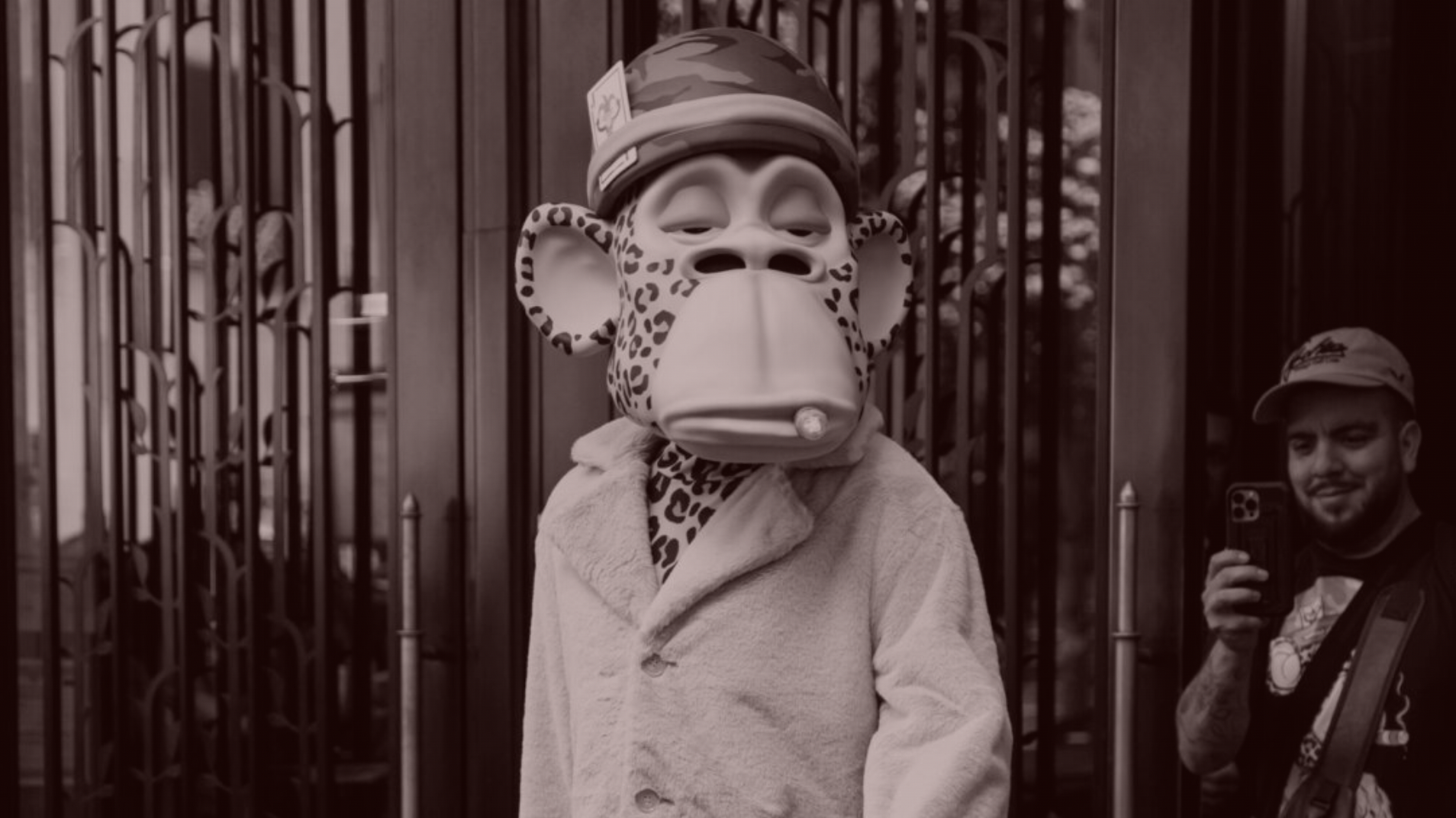
| Are Nazi sympathizers laundering racist ideology with an army of digital apes and abusing the law to muffle criticism of their dastardly plot? That may sound freakishly preposterous, and yet it’s exactly the batshit situation described in court papers filed Monday, in response to a recent lawsuit from Yuga Labs, the multi-billion dollar company behind the Bored Apes Yacht Club. The case, which pits a couple of NFT millionaires against a copycat conceptual artist, is already raising significant questions about art and commerce. It may even reshape our understanding of NFTs themselves.
The Bored Apes, for anyone still unfamiliar, are algorithmically-generated images of cartoon apes, immortalized on the Ethereum blockchain, that have become wildly popular with digital collectors and celebrities including Justin Bieber, Gwyneth Paltrow, Jimmy Fallon, Tom Brady and Mark Cuban. Even with the recent downswing in the crypto market, BAYC’s 10,000 digital apes are collectively valued at some $4 billion, making Yuga Lab’s founders, Greg Solano and Wylie Aronow, incredibly wealthy—at least on digital paper.
But all is not well on the planet of the bored apes. Ever since they were revealed by Buzzfeed as the founders—or as they claim, “doxxed”—Solano and Aronow have faced whispers that their BAYC project contains hidden racist symbols. Leading the online backlash is the conceptual artist Ryder Ripps, a creative director who has worked with the likes of Nike and Redbull but has more recently focused his efforts on taking down Yuga. According to Ripps, the Bored Apes are filled with Nazi dog whistles, including a logo that is reminiscent of the SS Totenkopf emblem. On a web page laying out his case, Ripps further alleges that Solano wrote his undergraduate thesis on Nazi fiction and that Aronow goes by an internet nickname that’s an anagram/4chan slang for “stupid negro.” And, of course, there’s the apes themselves, which Ripps sees as “simianization,” an alleged effort to dehumanize various ethnic groups.
In late June, the whispers were loud enough that Aronow and his colleagues posted an essay on Medium, arguing that Yuga had become the target of a “crazy disinformation campaign” and laying out in detail how each of the “insanely far-fetched” inferences drawn by Ripps had entirely innocuous explanations. They wrote: “We liked the idea of creating a whole collection around apes who became so wealthy because of crypto’s rise, that they became extremely… bored.”
If a war of words was all that had happened, I’d shake my head slowly and chalk this up to the typical craziness of these modern times, but the same day the Medium essay went up, Yuga also filed a lawsuit in California federal court. Ripps, after all, isn’t just on a media crusade to expose BAYC’s allegedly racist origins. The artist also launched his own, copycat NFT collection, “RR/BAYC,” which pointed to the same digital images as the original Bored Apes but used unique entries on the blockchain. Later, he would describe his “appropriation” as a “satirical” commentary intended to highlight “Yuga’s use of unwitting celebrities and popular brands to disseminate offensive material” and to “create social pressure demanding that Yuga take responsibility for its actions.”
On first glance, Yuga’s lawsuit, lodged in California federal court on June 24, might come across as standard fare over a knockoff product. According to the complaint, Ripps’s collection attempts to “devalue the Bored Ape NFTs” and is “sowing confusion” with consumers about whether “RR/BAYC NFTs are in some way sponsored, affiliated, or connected to Yuga Labs’ official Bored Ape Yacht Club, in violation of the Lanham Act and related state law.”
Upon closer inspection, however, the lawsuit (read the full thing here) is a bit quirky. Usually, intellectual property usurpers are more interested in lifting themselves up than dragging a rival down. And where are the copyright claims? There are none. Just claims based on the Lanham Act, including trademarks, false advertising, and unfair competition. In other words, Yuga isn’t suing over the creation of not-so-original apes; instead, the company is fighting over something slightly different—specifically, consumer confusion. |
|
|
| I realize this is a nuanced point that takes some understanding about the difference between copyright and trademark. The former protects original authorship while the latter protects brands. Think about Yuga’s suit this way: It’s like if some movie producer made an unlicensed flick about a guy from a distant planet who wears a red cape and a big S on his chest, a hero who flies around with magnificent strength, and DC Comics wasn’t so much concerned with there being a copy of Superman in theaters, but rather how comic fans might get the wrong idea about who created this derivative character. Yuga is essentially in court to guard the value of its own name.
Since copyright seems the most logical cause of action, I began asking around about this curious omission, and the best theory I heard back—from multiple sources—was how Yuga might be forgoing copyright claims because this billion-dollar cartoon chimp business can’t risk a court exploring exactly who owns what. (I reached out to Yuga’s attorney and didn’t hear back.) There is, after all, plenty of real confusion in the crypto world and in Hollywood about who controls the copyrights to NFTs after they are sold. I touched upon some of the legal issues a couple months back, in a story about actor Seth Green’s stolen ape. The BAYC terms and conditions are quite messy and don’t offer that much clarity (“When you purchase an NFT, you own the underlying Bored Ape, the Art, completely. Ownership of the NFT is mediated entirely by the Smart Contract and the Ethereum Network…”).
But by making its case against Ripps just about trademarks—actually, make that common law trademarks as Yuga has apparently been having some difficulty with the U.S. Trademark Office in registering its ape marks (a longer story for another day)—Yuga has opened the door to a particular defense. And this one includes talk about Nazis.
Ripps is represented by WilmerHale attorneys led by Louis Tompros, who a few years ago notably represented “Pepe the Frog” creator Matt Furie when the artist attempted via copyright claims to wrestle back his creation from alt-right meme-makers. (Furie’s case against InfoWars settled, although not before some funny business about how Pepe had supposedly derived from an Argentinian creature.) Now, Tompros is once again tackling the subject of alleged hate speech, although this time he’s doing so on the defendant side of an intellectual property dispute.
Tompros, in a just-filed motion to immediately dismiss the case, argues that Yuga’s suit against his client is “an attempt to silence an artist who used his craft to call out a multi-billion dollar company built on racist and neo-Nazi dog whistles.” Interestingly, Tompros invokes anti-SLAPP law, on the basis that Ripps’s apes are an expression of his free speech and that Yuga’s suit has no likelihood of succeeding. “Ryder Ripps used conceptual art to critique hateful imagery in the popular ‘Bored Ape Yacht Club’ project,” the motion continues. “When called out on their racism, Yuga sued Mr. Ripps not for defamation, but for trademark infringement. The First Amendment and the Rogers test preclude exactly this kind of abusive trademark infringement lawsuit.”
Could this wild gambit possibly work? And if so, what would that say about intellectual property on the blockchain? |
|
|
| When it comes to trademark infringement and the First Amendment, one of the most important developments occurred more than a quarter century ago when the Second Circuit Court of Appeals developed the aforementioned “Rogers test.” At the time, actress Ginger Rogers was suing over Italian maestro Federico Fellini’s film, Ginger and Fred, a fictional story about two cabaret dancers who imitated Ginger Rogers and Fred Astaire. Rogers claimed the title misled consumers into believing she endorsed the movie. She lost the case. In response to her Lanham Act claim, the appellate court wrote that judges should look to see whether there’s artistic relevance in the title, and if so, to give it a pass unless there’s something that’s explicitly misleading about who sponsored or endorsed the underlying work.
Since the “Rogers test” came onto the scene, lots and lots of courts throughout the nation have used it, although there has been some stray criticism. For example, when the rap group Outkast came out with a song called “Rosa Parks” and the civil rights icon sued, the Sixth Circuit responded “the First Amendment cannot permit anyone who cries ‘artist’ to have carte blanche when it comes to naming and advertising his works.” (The rap group argued it was artistically relevant thanks to the line in the song about “Aha, hush that fuss / Everybody move to the back of the bus.” The case later settled with the parties including Sony BMG agreeing to collaborate on projects intended to educate the public about Parks’s role in making America a more racially inclusive place.)
More often than not, though, the “Rogers test” has been applied, and the artistic relevance doesn’t have to be high (“Above zero,” says the Ninth Circuit). So if Ripps, an artist, can show California federal judge John Walter that this lawsuit arises from his speech (no certainty) and how there’s something artistic about what he did, the case may come down to whether NFT buyers were explicitly misled.
On Twitter, Ripps once promoted his collection as a “fuck you” to Yuga, a message which he is now seizing upon as a point in his favor since, while not altogether kind, it’s pretty clearly a note of disassociation. His anti-SLAPP motion (read here) also notes that each purchaser of an RR/BAYC NFT was required to click an acknowledgement that the ape being bought was a “new mint of BAYC imagery, recontextualiz[ed]for educational purposes, as protest and satirical commentary.”
Yuga now gets to respond. If the company does manage to beat the anti-SLAPP motion and stave off dismissal, it’ll probably be buying a ticket to a long discovery process where some in the crypto community could be surveyed about their knowledge and expectations when buying funny-looking apes. I don’t think Yuga’s founders will have to prove they are not Nazis.
Next week, I’ll be sharing my list of must-watch crypto cases. The ones I’ve been quietly tracking for quite some time that are primed to mint new law. Got any suggestions? Email me at eriq@puck.news. |
|
|
|
| FOUR STORIES WE'RE TALKING ABOUT |
|
|
|

|
|
|
| You received this message because you signed up to receive emails from Puck
Was this email forwarded to you?
Sign up for Puck here
Sent to
Unsubscribe
Interested in exploring our newsletter offerings?
Manage your preferences
Puck is published by Heat Media LLC
227 W 17th St
New York, NY 10011
For support, just reply to this e-mail
For brand partnerships, email ads@puck.news |
|
|