 |
|
Happy Monday, I’m Eriq Gardner.
|
|
Welcome back to The Rainmaker, a private email about money, power, fame, and most of all, the law. (Was this email forwarded to you? Click this link to subscribe.)
In this week’s edition, how Sam Bankman-Fried’s legal team is relying on the Enron playbook and a pair of “Varsity Blues” parents to keep their client out of jail. Plus, the most legally confounding thing about the Hollywood writers strike. But first…
|
|
|
- Will Fox Sue Tucker?: We’re about to find out just how determined Fox News is to keep Tucker Carlson sidelined until his “pay or play” deal expires in 2025. Forget the $15 million (previously misreported as $25 million) that the controversial right-wing star might forgo if he were to immediately relaunch a show on Twitter. That’s not deterring Carlson, who’s got plenty of money and litigator Bryan Freedman on his side.
But it is worth noting that Carlson’s contract with Fox includes an injunctive relief clause, which raises the specter of a judge ordering Carlson to honor his exclusivity to the network. While it’d be a bold move, especially in a media industry that prides itself on free expression, Murdoch’s Fox has taken similar actions in the past. Five years ago, a Fox News sister division (later sold to Disney) sued after Netflix recruited its executives. Fox eventually won that case and scored an injunction.
If Fox were to bring a legal case, likely in New York, Carlson could counter that the company can’t substantiate damages or demonstrate any irreparable harm caused by him hosting an alternative show. Moreover, he could argue that he is not joining a direct competitor, like Newsmax, but rather streaming on Twitter, a platform where Fox News hosts frequently post without contractual concern.
- Chris Cuomo’s Arbitration Showdown: Speaking of cable news hosts, CNN is still dealing with Chris Cuomo, the former 9 p.m. anchor who initiated a $125 million legal action for wrongful termination. Since then, the arbitration process at JAMS has remained confidential. However, I can reveal that the showdown at the arbitration forum is slated for next month. Based on the initial demand, Cuomo will be focused on CNN’s alleged hypocrisy in firing him for advising his brother, the New York governor, while ex-boss Jeff Zucker, PR chief Allison Gollust, and others were aware of what he was doing and gave similar advice when Andrew Cuomo faced sexual harassment allegations and heat from Donald Trump.
Cuomo, naturally, is represented by the same attorney in Freedman who is advising Tucker Carlson. CNN is handled by Daniel Petrocelli, who previously fought for Fox in that case against Netflix.
|
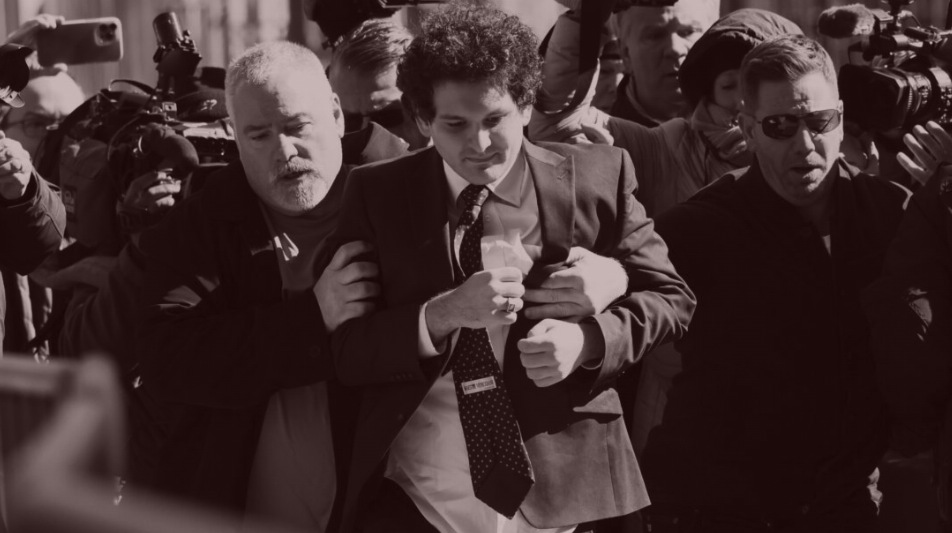 |
| S.B.F.’s Varsity Blues Defense |
| Lawyers for Bankman-Fried are hoping to turn a seemingly slam-dunk prosecution into an inscrutable legalistic debate over the definition of “fraud,” itself. It might just work. |
|
|
|
| The prosecution of Sam Bankman-Fried, accused of engineering “one of the biggest financial frauds in American history,” would appear to be an open-and-shut case, which is perhaps why most members of S.B.F.’s inner circle at FTX—Caroline Ellison, Gary Wang, Nishad Singh—have accepted plea deals with the Justice Department. The 13-count indictment lays out in meticulous detail how S.B.F. allegedly absconded with customer deposits and misled investors and lenders as the crypto market collapsed, incinerating billions of dollars in assets. But did he really commit fraud?
Not really, say Bankman-Fried’s attorneys at Cohen & Gresser, who just took their first big swing at knocking out the bulk of the criminal case. In a motion to dismiss last week, they argued that the collapse of FTX was a result of market forces during the “crypto winter,” and that prosecutors rushed to frame S.B.F. as the fall guy rather than letting traditional civil and regulatory processes address the situation. “Bankman-Fried,” his lawyers add, “has not defrauded anyone, nor intended to defraud anyone.”
It seems preposterous, of course. But a close reading of S.B.F.’s initial motion, and the strategy behind it, reveals his attorneys are constructing an extremely clever, if ponderously legalistic, strategy to whittle down the key conspiracy and fraud charges as nothing more than a couple big mistakes and a lot of bad luck. And, incredibly, the S.B.F. legal team just caught two big breaks that could help make their case.
The first involves Gamal Abdelaziz and John Wilson, who were accused of bribing school officials in the 2019 “Varsity Blues” scandal—the pre-pandemic, schadenfreude-laden criminal conspiracy in which wealthy parents were caught making pay-offs to get their privileged kids into elite schools. Abdelaziz, a former casino executive, and Wilson, a private equity financier, were sentenced in 2021 to a year in prison and 15 months in prison, respectively. But last week, the First Circuit Court of Appeals picked apart the charges. What were the universities actually deprived of, the judges asked. Honest services? Not when the bribes went to the supposedly betrayed universities, U.S.C. and Harvard. How about property? The First Circuit wasn’t ready to accept that admission slots constitute property, either. In short, the judges ruled, the prosecution’s conception of fraud was flawed. On May 10, the court vacated their convictions entirely.
But that’s not all. The very next morning, there was another “fraudster”-friendly plot twist when the Supreme Court overturned the conviction of Louis Ciminelli, a construction executive who was convicted of a bid-rigging scheme in Buffalo. Former U.S. Attorney Preet Bharara had originally prosecuted Ciminelli, and others connected to former governor Andrew Cuomo, as part of a blockbuster series of public corruption cases. This one relied upon what’s known as the “right to control” theory of fraud, whereby a defendant is guilty if he or she slyly deprives a victim (like the entity responsible for doling out lucrative contracts) of potentially valuable information needed to make a well-informed economic choice.
Ciminelli appealed the case all the way to the Supreme Court, where, on Thursday, Justice Clarence Thomas rejected this fraud theory. “Because the theory treats mere information as the protected interest, almost any deceptive act could be criminal,” he wrote for a unanimous high court. Federal fraud statutes, he emphasized, only criminalize schemes that deprive people of traditional property interests.
Bankman-Fried’s lawyers knew Ciminelli was coming, of course. They referenced this very case in their own dismissal motion, submitted just days before the Supreme Court’s decision. According to their arguments, prosecutors relied on the “right to control” theory of property fraud when charging Bankman-Fried with bank fraud in connection with an account that was opened to receive FTX customer deposits. While Bankman-Fried may have concealed how Alameda was using money, his lawyers contend the bank wasn’t deprived of anything more than information.
So when the Supreme Court opinion came, they made sure to alert the Manhattan judge, as if to say: You see? The S.B.F. prosecutors’ similar fraud theory is bunk! |
|
|
| At the beginning of the year, I made several predictions about the FTX case, including that Bankman-Fried would eventually take a plea deal. One reader cheekily replied that I wasn’t being particularly adventuresome in my prognostication. After all, 90 percent of criminal defendants plead guilty, while just two percent end up at trial. We rarely get opportunities to see how fraud charges, for example, hold up when challenged. Just look at the “Varsity Blues” scandal, which resulted in more than 50 guilty pleas—including for Felicity Huffman and Lori Loughlin—while just four cases made their way to trial. (Besides Abdelaziz and Wilson, U.S.C. water polo coach Jovan Vavic was convicted and then was granted a new trial while Amin Khoury, a businessman who sent his daughter to Georgetown, was acquitted.) So maybe I was just holding a wet finger in the air and forecasting the weather.
Indeed, while prosecutors have always pushed the envelope on fraud laws, a few defendants have fought back, and in several of those cases the Supreme Court actually clawed back power from prosecutors. In McNally v. United States (1987), the justices rejected the notion that fraud laws extend beyond money and property to some intangible right to good government. They curtailed the definition of fraud again in battles over “Bridgegate,” political grifting, and most seminally, in Skilling v. United States (2010), when former Enron C.E.O. Jeffrey Skilling convinced the justices that while Congress may have extended the fraud law post-McNally to include “honest services,” the statute as written was unreasonably vague.
The takeaway is clear: if you’re a well-resourced, risk-tolerant defendant who doesn’t mind spending years in purgatory fighting the good fight, then rejecting a plea deal ain’t without upside. Skilling, who paid tens of millions of dollars over the years for his defense, ultimately got his sentence reduced by 10 years, and was released from custody in 2019.
Enter S.B.F., whose lawyers made several motions this past week. The one that most caught my attention tackles the core allegation that FTX misled customers by using their deposits to make speculative investments via another S.B.F. company, Alameda Research. His lawyers characterize this commingling of funds as “loans to Alameda” and argue that even if they were “improper loans,” that doesn’t implicate “‘property’ under the wire fraud statute” because what’s alleged is not economic loss but rather a “hodgepodge of different intangible losses—from the right to honest services, to the loss of control of assets, to the deprivation of valuable information—none of which pass muster under current Supreme Court and Second Circuit guidance.”
Sound familiar? That’s what S.B.F.’s lawyers want. The motion continues by suggesting that what prosecutors are really saying is that “had FTX customers known that Mr. Bankman-Fried would loan out their deposits to Alameda to make riskier investments than they may have made themselves, they would not have chosen to deposit their funds with FTX.” And finally, the coup de grace: “In the end, the Government is trying to transform allegations of dishonesty and unfair dealing into violations of the federal fraud statutes.”
Now it’s over to Judge Lewis Kaplan, who might not grant Bankman-Fried’s full motion to dismiss, but will nevertheless play an important function in framing the debate between the two sides and rendering an opinion that sets the trial dynamic and provides grist for what may be reviewed later on appeal. Accordingly, this stage could go a long way in determining whether this case eventually establishes new law on wire fraud. Of course, it’s also possible that Kaplan’s decision causes the parties to reflect on the wisdom of moving forward.
I’m conscious of how, as my partner Teddy Schleifer once wrote, “S.B.F. may care more about being remembered well by history than about winning his case.” If the discussion stays close to how his lawyers want to frame it, or even veers towards a debate over crypto regulation, then perhaps S.B.F. really can run the Skilling playbook. But if prosecutors successfully refute the straw man notion they’re not alleging any economic loss, I think I’ll stick with being a weather vane.
Finally, a few words on the writers’ strike… |
| The Show Must Go On… Er, Off |
|
| Since Hollywood writers went on strike, TV showrunners with ongoing projects have been caught between the studios’ pressure to fulfill their duties, and the WGA’s wish for them to show solidarity and work as little as possible. It’s an issue that exists in a weird legal gray area.
In fact, the Supreme Court examined this very issue back in 1978. In ABC v WGA, the court ruled by a narrow 5-4 margin that the union had violated labor law by disciplining picket crossers. The logic was that some producer-writers perform supervisory duties, and the National Labor Relations Act prohibits coercing employers in their selection of grievance officers. But the high court backtracked somewhat when it revisited the dilemma a decade later. Unfortunately, their current guidance doesn’t provide much clarity for industry writer-producers with divided loyalties.
This year, studios have been aggressively sending letters to showrunners demanding they work. Disney, for instance, has advised, “Your personal services agreement with Studio requires that you perform your showrunner and/or producing duties even if the WGA attempts to fine you for performing such services during the strike.”
But wait a minute. The National Labor Relations Board has long recognized a right to refuse to cross a picket line, even on behalf of another union as an act of solidarity, which is a primary reason why other Hollywood unions like the Directors Guild of America and the SAG-AFTRA have “no strike” clauses in their own collective bargaining agreements. That’s to prevent directors and actors from engaging in sympathy strikes. (Although even that isn’t as cut-and-dry as many make it out to be. Ahem.) So can’t producers—regardless of whether non-writing falls outside of the WGA’s jurisdiction—honor the picket line?
Alas, I’ve consulted a half dozen labor law experts and gotten a half-dozen different answers. Some think it matters that they play a supervisory role on set. Others don’t, thanks to how (arguably similarly situated) dictatorial movie directors are treated as non-supervisors with respect to labor rights. Maybe these hyphenates will get back to the Supreme Court one day. If so, let’s hope the justices do a better job next time.
That’s it for today. As always, I love hearing feedback. Please don’t be a stranger. Email me at eriq@puck.news |
|
|
|
| FOUR STORIES WE’RE TALKING ABOUT |
 |
| A.I. Art Heist |
| A moral playbook for Hollywood’s A.I. future. |
| BARATUNDE THURSTON |
|
 |
|
 |
|
 |
| DGA ex Machina |
| Can a DGA deal bring an end to the writers’ strike? |
| JONATHAN HANDEL |
|
|
|
|
|
 |
|
|
|
Need help? Review our FAQs
page or contact
us for assistance. For brand partnerships, email ads@puck.news.
|
|
|
|
Puck is published by Heat Media LLC. 227 W 17th St New York, NY 10011.
|
|
|
|