 |
 |
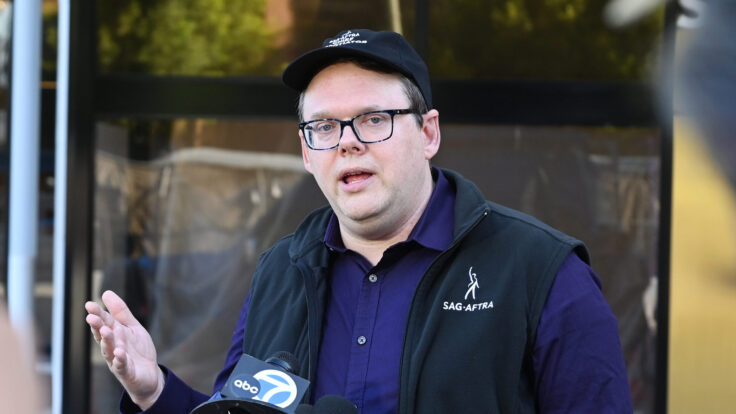
| Welcome back to What I’m Hearing, finishing up a weekend of quiet optimism on the strike front. I got a download today about the Friday meeting between the Writers Guild and studios, but I’m not gonna discuss details, lest the WGA leadership freak out and the talks blow up. I’ll just say it was a positive meeting with at least a little movement by the AMPTP.
Programming note: I’m back on CNBC at 7:50 a.m. eastern on Monday. Plus, this week on The Town: Lucas Shaw and I asked whether creators actually want to see their streaming data; Rick Nicita compared CAA in the ’90s to today’s gerontocracy; and Justine Bateman predicted A.I. will destroy Hollywood as we know it. Subscribe here.
ICYMI: Puck, the home of WIH, has a new Business Daddy. We closed a Series B funding round led by J Rothschild Capital Management, as well as existing investors TPG, Standard Investments, and publicist Kelly Bush Novak (kidding about that last one). If you care, Axios has details here.
Was this email forwarded to you? Click here to become a Puck member.
Discussed in this issue: Bob Iger, Florence Pugh, David Zaslav, Tom Holland, Jimmy Pitaro, Adam Aron, Aaron Korsh, Robert Pattinson, Bryan Lourd, Kathy Kennedy, and your must-have submersible.
But first… |
| Who Won the Week: Dave Portnoy |
|
| This f-ing guy. He’ll probably implode at some point, but selling Barstool Sports for $550 million and then buying it back for $1 because the company he sold it to, Penn Entertainment, can’t get gaming licenses thanks to his toxic public persona, and Disney happened to be desperate enough to assume the Penn relationship, is a world-class-asshole way to come out on top.Runner up: My buddy Adam Aron, the AMC C.E.O., whose fears of running out of cash were allayed when a judge approved a new settlement with his angry shareholders, so he can raise more money. Now Aron only has to worry about the strikes decimating theatrical releases.
Dishonorable mention: Congrats to Universal, which has now released two separate bombs (Renfield and Amblin’s Last Voyage of the Demeter) based on the same I.P. (Dracula) in the same year. A truly unique accomplishment. |
| The Suits Residuals Echo Chamber |
|
| Can someone please explain to the Suits writers, stars, and possibly the L.A. Times op-ed editor how residuals work? Every day, it seems, someone new comes forward to complain publicly about how little they are making, despite the show blowing up on Netflix.I get it: During a strike, any knock on the No. 1 streamer leveraging cheaper content for eyeballs will gain traction. But first off: Suits is owned by NBCUniversal, not Netflix, which did a non-exclusive, U.S.-only license deal for eight of the nine seasons of the show. It remains on Peacock and was recently on Prime Video. Is it Netflix’s fault that its users really love zippy lawyers and Meghan Markle, and thus an old USA Network show is finding a new audience? Netflix licensed the show fair and square, and streaming residuals are based on a percentage of the license fee. If NBCU negotiated too low a fee, it screwed itself as well as residuals participants.
Second, while I’m told Suits is in profits—meaning participants on the show do make money on each license—that’s separate from residuals and negotiated by agents. Maybe you’re underpaid on that front—the guy who wrote about his low residual for an episode he penned didn’t include his writing/producing fees or reveal that he wrote many different episodes and thus made a lot more than the $259.71 in the headline—but it has nothing to do with guild protections. It’s true, streaming residuals for made-for streaming shows are often not as high as they are for linear TV, which sucks and should be remedied given audience shifts, but Suits was made for basic cable. What matters is where the series first appeared and where it is being used or reused. That’s why Puck contributor Jonathan Handel summarizes residuals formulas in a grid: the combination of made-for medium and reuse medium determines the formula for how residuals are paid. Other factors such as which guild we’re talking about, when the show was written or produced, and episode length, also matter.
Netflix has proven time and again that it can make a hit out of a show that doesn’t perform elsewhere. That’s both a curse and a blessing for the creatives involved. The good news is NBCU will arguably get more money for future licenses, and the Suits people are arguably hotter now than they were a few months ago. Reps for creator Aaron Korsh and the others can likely take advantage of the popularity to get new opportunities—at potentially higher pay. |
|
|
| “Never waste a crisis.”
–Mark Shapiro, the Endeavor president, noting on an earnings call that the company is “lifting all levers” to slash costs at the WME agency amid the strikes, which C.E.O. Ari Emanuel said is costing the company about $25 million a month.A little more on a WME rival… |
| CAA’s Amuse Bouche of Layoffs |
|
| Much was made this week of CAA’s layoffs, which amounted to about 60 employees, though few (if any) were agents with meaningful clients. Overhyped, but that’s just round one. Wait until the strike drags into September, and CAA’s majority owner, TPG, finalizes the sale of its stake in the company to French billionaire Francois-Henri Pinault.I first told you about that potential transaction back in May, and the acquisition is still chugging along, with the CAA/TPG guys intent on closing the deal whose potential $7 billion valuation has the entire agency business salivating. Still, a TPG rep said that the rumor that the deal is closing on Tuesday is false. (Usual disclosure: TPG is an investor in Puck.) If the strike lasts into the fall, and once Bryan Lourd and his CAA partners finish negotiating their massive payouts and their new deals—Does Richard Lovett stay? Your guess is as good as mine—that’s when the real CAA bloodletting will likely happen. |
 |
| The Interns of Hollywood Can See Through the B.S. |
| Amid dual strikes and the graying of Hollywood, a conversation with six unabashedly candid interns about where movies fail with young people, Barbenheimer lessons, Marvel’s decline, Netflix “content dumping,” and how one Disney fan has lost respect for Bob Iger. |
|
|
|
| I went to a nice dinner the other night that the producer Roy Lee organized at the Microsoft Lounge with about 25 fellow film and TV producers. These kinds of get-togethers can quickly turn into bitch-fests these days, amid the strike shutdown and general industry malaise. But while the table discussion was off the record, I noticed that in our back-and-forth about how Hollywood can better wage the war for relevance with young people, one big producer referred a couple times to the hopeful insights of his company’s college-age interns. Huh, I thought.I had just taped a podcast about how Hollywood, once so vibrant with young stars and executives, has become a gerontocracy, with many of the same people running the business for decades now, possibly leading to the funk and dysfunction that plays out in the headlines. Some entertainment companies are great about empowering and listening to their young people; many aren’t. |
| A MESSAGE FROM OUR SPONSOR |
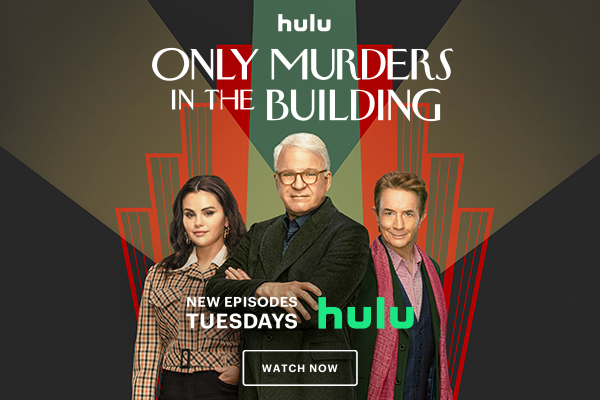 |
| Your favorite hit comedy is back! In a new season of Only Murders in the Building, murder takes center stage when actor Ben Glenroy is killed on the opening night of Oliver’s big production. On top of a new case to crack, our sleuthing trio’s relationship is put to the test. Will their friendship survive? Starring Selena Gomez, Steve Martin, and Martin Short, and guest-starring Meryl Streep, Paul Rudd, Ashley Park, and Jesse Williams. Check out the new season of Only Murders in the Building, new episodes Tuesdays, streaming only on Hulu. |
|
|
| It struck me: I kinda wanted to talk to those interns. So I asked the guy if he was cool with it, and the next day I sat in a conference room with four current and two recent interns. (I’m not naming the company but it’s a well-known outfit that makes big-budget studio movies, indies and TV.) These kids were very candid! We got into a bunch of topics—the strikes, Barbenheimer, Marvel’s decline, Netflix “content dumping,” where Hollywood fails with young people, and how one Disney fan has lost respect for Bob Iger. I think you’ll find it instructive.The participants: Jadon, 20, of Chapman University; Henry, 25, of USC film school; Emily, 20, of the University of Maryland; Stephanie, 22, also of Chapman; as well as Ciao, 23, a recent USC Annenberg grad and former intern who’s now an assistant; and Kent, 25, a USC grad and former intern who now works at the company. ” I edited the conversation for length and clarity. |
|
|
| Do you think Hollywood is doing a good job catering to young people? All: No.
Stephanie: What Generation Z and probably Alpha has gone through is unique. We just went through a pandemic, we grew up with social media—unlike other generations, we’ve had a lonely culture growing up. If anything, we want to go to movie theaters and have a shared experience. But the types of stories that are being presented can be somewhat pessimistic: “Ugh, this just reminds me of all the bullshit I’m already going through,” rather than giving us hope.
That’s interesting. Give me examples.
Stephanie: There’s a lot of stories, especially recently, where it’s like, “This mass force is destroying all of civilization.” And no one wants to hear that. Young people want rooted stories that actually have an emotional core with characters that remind us of ourselves, just going through small day-to-day problems, like in The Office or Friends. Things like Barbie and even Top Gun… there’s something happy and uplifting that can give young people a sense of hope, because we’ve honestly gone through a lot of shit.
I bet you all think about Hollywood differently now, especially this summer as the business itself is going through a lot of shit.
Jadon: The biggest takeaway for me is that bad movies were often worse, and the people who make them are really just trying to do their best. One of the executives [here] said, “Sometimes you are handed a project that is going to be an F and you bring it up to a C and that’s a small miracle.”
Henry: You think Hollywood has it all together and they know exactly what they’re doing, especially with big franchises. But nobody really knows exactly what they’re doing each time.
Emily: It was shocking that I could suggest something and it would be considered.
Do you and your friends care about going to theaters more or less than you did before Covid?
Jadon: It depends. Hollywood has been very reactionary lately. A movie is released that does something different, and it’s super popular, and then that’s all we see for the next couple years. It’s just that, again and again, and it wears down audiences. And price is a big deterrent for young people.
For sure.
Jadon: It’s kind of a lot to ask of a young moviegoer to drop $15, $20 on a ticket to a movie they may or may not like. There’s definitely much more premeditation in the process. It’s “Okay, this movie’s coming out. Do we think we’ll like it?” We’re not walking up. It’s gotta be an event. That’s why the half-price Tuesday is so great. The balance should flip. It should be weekdays are half price, and then weekends are more.
A bunch of summer movies underperformed, especially with young people. Were you guys at all interested in Indiana Jones or Mission Impossible?
Emily: I only saw [Indy] because my grandma’s a huge fan of Harrison Ford.
Jadon: I wanted to see Indy just because I’m a big Disney nerd. I’m all for a passing of the torch with a legacy sequel with the characters that my dad grew up watching and showed me when I was a kid. But it just didn’t seem interesting. If they did something fresh and exciting with Indy, even with Harrison, I would’ve been all in. But just watching the trailers, I was like, “This looks like every other Indy movie.” |
|
|
| How much does the social media conversation dictate what movies you see?Stephanie: If I hear a lot of people talking about a movie, I am more likely to go.
Jadon: I’ve never been swayed to go see a movie because of a meme. But what is cool about the memes is they start to build out a community. We all want to have a communal experience, and what’s so cool about going to the [theater] is it’s a bunch of strangers sitting down and all caring about the same people for a little while. We love that. It feels like a secret language. We all went to see Barbenheimer at The Grove; you see people walking around in all pink and you’re like, “I’ve had the same experience as you!” We’re all in on the joke.
Henry: I’m not on TikTok or Instagram really, but I don’t see how they couldn’t be the driving force for all these movies. The meme is the baseline. Like, “I’m not actually advertising to you, but I’m getting in your head somehow.” I feel like that’s the only way these movies can advertise now.
I did a podcast today about how the same people who were running the business 20, 25 years ago are still running the business, and the leadership keeps aging. As people that are looking to get into this business, what do you think of that?
Emily: It sucks, right? That’s how I feel about our nation’s leaders as well.
Ciao: You don’t know how many years you gotta suffer on the desk or whatever entry level position.
Kent: We’re just gonna have to wait till you guys die out.
I’m not that old! Also, these old guys are not dying.
Kent: Exactly. That’s the issue. Modern medicine is keeping the oppressors alive.
You see the studio heads as the oppressors of the culture?
Kent: It’s not that they would be the oppressors, it’s just that it’s definitely a dated outlook. Even when there are big successes—let’s say the Barbie movie—the lessons learned are maybe the incorrect lessons.
Like the lesson from Barbie seems to be, let’s make 20 different toy movies.
Kent: Exactly.
So what was the lesson for you from Barbie?
Kent: You make an event. You expand on the community that already exists. Somehow Barbie appealed to anyone who could identify with a broken toy. From all the trailers, we came to agree the Barbie we were gonna watch was broken. That was the deeper character that was appealing to our generation. Oppenheimer, being the competitor, was just fun, like we finally have a Coca-Cola vs. Pepsi moment. It was almost like a sports event for movies, like which team has the better film?
Back to the aging Hollywood question, do you think that’s the reason we’re getting the stale movies that we’re getting?
Stephanie: Potentially. I think you really should be listening to 20 and 30 year olds. We should be the ones making those creative decisions.
Jadon: There’s a lot of experience in Old Hollywood, and until a few years ago, I would say they were doing a pretty decent job catering to our needs.
Like with Marvel movies?
Jadon: Marvel movies used to be really fun. Then they fractured their fan base and lost their quality.
So you’re done with Marvel?
Jadon: No, I’m still in it. [Laughs.]
Stephanie: I’m done.
Emily: Yeah.
Henry: Yeah. Since Infinity War.
Stephanie: It just feels like a factory, like they’re just chugging out movie after movie or show after show.
Emily: It’s not an event anymore.
Jadon: True. They broke their must-see rule. I don’t think the superhero genre is dead but I do think the kind of superhero movie that we’ve had is dead.
And DC vs. Marvel?
Jadon: Marvel’s still more consistent. Honestly, DC should stick to making their art house movies. Joker and The Batman, that’s their best stuff. But their shared universe? Like what is this half reboot they’re doing where they’re keeping Gal Gadot and they’re getting rid of Henry Cavill? Blue Beetle is in the new [universe] but Aquaman might be? It’s too much. |
|
|
|
|
| What do you guys think of the strikes? Have they impacted your view of the business?Stephanie: I hope I can get a job.
Emily: It does scare me how the industry’s going.
Henry: It relates back to this idea of Old Hollywood not even understanding the impact of streaming. And not understanding the value of writers and giving them the pay and the right size [writers’] rooms and the right number of episodes.
Jadon: I’ve lost so much respect for the studios during the strike. Beforehand—again, big Disney fan—if you asked me my thoughts on Bob Iger, I would tell you he’s great. And then he goes out and starts talking about how writers and actors are “unreasonable.” And I’m like, “We are the lifeblood of your art form.”
You lost respect for Iger.
Jadon: Yeah. It was such an out-of-touch comment. For someone who built his whole brand on, “I know what the audience wants. I’m gonna give you Marvel and Pixar and the Muppets and all these things that you love.” And then he’s like, “But y’all don’t mean anything to me. I could do this by myself if I wanted to.” It was a peek behind the facade, the man behind the curtain. All of a sudden, the Wizard of Oz is just the swindler from Kansas. That’s how the whole strike has felt, looking at the studio heads—except David Zaslav, who always kind of sucked.
Stephanie: I don’t know if I have been in the industry long enough to form an opinion.
Which is why I was surprised that Jadon [who was a child actor before college] has such strong feelings about Iger. But Disney’s a little different. You probably do not have feelings about Ted Sarandos at Netflix.
Jadon: Yes and no. As consumers and as people in the business, I think every decision they make affects us all. Netflix content, I would argue, is not where it should be.
Stephanie: And canceling [shows after] Season One… is a shame too.
Jadon: It just feels like they’re content dumping, and not actually honing in on the stories that people really care about. I think it plays into the whole out-of-touch narrative.
How do you guys feel about the various streaming services?
Emily: There’s too many of them.
Henry: It’s just cable again. I think Netflix is like a waste now. At first [Netflix] was pretty good. They had BoJack and everything. That was fun. But nowadays, it’s just a bunch of random movies that don’t really have any cohesion.
Stephanie: One thing I do like about Netflix is the international content. Attorney Woo is one of my favorite shows and that’s from Korea.
Would you want to work at Netflix?
Jadon: It’s so funny you asked that, because me and my writing partner wrote a pilot—it’s a superhero pilot trying to do something different with the genre. We were like, “Where would we want this to end up?” I mentioned Netflix, and she was like, “I don’t trust them.” We have a three-season arc imagined, and she’s like, “I wouldn’t trust them to let us have that.” So we’re leaning Apple or Max. I really like Apple original content. I feel like they give their shows enough time and money to become what they’re meant to be. Disney+, all of their non-franchise original content is pretty rough, and even their franchise original content has gotten pretty rough. And then Max is such a mess with the whole Batgirl thing. I mean, it’s hard.
Which stars do you care about? You can also say you don’t care about stars.
Emily: Saoirse Ronan. Because it really helps if they have a career arc you can root for. Like, Jennifer Lawrence. In the movie she was just in—
No Hard Feelings.
Emily: Yeah. It really helps that I knew her and it was her sort of comeback.
Jadon: Most of the time I go based on story, but occasionally there’ll be a movie where it’ll be like, “Wow, I really love them and it looks kind of interesting.” Hailee Steinfeld, that girl needs more work. She’s great.
Any male stars?
Jadon: Tom Holland, maybe?
Emily: Robert Pattinson.
Jadon: Oh, Ryan Reynolds. Love Ryan Reynolds. He does all his own marketing, and he has his finger on the pulse. He makes marketing feel like it’s not marketing.
Kent: I don’t think I have any current movie stars from our generation. I love Anne Hathaway. I know that there’s big potential ones like Timothée Chalamet and Zendaya, but I don’t think Zendaya has shown what she can actually do.
Emily: Jake Gyllenhaal and Carey Mulligan. I like character-driven movies. To me, star power used to be a guarantee that the actors care about the stories and the roles that they play. Might be a bad movie, but it will be a decent character and a decent performance. But I don’t think good actors are signing up for roles because they’re truly excited about the story; it’s more about how to build value, build your brand, build a persona.
Kent: Jury duty. Actors will start getting big and then all of a sudden it’s announced that they’re on a Marvel project, and it’s like, “Oh, you got assigned jury duty.”
Emily: Chris Evans, I used to like him. Before Captain America.
Kent: And then the movie with Ana [de Armas, Ghosted] comes out and it’s almost like, “Oh yeah, that’s the end for both of them.”
Last question. If you had a sitdown with the heads of all the studios and streamers, what would you say to them?
Jadon: Gimme a job.
Ciao: Stats. Transparency. Netflix is my go-to streamer, which is weird because it doesn’t have the best content. And I feel like the black box of [data] scares me and I wanna know the truth.
Jadon: Create the wave. Don’t just try to catch it.
Emily: I’d say stop putting things direct to streaming because I’m never gonna see it. The only [services] I have are because my parents subscribe to them. If it’s not in theaters, it doesn’t feel like an event and therefore it doesn’t reach me.
Henry: I would ask them if they’re afraid. Because I feel like a lot of this industry, there’s just such a reek of fear from the top down. It’s just such a weird experience for an industry to always be on the edge all the time.
How do you see the fear manifesting?
Henry: I see it even in terms of marketing. It’s like, “Finally, we got people to the theaters. We thought theaters were dead.” They keep pushing that over and over. “And streaming is taking over and, oh no, everyone’s on these little phones. Like, our industry’s not gonna survive.” Do you believe that? And if you’re so scared, why not take more risks and hire younger people, and why not make more movies that are different stories than we’ve already seen?”
Stephanie: Like, if you wanted a safe career, go to a different industry. Because that’s not this one.
Jadon: I would try to remind them what’s so special about movies and storytelling. I feel like they’ve lost sight of it up there in their offices. It makes me think of The Menu, which I dunno if you saw—
I did.
Jadon: Not a perfect movie, but I really liked what they did at the end, where Anya Taylor-Joy reminds the chef of his love for cooking, which he’s lost sight of. He has that visceral moment, making that cheeseburger and feeding it to her. And I feel like the studio heads need to make a cheeseburger, give it to the audience, and watch them eat it. They need that connection again. |
|
|
| If my rant wasn’t enough, my colleague Julia Alexander goes deep on the Suits phenomenon on Netflix. [Puck]Big-time schadenfreude as Carl Icahn, activist investor and tormentor of many media companies, has seen half his fortune disappear. [WSJ]
Ethan Strauss’s smart take on the ESPN/Penn gambling deal: ESPN missed the boat here. [House of Strauss]
Related: Top 3 things at Disney World that I’d like to bet on:
1. Heavyweight fights between guests in line for turkey legs
2. Over-under on peak wait time for Star Wars: Rise of the Resistance
3. Drinking contests in EPCOT’s All Around the World
Post Malone and Nickelback are among the arena acts that got $200 million in Covid relief from taxpayers. I know some very rich movie producers who did the same. You know who you are. [Insider]
Taylor Swift and Beyonce are expected to generate $9.1 billion in economic activity this year. That’s a lot of bracelets and red scarves. [NY Times]
Quiz: What was the most amusing sighting at the Swift L.A. shows? The correct answer is Damien Chazelle drinking a hard seltzer with his Whiplash star Miles Teller.
Dept. of Hmmmm: Lucasfilm’s Kathy Kennedy has listed the $18.5 million Malibu beach house she shares with husband Frank Marshall. [SacBee]
You’ve got a yacht, but do you have a submersible? [DealBook] |
|
|
| My Thursday item on Bob Iger’s gambling cash grab with Penn sparked a number of thoughtful responses, as well as the ongoing strike chatter. Some examples:“Where were all the lawyers and agents when these terrible deals were being made with the streamers? Any time a writer pushes back on a ridiculous deal point, the streamers cry precedent. This precedent didn’t exist before. You said it correctly, most writers trust their reps, so why isn’t there any shared accountability for the dealmakers for allowing that precedent to be set? Were they not sharing information? The excuse that agents were pissed about the writer campaign [against packaging] does not hold water because this predates that and it’s not just agents, it’s lawyers as well. If we are doing endless analysis of how we got here, it seems like their passivity should be part of this story, as well.” –A writer
“Couldn't agree more that the streamers have not released viewership numbers because it will be more harmful than helpful. It will be—in many cases—downright embarrassing. I don’t think it will necessarily hurt the stock prices (maybe for a day or two), but I do believe it will cause a MASSIVE contraction in the number of shows ordered, the number of episodes produced, and the number of films acquired. Someone—some adult in the room at SAG-AFTRA and/or the WGA—must have a clear enough head to understand the potentially deleterious effect that this can and will have. Or, are the entire leadership teams blinded by anger and a sense of entitlement and too much distrust to think this thing through?” –An executive
“Thank you for calling out Iger for this embarrassing Penn deal. Like many Disney investors, I’m not opposed to gaming, and the tolerance generally has shifted from when Bob said it was bad for the brand. But DraftKings and FanDuel dominate this market, and Disney already owns a small stake in DraftKings. Disney should do business with premium businesses, even if it’s in the low-rent gambling space.” –A Disney investor
“Dave Portnoy’s sloppy seconds! That’s where Iger thinks Disney should be. Sad for sure.” –A Disney executive
“Need the Apple buying Disney speculation to stop! If Disney were just studios, parks, and Disney+, you could entertain the idea. But we are a ways away from that.” –Another investor |
|
|
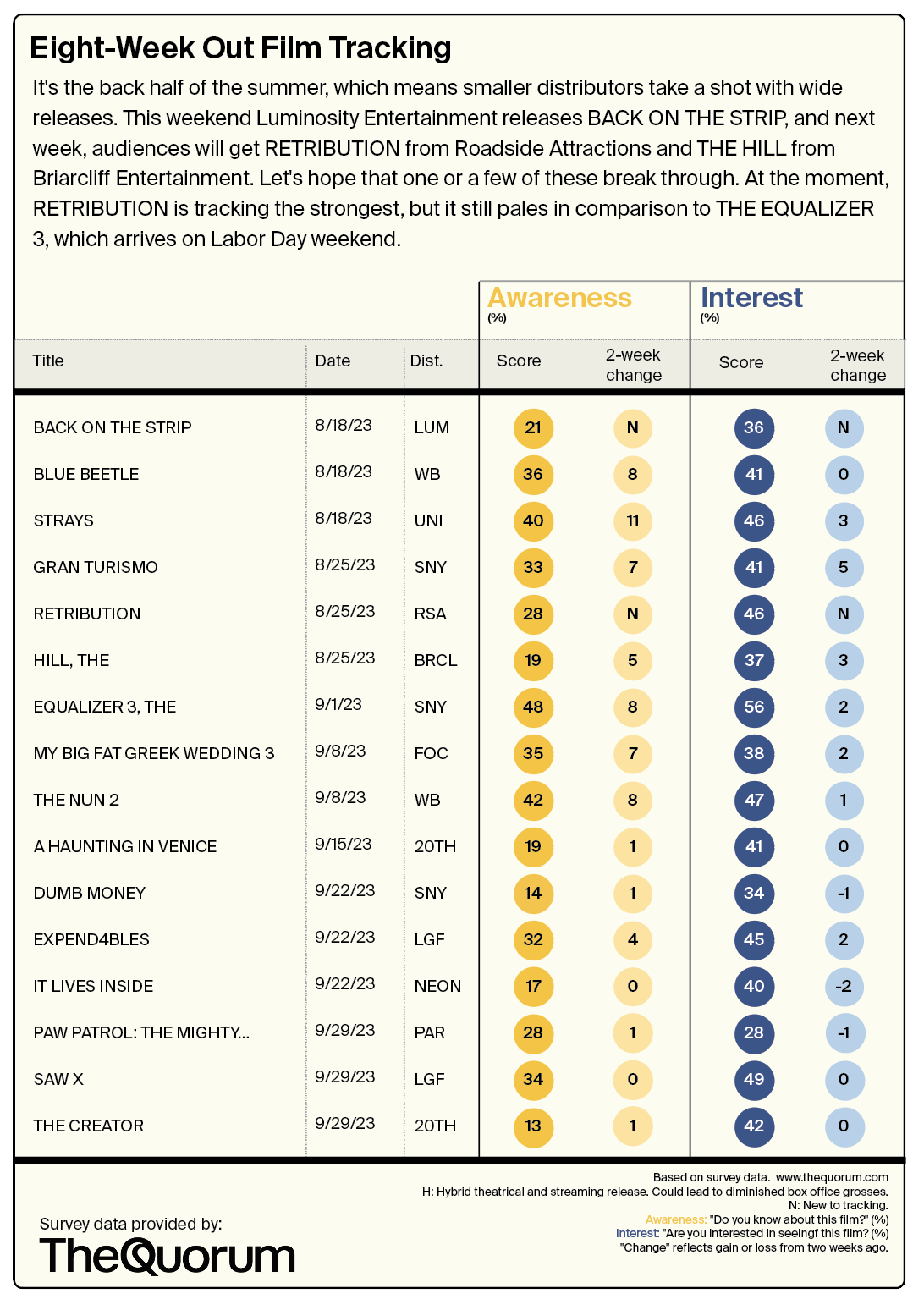
| It’s Dregs of August time on The Quorum early film tracking chart. I honestly hadn’t heard of half these titles. Good luck!... |
|
|
| Have a great week,
MattGot a question, comment, complaint, or a suggestion of what to order at the Netflix Bites pop-up? Email me at Matt@puck.news or call/text me at 310-804-3198. |
|
|
|
| FOUR STORIES WE’RE TALKING ABOUT |
|
|
|
|
|
 |
|
|
| Need help? Review our FAQs
page or contact
us for assistance. For brand partnerships, email ads@puck.news. |
| You received this email because you signed up to receive emails from Puck, or as part of your Puck account associated with . To stop receiving this newsletter and/or manage all your email preferences, click here. |
| Puck is published by Heat Media LLC. 227 W 17th St New York, NY 10011. |
|
|
|