{{ 'now' | timezone: 'America/New_York' | date: '%b %d, %Y' }}
|
|
|
|
Hello and welcome back to the Tuesday edition of What I’m Hearing, the one I usually hand off to
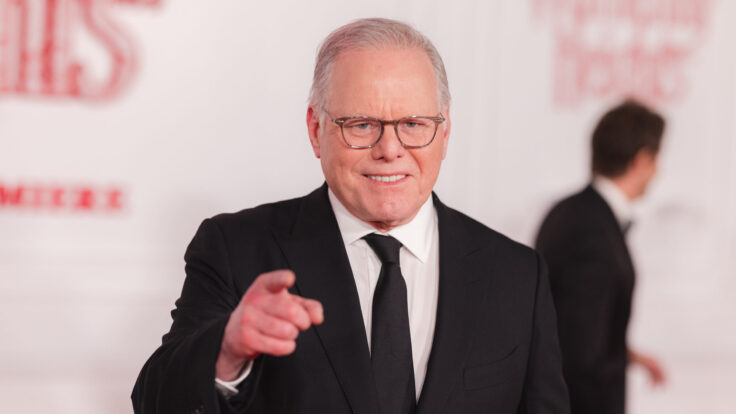
Eriq Gardner, who is joined today in a special tag-team issue by Kim Masters. Tonight, Kim looks at Netflix’s seemingly inevitable march toward releasing movies in theaters, and what’s going on at Justin Baldoni’s Wayfarer Studios post-Lively settlement. But first, Eriq reveals the extraordinary cost (so far!) of David Ellison’s pursuit of Warner Discovery, and the next moves in Disney’s escalating battle with
Trump.
Send Kim and Eriq your news tips and column ideas at Kim@puck.news and Eriq@puck.news!
Discussed in this issue: Anna Gomez, David Ellison, Ted Sarandos, Greg Peters, Blake Lively, Scott Stuber,
Josh D’Amaro, Jon Tigar, Justin Baldoni, David Ellison, Chris Nolan, Makan Delrahim, Ryan Reynolds, Steve Sarowitz, Greta Gerwig, Bela Bajaria, Paul Clement, Brendan Carr, Dan Lin, Margot Robbie, Spencer Klein, Thomasin McKenzie,
Reed Hastings, and more…
|
|
|
|
 |
Eriq Gardner |
|
- The Ellisons’ WBD burn
rate: No one will be shocked to learn that the money Paramount Skydance is shelling out on lawyers, bankers, lobbyists, and assorted deal mechanics to drag its Warner Bros. Discovery acquisition across the finish line will almost certainly dwarf the amount spent on its previous merger. In its latest 10-Q, Paramount disclosed $103 million in Q1 transaction-related expenses—principally legal, advisory, and other professional fees tied to the planned WBD takeover—putting it on track to blow
past the roughly $199 million spent in 2025 on the combination of the Ellison family’s Skydance with Paramount, a figure that also included employee transaction awards.And the truly expensive phase has not even begun. State attorneys general are now circling—the 10-Q confirms subpoenas have already started landing—while financing fees, integration-planning costs, and a fresh consumer
class action will push the bill even higher. The meter keeps running elsewhere, too. I suspect we’ll soon hear more about the European review process and whatever concessions the regulators there ultimately demand.
No wonder Makan Delrahim has become one of the rare in-house lawyers outearning his boss.
According to the filings, Paramount’s chief legal officer collected roughly $63.58 million in total compensation last year, narrowly edging out C.E.O. David Ellison’s $63.2 million package—mostly in stock, naturally.
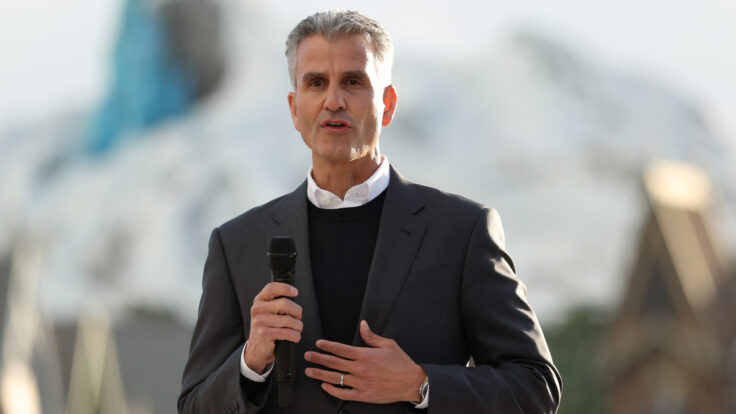
- Is D’Amaro suiting up for battle?: Speaking of regulatory filings, Disney’s troubles with the F.C.C. have now graduated into a disclosed business risk. In its latest filing, the company warned investors about an
“increasingly unpredictable regulatory landscape,” specifically citing the F.C.C.’s demand that Disney submit early license-renewal applications for its owned television stations. Meanwhile, the F.C.C.’s lone Democratic commissioner, Anna Gomez, sent Josh D’Amaro a letter
yesterday urging the Disney C.E.O. to take the regulator seriously, describing a “sustained, coordinated campaign of censorship” under Brendan Carr.As you may have heard, one of Disney’s ABC affiliates is accusing Carr of threatening free speech by questioning whether The View qualifies as “bona fide news” exempt from the equal-time rule. But anyone who spends enough time reading F.C.C. filings knows constitutional fire alarms get pulled all the
time. The real tell is procedural. Disney chose the declaratory-ruling route, and the filing carries the signature of Paul Clement, one of the country’s premier Supreme Court advocates. That suggests Disney and ABC are laying the groundwork for a federal court battle.
Strategically, it’s a smart move. The petition creates an administrative record while forcing
the F.C.C. either to respond or to sit on the matter—both potentially useful outcomes ahead of an Administrative Procedure Act challenge. Is Carr acting arbitrarily and capriciously? Is the commission selectively targeting speech it dislikes? Those are the kinds of questions Disney appears to be positioning for judicial review. A few weeks ago, I
floated the possibility that D’Amaro might decide to go on offense. This very much looks like the opening salvo.
- A.I. copyright squeeze play: I’ve been harping on the Supreme Court’s March 25 opinion in Cox v. Sony because few legal fights will shape the
entertainment industry’s future more than the copyright cases closing in on A.I. companies. In Cox, the justices raised the bar for contributory copyright liability, requiring plaintiffs to show that a defendant either induced infringement or provided a service tailored to it. Against that backdrop, a new ruling in the authors’ lawsuit against Nvidia—in which they
alleged that the company trained an A.I. platform on pirated books—deserves attention. It appears to be the first post-Cox decision in the A.I. copyright wars and, for rights holders, a sign those hurdles can still be cleared.The authors beat Nvidia’s motion to dismiss by narrowing the technology at issue. Nvidia portrayed its NeMo Megatron Framework as a general-purpose A.I. platform with multiple lawful uses—the equivalent of Cox merely providing internet access. But the
authors persuaded Judge Jon Tigar to focus on the specific scripts Nvidia allegedly supplied to download and preprocess The Pile, a dataset said to contain pirated books. Viewed narrowly, the platform looked less like neutral infrastructure and more like a purpose-built infringement tool.
Expect others to follow the same playbook. In the studios’ case against China’s MiniMax, the company similarly argued that its Hailuo A.I. video generator supports substantial
noninfringing uses. Disney, Universal, and Warner Bros. responded by narrowing the frame: MiniMax, they say, didn’t merely provide a passive tool that users misused. Instead, it allegedly demonstrated that prompts like “Spider-Man and Supergirl kissing in the park” could generate recognizable replicas.
The studios went even further, claiming direct infringement on the theory that MiniMax itself was a volitional actor—training and fine-tuning the model, storing character knowledge, and
effectively building a Hollywood-character vending machine. Whether courts buy that framing remains to be seen. But after Cox, the roadmap is emerging: The broader the technology, the safer the defendant; the narrower the workflow, the more the case begins to look like inducement.
|
|
|
|
News and notes from around town: Will the famously theater-shy streamer go all-in on
distribution? And now that the Blake Lively war is almost over, what are Justin Baldoni’s Hollywood prospects?
|
|
|
|
You’ve probably noticed that Netflix has been dropping a lot of tasty breadcrumbs for movie theater owners
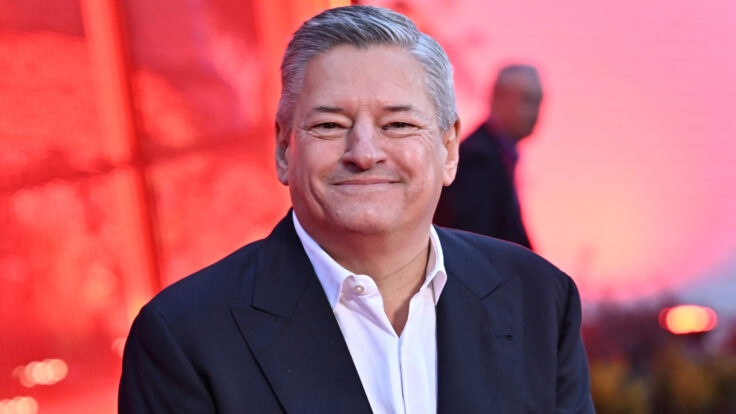
since trying to buy Warner Bros.—and finally delivering a whole loaf with the planned global theatrical release of Greta Gerwig’s upcoming Narnia film. That prompted me to ask a well-connected producer what he thought was afoot. Was Netflix still shopping for a way into theatrical? Was there more to this courtship than meets the eye? His reply: “I think that Ted [Sarandos] will eventually start a distribution division to handle
theatrical releases.” Other Netflix observers in the industry agreed this was not only possible, but likely.
Netflix has been slowly morphing into a more traditional Hollywood player for years now, having not only built an advertising sales operation despite initially pitching itself as ad free, but actually pushing customers onto the ad tier with its pricing strategy. Many of its top executives grew up at legacy studios, including content chief Bela Bajaria, film leader
Dan Lin, and head of film distribution Spencer Klein. Distribution could be where the train was headed all along, even if Netflix didn’t know it, instead insisting that it didn’t do dumb Hollywood stuff and should be viewed and valued as a tech company. But having pretty much conquered the world in streaming, Netflix has found it necessary to explore diverse revenue streams and to break its own vows.
A spokesperson told me, naturally, that the
(erstwhile?) streamer was not changing anything. But one source with ties to the company said he expected Netflix to “learn” its way into handling distribution. While domestic distribution is certainly doable, this person said, overseas will be more challenging, with more cats to herd and varying rules country to country.
While the Narnia release is obviously the biggest theatrical commitment that Netflix has ever made—a 49-day window between opening wide in theaters next
February and its debut on the streamer—we’ve all witnessed the company’s other moves to court theaters. Last month, Sarandos made his first trek to CinemaCon to meet with top domestic and international theater owners. And we all watched as he labored to convince Hollywood that he had gotten religion after looking under the hood at Warners, though many in Hollywood remained skeptical given that the man had spent years repeating the mantra, “It’s not our model.” Certainly some in the Netflix
offices noticed the estimated $16 million to $20 million that KPop Demon Hunters earned last August in its limited theatrical run two months after debuting on the platform.
|
The
Pro-Distribution Argument
|
With box office picking up over the past few months, my well-connected producer laid out several more reasons
for his belief that Netflix will plunge into distribution:
|
- “Every time they have a quarter with no movement, they do something new.”
|
It’s true. This go-round, Netflix disclosed strong results for its first quarter, but the stock did not react
positively and shares have declined about 35 percent from the 52-week high of $134, to about $87. Remember, in April 2022, Netflix reported losing 200,000 subscribers in the first quarter, projected more losses in the quarter ahead, and the stock dropped 35 percent. The day the company announced those results, then-C.E.O. Reed Hastings said he was disavowing his earlier promises and exploring an ad-supported tier. Six months later, it was a fait accompli.
|
- “Reed Hastings was definitely opposed to theatrical. With him leaving, it’s a lot easier for Ted to change course.”
|
Next month, Hastings, the co-founder famous for shaping Netflix’s identity as a tech company, is stepping
down as executive chairman and leaving the board of directors. Back in 2016, Hastings said theater owners demanding the traditional release model were “strangling” the movie business; in 2022, he said that Netflix’s very limited theatrical releases were just “a promotional tactic” for the streamer; and earlier this year he once again said Netflix should stay out of theatrical. Sarandos has, until recently, carried that message, but he and Greg Peters are the captains now.
|
- “Everyone at the company below Ted wants theatrical. They all hate losing projects to other studios. They’re going to be quietly supporting the push.”
|
Matt previously
reported on Lin’s problem securing Margot Robbie’s Wuthering Heights despite offering more than $150 million for the project, and that kind of thing has been going on for years. If Netflix dreams of releasing a Chris Nolan movie—and everybody does—theatrical is the only
hope.
So there’s plenty of logic to the idea of Netflix giving full theatrical releases to select films. But let’s spare a thought for Lin’s predecessor, Scott Stuber, who repeatedly implored Sarandos to change the policy. Imagine the shriek coming from Stuber’s Culver City office, where he now has a deal to make movies at theater-friendly Amazon, when and if Netflix finally changes course. (He was very well compensated for his pain and suffering, at least.)
If
Netflix plunges ahead, Hollywood will rejoice, and not just because it will be sweet satisfaction to watch the company acknowledge that the “outdated” model isn’t so stupid after all. “What we all are and should be excited about is steering into a healthier future,” said the head of one studio. “As the biggest content creator in the world, their acknowledgement that theatrical is important from a creative and financial perspective would be additive and great.”
And with the town then
feeling all warm and fuzzy and more star directors doing business with Netflix, who knows? Ted might finally get a best picture Oscar for his mantel.
|
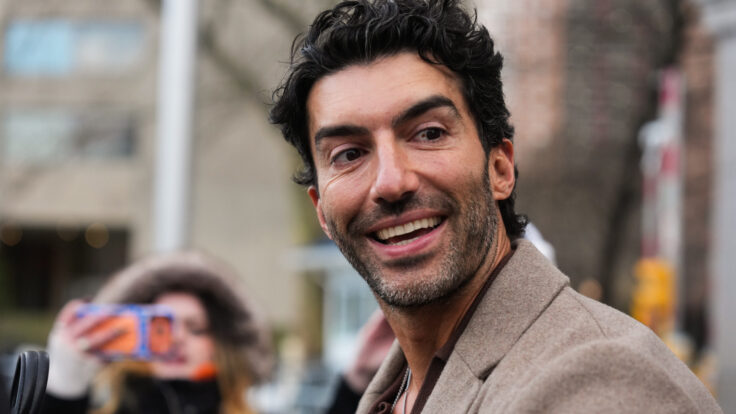
With the scorched-earth litigation in the It Ends With Us saga reaching its denouement last week,
the consensus has emerged that while everyone involved was damaged, Justin Baldoni—less established than Blake Lively and Ryan Reynolds—arguably took the hardest hit to his career. Of course, the battle isn’t quite over as Lively presses ahead with her claims that Baldoni must pay her legal fees and additional
damages. But is Baldoni toast?
This is Hollywood, so let’s not be hasty. As far as anyone seems to know, Baldoni still has the backing of billionaire Steve Sarowitz, the founder of a payroll-services company who invested $125 million and co-founded Wayfarer Studios with Baldoni in 2019. As one manager put it, “If you have money, you’re always going to stay in the game in some capacity.”
When it comes to the money, though, the tale is a little curious. Both Baldoni
and Sarowitz are adherents of the Baha’i faith, as are various employees of their production company. Alongside Wayfarer Studios, in 2021 the two men founded, and Sarowitz funded, the Baha’i-inspired Wayfarer Foundation to “advance humankind spiritually towards a future peaceful world civilization.” (Irony noted.) But in May 2025, after giving away nearly $60 million, Sarowitz abruptly shut the foundation down, citing harassment due to his involvement in the Baldoni-Lively legal
brawl.
Certainly he had been through a very unpleasant episode. At about 3:25 one morning in April 2025, Sarowitz found a fire burning in a trash can in the driveway of his suburban Chicago home. A person claiming to be the arsonist then texted Sarowitz’s wife, threatening to take the couple’s daughter hostage unless they paid $80,000. “If you guys are prepared to spend a hundred million to ruin the lives of Blake Lively and her family, we are sure you can spare a few for your daughter,”
the text said. A man from Sarowitz’s Highland Park neighborhood was later charged with multiple felonies in the matter. Authorities found nothing linking the suspect to the Lively camp.
But a Wayfarer source made it clear who the billionaire blames. “Blake’s lawsuit, which was the impetus for the negative press, social media, and the arson and kidnapping threats of [Sarowitz’s] daughter that followed, was one of the main contributing factors for Sarowitz choosing to sunset the Wayfarer
Foundation,” this person said. “It was not the only factor, but certainly the largest.” (A rep for Lively did not respond to a request for comment.)
Why would Sarowitz stay the course at the studio after shutting down the foundation? (Noting that by then, Wayfarer had hit its first box-office gusher with It Ends With Us.) I got no answer to that question. But it’s not like the publicity around Sarowitz evaporated. Last month, just before the partial settlement was reached,
Lively’s legal team pressed the court to let potential jurors hear testimony about his alleged incendiary comments regarding Lively and Reynolds, including a remark that he was in fact willing to spend $100 million to “ruin the lives” of the couple.
Though the Wayfarer source said Sarowitz is still backing the production company, it’s unclear at what level. “While Steve still finances Wayfarer Studios, and is co-founder, it has its own money and is not solely reliant on Steve’s funding,”
this person said. I asked what percentage of Wayfarer’s money comes from Sarowitz and what other sources provide financing but again got no answer.
An agency source with no involvement in the matter said he’s been assured that Sarowitz is indeed “committed to the company and committed to the guy”— i.e., Baldoni. This person said he’s been told that Sarowitz “paid every one of the litigation bills on time, never tried to get a cut rate, and sees it as a point of pride” because he
thinks Baldoni was “unfairly attacked.” Still, this person said he’s seen wealthy backers insist they were sticking with a Hollywood adventure only to find that “it gets harder and harder to get money out of them.”
Another talent rep involved with a film that had been at Wayfarer before moving it told me, “I don’t know how real the money is. They were saying they were financing things and then they were pretty much like, we’re not really financing stuff now.” (According to a Wayfarer
source, the studio has three fully financed films that will be announced in the months ahead.)
It’s unclear how many projects Wayfarer has lost, but clearly there have been some, including, believe it or not, a live-action Pac-Man film that Baldoni apparently was hoping would reset the narrative. WME, which represents Lively and Reynolds, dropped Baldoni, which didn’t help. The Wayfarer source said UTA is now handling domestic sales of Wayfarer’s upcoming Dinner With Audrey,
starring Thomasin McKenzie as Audrey Hepburn, and “is representing the studio and its filmmakers moving forward.” A UTA source said the agency reps Wayfarer solely as a financier and does not represent their filmmakers. (Baldoni is an exec producer on Audrey, but did not direct or appear in the film.)
Assuming the money is there, Wayfarer has the means to buy material, which can be the key to luring talent. (Wayfarer was in a position to make It
Ends With Us after acquiring the rights to the popular Colleen Hoover novel.) “You get a great script—it doesn’t have to be expensive or big-budget, it has to be great—and he could resurrect himself through quality,” said an agency source regarding Baldoni. As far as talent avoiding the company, one agent told me, “If there was a good project and they had the money, 99 percent of actors and actresses would engage.” Another leading agent concurred. “There are just so few
options out there,” he said. “Beggars can’t be choosers. If they need a job, people will do it.”
|
Thanks to Eriq and Kim. I’ll see everyone on Thursday evening.
Matt
This newsletter has been updated. |
|
|
|
Puck founding partner Matt Belloni takes you inside the business of Hollywood, using exclusive reporting and insight to explain
the backstories on everything from Marvel movies to the streaming wars.
|
|
|
|
Ace media reporter Dylan Byers brings readers into the C-suite as he chronicles the biggest stories in the industry: the future
of cable news in the streaming era, the transformation of legacy publishers, the tech giants remaking the market, and all the egos involved.
|
|
|
|
Need help? Review our
FAQ page or contact us for assistance. For brand partnerships, email ads@puck.news.
You received this email because you signed up to receive emails from Puck, or as part of your Puck account associated with {{customer.email}}. To stop receiving this newsletter and/or manage all your email preferences, click here.
|
Puck is published by Heat Media LLC. 107 Greenwich St., New York, NY 10006
|
|
|
|
|