 |
 |
|
Welcome back to What I’m Hearing, still coming at you from my secret summer retreat. Today we’ve got a treat: My Puck colleague (and former investment banker) William Cohan is here to banter about the challenges facing Disney, and I’ve got a wild story of Vanna White fighting back against pay disparity.
As always, if you’ve been forwarded this email, become a Puck member here.
Let’s begin…
|
|
|
- It’s not TV. It’s HBO on Netflix: Apologies to the anti-David Zaslav outrage machine, but isn’t a shift to potentially licensing a few HBO shows to Netflix a healthy move for the overall entertainment ecosystem? Sure, it may weaken Max a little, and it’s—gulp— Netflix, which, to HBO lifers, is like Prada selling its couture at Ross Dress for Less. But any transaction that puts a fresh dollar value on a show is good for the talent that made the show (assuming they are paid at least something), especially when it breaks up the full vertical integration of most streamers. HBO licensed to linear outlets, as well as Amazon and Hulu. Holding their collective nose for a Netflix deal at a time when Zaz is firing thousands and gutting outlets like TCM seems like a small sacrifice.
- Elsewhere in WBD scandals: What is CNN general counsel David Vigilante thinking? A judge just halted the high-stakes arbitration with fired anchor Chris Cuomo because the arbitrator, Steve Sonnenberg, is alleged to have previously repped CNN and didn’t disclose that fact. Does CNN not run full conflicts checks on its potential arbitrators?
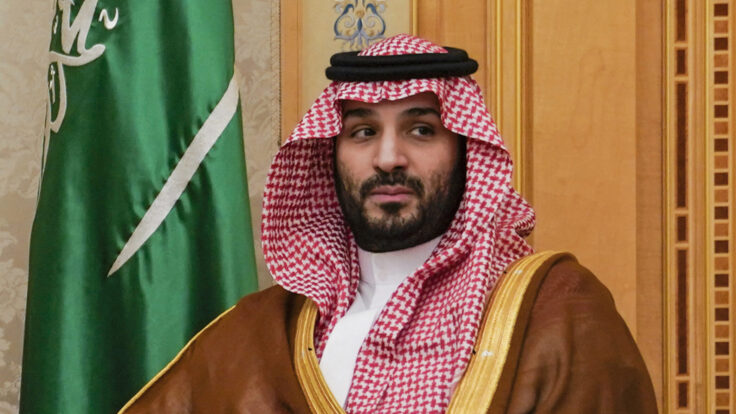
- Big day for my Disney P.R. friends: Much has been made today of former Bob Iger whisperer Zenia Mucha joining TikTok as head of communications and marketing, a very big job. But not to be outdone, Geoff Morrell, her successor and Disney’s top comms person for four chaotic months last year, just registered as a foreign agent for the Saudi government. Yes, the guy who helped get Disney into the Florida mess will spin for the odious LIV Golf-PGA Tour merger and “support government affairs engagement.” “Kinda perfect,” texted one of Morrell’s former colleagues.
- Disney “wins” the Ryan Murphy sweepstakes: Congrats to Disney TV chief Dana Walden for prevailing in a bidding war of one for Ryan Murphy’s services. Bela Bajaria decided months ago that Netflix was out on Murphy, so his return to Walden, the godmother to his kids, was a matter of papering a deal. One request: Can we all officially stop calling Murphy’s Netflix arrangement a “$300 million deal”? It was never $300 million.
- Academy kills the Oscar “qualifying runs”: As I foretold back in March, the Oscars are now requiring an additional 7 day theatrical release in 10 major markets within 45 days of its initial release to qualify a film for best picture in 2024 and beyond. Yes, it’s a small gesture for theaters and a shot at Netflix, but it won’t impact 98 percent of movies. It does end the indie/foreign distributor play of the cheap NY/LA qualifying release followed by a streaming deal. And nearly all documentaries, which actually do get submitted for best picture, are out of luck.
- Box office over/under: If Jennifer Lawrence can’t open a comedy to more than the $11 million tracking for No Hard Feelings, we might need to declare the mid-budget star-driven summer movie officially dead. So I’ll take the over.
|
| Vanna White Would Like a Raise |
|
| After I wrote about Wheel of Fortune on Sunday and the impending retirement of host Pat Sajak, a Sony TV source reached out to note one thing I missed: Vanna White, Sajak’s co-host for four decades, is negotiating to continue on Wheel beyond when her deal ends at the conclusion of the 2023-24 season. I’ve since confirmed that fact (a Sony rep declined to comment on that and other new details reported here), and it led me down a wild path about “America’s Game” and what’s going on behind the scenes.
White currently makes about $3 million a year for her duties on the syndicated Wheel, per multiple sources. Sajak makes almost five times as much. Sure, OK, he’s the host, she’s the co-host, and—cue the voice of the Bobs from Office Space—What would you say that Vanna… actually… does… here? An OK point. White doesn’t even turn letters anymore, instead tapping the lighted rectangles and silently cheering on contestants from her perch. Ed McMahon and Andy Richter made way less than Johnny Carson and Conan O’Brien, respectively. Analogous? There’s no real comp for what Vanna does, which means she’s not exactly Jennifer Lawrence or Michelle Williams when it comes to shining examples of pay disparity in Hollywood.
But… that’s a pretty shortsighted way of assessing value, in my opinion. White spends the same time on set as Sajak—more, actually, due to hair, makeup, and wardrobe obligations, my Sony TV source noted. She does way more publicity for the show than Sajak. She’s a personality, part of the show’s look, feel, and, let’s be frank, appeal. Her enthusiasm and silly button segments with Sajak at the end of each episode are fan favorites. And at this point, she’s arguably become more associated with Wheel of Fortune than Sajak is. The duo are in all the Wheel marketing together (unlike the late-night shows), and Sony’s own research shows Vanna’s appeal to women helps drive the show’s older, female viewership. In short, she arguably adds just as much value.
It’s one of those weird Hollywood things: Wheel of Fortune just works, it’s worked for 41 years, and it works in part because of the dynamic between Pat and Vanna. So it was a bit surprising to hear that some at Sony have even suggested eliminating the “Vanna role” when the new host is chosen. The thinking, as it’s been conveyed to me, is that a big name like Ryan Seacrest (or whoever ends up hosting) might not need an old-fashioned spokesmodel co-host. Yes, Vanna White might even get Dunkleman-ed.
That probably won’t happen, though, hence the current negotiation for a new deal. But amid all the uncertainty, White recently made a curious move: I’m told she hired Bryan Freedman, the super-tenacious litigator for everyone from Tucker Carlson to Chris Cuomo, and who represented the ousted Jeopardy! and Wheel producer Mike Richards during Sony’s botched Alex Trebek transition. I’m told Freedman is hitting the pay discrepancy issue hard with Sony, as well as possible gender discrimination with respect to White’s salary. According to three sources, White hasn’t had a raise in 18 years. Yes, 18 years. She got some bonuses along the way, but never a straight pay increase. I know she’s hardly a ditch digger or school bus driver, but given her longevity and profile, and the increased value of the Wheel asset to Sony, that seems nuts to me.
Vanna, now 66, does make more for ABC’s primetime Celebrity Wheel of Fortune, and she’s allowed to do outside endorsements, like a recent deal with IGT to plug a Wheel casino, though that arrangement doesn’t exactly break the bank, according to two sources. A new season of Celebrity Wheel is about to start filming its 20 episodes for the 2023-24 season. Perhaps because Freedman is now involved, Sony has offered White a raise on that show, from $55,000 an episode to $66,000, or 20 percent. Sajak makes about $300,000 an episode for primetime (inclusive of a bonus), per the three sources. Any increase White negotiates for the primetime show would presumably be used as precedent to get White closer to Sajak on her deal for the syndicated show. Or so she hopes.
This isn’t actually the first time Sony has flirted with eliminating the Vanna role. Back in the late ‘90s, when Wheel and Jeopardy! were considered geezer Ambien and weren’t the cash cows they are today, an exec proposed cost cuts including White. People freaked internally, fearing the fan backlash, and Sony ultimately decided against the move. But Vanna—who, by all accounts, is super nice and doesn’t court conflict—has always felt vulnerable, and she’s bought into the idea that she’s lucky to have the job. She also had a lawyer, Joe Horacek, who didn’t do much to help dissuade her. (Sajak also used Horacek for a time, but switched to attorney Bob Madden.)
Now, as I noted Sunday, the Wheel/Jeopardy! combo is considered a financial juggernaut in a declining TV market. Before the syndication deals with ABC were up at the end of 2022, Fox and CBS stations both approached former Sony chief Mike Hopkins to bid to take over the show at a much higher price. Negotiations got pretty far with current Sony leader Tony Vinciquerra and team, but I’m told a personal call from Disney C.E.O. Bob Iger—and perhaps a veiled threat that Sony does a lot of TV business with Disney outlets—sealed the renewal at ABC, with hefty fee increases.
Now, with Sajak leaving, White and Freedman likely see an opportunity to remedy the salary issue. If some at Sony might want to can her, others recognize she’s consistency at a time of change in a genre of TV that doesn’t like change. We can argue about what Vanna should be making after four decades of looking and acting fabulous on Wheel of Fortune. But like everything in Hollywood, the question is what should Vanna be making relative to both Sajak and the studio that produces the show. And 20 percent of her male co-host seems low to me. Hopefully Sony will fix this situation faster than the best Wheel contestants can buy up all the vowels.
Now for my back and forth with Bill Cohan about Disney… |
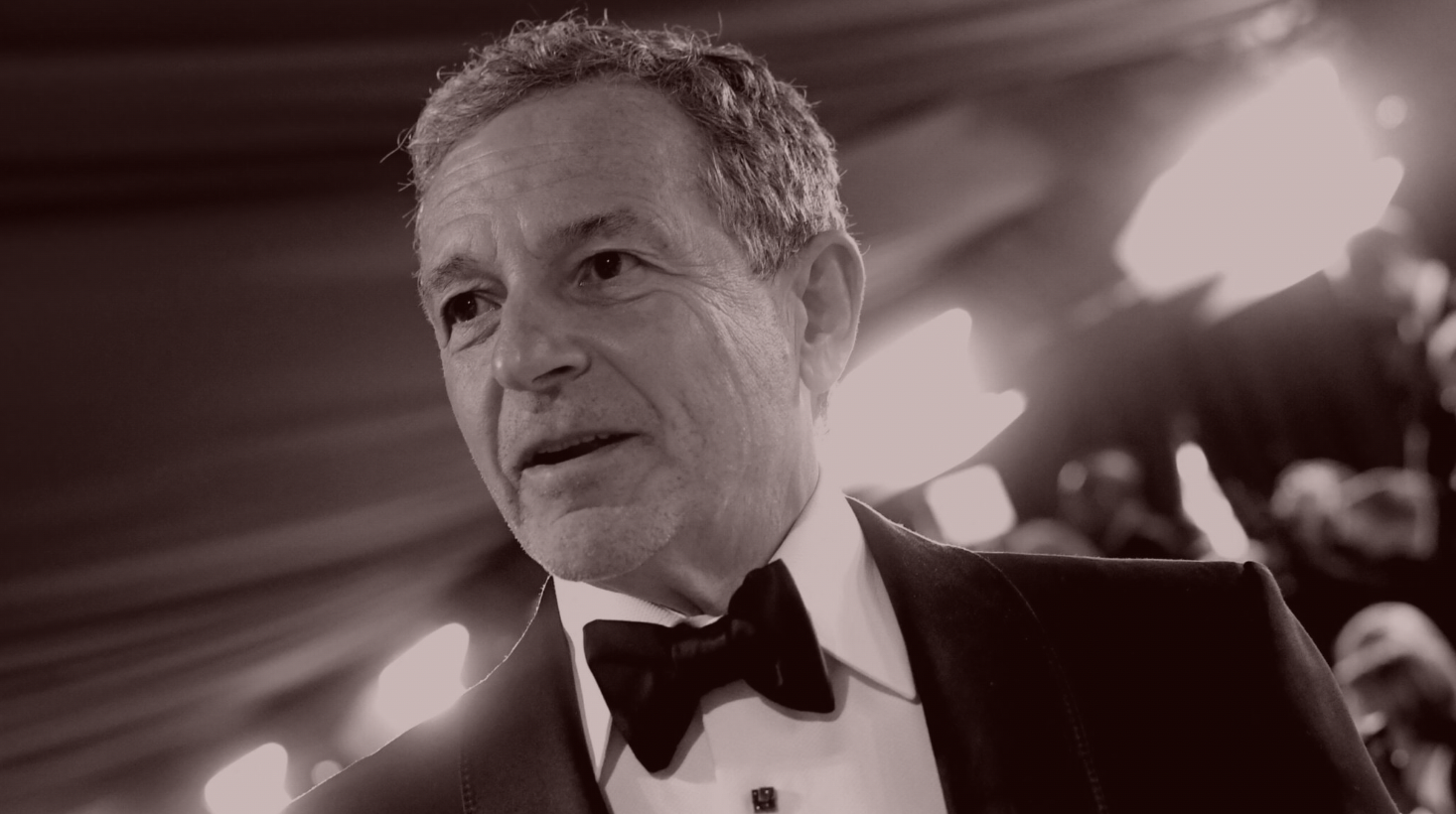 |
| The Iger Sophomore Slump |
| Succession planning, ESPN, Hulu, the Walden question, and a CFO search: Iger’s second act isn’t what he planned, so what’s the way out? Two Disney-watchers debate. |
|
|
|
| Here’s my conversation about the latest headaches at Disney in the second Bob Iger era, with former M&A banker Bill Cohan. |
|
|
| Matt Belloni: Hi Bill, it’s been awhile. It’s certainly been a loooong few months for Bob Iger in his return stint as Disney C.E.O. He’s laid off about 7,000 employees; pledged to slash costs by $5 billion; fended off investor Nelson Peltz and his disgruntled mini-me Ike Perlmutter; sued the governor of Florida; watched as the cable bundle that propped him up in his first C.E.O. tenure now drags him down; distanced himself from Hulu and then apparently re-committed himself to spending billions to take the platform out from Comcast; Pixar and Disney Animation can’t buy themselves a hit (and at $200 million a pop for these movies, they’re definitely trying). Oh, and his screenwriters are on strike. The Disney stock is flat for the year, and lower than when this supposed “savior” returned in November. When you look at the Disney balance sheet, what worries you most?
|
|
A MESSAGE FROM OUR SPONSOR
|
 |
| Winner of a Peabody Award and the Golden Globe®, SAG and Critics Choice Awards for Best Comedy Series, ABC’s hit comedy series “Abbott Elementary” is “absolutely perfect” and “TV’s best show,” according to The Daily Beast. Starring and created by Emmy®-winner Quinta Brunson, the series’ stellar ensemble includes Emmy-winner Sheryl Lee Ralph, Tyler James Williams, Janelle James, Lisa Ann Walter, Chris Perfetti and William Stanford Davis. “Abbott Elementary” is for your Emmy consideration for Outstanding Comedy Series and all other eligible categories. |
|
|
| William Cohan: There’s no question Iger has his hands full with an increasingly complex business model. He’s got problems nearly everywhere (except ironically from the parks, the business his successor/predecessor ran), including a streaming business losing billions of dollars, movie franchises that seem tired, an ESPN linear channel losing subscribers while also having to pay insane fees for content. Sheesh! And it didn’t help that Elemental just flopped and the once mega-successful Pixar unit appears to be floundering, as you recently noted. Then there is the sideways stock price.
But my biggest worry for our friend Mr. Iger is whether he will actually be able to find a successor, as he promised he would, during the rapidly shrinking two-year tenure of his round trip to that 6th floor office in Burbank.
Matt: OK, let’s go there first.
Bill: Not only do I not see any obvious candidates out there to succeed Iger—it ain’t going to be NBA Commissioner Adam Silver, that’s for sure—I don’t yet believe Iger is actually serious about stepping away. In other words, I wouldn’t be the least bit surprised to see Iger extend his Disney runway for another few years. After all, he remains a vigorous 72-year-old without any clear successor lined up. I’m thinking he’s in Jamie Dimon mode at JP Morgan Chase: a highly respected C.E.O., with political aspirations, who is not ready or willing to give up the seat and has been skillful in eliminating replacements. What do you think, Matt?
Matt: At this point, it would be a shock to see Iger just peace out at the end of 2024. I think he’ll make a move, like elevate his TV chief Dana Walden or parks guy Josh D’Amaro (both of whom he’s taking to Sun Valley for the first time) or bring back his former C.F.O. Tom Staggs (if Staggs’ hurt feelings or commitment to other endeavors would allow it), or identify another heir apparent, and then announce a transition period into 2025 or 2026, where Iger stays but he’s committed to one of these heirs. Then maybe he becomes a hands-on executive chairman, or a co-C.E.O., or the chosen person is paired with a co-C.E.O. to compliment their skills. Something like that.
Bill: Oh no, Matt, not a co-C.E.O. situation. That never works out. Don’t see that happening
Matt: That does seem unlikely, but not a lot of great options here. Iger also just lost his longtime C.F.O. Christine McCarthy, though most people seem to think she was pushed. Some think Iger’s pick to replace her might become a C.E.O. successor frontrunner. How much are you reading into the McCarthy exit and the fallout?
Bill: Disney has done a masterful job of P.R. on this one. On the one hand, McCarthy’s husband is unwell and she has had her own health problems and has been around the Disney C-suite for a long time. On the other hand, it sounds like there was real friction between the top executives and, as we know, Iger is not shy about defenestrating a C.F.O. It might also be a way for him to put into the job someone who could take over. That’s, of course, not the Disney way. There has never been a C.F.O. at the company who became C.E.O., at least not in the past four decades when Disney has had actual C.F.O.s. But finding a superstar C.F.O. who people might think could ascend—think Mike Cavanaugh at Comcast—would go a long way to solving Disney’s main problem of who the heck is going to lead the company for the longer term.
Matt: I re-read a big chunk of Disney War earlier this year, when I was reviewing James B. Stewart and Rachel Abrams’ Sumner Redstone book for The Washington Post. People forget how susceptible Disney was to various takeovers, hostile and otherwise, over the years. I don’t want to discuss that persistent Apple buyout rumor, which I don’t think would ever make it past regulators. But in your estimation, what would need to happen for Disney to be truly in play?
Bill: Disney is a public company, without dual-class stock, and is widely held. There is no concentrated ownership. So all it would take to “put Disney in play” is for a company with the wherewithal to make an offer, either publicly or privately, to buy it. Twitter was not for sale before Elon Musk made public his $44 billion hostile offer for the company. In the end, as was easily predictable, the Twitter board had no choice but to accept Elon’s very generous offer, since absent it, the Twitter stock would have fallen precipitously.
Matt: And now they look like geniuses for getting out!
Bill: Elon’s deal for Twitter is one of the worst in Wall Street history from a value destruction point of view, but it was one of the best deals in Wall Street history from the Twitter shareholders’ perspective. The same thing could certainly happen at Disney if there were a buyer out there with the mindset to try to pull it off. Disney’s market value is now around $160 billion. Let’s say a bid of $200 billion—a 25 percent premium—gets the deal done, or puts enough pressure on the Disney board to sell. |
|
|
| Matt: Back in 2004, when Comcast C.E.O. Brian Roberts launched a hostile bid for Disney at $54 billion (plus $12 billion in debt), that was a 10 percent premium. The Disney board said no, investors quickly bid up the stock beyond that offer, and Roberts eventually backed away with his tail between his legs. The question now is who can afford a $200 billion acquisition, which would easily become the largest M&A deal in history?
Bill: The usual suspects, of course: Apple (market value: nearly $3 trillion, incredibly); Amazon ($1.3 trillion); Microsoft ($2.5 trillion); Alphabet ($1.5 trillion) and Meta (back up to $715 billion). Not sure I see any of them pulling the trigger, especially going hostile, but any certainly could. On the other hand, if Iger and the Disney board decided to put the company up for sale—there being no successor or viewing the company’s myriad problems as too intractable to solve—then I would think every one of these five companies would take a serious look, as might a few foreign entities. Regulatory approval would certainly be an issue, unless the stock price continues to slowly set into the west, as it seems to be doing month after month.
Matt: Right, so at what point would Iger and the board need to sell Disney to save it?
Bill: When they think Disney would somehow be better off as part of Apple or the others. But I would say this is a very low probability scenario, and probably not one that Iger will allow himself to consider. That would forever tarnish his legacy and brand him as The Man Who Sold Disney, which, other than being a good title for an eight-episode limited series, is not something to aspire to achieve.
Matt: I agree there. Things would have to get really bad. Or maybe Ron DeSantis kicks Disney out of Florida. Another topic: Iger’s comments, and everyone I’ve talked to, suggest he’s going to buy out Comcast’s share of Hulu in early 2024, which will run Disney at least $9 billion, and possibly a lot more, depending on the valuation. Disney can afford to take that financial hit, but the company is already pretty leveraged. You’ve been a proponent of creative dealmaking here between Disney and Comcast. How should they handle Hulu?
Bill: Bob, please don’t just buy Hulu for $9 billion! (Or whatever you and Brian are able to negotiate.) My preference by far would be for Disney to swap ESPN for Comcast’s stake in Hulu, plus whatever cash from Comcast is needed to equalize the valuations of one-third of Hulu and the 80 percent of ESPN that Disney owns. This deal would make Iger look smart, would get Disney the rest of Hulu, plus a bunch of cash to use to pay down debt and invest in streaming, and offload the headache of ESPN to Comcast, which would probably be in a better position to manage the decline and the higher cost of live sports. It strikes me that Disney is running out of gas on ESPN and no longer has answers for it. I don’t see them getting much value by separating ESPN into its own entity. Roberts and Cavanaugh would bring fresh energy and ideas to the franchise and figure out its streaming future.
Matt: I don’t know. Just as you said Iger doesn’t want to be known as the guy who sold Disney, I don’t think he wants to be the guy who got Disney out of the sports business. Sports is proving to be the most powerful content in the world—in the U.S., sports accounted for 94 of the 100 most-watched telecasts last year—and if Disney wants to continue for the next 50 years as the biggest entertainment company in the world, it kinda needs to be in the sports media business.
Bill: I don’t know about that, Matt. The economics of sports no longer work. The cord cutters are everywhere. The cost of the rights to broadcast live sports are rising exponentially, rendering the ESPN income statement highly unattractive. I think Iger is smart enough to see that he’s got nothing left in the tank on ESPN. This is the moment to recognize the swap opportunity. Remember Matt, pride goeth before the fall. |
|
|
See you Sunday,
Matt |
|
|
|
| FOUR STORIES WE’RE TALKING ABOUT |
|
|
|
|
|
 |
|
|
|
Need help? Review our FAQs
page or contact
us for assistance. For brand partnerships, email ads@puck.news.
|
|
You received this email because you signed up to receive emails from Puck, or as part of your Puck account associated with . To stop receiving this newsletter and/or manage all your email preferences, click here.
|
|
Puck is published by Heat Media LLC. 227 W 17th St New York, NY 10011.
|
|
|
|