 |
|
Welcome back to What I’m Hearing, hopefully you’ve already left town for Thanksgiving week. (WIH is off on Thursday, back next Sunday.)
A few readers crowned a clear winner in my search last Sunday for the thirstiest awards season campaigner. Bradley Cooper raced to participate in a CBS Sunday Morning interview with Leonard Bernstein’s family to plug Maestro seemingly seconds after SAG-AFTRA called an end to the strike, thus making him first with a major campaign piece aimed at the older demo he needs to shore up. Great work, Bradley.
Speaking of awards, Fox found someone to host the rescheduled Emmys on Jan. 15. It’s Anthony Anderson, I’m told. As per recent tradition, Anderson (and his mother) are in business with Fox on the upcoming game show We Are Family. Remember when awards shows didn’t just serve to promote the networks airing them?
Programming note: This week on The Town, Lucas Shaw and I parsed Bob Iger’s first year back at Disney; Brian Stelter broke down the post-Rupert business of Fox; and Justine Bateman voiced the problems that some actors have with the SAG-AFTRA A.I. deal. Subscribe here and here.
Was this email forwarded to you? Click here to become a Puck member, or email fritz@puck.news to gift a subscription to that special frenemy in your life.
Discussed in this issue: Tim Cook, Brie Larson, Chris Aronson, George Cheeks, Nelson Peltz, Jay Penske, David Field, Steph Jones, Martin Scorsese, Kelly Bush Novak, Michael Klein… and the wisdom of A.I. David Zaslav.
But first…
|
| Who Won the Week: Helen Hoehne |
|
| The president of Golden Globes LLC, the troubled OFKATHFPA (Organization Formerly Known as the Hollywood Foreign Press Association), landed a Hail Mary savior in CBS/Paramount+, which said on Friday that it will air this year’s show on Jan. 7.
A little more on this one… |
| And the Golden Globes Go to… CBS |
|
| CBS passed not once but twice on the Golden Globes, so when Jay Penske, the trade media magnate who now also controls Globes producer Dick Clark Productions, came back a third time, it was on his knees, with a price that CBS’s George Cheeks couldn’t refuse. I don’t have the exact license fee, but I’m told by three sources it’s nowhere near the more than $60 million a year (!) that NBC was paying. (One source says it’s less than $10 million, but that’s not confirmed; CBS declined to comment and Dick Clark’s publicist didn’t respond.)
Remember, NBC paid full freight for January’s show in exchange for exiting its long-term deal litigation-free in the wake of the HFPA diversity scandal, and Dick Clark accepted that arrangement just to get its key asset back on TV after the 2022 show was kicked off the air entirely. That January telecast generated 6.3 million viewers, a record low, but it was on a Tuesday with no lead-in. So the CBS broadcast, airing Jan. 7 in the traditional slot after Sunday NFL games (though opposite NBC’s Sunday Night Football), should improve ratings significantly, especially if producers Glenn Weiss and Ricky Kirshner find a halfway decent name to host. Those plans are now afoot.
This is a big haircut for Penske, but a necessary one. Getting the Globes on a network actually watched by the remaining demo for awards shows (older women) was the only thing that mattered for an event that risked sliding into total irrelevance. Without that perch, a show that once regularly lured more than 20 million viewers would become the Critics Choice Awards, or the Indie Spirits, or DCP’s Billboard Music Awards—which, as I mentioned Thursday, is airing on Penske’s own website tonight. “This milestone isn’t perfect,” Penske admitted in an email to DCP employees on Friday. “But a tremendous step forward for DCP, and one we should celebrate.” With DCP’s BBMAs and American Music Awards both currently homeless, and its Academy of Country Music Awards hanging on by a thread after a price drop to get a new two-year deal at Amazon Prime Video, any positive news about an awards show is a win.
Ironically, the Globes actually ended up benefiting from the lengthy actors strike. CBS now won’t have fresh primetime shows until February, and there’s only so many Yellowstone reruns or CSI: Timbuktu foreign filler to air. So it’s worth picking up three hours of original content on a Sunday in January that advertisers do still like and that can promote the return of CBS originals. The Globes, despite all their problems within the industry, is still a big, well-known brand, and people in the real world don’t care at all about the diversity scandal. They just want to see stars looking pretty and drinking champagne and potentially giving each other side-eye. And for CBS, the price was right.
Now the only question (well, beyond whether a hotel workers strike at the Beverly Hilton will cause Globes attendees to cross a picket line) is whether stars will show up. For the most part, they did last January. Kelly Bush Novak and the most militant of the grandstanding publicists have largely backed down after all the reforms, the addition of new voting members, and the expulsion of some of the more problematic old ones. Member press conferences have resumed, but via Zoom and with questions prescreened. So the publicists got what they were after all along in this supposed crusade for diversity: control over the one group of journalists they didn’t already control. Now that the OFKATHFPA has fallen in line, and a real television network has endorsed the Globes, the show can, and likely will, go on as usual. |
|
|
“The split second court opens on Monday, X Corp will be filing a thermonuclear lawsuit against Media Matters and ALL those who colluded in this fraudulent attack on our company.”
—Elon Musk, so-called free speech “absolutist,” threatening to sue over true statements made about Nazi content appearing opposite brands on Twitter/X that caused Disney and other studios to pull ads. Let’s see if this B.S. lawsuit actually materializes.
Runner-up: “Cut costs and pay down debt, and do the best you can. That’s his job. It’s not complicated.”
—Barry Diller, go-to quote machine for all media executive profiles, on Warner Bros. Discovery C.E.O. David Zaslav, in the Times Magazine. |
 |
| Apple, Marvel, and the Great Box Office Fallacy |
| In a perverse side effect of the streaming age, Hollywood seems unwilling to call a flop a flop. Instead, the question of what is “profitable” or “value-additive” has become convoluted—especially if it involves a pure-play streamer or a Scorsese movie. |
|
|
|
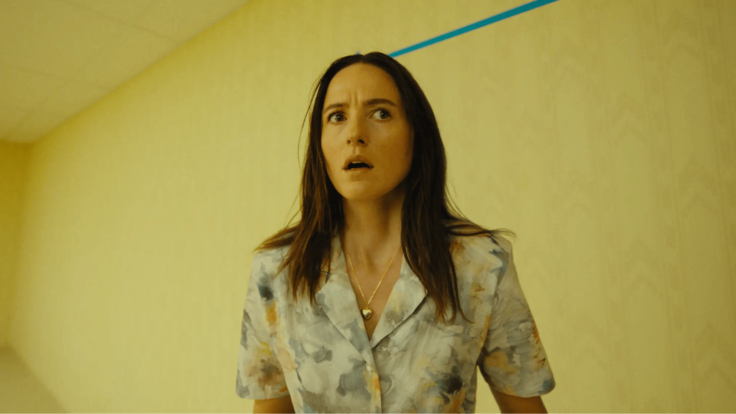
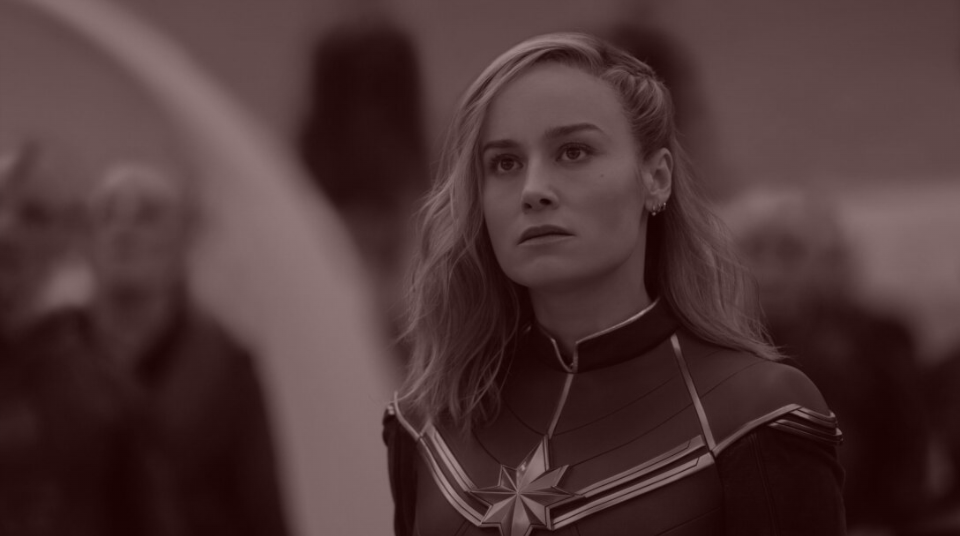
| You’ll probably read many articles this week about how much money The Marvels will lose for Disney. The Marvel film, with a budget in the $250 million range, dropped an embarrassing 78 percent in the U.S. in its second weekend, bringing its global gross to about $160 million. This thing will likely top out at less than $200 million in theaters, or, doing the usual math and factoring in the marketing, about $400 million less than the film needs to become “profitable.” Ouch.
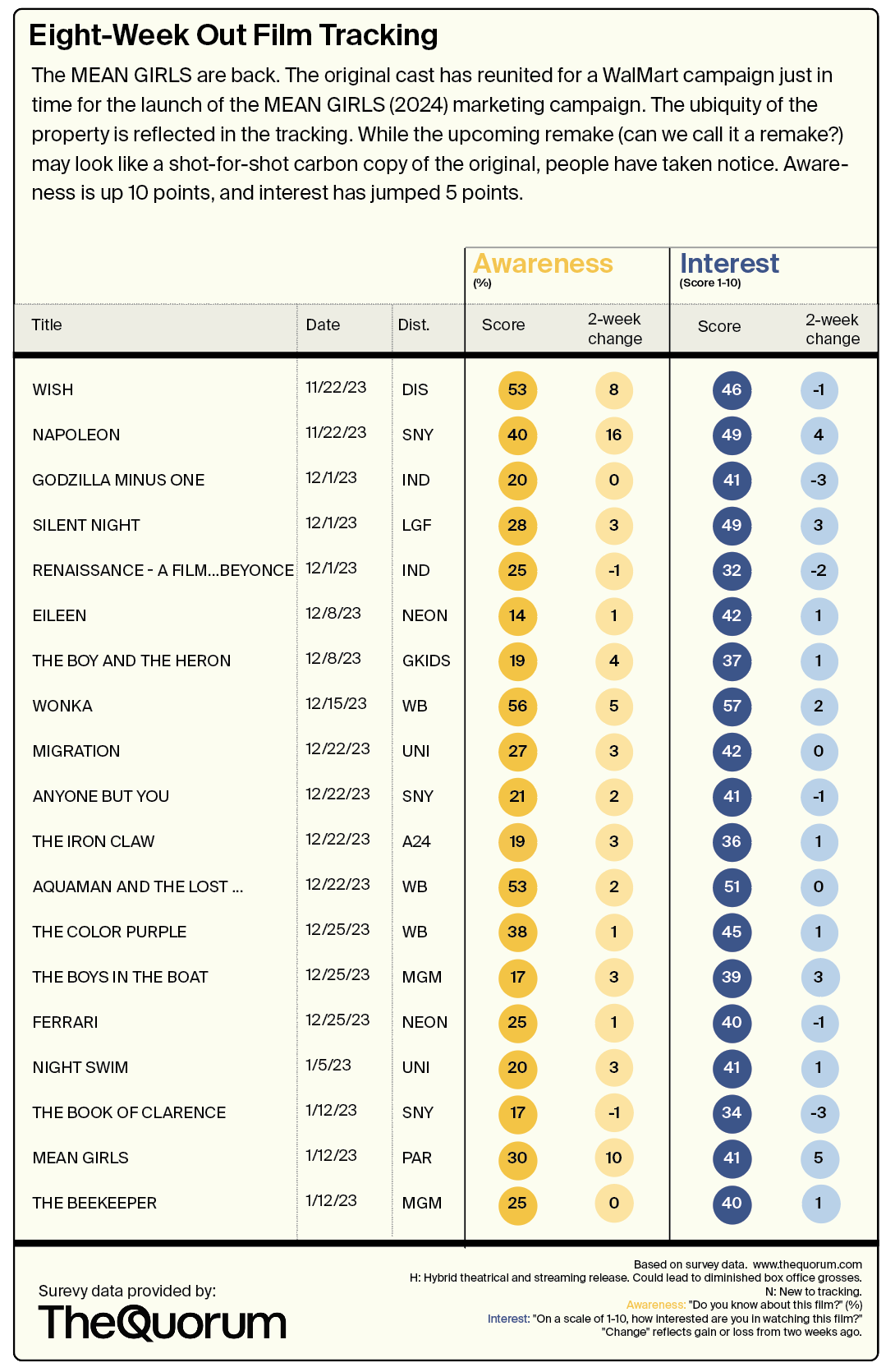
It seems like everyone in marketing and P.R. at Disney has already moved on from Marvels and is now trying to prevent another problem with Wish, its holiday animated film, which actually declined a little this week in the prerelease tracking. Brie Larson was on the Today show on Friday to plug her Apple TV+ show and, unless I missed it, didn’t even mention the massive Marvel movie in which she stars and is currently in theaters. That’s cold.
But this question of what is profitable or value-additive or even a hit has become so convoluted lately, as both Amazon and Apple have pushed into traditional bigger-budget theatrical exclusives. Even as the trades and others are jumping all over Marvels, they’re still holding on to this fiction that Killers of the Flower Moon—a movie that also cost in the $250 million range and will fail to generate $200 million in worldwide gross—is somehow a great success because its studio is Apple, not Disney. The same thing happened earlier this year with Ben Affleck’s Air, the Amazon release that grossed $90 million worldwide and was declared a smash hit despite costing the company $130 million to acquire.
Part of that is just spin. Chris Aronson, head of domestic distribution at Paramount, which is releasing Killers in theaters, is very good at massaging the media. Thus, the laughable headlines about how Killers “impressed” and was off to a “great start” when it debuted to just $23 million despite that massive budget and the star power of Leo DiCaprio and Martin Scorsese… Even at Paramount, people were surprised by the fawning coverage.
There’s also this bizarre notion, which is prevalent in the media, that Apple doesn’t need to make money on its content initiative, so who cares if the box office isn’t there? Apple makes plenty of high-cost content viewed by very few people. Being in business with Scorsese is enough, the argument goes, that the association with a cinematic legend will allow services chief Eddy Cue to justify the expense to C.E.O. Tim Cook—even if Scorsese took an enormous fee for himself and delivered a movie so long that no company could make money distributing it. After all, Flowers will almost certainly generate Oscar nominations, and it might even win a few—unlike Napoleon, Apple’s other pricey period pic from an octogenarian director. Whenever I question why Apple is in the movie business, I flash back to witnessing Cook and Cue at the Governors Ball the year that CODA won best picture. Their smiles that night address most questions I might have.
But that’s ego, not business, and it shouldn’t impact how the industry views movie releases. These days, Apple, Amazon, and even Netflix—when it puts films in theaters for reasons other than to try to delude filmmakers, awards voters, and the American Cinematheque into thinking that it cares about exhibition—are seen as leveraging theaters to make their streaming releases more robust. And yet, the traditional studios are not given the same pass. In pumping up the Killers opening, Variety noted: “Analysts have been more generous in reading the box office tea leaves because streaming services, like Apple, have different metrics of success compared to traditional theatrical players. They don’t place as much emphasis on box office, instead viewing ticket sales as a way to bolster the film’s profile before it lands on streaming.”
Uh, really? At this point, every major studio except Sony Pictures has a streaming service, and every streamer sees a benefit when a movie that played in theaters—and thus was marketed—debuts on the service. Hits in theaters are often hits on streaming, and even well-marketed flops can boost audiences at home. Will Killers of the Flower Moon help bring people to Apple TV+ when it debuts there? Sure, though that service has only about 15 to 20 million subscribers in the U.S., according to Parrot Analytics. In all likelihood, The Marvels will also be very meaningful to Disney as a Disney+ title because it will satisfy the Marvel fans who subscribe for exactly this kind of content. Ant-Man and the Wasp: Quantumania, the most recent Marvel “flop,” debuted at No. 2 on Nielsen’s streaming top 10 for movies when it dropped on Disney+ in May; it was top 5 overall that week. Guardians of the Galaxy: Vol. 3 debuted at No. 1 on the film chart, and No. 3 overall. The Marvel movies do really well on streaming, and arguably do more to add value to Disney+ than a Scorsese limited series masquerading as a movie will ever do for Apple TV+, given the greater scale of Disney+ and the importance to its bottom line.
So let’s stop excusing poor performance in a movie’s first window by claiming the whole point is succeeding in the second window. The Marvels is a flop. Killers of the Flower Moon is also a flop. Both will accrue additional value to their respective streaming services when they debut there, just as all movies make additional money in home video and other ancillary windows. Movie studios have always been playing the long game. |
|
|
| Nelson Peltz actually owns far fewer Disney shares than the number he leaked to the Journal, my colleague Bill Cohan reports. But rest assured, he still owns 100 percent of Ike Perlmutter’s heart. [Puck]
CAA acknowledges that its Evolution Media Capital merchant bank isn’t working and can’t land big deals. Maybe relaunching it with Michael Klein as CAA Evolution (guys, at least change the name!) will fix that, though Klein is keeping his existing M. Klein advisory firm separate. [WSJ]
Audacy C.E.O. David Field thought it was a good idea to bet his family fortune on a $1.5 billion deal for CBS Radio. Turns out terrestrial radio is no longer a great business. [Bloomberg]
Dry January: Just five wide releases are scheduled for early 2024—and three of them are on one weekend. [The Quorum]
Big thanks to Steph Jones, Lauren Sanchez’s publicist, for landing her client a vomitous Vogue profile that Amazon employees and friends of her ex, Patrick Whitesell, could pass around and mock all week. [Vogue]
A.I. David Zaslav (actually a former Kimmel director) helpfully—and totally realistically!—explains the Warner Bros. strategy behind shelving Coyote vs. Acme. [YouTube]
Another top lieutenant of David Miscavige has defected from Scientology and written a tell-all book with details on Tom Cruise and the “new Shelly.” [Daily Mail]
Now Jonathan Handel helps assuage concerns about a provision of the SAG-AFTRA deal… |
| A Quick Fix for (Some of) the Actors’ A.I. Contract Fears |
|
| I spent the weekend Zooming with 200 stunt people and 30 voice actors. Many, if not most, expressed deep frustration about the A.I. provisions of the SAG-AFTRA deal that members are currently voting on. A key concern, as I wrote on Thursday, surrounds the effectively involuntary nature of the “consent” that the studios and streamers are likely to request regarding the use of A.I.-based digital replicas of actors’ likenesses and voices.
As I was talking to a looping supervisor (“loopers” are actors who do background voices), I realized that the A.I. provisions in the tentative deal discuss “clear and conspicuous” consent but don’t articulate what, exactly, the language of consent will be. Rather than wait for the studios to prepare their own contract forms, I realized, the union could prepare and standardize the consent forms itself. I made that suggestion to SAG-AFTRA officials yesterday; the idea was met with enthusiasm, and less than 24 hours later, a high-ranking official told me that the union now plans to implement a version of the proposal.
Here’s why this is significant—and softens the blow of coercion inherent in a studio demanding consent from an actor, with the implicit (or explicit) threat of hiring someone else if consent is refused. First, the union can include explanatory text and check-the-box choices right on the form, making it clear and easy to use. For instance, the explanatory text can warn that blanket consent (e.g., “all sequels to the current movie”) is prohibited, and specific projects must be identified.
Second, with forms used for independent projects (with non-AMPTP companies), the union can resolve certain ambiguities and compromises in the A.I. language by making them slightly more favorable to actors. They did this when they issued a new media contract some years ago for independent producers. It generally followed the framework of the AMPTP language but in certain places was more favorable to actors.
Third, the forms can include “nudges” in the actors’ favor. For instance, the form for stunt performers could include a place to provide that if a stunt is done digitally, the performer would receive, say, 25 percent or 33 percent or 50 percent of the stunt adjustment (additional payment) they would have received had the stunt been performed physically. The producer could always specify 0 percent—that is, no digital payment in lieu of the physical stunt adjustment payment—but the nudge would incentivize some payment, even though not required by the collective bargaining agreement. If an industry consensus developed, the union could negotiate for contractual requirements of this sort in the next cycle, two and a half years from now.
Fourth, SAG-AFTRA can legally require non-AMPTP companies to use the union's forms. That will actually be a relief to many independent producers, who would otherwise have to hire and pay lawyers to draft the forms. Fifth, in the next round of triennial bargaining, the union can advocate for the standardized forms to be included in the collective bargaining agreement as mandatory for all signatories, including the AMPTP companies.
There could also be a “No Consent” form allowing the performer to affirmatively express that consent is withheld. Likewise, SAG-AFTRA should establish a registry at the union for performers to instruct the union as to whether or not they consent to digital replicas after death, given that the union controls postmortem consent under the new A.I. provisions if the estate or legal representative is not locatable or ascertainable.
A set of union forms in this area isn’t a magic bullet, but it has the potential to reduce abuses and help ensure that performers of various types (on-camera principals, voice actors, stunt personnel, background actors, etcetera) understand exactly what they are being asked to agree to. And that’s no small improvement on the confusion that currently reigns. |
|
|
| Jonathan’s response to the critics of the SAG-AFTRA A.I. deal and the David Zaslav piece in The New York Times Magazine both dominated my inbox this week. Some examples...
“I’m surprised no one has made this analogy: Zaslav is essentially the [former Philadelphia 76ers general manager] Sam Hinkie (“trust the process”) of studio heads, intentionally tanking an organization in the short term to come out better in the long run. In both cases, the men ignore that they’ve created a culture of losing and it’s giving off bad vibes to people who might want to join the team.” —A writer
“On Zaz, while everything they write about his missteps is true, I think the real article that hasn’t been written yet is how badly wrong they read the industry. It’s true that they’re doing what they have to do (burn the furniture to pay down debt), but no one is reflecting on how giant a mistake they made in doing the deal in the first place.” —A consultant
“As a non-union employee of a major studio, I’m interested in how these guild agreements might affect us, even indirectly. For example, our standard annual raises are not tied to inflation, so does SAG’s deal (although not fully compensating for inflation) apply pressure to move in that direction for more employees? A.I. displacement is also relevant to many jobs. I previously never considered resisting A.I. advances to maintain job security, but now that the precedent has been set, it seems inevitable that studios will be faced with questions and expectations from a broader audience.” —A lawyer
“Handel is using self-driving and augmented reality as examples of slow change, but that is about the vexing and significant hardware issues. This is more akin to Napster and music, movies/TV and streaming, and the internet and media. It will happen fast. It’s inevitable, especially since production is SO inefficient. [Justine] Bateman is closer to correct, though there is nothing you can negotiate to get it to work. Handel is right that this is the best they could have gotten, but Bateman is right that it is game over for a lot of folks. It’s like holding back the ocean.”
—A journalist |
|
|
| The Mean Girls musical (whose trailer features zero music) debuts with mixed indicators on The Quorum’s early tracking chart… |
|
|
Have a great (short) week,
Matt
Got a question, comment, complaint, or a prediction for the number of shameless plugs for holiday shopping during Amazon’s Black Friday NFL game? Email me at Matt@puck.news or call/text me at 310-804-3198. |
|
|
|
| FOUR STORIES WE’RE TALKING ABOUT |
 |
| Gap Year |
| Presaging a C-suite massacre. |
| LAUREN SHERMAN |
|
 |
|
 |
| Zaz Lit 101 |
| News and notes from around the media industry. |
| DYLAN BYERS |
|
 |
|
|
|
|
|
 |
|
|
|
Need help? Review our FAQs
page or contact
us for assistance. For brand partnerships, email ads@puck.news.
|
|
You received this email because you signed up to receive emails from Puck, or as part of your Puck account associated with . To stop receiving this newsletter and/or manage all your email preferences, click here.
|
|
Puck is published by Heat Media LLC. 227 W 17th St New York, NY 10011.
|
|
|
|