 |
|
|
|
Forward this email to a friend!
|
|
For our second anniversary, subscribers can share the benefit of Puck with an exclusive code (INSIDEACCESS) that gets your network 30% off.
|
|
|
|
|
|
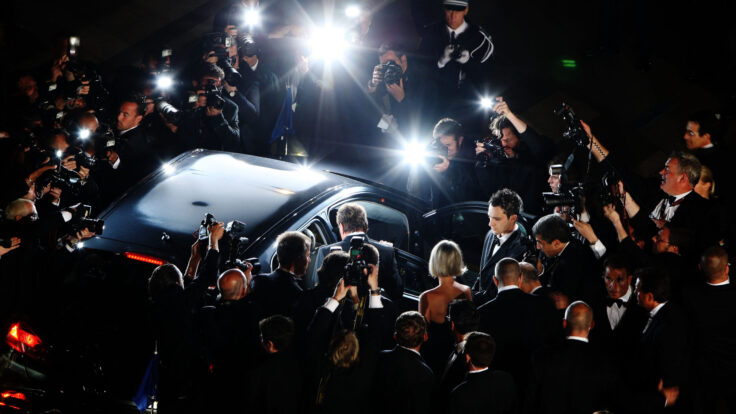
Welcome back to What I’m Hearing, and farewell to Strike Summer ’23 from Los Angeles, where more A-level celebrities showed up for Lionel Messi last night than for the Oscars.
Programming note: I’m back on CNBC’s Squawk Box at 6:50 a.m. Eastern tomorrow. This week on The Town: Lucas Shaw and I debated my new guess for when the strike ends, IMAX C.E.O. Rich Gelfond predicted the company will be acquired at some point, and Jeff Bock and I gave out summer box office awards. Subscribe here and here.
Was this email forwarded to you? Click here to become a Puck member, and invite a friend for 30 percent off.
Discussed in this issue: Bob Iger, Taylor Swift, Chris Keyser, John Malone, Mike Simpson, Bill Damaschke, Ari Emanuel, Jeff Bezos, Bradley Cooper, Jimmy Pitaro, Carol Lombardini, Kelly Bush Novak, Fran Drescher… and a rare 0% on Rotten Tomatoes.
But first…
|
| Who Won the Week: Emma Stone and Yorgos Lanthimos |
|
| Okay, Taylor Swift sold $26 million in AMC movie tickets in one day, but the star and director of the outrageous “bizarro Barbie” film Poor Things became the toast of the Venice and Telluride film fests in the same weekend (and an Oscars shoo-in for Searchlight, if it’s not too wild for the Academy).
Runner up: The late-night hosts, whose debut episode of Strike Force Five shot to No. 1 on both Spotify and Apple U.S. podcast charts.
Dishonorable mention: Roman Polanski, whose new “comedy” The Palace, which apparently features dog-on-penguin sex, debuts with a rare 0% on Rotten Tomatoes, and blurbs like “an eye-scorching atrocity” from critics in Venice. (I spent 25 minutes last night reading the pans, and this one, by Owen Gleiberman, is my favorite. I now need to see this film.) |
|
|
“We’re on the edge of a precipice. We’re either moving forward with a new collaborative video model, or we’re moving on.”
—Chris Winfrey, the Charter C.E.O., defending the removal of Disney channels, including ESPN, from its 14 million Spectrum cable customers (including me, dammit!).
A little more on the Disney/Charter standoff… |
|
|
| These TV carriage disputes are the most boring fights in Hollywood, especially this time of year. The channels go dark, the two sides exchange mean press releases for a week or two, then a deal is reached right before the NFL season begins. And that’s likely how this Charter/Disney fight will end.
But… for now, this one seems different. Winfrey and his big shareholder John Malone are clearly sensing weakness at Disney, especially at ESPN. And with declining subscriber numbers, the money Charter makes on video is becoming less and less important than its other, more profitable broadband business. So they’ve gone in for the kill, challenging the economic premise that the cable bundle has been based on for decades, even if that’s somewhat of a suicide mission as well.
Disney asked for $1.50 more per subscriber, and Charter said that was fine as long as customers could opt out of the expensive Disney channels, which Disney C.E.O. Bob Iger knows would lead to a collapse in revenue. Oh, and Charter wants the Disney OTT services like Disney+ and Hulu to be available for free, while Disney charges carriers like Comcast for those.
It’s a decent argument: Why should Charter pay increasing fees for channels with fewer viewers while Disney simulcasts much of that channel content on its streaming services, while also taking the $2 billion it gets from Charter and plowing it into shows exclusive to its digital services that actively lure customers away from Charter? And now Iger is talking about taking ESPN, the lynchpin of the bundle, fully OTT?!?
Some tough choices for Iger and ESPN chief Jimmy Pitaro: They can bend over for Winfrey, which would perhaps permanently devalue both the Disney linear channels and the D-to-C services and signal to the rest of the carriers that they are willing to bend over for everyone, which could quickly lead to significantly less money flowing into ESPN. Or… Disney can stand firm, potentially let Winfrey remove its channels indefinitely—either to focus on the non-sports cable customer or, more likely, to eventually wind down its video business—watch $2 billion in annual carriage fees go bye-bye, and pray that other carriers don’t dare make the same move.
Not great choices! And, as Ethan Strauss pointed out, college football realignment is forcing ESPN to pay more for the same product, another indication that sports rights are getting more expensive, not less, as Disney’s revenue from them is almost certainly going down, not up. No wonder Iger is considering all options for ESPN.
Related question: If Disney, owner of the most valuable cable channel in ESPN, is being treated this way by Charter, imagine what the talks with Paramount, Warner Discovery and the other network owners will look like? No surprise their stocks dropped on the Disney/Charter news.
Speaking of stocks: Let’s check in on how the share prices of the AMPTP 8 companies fared during this strike summer (May 1 through Friday). See if you notice a trend that might be influencing the fractured WGA negotiations…
Strike winners:
Amazon: +35 percent
Netflix: +35 percent
Apple: +11 percent
Comcast: +10 percent
Strike losers:
Paramount Global: -42 percent
Disney: -20 percent
Warner Bros. Discovery: -13 percent
Sony Corp.: -7 percent
Now for a Labor Day special conversation with Jonathan and me and everything we know about the strike… |
 |
| The Official End-of-Summer Strike Report |
| A candid conversation on The Eight’s strategy, Fran Drescher’s whereabouts, why Bradley Cooper isn’t in Venice, the interim agreements and more as Hollywood’s summer of unrest turns into an autumn free-for-all. |
|
|
|
|
|
| Matt Belloni: Here we are, Labor Day, and we’re entering Month Four of the strikes. I hate to say I’m not surprised, but I never thought there would be real movement until September. I am surprised, however, that the studios seem to be at a stalemate with the WGA and that they aren’t even talking to SAG-AFTRA.
Jonathan Handel: I can’t say I’m surprised, either—but I am disappointed that the C.E.O.s didn’t get involved until more than 100 days had elapsed. That’s key, because lead AMPTP negotiator Carol Lombardini and the company labor V.P.s are primarily empowered to say “No”—which Chris Keyser and the WGA negotiating committee knew, of course. The C.E.O.s have either learned nothing from the past or, more likely, thought the delay would wear down the writers’ resolve. Which also means they’ve learned nothing, since we saw recently how determined the writers were in their lengthy campaign against the talent agencies. And most actors are used to going months without work.
Matt: Everyone asks me what I’m hearing about the negotiations, so let’s get into it: The studios actually felt they got close to a deal in their last face-to-face with the WGA, where they said they were willing to give in a couple areas, as long as the union agreed to use the most recent studio proposal as a template. When the union said no, talks broke off and the studios decided to release the offer publicly, which pissed off the writers, and now we’re kinda nowhere. Do you know what the WGA’s counter is to “the underwhelming AMPTP offer”? Did they actually make one?
Jonathan: They did, but it was much less movement than the studios were expecting or hoping. One concrete example: On minimum staffing levels, the WGA reduced its demand by one writer, presumably meaning that on a ten episode show, the companies would be held to a staffing level of seven writers rather than eight, as the guild had originally proposed. I’ve learned that at least as of last week, the studios were still talking informally to the WGA. There is back channel outreach to SAG-AFTRA as well, but nothing formal yet.
Matt: If the studios can’t make a deal with the writers, do you think they will pivot to the actors? Or maybe engage with both concurrently? I’ve heard the C.E.O.s are waiting to see what happens with the SAG-AFTRA elections—the results of which will be revealed later this week.
Jonathan: I expect that if the companies don’t gain traction with the WGA, they’ll soon reach out more formally to SAG-AFTRA. But I suspect that those negotiations won’t go any better than the recent WGA discussions did, unless the C.E.O.s have come to accept the need for painful compromises. Which I doubt they have.
Matt: Speaking of the elections, SAG-AFTRA president Fran Drescher has been pretty quiet since that initial burst of ubiquity. What’s the strategy there? Do you think the union is purposely dialing back the rhetoric to help get back in a room with the studios, or am I reading too much into this and she’s just focused on winning re-election?
Jonathan: You’re right, Fran has ceded some of the spotlight to chief negotiator Duncan Crabtree-Ireland, who comes across as firm and determined but not ferocious. Drescher’s retreat is partially due to the need for the union itself to appear neutral during elections and partly due to the need to give Fran some rest. But I also think Duncan’s new prominence is strategic, for two reasons.
First, Fran doesn’t have to worry about reelection, as she’s running on a unity slate of the two main SAG-AFTRA factions. With all due respect to the election process, the independent candidate Maya Gilbert-Dunbar—who somewhat surprisingly tailored her official campaign statement solely to background actors—is no real threat to her. And second, SAG-AFTRA’s messaging and strike strategy is generally very deliberate, and I think Duncan is being positioned as a SAG-AFTRA leader that the C.E.O.s can talk to. If bargaining goes poorly, we may see Fran reemerge to scold and goad the studios once again, and re-energize the members. |
|
|
|
|
| Matt: Let’s talk about the SAG-AFTRA interim agreements, which have raised some concerns over which productions are covered and the delays in getting them. We’ve seen almost no U.S. stars at Venice, and even some who could technically attend, like Bradley Cooper—who directed, co-wrote, and stars in Maestro for Netflix—have chosen to avoid the potentially bad optics.
First, why would the union issue interim agreements to AMPTP-produced shows like the Walking Dead spin-offs and Interview With a Vampire? I know AMC Networks is not one of the eight negotiating studios, but AMC is an AMPTP signatory.
Jonathan: There’s a difference between AMPTP members, which are the eight negotiating studios and streamers (Disney, NBCU, Paramount, Sony, WBD, Amazon, Apple, and Netflix), and AMPTP signatories, which is everyone else who signs on: AMC, Lionsgate, Fox, and thousands of others, all the way down to student filmmakers or even a dentist in Montana producing a low-budget vanity project with SAG-AFTRA actors. Non-member signatories have no seat at the negotiating table and no ability to influence AMPTP behavior, so the union’s approach is, Why punish them when you can co-opt them instead?
Matt: I get that for the true indies. It just seems weird for a big publicly-traded company like AMC.
Jonathan: The interim agreements are more than 70 pages apiece, and reflect all of SAG-AFTRA’s demands. The strategy is to show that the asks are reasonable and realistic, because small and even large companies like AMC can live with them. What’s more, if an interim agreement project without a distribution deal is later sold to an AMPTP member such as Netflix, then that buyer/distributor must comply with the union’s demands regarding residuals—unless and until an AMPTP deal is reached, which would supersede the interim agreement.
Matt: Right, that’s why it’s a bit premature to ask how companies will comply with the requirement in the interim agreements to share two percent of revenue. That demand will likely not be in the final AMPTP deal, which will supersede everything. A second question: Some indies have applied and haven’t yet received interim agreements. Why?
Jonathan: The union has issued almost 400 interim agreements to date, and I’m told they’re working through a backlog of as many as 1,100. The reason for the logjam is that SAG-AFTRA must first go through the normal, typically weeks-long approval process: Is the signatory entity financially responsible? Will there be a production bond and/or a residuals bond? Who controls the parent company of the signatory entity? Are all the forms filled out accurately and completely? Plus, the union must investigate to be sure that, if the project is being shot only in the U.S., there is no AMPTP 8 connection to it, and no WGA coverage. (For foreign labor law reasons, projects shot overseas may qualify even if there’s AMPTP or WGA involvement, hence HBO’s House of the Dragon continuing its shoot.) That takes time. |
|
|
| Matt: One area I haven’t seen much coverage of is influencers. I know a number of them are afraid of even doing promotional work for studio releases because SAG-AFTRA has informed them that they will be blackballed from the union if they ever want to join. Is this legal?
Jonathan: Yes, and it’s not just about influencers. Indeed, both the WGA and SAG-AFTRA have informed everyone—writers, actors, and influencers among them—that if they do anything that’s prohibited by the strike rules, the person (the offender, in the guild’s eyes) will never be admitted to the union. So this means, for instance, that no writer should be submitting a spec script to a producer. I spoke with a management-side lawyer with a background in traditional labor law as well as Hollywood guilds, and the lawyer confirmed that this guild prohibition is completely legal. The writer, actor, influencer or whoever can be barred from the union for life.
Now, to peel the onion another layer, the barred person can’t be prohibited from working, as long as they offer to join and pay their fair share of guild dues, though the guilds often refuse to accept the money, in which case it’s much like the situation in a right-to-work state: the non-member pays no dues and can freely work union and non-union jobs. And when they work for signatory companies, they are entitled to all the rates, terms and conditions (including minimums, pension & health and residuals) of the collective bargaining agreement. They can even have the union lawyers bring grievances and arbitration on their behalf for contract violations.
Matt: So someone who is barred from joining SAG-AFTRA would essentially get many, if not all, of the benefits of being a member without paying dues?
Jonathan: Yes, the union staff have to service the non-paying non-members. When I was on the WGA legal staff in the early ’90s, I actually did bring an arbitration for a non-member at one point. But the guild and other members will likely consider the person a scab, which could be a problem on some projects, and even lead to harassment and being effectively blackballed—even though refusing to hire someone because they’re a non-member is probably unlawful. It’s a legal maze, but the safest course for non-members is to adhere to the strike rules.
Matt: Meanwhile, things are getting really bad around town. I know of several companies that have been waiting until after Labor Day to start firing assistants and conduct broader layoffs. Movie releases have been impacted, and more delays are coming. The longest strike in Hollywood history, the 1988 Writers Guild walkout, lasted 153 days. We’ll hit that milestone at the end of this month. Tell me something positive, please!
Jonathan: I wish I could. The fall scripted season is dead and the window for midseason replacements is closing, too. As for the ripple effects, I heard that members of the L.A. chapter of the California Restaurant Association met last Thursday in what was essentially a doom-and-gloom session on the strikes’ impact. I’m crossing my fingers that the studios will find middle ground with the WGA, and we’ll see fruitful SAG-AFTRA negotiations soon, but the most positive thing I can say is, these strikes will eventually resolve and end—some day. |
|
|
| Dylan Byers’ assessment of new CNN C.E.O. Mark Thompson suggests his focus will rightfully be on big-picture existential issues, not who’s anchoring at 9 pm. [Puck]
Amazon pulled a million-dollar ad buy from THR after my pal Kim Masters reported aggressively on its dysfunction. Wonder what Jeff Bezos, owner of a famously aggressive newspaper, thinks of that move? [Semafor]
A telling sign that Netflix’s Diana Nyad biopic starring Annette Bening is probably based on a B.S. story: Nyad hired shady publicist Kelly Bush Novak to refute claims that she’s a serial fabulist. [LA Times]
“The first time I heard about Taylor Swift, I was in a Los Angeles County jail, waiting to be sent to prison for murder.” [New Yorker]
The Saudis, by investing in a UFC rival league, seem to be exacting long-game revenge on Ari Emanuel for giving back their investment in Endeavor after the Khashoggi murder. [Sportico]
The virtual ABBA show in London is clearing $2 million a week. How long until virtual Jimmy Buffett is playing Margaritaville cruises? [Bloomberg]
If you’ve ever been to a party at a mid-century home owned by Warner Animation’s Bill Damaschke and business manager John McIlwee, you know they are not effing around with their restoration efforts. [WSJ] |
|
|
| My Thursday analysis of Taylor Swift’s movie deal was hotly debated among film distributors. One savvy investor in the space sent me a smart take on the studio economics and why Swift ultimately went with AMC Theaters…
“The advantage of the AMC deal is they are able to release immediately while the heat is on. And there is no conflict with the release schedule because there is none. And we’re in a moment with a release schedule more open than usual, for reasons we know. For sure, a studio would have to have meetings, talk dates, etc. etc., and no way they would be able to move before maybe Q4. Could one have done it for October? A desperate Paramount? Maybe??
Studio economics would be clear: Film rental would be around 60 percent, so a bit better than the 57 percent you reported for AMC, let’s say. How does the film rental get divided? I was thinking about that. Yes, Swift gets the lion’s share because no matter who distributes, it’s just a distribution deal as she paid for [the movie]. So she would pay max 15 percent distribution fee to AMC. She may have been able to pay as low as 10 percent, and given her proven ability to sell tickets, maybe a studio would also have allowed such a low fee.
Also, a low fee could be justified because virtually no marketing dollars will be spent. The only actual cost would be DCPs [the digital key that allows studios to beam movies to theaters via satellite], which you could conservatively say are $50 per screen, so $200,000.
Bottom line: AMC gave her the advantage of moving immediately. So if she can get 90 percent of the 60 percent film rental, that’s 54 percent of total box office. Call it 50 percent. So she’s whole after $40 million box office [if the movie cost $20 million to make]. If it does $200 million, that’s an easy $80 million net (minus DCPs). Pocket change for her. Huge for theaters who weren’t expecting it.
BTW, having the parents negotiating her distribution deal seems idiotic. She should have had Mike Simpson [the WME agent] do it. I’m sure he would have improved it materially in ways they could never imagine.” —An investor |
|
|
| A moment of silence and prayer for all the Hollywood people stuck at Burning Man. We’re all waiting for you to get out safely, after which we will make fun of you relentlessly.
Have a great week,
Matt
Correction: On Thursday, I said the Taylor Swift tour had grossed $1.4 billion so far, per Pollstar. That figure is a projection for the full Eras Tour, not the first North American leg. Apologies.
Got a question, comment, complaint, or your Burning Man horror story? Email me at Matt@puck.news or call/text me at 310-804-3198. |
|
|
|
| FOUR STORIES WE’RE TALKING ABOUT |
|
|
|
|
|
|
|
|
|
 |
|
|
|
Need help? Review our FAQs
page or contact
us for assistance. For brand partnerships, email ads@puck.news.
|
|
You received this email because you signed up to receive emails from Puck, or as part of your Puck account associated with . To stop receiving this newsletter and/or manage all your email preferences, click here.
|
|
Puck is published by Heat Media LLC. 227 W 17th St New York, NY 10011.
|
|
|
|