 |
 |
|
Happy New Year from What I’m Hearing HQ, and a joyous emancipation day to Mickey Mouse, or at least the Steamboat Willie version of Mickey, which enters the public domain today. Is there a porn version yet? Horror? Minions vs. Mickey?
Programming note: I’ll be on CNBC’s Squawk Box at 8:15 Eastern tomorrow previewing the year in Hollywood. Also, I’ll be at CES next week moderating the A.I. Goes to Hollywood panel at SAG-AFTRA’s Labor Innovation & Technology Summit. More info here.
Didn’t get what you really wanted for Christmas? Fix that with a Puck membership by clicking here! Our holiday discount ends tomorrow.
Before we get to the Villains (plural!) of the Year, and a look ahead at the scary year in movies from contributor Scott Mendelson, I’ve created a smaller yet no less prestigious honor: Scrooges of the Year. Think of it as Supporting Actor at the Oscars, or Limited Series at the Emmys—not quite full villainy, but definitely not cool…
|
| Hollywood’s Scrooges of the Year Are… Bryan Lourd, Richard Lovett, and Kevin Huvane |
|
| The CAA leaders and their majority owners at private equity firm TPG pulled off a coup in getting French billionaire François-Henri Pinault to buy out TPG’s stake in a deal that valued the agency at more than $7 billion. But that astronomical number made it all the more frustrating for CAA agents and employees—past and present—when they were told that the leadership would only let them cash in 10 percent of their equity in the company. Some of these agents have been waiting decades for a significant transaction, but because their shares were not sold—Pinault bought TPG’s stake in the agency, but not all of CAA—they were largely left out of a deal that has generated phenomenal wealth for, you guessed it, Lourd, Lovett, and Huvane. (TPG is an investor in Puck.)
It’s not unusual for a new majority shareholder to want to keep its employees incentivized for an even larger outcome, and CAA is said to have taken care of a few key people. But good luck to agents who think another big deal could be on the horizon. The agency is now controlled by a family office, and unlikely to be sold again for a long time (though Pinault may eventually buy out individual shares, especially if the principals ever sell out).
But this leaves agents in a tight spot. Per the terms of CAA employment agreements, those who defect to a rival company forfeit their equity or risk ending up in a legal dispute, like the CAA defectors who became managers at Range Media. This outcome, along with strike-impacted bonuses, has left a bunch of CAA’s finest fuming at their bosses this holiday season.
Now it’s the Villain of the Year. This is not the person who lost the year. (That would be Paramount Global and Shari Redstone.) This is the person (or persons!) who best embodied what’s wrong with Hollywood in 2023… |
|
|
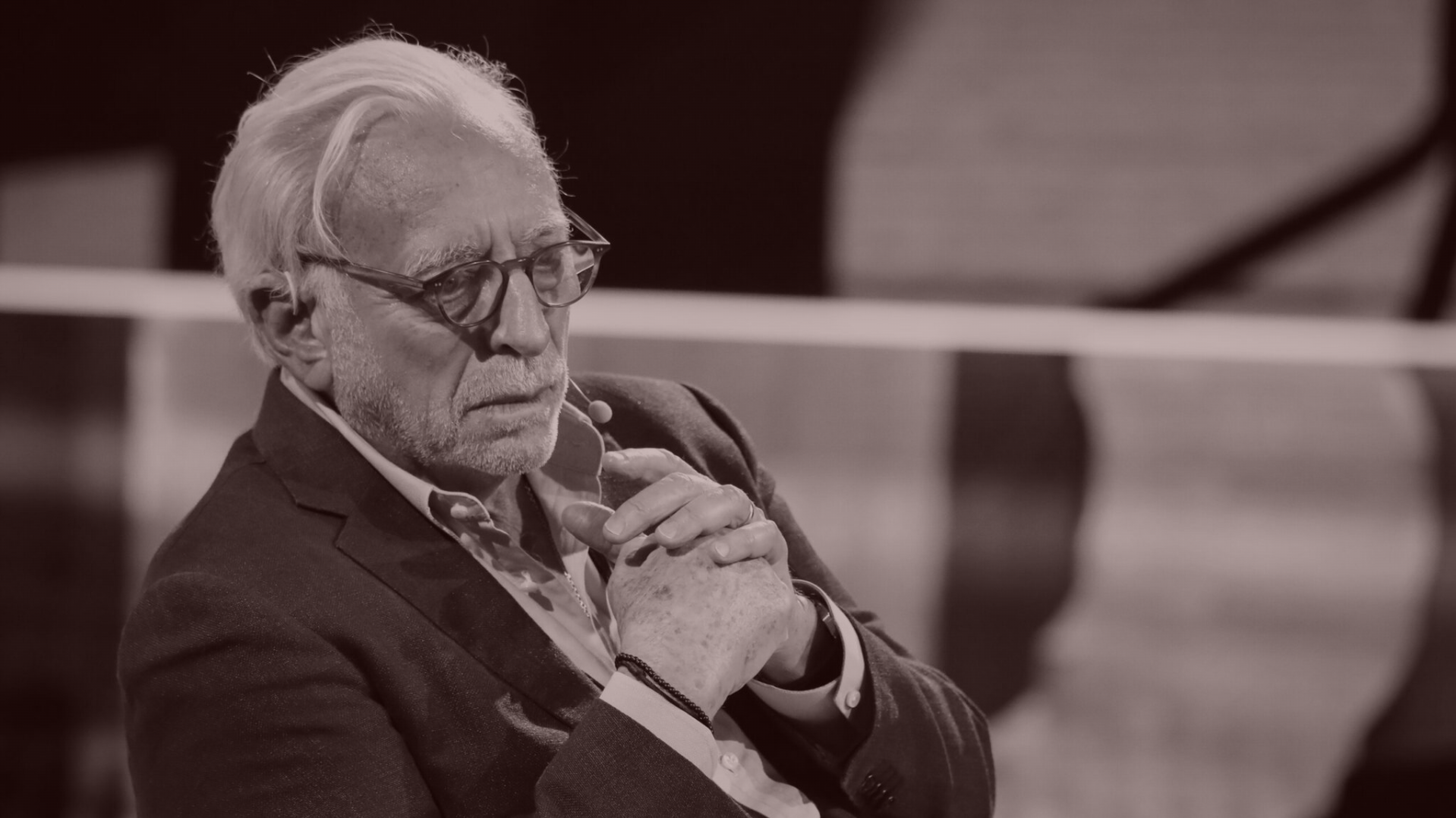
| Ask people in Bob Iger’s orbit for his reaction to Jay Rasulo joining the disgruntled shareholder fight against Disney, and you’ll get some version of Can you believe this?! Iger should be forgiven his incredulity; it’s all pretty remarkable, to be honest. Not so long ago, Disney was untouchable, the envy of Hollywood, and a multipronged media platform of such universal renown that Iger seriously considered running for president. Now, it’s still the biggest and best pure entertainment company in the world, but…
And Rasulo, the former Disney C.F.O., who left the company and disappeared in 2015 after being passed over for the No. 2 job, was said to be content in semi-retirement and had declined offers to set up spite stores elsewhere. But now he’s gone full Galactic Empire, having been seduced by activist investor Nelson Peltz and fired Marvel executive Ike Perlmutter—the Emperor Palpatine and Darth Vader of Disney shareholders—to join Peltz as a potential board member in their proxy battle. “The Disney I know and love has lost its way,” Rasulo said in a statement, adding, “With Nelson, Ike, and the power of the Dark Side, together we will rule the galaxy.” (Okay, I made that last part up.)
For Iger, and for all of Hollywood, such are the indignities of secular decline. In a year defined by crippling labor strikes and a massive content correction, the challenges at Disney have in many ways summed up the entire entertainment industry. The TV business has officially Thelma & Louise-ed into oblivion; nobody knows what regular people want to see in a movie theater; streaming is a money-suck ($2.6 billion lost in fiscal 2023 at Disney alone); sports is a bigger money-suck; creative malaise has crept into some of the most bankable franchises; investors are panicking; and, predictably, the cockroaches have come out to feed. Against this backdrop, there are no hungrier Hollywood cockroaches than Peltz, Perlmutter, and now Rasulo, which earns them the honor of Villains of the Year. |
|
A MESSAGE FROM OUR SPONSOR
|
 |
|
|
|
|
|
| We’re now more than a year into Peltz’s on-and-off public war with Disney, and it’s still unclear what he and his Trian Partners actually want, other than for the stock price to magically return to the Fantasyland of the Covid bubble. And relevance, of course. Well, relevance besides a starring role in Peltz Beckham vs. The Wedding Planners, the new Max documentary about the batshit litigation that ensued after Nelson’s daughter Nicola—of Transformers: Age of Extinction fame—married Brooklyn Beckham in 2022. The doc debuted last month overseas, but for some reason has not yet been added to the service in the U.S. (Reps for Max and Trian declined to comment on the reason for that; I set up an alert and will let you know the moment it appears.)
Anyway, when the so-called “Smiling Crocodile” first appeared last year, he said he wanted Disney to cut costs aggressively, lay off employees, and return the dividend to shareholders. Which was fine… except that Iger, by all accounts, was already doing exactly that, as any competent chief executive would when presented with the stark numbers. Still, Peltz claimed victory in February and dropped his fight for board seats—having, incidentally, made a tidy windfall that Bloomberg estimated as at least $150 million in a three-month period.
Maybe Peltz knew what Disney would need to do, and went public for fun or for profiteering. Maybe he wanted to create a bigger profile for his son, Matthew, who reportedly was behind a “white paper” on how to fix Disney. Regardless, Iger recognized that Disney had way overspent on streaming content and needed to downsize amid the TV ad apocalypse. It was obvious, and everyone else in entertainment was doing the same. Bob certainly didn’t need a bored 80-something Palm Beach billionaire screaming in his ear.
Let alone two bored 80-something Palm Beach billionaires. Perlmutter, a first-ballot Hall of Fame asshole and chaos agent when he ran Marvel, is an obsessive cost-cutter widely loathed within Disney, even before he became a Trump adviser. Yet Ike didn’t seem to appreciate the irony of being “laid off” by Iger in April due to what Disney said was simply part of its effort to trim $5.5 billion from its budget and eliminate 7,000 jobs. The firing “was merely a convenient excuse to get rid of a longtime executive who dared to challenge the company’s way of doing business,” Ike cried, in one of several interviews he and Peltz have given The Journal.
Nobody at Disney was surprised when Perlmutter revealed that he was the helping hand behind the Peltz campaign, calling and lobbying board members, and ultimately pledging shares to the cause. I’d reported that, as had others. But Rasulo was a shock, even inside Disney, considering he’d gone quiet as one of the few ex-Mousers who didn’t really keep up with his former colleagues. Rasulo was one of the only top Disney execs to have a good relationship with Perlmutter, a bond they seemingly forged over their mutual frugality. Ike was pissed when Jay was forced out of the company, and it was arguably a key moment in the downward spiral of his relationship with Iger.
But that’s all personal; again, what does Team Peltz actually want from Disney? They still offered no real ideas when they formally reappeared in December. “I want Disney to get back to the way it was when Jay Rasulo was here as C.F.O., because that’s when the company understood the taste and smell of success,” Peltz said. |
|
|
| Don’t we all. In 2015, ESPN had 94.4 million subscribers; today it’s in about 70 million homes and dropping fast. In 2015, Dancing With the Stars, the most-watched show on ABC, averaged 13.7 million viewers (live+7 days). This season, ABC’s most-watched show, The Golden Bachelor, averaged 5.95 million viewers. I think everyone at Disney would like to go back to 2015.
Unfortunately, the TV business has unbundled and evolved, and markedly for the worse. There’s a good argument to be made that Disney and the other traditional studios, so reliant on the cable bundle yet very aware of what Netflix was building, failed to plan for the digital transition until they over-corrected in the late 2010s, once it was too late. But wasn’t heeding Wall Street shills and greedy short-term investors a major reason for that failure? Everyone cheered Disney to go “all in” on the Streaming Wars and rewarded its largesse with a Netflix-style run-up in the stock, which hit nearly $200 in March 2021, when many of its theme parks were still closed.
Problem was, Netflix used that run-up to get over the debt hump and into true global scale and profitability. Disney earned plenty of subscribers—about 225 million worldwide and counting, across all its services—but it failed on the profits front. And in the meantime, its rush to streaming, combined with the Covid upheaval and Iger-Chapek-Iger leadership carousel, inarguably hurt its content machine in ways we saw come home to roost in 2023. It can’t be a coincidence that nearly all of Disney’s creative units are fluttering at the same time, whether it’s Marvel president Kevin Feige losing his Thanos grasp on what comic-book movie fans want; $200 million animated films failing to open big enough to justify $200 million budgets; Lucasfilm’s Kathy Kennedy thinking that a paint-by-numbers Indiana Jones movie starring an 80-year-old Harrison Ford can cost $350 million and turn a profit; or even the TV unit, which has digested the Fox assets under Dana Walden but is under increasing pressure to deliver hit branded content, at a price, that isn’t Marvel or Star Wars. (Is that the expensive new Percy Jackson show? Let’s see if it charts on Nielsen.)
When Disney opened the content floodgates to fuel streaming, it lost something. When Disney trained fans during Covid to expect first-run Pixar and even Marvel movies at home, it lost something. When the entire industry emerged from the Great Netflix Correction in 2022, it lost its growth narrative. Now the Disney stock trades at less than half that bubble price, and who’s fault is that? Iger’s? He’s certainly not blameless. But this is bigger than Iger or even Disney. And one thing is pretty clear either way: Adding an activist with no media experience or a burned former C.F.O. to the board to advocate for spending less probably isn’t going to fix any long-term problems.
Peltz isn’t wrong that Disney lagged behind its peers this year, at least on paper. Its share price was actually up a bit (as in, 1 percent or so), closing Friday at about $90. But the S&P 500 in general closed up about 24 percent for the year. Netflix gained 63 percent, Comcast was up 26 percent, Sony up 23 percent, Warner Bros. Discovery up 20 percent, and Amazon and Apple (the tech companies that dabble in professionally produced content) were up 78 percent and 48 percent, respectively. Among the larger entertainment companies, only Paramount Global performed worse than Disney, down 17 percent. Poor Paramount.
But all the entertainment companies are way down from their pandemic highs, and all are facing the same problems; it’s not like Disney is ignoring industry trends. Peltz’s main argument seems to be that Disney shouldn’t have bought most of Fox in 2019, a $71 billion deal that saddled the company with debt. He might be right, but that calculus is far from assured. Disney gets a ton of value from the Fox assets, including all the FX shows on Hulu/Star, The Simpsons, and Avatar. If it weren’t for the Fox franchises Deadpool, Planet of the Apes, and Alien, Disney would have just two tentpole theatrical releases this year. Plus, if Disney let Comcast take Fox, the entire narrative of the past four years would be different. And, big picture, Fox is not what’s troubling Disney. |
|
|
|
|
| Plus, I gotta ask: Is Ike Perlmutter really the guy anybody should be listening to these days? Forget his well-documented reluctance to make Black Panther or Captain Marvel, or the clashes with Feige that nearly led to Disney losing Marvel’s creative force. Fiscal responsibility is great, but Perlmutter is a destructive force. Remember back in 2016, when the Financial Times reported that Ike’s micromanaging of Disney’s consumer products unit caused Andy Mooney, its chairman, to bail? So did “three female executives who hired a lawyer to seek individual financial settlements,” the FT said.
At the time, Jessica Dunne, head of global product licensing, complained in writing that Ike told her that he had a “bullet with [her] name on it.” When Terrence Howard was replaced by Don Cheadle in Iron Man 2, Ike bragged that the recasting would save money and nobody would notice because Black people “look the same.” So, yeah, that’s who we’re dealing with here.
And if you’re saying, So what, Ike wouldn’t be on the board, Peltz and Rasulo would, you don’t know Ike. At Marvel, he installed his figurehead Alan Fine as head of the “Marvel Creative Committee.” Then Fine consistently did Ike’s bidding, blocking projects that Feige wanted to make, and presenting data showing “black and female” heroes wouldn’t perform. Iger ultimately had to intervene. |
|
|
| It’s far from clear how this Disney proxy fight will proceed. As my colleague Bill Cohan has noted, Peltz has successfully shaken up companies as varied as Heinz and GE. But his Trian, which controls about $3 billion in Disney shares, has not yet filed papers to formally nominate its proposed slate, and these battles are expensive, costing tens of millions to wage war against a monolith like Disney. So it may not even happen.
But I’m guessing it does. Peltz already threatened a proxy fight once with Disney, only to back away the day after Iger restructured the company and announced plans to slash billions in costs. Threatening a second time, and recruiting Rasulo to his clown car, only to back away, would definitely call his motives into question. More likely, as Cohan has noted, we will see some kind of settlement, where Peltz gets one board seat, or other board members increase their ownership stake in the company, as Peltz has requested. Something like that.
But man, what a waste of time, money, and energy for Disney. Heading into 2024, Iger has five main issues to resolve besides this proxy fight, as articulated in a recent BofA Securities note by Jessica Reif Ehrlich:
- Figuring out the final price of Hulu and integrating it into Disney+
- Finding a strategic investor in ESPN
- Reinvigorating the creative engines in film
- Renewing NBA rights
- C.E.O. succession (discussed by me on Thursday)
The question for Disney shareholders in 2024 is: Does Nelson Peltz or Jay Rasulo help the company with ANY of these issues? The answer is almost certainly no. So why would any of them vote for the Peltz slate? Disney, for all its troubles in 2023—and they’re pretty big troubles—still has the best assets in Hollywood, the best brand, and the most potential upside to figure out the streaming transition, which is the only real way to ultimately lift the stock price. What it doesn’t need are dumb, self-serving distractions.
Previous Villains of the Year:
Gunnar Wiedenfels (’22, click here)
Adam Aron (’21, click here)
Now, our box office contributor Scott Mendelson has a definitive analysis of what to expect from the movies this year… |
| Is 2024 Really the Box Office Year From Hell? |
|
| Amid all the familiar and well-rehearsed doom and gloom narratives, some ostensibly good news: This past weekend’s domestic box office totaled $111 million, up 8 percent from the final weekend of 2022 and some 12 percent from the final Friday-to-Sunday frame of 2021. And this despite the fact that this year’s big December tentpole, Aquaman and the Lost Kingdom ($77 million by year’s end), earned far less than Spider-Man: No Way Home ($575 million by the end of 2021) and Avatar: The Way of Water ($401 million by the end of 2022).
Of course, deeper scrutiny reveals a slightly different reality. The 2023 final weekend numbers benefitted from a last-minute blitzkrieg: Nearly every distributor, and streaming-focused tech company, flooded theaters to mollify what could have been a disastrous year-end season. It’s yet another strange wrinkle in a once unimaginable year, and perhaps a prelude of what to expect in future Christmas seasons.
Less-conventional tentpoles (Wonka), unexpected non-English language smashes (Godzilla Minus One), and surprise concert flicks (Taylor Swift, Beyoncé) helped paper over the underwhelming and strike-delayed tentpole fare. And this trend will continue, given the painfully slight 2024 slate. In fact, the industry-wide prediction of a 10 percent drop next year already seems like wish-casting. After all, Mission: Impossible 8 and Spider-Man: Beyond the Spider-Verse won’t open in 2024. Plus, the MCU and DC superhero movie subgenre is already on a sabbatical. Next year, the industry is counting on far less surefire franchise titles, like Twisters, Furiosa, a Lion King prequel, and seconds of decades-old hits Gladiator and Beetlejuice from their original directors.
By some estimates, 2024 is already looking to be a very scary year—particularly on the superhero front. This past year, Marvel and DC movies (Ant-Man 3, Shazam 2, Guardians of the Galaxy Vol. 3, Spider-Verse 2, The Flash, Blue Beetle, The Marvels, and Aquaman 2) earned a combined $1.365 billion at the domestic box office. The 2022 offerings (sequels to Doctor Strange, Black Panther, and Thor, alongside Morbius, Black Adam, The Batman, and a Super Pets toon) earned a combined $1.9 billion globally. And the overall superhero total in Covid-impacted 2021 (Black Widow, The Suicide Squad, Shang-Chi, Venom 2, Eternals, and Spider-Man: No Way Home) was around $1.65 billion. However, a realistic cumulative domestic expectation for the five Marvel/DC superhero movies opening this year (Joker 2, Deadpool 3, Venom 3, Madame Web, and Kraven the Hunter) is only around $850 million, which would be a year-to-year drop of around $515 million domestic.
Save for the likes of Despicable Me 4, this year’s non-superhero franchise films are either commercially questionable or the kind of (often lower-budgeted) titles that, like Sonic the Hedgehog 3, might be expected to top out just over $400 million globally. This comparatively thin lineup, and minimal bankability, leaves little room for error. Perhaps the only hope, next year as this one, is that every distributor throws everything they’ve got to keep theaters afloat…
Click here to continue reading online... |
|
|
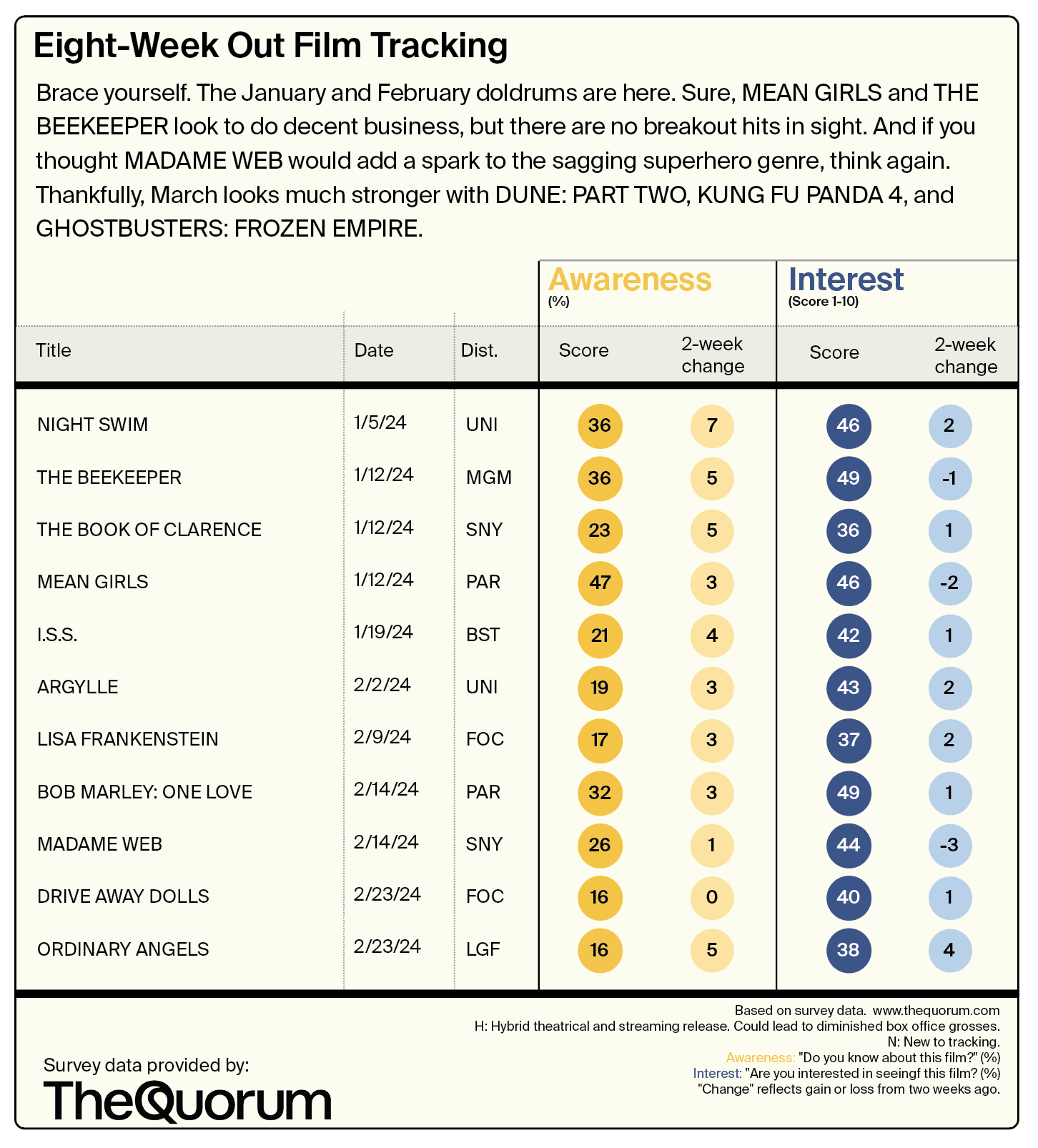
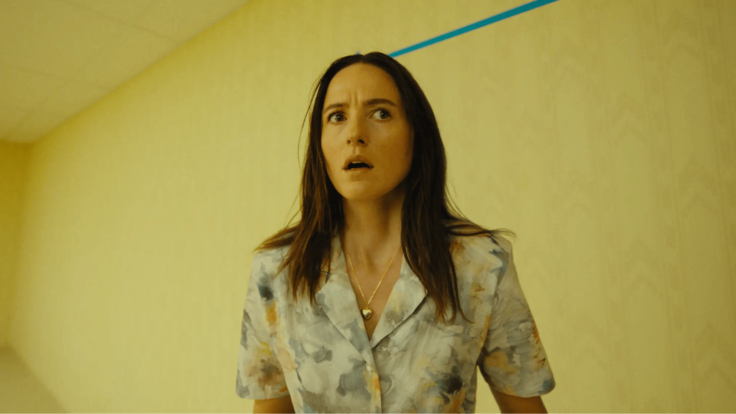
| Dry January (and February!) are here for theaters, with nothing looking like a breakout on The Quorum’s early tracking chart. If the numbers don’t improve, Sony’s Madame Web looks to continue the superhero drought… |
|
|
| Correction: I should have noted on Thursday that Taylor Swift: The Eras Tour is opening in China, so it might still pass Michael Jackson: This Is It globally (not adjusted for inflation). Apologies to TSwift, I’m sure my oversight ruined her entire year.
See you Thursday,
Matt
Got a question, comment, complaint, or your secret New Year’s resolution?
Email me at Matt@puck.news or call/text me at 310-804-3198. |
|
|
|
| FOUR STORIES WE’RE TALKING ABOUT |
|
|
|
|
|
 |
|
|
|
Need help? Review our FAQs
page or contact
us for assistance. For brand partnerships, email ads@puck.news.
|
|
You received this email because you signed up to receive emails from Puck, or as part of your Puck account associated with . To stop receiving this newsletter and/or manage all your email preferences, click here.
|
|
Puck is published by Heat Media LLC. 227 W 17th St New York, NY 10011.
|
|
|
|