 |
 |
|
Welcome back to What I’m Hearing, hope you had a nice holiday.
|
|
Programming notes: A reminder that Puck and NatGeo are co-hosting an FYC event for A Small Light on June 12 in L.A. Members can RSVP here to attend. This week on The Town, Lucas Shaw and I broke down Netflix’s first upfront, Jake Szymanski and Ronald Gladden explained how they pulled off Jury Duty, and Scott Gustin discussed the state of Disney parks. (Sneak: Tomorrow, Lucas and I offer our hottest Cannes takes.) Subscribe here and here.
Discussed in this issue: Ron Burkle, Shari Redstone, David A. Goodman, David Zaslav, Tina Turner, Brian Roberts, Michael Eisner, Elizabeth Olsen, Bob Iger, Beyonce, Carol Lombardini… and J.Lo’s dictator benefactors.
But first…
|
| Who Won the Week: Jesse Armstrong |
|
| You’d never know his Succession wasn’t ever a huge ratings driver for HBO, given the truly insane level of media attention on this final season (really, New York Times? A1 above the fold?). But it all virtually guarantees a much-deserved Emmys sweep.
Runner up: Taylor Sheridan, whose Yellowstone ended the 2022-23 linear TV season as the most-watched entertainment show, per Nielsen, with 11.6 million viewers per episode (live + 7 days), the only non-sports program to cross 10 million.
Speaking of Sheridan and TV’s biggest show, a strange legal item tonight from me and Eriq Gardner… |
| How Much Is Yellowstone Worth? |
|
| That’s a good question, right? It’s linear TV’s No. 1 series, despite airing on Paramount Network, an outlet that few could name or find. And it’s spawned the hit streaming spinoffs 1883 and 1923, with more on the way. It’s not Law & Order or even NCIS-valuable, at least not yet. But on Tuesday, an L.A. judge is scheduled to hold a key hearing in an under-the-radar legal fight that could expose the Yellowstone windfall, as well as provide new insights into the machinations of various executives after the downfall of Harvey Weinstein.
This all stems from a fraud and breach of contract case brought back in 2018 by investor Ron Burkle against Lantern Capital Partners, the Texas buyout shop that took the Weinstein Co. assets out of bankruptcy during that chaotic period after Harvey was accused of multiple rapes. Burkle, a FOH (Friend of Harvey), was a big TWC investor, so he thought his Yucaipa shingle had the inside track on the deal. Then Lantern appeared interested, so Burkle allegedly considered a partnership. But the New York A.G. threatened to block any deal, TWC filed for bankruptcy, and Lantern, allegedly using confidential information it obtained from Yucaipa, acquired TWC’s assets for $289 million and cut Burkle out.
Burkle was furious, so he sued Lantern and Spyglass, which bought the TWC library and eventually engineered a transaction that laundered the Harvey stink and deposited the films—minus some big assets it lost in the process, like Paddington and Boys in the Boat, which Clooney is now directing—with Lionsgate, screwing some creative partners in the process. (I wrote about that effort here.) The Burkle suit claims Yucaipa had a side agreement with Lantern that gave it fees from the TWC deal. That amounts to an $80 million or so damages claim, and the trial is finally slated for December.
So that’s the background. Now Lantern is counterattacking… oddly, by investigating how Burkle got a piece of Yellowstone. If you recall, Paramount (then Viacom) and TWC initially partnered to co-finance the show, and TWC had the relationship with co-creator Taylor Sheridan, with whom it had made the film Wind River. Then TWC blew up, Harvey stopped making payments on Yellowstone, Viacom took the rights to the market, and TWC’s C.O.O. David Glasser set up a new company, 101 Studios, to outbid others and take over the project. Lantern didn’t even bid, and both the TWC trustee and bankruptcy court determined that the 101 Studios transaction was kosher. (Lantern and Paramount, by the way, have already come to a resolution with each other; Paramount declined to comment.)
Regardless, in briefs last week, Lantern suggested to the court that Burkle and Glasser conspired with each other to rob the TWC buyer of Yellowstone rights, which it calls “the piracy of one of TWC’s most valuable assets.” According to court documents, starting in July 2018, around the time Lantern bought TWC assets, Yucaipa began making investments in 101 Studios. First $2.5 million. Then $7.3 million. Then another $9.5 million. That gives Yucaipa a big stake in 101 and thus in the outsized success of Yellowstone.
So… why is this relevant? In addition to the “piracy” Hail Mary, for damages purposes, Lantern also wants to see how Burkle’s investment in 101 compares to what his return would have been had he invested in the TWC assets. If 101 outperformed—and, given the success of Yellowstone and the entire so-called Sheridan-verse, it’s pretty clear it did—Lantern will argue at trial that there’s no damages.
That’s a pretty strange position, in my opinion. But to make it, Lantern argues it needs to see the financials on Yellowstone to determine its value. On Tuesday, L.A. judge Steven Kleifield is scheduled to hold a hearing on Lantern’s bid to compel that information or more, so we’ll see if he lets Lantern spill the value of TV’s biggest show for all to see. |
|
|
| “I know you’re all very disappointed, but I will not be dropping the first half of my name any time soon.” –Peacock’s official Twitter feed, responding to HBOMax becoming Max.
Runner up: “Just give them one.” –Elizabeth Olsen, offering her advice to actors working with Marvel… as agents everywhere roll their collective eyes. |
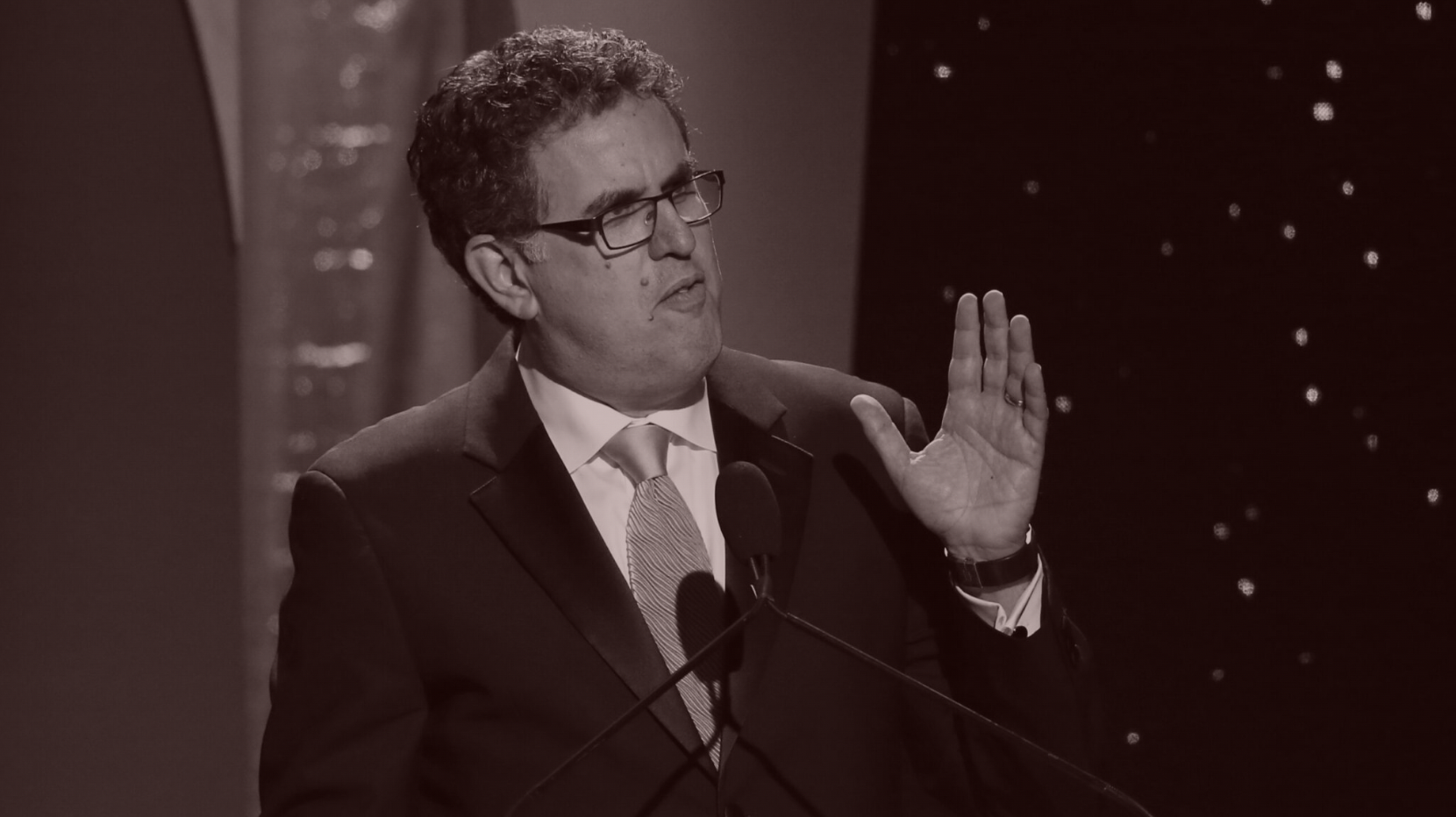 |
| Must the Writers Strike Last Six Months? |
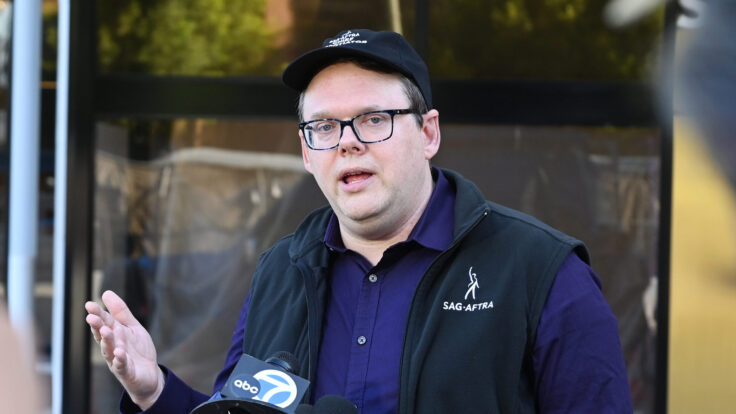
| No, says negotiating committee co-chair David Goodman, who offers a path to resolution, responds to the Max credit debacle, and defends the guild’s hardliner tactics: “These companies are hurting” |
|
|
|
| The Writers Guild strike will hit the one-month mark this week, and the two sides are arguably further apart now than when 12,000 or so writers walked out on May 2. Studio negotiator Carol Lombardini has moved on to the Directors Guild, and SAG-AFTRA has asked its members to authorize its own strike. This past week, Warner Bros. Discovery threw kerosene on the inferno by lumping writer and director credits into a catch-all “creators” category on its re-branded Max service, which drew immediate rebukes from the WGA and DGA, and a swift apology.
I discussed that and more with WGA negotiating committee co-chair David Goodman, in an interview for The Business that I thought I’d include here. This is edited for length and clarity. |
|
A MESSAGE FROM OUR SPONSOR
|
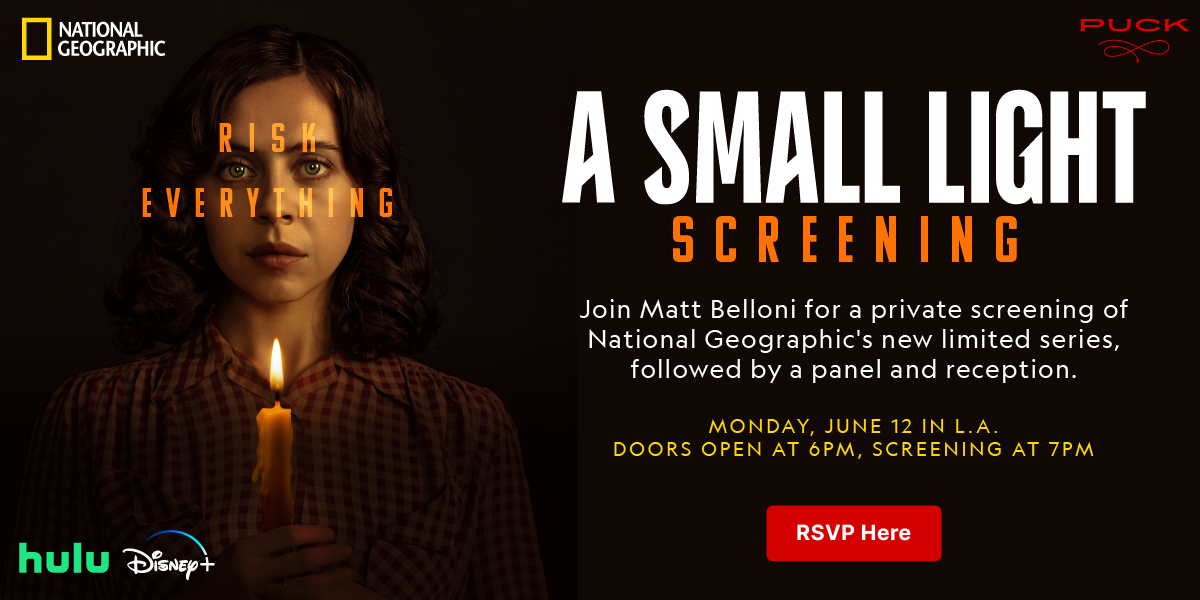 |
| Based on an inspiring true story, Miep Gies (Bel Powley) was young, carefree and opinionated – at a time when opinions got you killed – when Otto Frank (Liev Schreiber) asked her to help hide his family from the Nazis during WWII. Told with a modern sensibility, A Small Light shakes the cobwebs off history and makes Miep’s story more relevant than ever. Hailed by critics as “exceptional” “profound” and “extraordinary”, for your consideration in Outstanding Limited or Anthology Series and all eligible categories. Here’s a look at the trailer for the series now streaming on Disney+ and Hulu. |
|
|
| Matt Belloni: So, what do you make of this Warner Discovery apology?
David Goodman: I’m not there, so I don’t know what happened. It does read to me as just a screw up. But it also speaks to what can happen in this new model of these giant companies, and the protections we have being trod under in the name of expediency.
Belloni: The creative partners didn’t seem to be the priority.
Goodman: That’s sort of what this strike’s about. You have to recognize that we’re your partners. And the idea that corporately, it was just shunted aside, like, “Oh, this will save time, people don’t read these credits anyway.” Well, people do.
Belloni: The mothers of the writers absolutely do! So, we’re now coming up on a month of the strike, and you guys have made a lot of noise. But what do you say to people that believe that none of that matters? That the writers can stomp up and down and get people to honk for them, but it doesn’t really do anything to impact the negotiation?
Goodman: The most important thing about a strike is that we’re depriving them of our work.
Belloni: Sure, but you could do that without doing a million media interviews and embarrassing the executives at college commencement speeches.
Goodman: It was the students who booed [David Zaslav] at the commencement address.
Belloni: True, but there were WGA members there.
Goodman: On the outside. But inside, what was happening was people showing support. And that is an important piece, that people understand that the things that we’re fighting for are not just about us. We’re talking about making a living in a field where the companies that we work for make huge profits off of our work. So it’s not just depriving them of our work, which is the most important thing, but letting people know that we’re serious. This is serious.
Belloni: It’s also to maintain the solidarity of the membership. You’ve had strong solidarity during these early days of the strike. That becomes harder as we get into month two, month three, month six. Do you worry about being able to maintain that level of solidarity?
Goodman: That is absolutely my biggest concern. If members don’t feel that the strike is worth it, then the value of the strike goes away. You said month six; I don’t want to assume that it has to go that long. I think these companies are hurting from this strike.
Belloni: But obviously these are companies that have seen their stock prices go down significantly this past year and a half. They are looking for ways to cut costs—Disney, $5 billion in cost cuts, others are doing the same. What about the argument that these companies, at least in the short term, are going to benefit from these costs coming off the books?
Goodman: I don’t buy that. Most of the companies… plan very far in advance. Release dates, the launching of new shows… so the idea that maybe there’s a short-term benefit to a stock price by cutting costs—the fact is, that might be true this quarter, but it won’t be true next quarter.
Belloni: Or in three quarters, perhaps.
Goodman: Also, the legacy companies still rely on the fall season. So those companies have a vested interest in ending the strike as quickly as possible. We’re hurting them. We’re shutting down productions that their investors are counting on to see on their platforms.
Belloni: The AMPTP has moved to the directors. SAG-AFTRA is also seeking strike authorization, which we assume will pass. What is the level of communication between you and the other guilds right now?
Goodman: Our staffs are in communication with each other. But there isn’t that kind of lockstep coordination that you may think might be happening. That’s a hope for the future…
Belloni: Why not?
Goodman: Well, historically these unions have been divided. This is really a first, that in our strike we’re getting support from SAG and DGA and IATSE and the Teamsters in such profound ways. But to change the way negotiations in Hollywood work will take time—to get these unions together and in lockstep, and to make use of our power. For so many years, there were these kind of myths, propagated by the AMPTP, that strikes aren’t worth it, that each union had their own interest. And yet they made us pattern-bargain and take whatever every other union got. It’s taken a long time for that change to happen, so it’s going to take a longer time for these unions to get in lockstep. Having said that, there’s a lot more open communication—you have members of those unions on our picket line, which we so value. |
|
|
| Belloni: Do you kind of hope that there is a tri-guild strike come July 1 when the DGA and SAG-AFTRA deals expire?
Goodman: I am hopeful that we’re going to be able to get the companies to address the issues that we’ve raised.
Belloni: But they’re probably not gonna talk to you until July.
Goodman: Well, you can’t assume that, Matt.
Belloni: Ok, but if the deadline is June 30 for the other two guilds, and the studios have chosen to deal with them rather than the striking writers… So presumably they wouldn’t come back…
Goodman: But I think that SAG asking for a strike authorization vote changes that equation. If [the studios] make a deal with the DGA now, which I think is likely, then the companies have a question: What’s the best way to make sure we don’t have two, possibly three, unions out on strike on June 30? So I don’t accept that it’s a given that they won’t talk to us by June 30.
Belloni: But if they don’t talk to you until July, having all three guilds on strike is a pretty big hammer to get some leverage.
Goodman: I’m not going to make predictions about what those unions are going to do. I think the DGA was negotiating for a few months back in the fall. I think they want to make the best deal that they can now. I think SAG’s strike authorization vote throws a hammer into the works. And we’ll see where we are, but I wouldn’t ever make predictions like that.
Bonus: I talked to Derek Thompson about the larger issues at play in the WGA strike on his Plain English podcast. The episode drops tomorrow here. |
|
|
| How to explain the U.S. hit The Little Mermaid’s rejection by the international market? An unappealing movie or does the review-bombing that prompted a warning from IMDb suggest that countries like France and Brazil and China are just racist? [IndieWire]
Your weekly update on The Hulu Saga now includes pensive photos of Bob Iger and Brian Roberts, and details of the “secret arbitration” over whether Disney de-valued the asset by failing to launch it overseas. [WSJ]
Shari Redstone proves it’s never bad to have very rich friends, with Michael Dell rescuing—sorry, investing in her National Amusements to position it for “sustainable growth and further post-pandemic recovery”—with $125 million from his BDT Capital. [Bloomberg]
No, Fox’s top lawyer Viet Dinh doesn’t look great in this autopsy of the company’s failed strategy that led to its still-incredible $788 million payout to Dominion. [NY Times]
It’s been a wild ride but Netflix is now worth more than Disney for the first time since the Great Netflix Correction in early 2022, Rich Greenfield notes. [Twitter]
I agree with Joe Adalian’s assessment of the newly-rebranded Max interface: “Watching and loving HBO was just as awesome when it was channel 501 on your overpriced cable system. And it’s just as cool now when you watch HBO on something called Max.” [Vulture]
Great lessons for Hollywood in this breakdown of how Bud Light botched nearly every step of its foray into the culture wars via transgender influencer Dylan Mulvaney. [WSJ]
A handy list of your favorite players in the upcoming NBA TV rights auction, and why each will or won’t win a package of games. [Bloomberg]
Long features on pop stars playing private gigs always deliver gems like this: “The Human Rights Foundation, an advocacy group based in New York, subsequently estimated that [Jennifer] Lopez had garnered at least ten million dollars in fees performing for ‘crooks and dictators from Eastern Europe and Russia.’” [New Yorker]
A former CBS News employee says Mike Wallace was just as big an asshole as you’d expect during that infamous 1986 Tina Turner interview. [Twitter]
Poor Michael Eisner. Zillow reveals the former Disney C.E.O. dropped the price of his Malibu compound from $225 million to $195 million, just as Jay-Z and Beyonce paid a record $200 million for a nearby spread, virtually ensuring Eisner won’t break the California record. [Zillow] |
|
|
| Disney’s recent content purge from Disney+ and Hulu generated interesting responses about the responsibilities, if any, of studios to make shows available to fans. Some examples:
“While the writers have a valid point that residuals should increase for higher performing shows, that demand cuts both ways. They can’t be upset when streamers remove shows that no one is watching.” –An executive
“We aren’t whining about our shows being taken off [the streamers]. It’s how it’s being done. I didn’t even get a call.” –A writer-producer
“I created a show in the 1980s that was very personal to me and unfortunately it was not successful. (Though, if I told you what it was rating, you’d probably say it’s doubling the average NBC show these days.) It was canceled after one season and exists only in YouTube clips and the occasional mention on social media. My point is we make these shows at the pleasure of our employers, nobody has a right to log into Disney+ or any other streamer and see our creations forever. This is and has always been a business first, and the quicker you accept that, the happier you will be as a creative person. I’m just happy I was able to tape my show and transfer it to DVDs, so I can watch it anytime I want.” –Another writer-producer
“Bob Iger’s strategy doesn’t seem to be working out. Can we just delete him from Disney and take an impairment charge?” –Yet another writer |
|
|
| No fun stuff today, it’s a holiday!
Have a great (short) week,
Matt
Correction to a correction: First time for this! Mark Gill produced Hypnotic, not Horizon, as I said last week. Duh.
Got a question, comment, complaint or Succession fan fiction about what happens the day AFTER the finale? Email me at Matt@puck.news or call/text me at 310-804-3198. |
|
|
|
| FOUR STORIES WE’RE TALKING ABOUT |
 |
| Iger’s Vulcan Chess |
| Notes from the Maidstone crowd and Burning Tree delegation. |
| WILLIAM D. COHAN |
|
 |
|
 |
| Bezos at Sea |
| A conversation encircling the latest media world plotlines. |
| DYLAN BYERS |
|
 |
| DeSantis-Sacks ’24 |
| Charting the PayPal Mafia scion’s ascendency through the G.O.P. |
| TEDDY SCHLEIFER |
|
|
|
|
|
 |
|
|
|
Need help? Review our FAQs
page or contact
us for assistance. For brand partnerships, email ads@puck.news.
|
|
|
|
Puck is published by Heat Media LLC. 227 W 17th St New York, NY 10011.
|
|
|
|