|
Welcome back to What I’m Hearing+, Tuesday’s flying dropkick from the top rope of the WIH ring. That’s a pro wrestling reference, thanks to my attendance last night at the big Netflix premiere of WWE Raw at the new Intuit Dome. Netflix invited a bunch of media people, as well as some of its own stars (and multiple Culkins, though weirdly not sitting together), and WWE threw its kitchen sink of “superstars” at the kickoff event: The Rock, The Rock’s cousin, John Cena, Seth Rollins, Logan Paul—all your favorites. Endeavor’s Ari Emanuel and Mark Shapiro both showed up ringside for the occasion, which seems like the least they could do after Netflix’s Bela Bajaria agreed to pay WWE about $5 billion over the next decade.
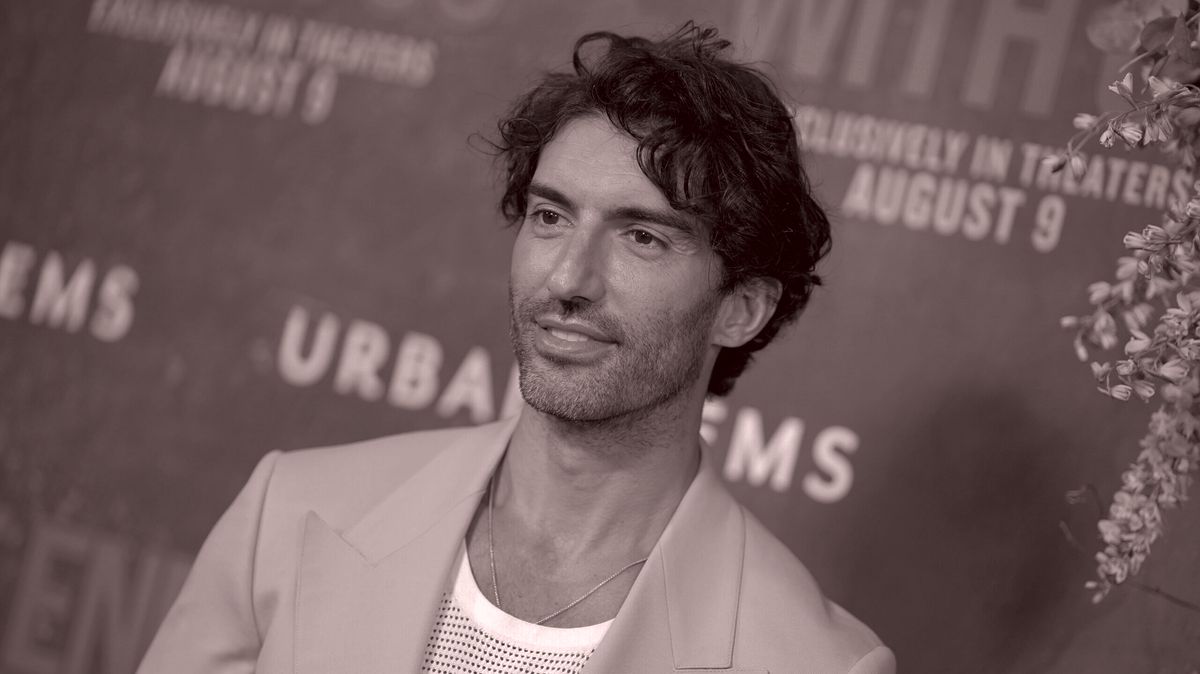
Anyway, Eriq Gardner is back today with the latest round in the real-life cage match between Blake Lively and Justin Baldoni. Eriq has pored through the legal filings and talked to tons of sources on all sides, and he’s got a look at the state of legal play and Baldoni’s $250 million suit against The New York Times.
|
|
|
|
A MESSAGE FROM OUR SPONSOR
|
NOW PLAYING IN THEATERS & AVAILABLE TO WATCH AT HOME
Starring Emmy, Grammy and Tony winner and Academy Award ® nominee Cynthia Erivo and Grammy Award winner Ariana Grande.
From Director Jon M. Chu comes the acclaimed cinematic adaptation of the beloved musical,
the untold story of the witches of Oz.
"A musical masterpiece."
GET TICKETS
|
|
|
 |
Eriq Gardner |
|
- Disney’s Monday mic drop: Disney’s bombshell announcement that it was taking a 70 percent stake in Fubo, merging the company with its Hulu+Live TV unit and settling the A.V.O.D.’s antitrust lawsuit over sports streamer Venu, was nothing short of breathtaking. First, it came just hours before a crucial 2nd Circuit Court of Appeals hearing. In a scene straight out of a legal thriller, Disney’s appellate lawyers learned about the resolution on the courthouse steps. Second, this was supposed to be the swan song for Joe Biden’s heralded antitrust regulators. Led by Jonathan Kanter, the Department of Justice Antitrust Division was set to argue for an injunction preventing the launch of Venu, the sports-focused service from Disney, Fox, and Warner Bros. Discovery, and that the trio should be legally compelled to license their content under certain conditions. The outcome of the Venu case might have set a precedent affecting future joint ventures and exclusivity deals across the video industry.
And yet, perhaps it still could. Even though the 2nd Circuit scrapped the hearing, and Kanter is packing his bags, there’s a good chance that someone else—a satellite or cable competitor, or class-action lawyers representing consumers—will pick up where Fubo left off and challenge the resolution. After all, a merger neutralizing an antitrust complaint… it can’t be that simple, can it?P.S.: I’ll be on John Ourand’s The Varsity podcast tomorrow discussing why the Venu case settled. You’ll be able to find the episode here.
- WWE civil suit moves forward: When Donald Trump nominated Linda McMahon to lead the Department of Education, there was discussion about how her confirmation hearings might be marred by longstanding sexual abuse accusations against a former employee of World Wrestling Entertainment, which McMahon co-founded with her estranged husband, Vince, and where she served as C.E.O. The better question, however, might be whether her cabinet appointment could influence an active criminal investigation into Vince for payments to conceal alleged sex trafficking.In recent days, the D.O.J. told attorneys for accuser Janel Grant that the government won’t further delay her civil case, which was paused in May amid an ongoing criminal investigation. I have to wonder whether outgoing U.S. Attorney Damian Williams decided to allow Grant’s lawsuit to proceed because he concluded Trump’s D.O.J. won’t file charges against McMahon. Meanwhile, of course, Linda has indicated she’s amenable to Trump’s call to abolish the department she’s set to lead.
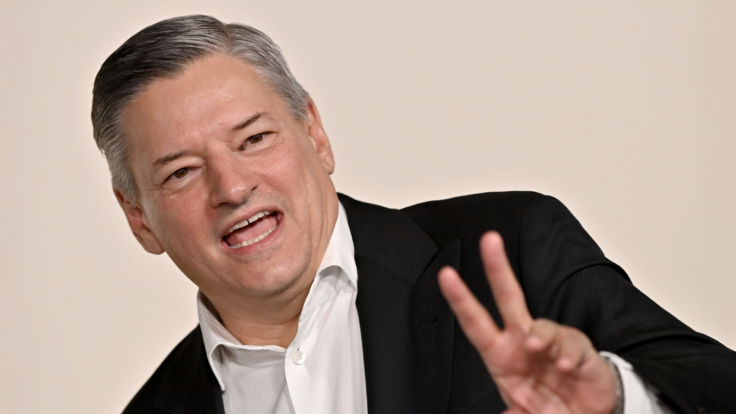
- The Kevin Spacey saga that won’t end: Speaking of political drama, the unconventional alliance between Kevin Spacey and House of Cards producers Media Rights Capital has entered a new chapter. As you’ll recall, after Spacey was fired from Netflix’s hit show because of alleged sexual malfeasance on set, MRC secured a $31 million judgment against the actor for breach of contract. But then MRC agreed to take just $1 million from Spacey in return for his cooperation with an effort to extract $150 million, plus damages, from the show’s insurers, Lloyd’s of London and Fireman’s Fund. MRC argued that Spacey suffers from sex addiction, and that this counts as an illness under the insurance policy.A trial date is now set for December, and the insurers are pushing to depose Netflix co-C.E.O Ted Sarandos, who they claim decided to halt production with Spacey. They’re seeking confirmation that his decision was influenced by bad press in the autumn of 2017, rather than Spacey’s alleged sex addiction or mental health issues. Sarandos’s legal team insists his testimony isn’t relevant, and that he had no direct role in Spacey’s removal from the series. The insurers say they have documentary evidence and witness testimony establishing otherwise. A hearing to determine whether Sarandos can be compelled to attend a deposition is scheduled for February 14. Should MRC prevail at trial, it’s worth noting that Netflix will
collect half of that $150 million, or whatever the final amount is, from the insurers.
- More Murdoch melodrama: I’m surprised that a December 27 opinion from the Delaware Court of Chancery, allowing a shareholder suit against Fox Corp. to go forward, hasn’t garnered more attention. It concerns everyone’s favorite topic: Rupert Murdoch’s struggle to rule his media kingdom. Shareholder attorneys are arguing that the Fox board has not
adequately managed defamation risks at Fox News, and that the financial burden of those mistakes—including the hefty $787 million settlement with Dominion Voting Systems—should be shifted to Lachlan Murdoch, Paul Ryan, Chase Carey, and five other directors.While the decision stops short of addressing whether the board could or should have prevented Trump advisors like Rudy Giuliani and Sidney Powell from broadcasting election lies, it does spotlight another critical issue: the board’s lack of independence from Rupert. That’s a prerequisite to a lawsuit of this nature, because if board members aren’t beholden to the boss, they can reasonably consider demands to make reforms. Thus, a ruling expressing their lack of independence could have far-reaching implications, potentially making it easier for shareholders to question and challenge Fox’s business judgment on other fronts, as well. Read the full ruling.
|
|
|
|
Now about that supposed libel of Justin Baldoni...
|
|
|
|
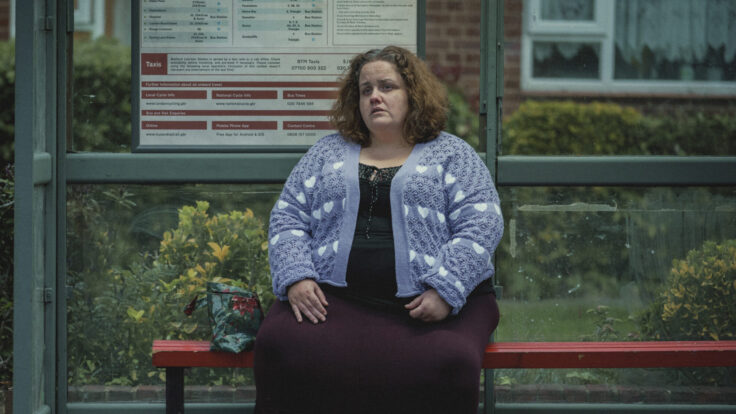
New combatants have joined the escalating battle between the movie star and her director, who’s upping the ante with a somewhat dubious $250 million lawsuit against The New York Times for journalistic malpractice.
|
|
|
|
Like many in Hollywood, my New Year’s Eve sparkled with fireworks, champagne, and a dash of the Blake Lively-Justin Baldoni melodrama. Hours before the ball dropped in Times Square, Baldoni slapped The New York Times with a $250 million defamation lawsuit, accusing the paper of betraying its journalistic mission by coordinating with Lively’s team to publish a sensationalized account of whatever transpired during and after the shooting of It Ends With Us. Bryan Freedman, Baldoni’s attorney, lambasted the Times for basing much of its story on an “unverified and self-serving” complaint that Lively had submitted to the California Civil Rights Department. The filing, Freedman said, should have remained “confidential unless leaked—as it was here.”
Freedman added that while a filing with a civil rights department can precede a lawsuit (indeed, Lively has now sued in New York), “it is clear that litigation was never her ultimate goal. Her real intention was to weaponize the appearance of legitimacy.”
I had to chuckle. This was Bryan Freedman, a guy who’s well-known for his skill and flair at working the press outside the hushed quiet of arbitration when it suits his clients. Doing press around an administrative complaint is practically a Freedman trademark. And I’m not knocking him. Freedman is a pioneer of sorts.
Still, in this dispute, Freedman proceeded in a way I found, frankly, surprising: In the complaint, he included correspondence from journalists covering the Lively-Baldoni story. These reporters had shared with Baldoni publicist Melissa Nathan—and later, directly with Freedman—their hearsay, opinions on peers’ coverage, and snippets of gossip rarely seen in court documents. Most striking was the correspondence from the Daily Mail’s James Vituscka, who badmouthed Lively’s publicist, Leslie Sloane, in private texts, and then sent Freedman a screenshot of their conversation, accompanied by the message: “I hope this helps in some way.” Blowing up your sources by using texts from journalists as legal fodder is a good way to make sure journalists stop taking your calls.
|
|
|
|
A MESSAGE FROM OUR SPONSOR
|
NOW PLAYING IN THEATERS & AVAILABLE TO WATCH AT HOME
Starring Emmy, Grammy and Tony winner and Academy Award ® nominee Cynthia Erivo and Grammy Award winner Ariana Grande.
From Director Jon M. Chu comes the acclaimed cinematic adaptation of the beloved musical, the untold story of the witches of Oz.
"A musical masterpiece."
GET TICKETS
|
|
|
|
I emailed Vituscka, who had no comment, but Freedman, perhaps spurred by my raising the issue last week, immediately submitted an amended complaint which redacted portions of the Vituscka exchange, “pursuant to reporter’s privilege request.”
The irony is that the Times may have to invoke that very privilege in defending this lawsuit. In the meantime, we’re witnessing an evolving tale involving not just stars and their lawyers and P.R. crisis managers—now, publicists for the reporters and lawyers for the publicists are entering the fray.
|
|
Would Baldoni win his case against The New York Times? I’d say it’s about as likely as an Oscar nod—long odds, indeed. What, exactly, is the filmmaker-actor accusing the Times of getting wrong? It’s murky. Yes, he’s ticked off that Megan Twohey, who famously exposed Harvey Weinstein’s history of sexual crimes while reporting alongside Jodi Kantor, presented a lopsided narrative of his alleged misdeeds. But let’s be clear: Bias isn’t illegal. Only demonstrable falsehoods can qualify as defamation, and complaints about vague character attacks don’t usually hold up in court, particularly in California, where anti-SLAPP laws encourage judges to quickly toss cases that interfere with free speech.
The bulk of Baldoni’s 87-page complaint appears aimed more at the court of public opinion than the judiciary, emphasizing his side of the he-said, she-said beef. Take Lively’s accusation of Baldoni’s unwanted kissing and discussion of his sex life: He counters that she refused to meet with the production’s intimacy coordinator, and that the creative process involved collaboratively designing scenes, which he found appropriate. This alternate narrative, however, is just that—an alternate narrative. In other words, a different interpretation of the same facts.
You have to look past long digressions, which have nothing to do with what the Times reported, to discern what Baldoni alleges that the paper factually misstated. Baldoni, for instance, says he did not agree to a 30-point list of Lively’s demands after she raised concerns about his behavior, stating he was never even presented with such a document. Yet the Times never mentioned such a list; rather, it noted that Baldoni’s company, Wayfarer, had agreed to terms to ensure a safe work environment.
Even if the Times made an error, or insinuated that Baldoni was guilty of sexual harassment, how much responsibility does the paper bear in conveying Lively’s account? This question introduces some legal nuances. While publications can be liable even when quoting others, repetition of someone’s complaint to a government body like a court or administration agency typically receives protection under the “fair report privilege.” This legal shield is vital, allowing journalists extra latitude to cover issues in the public interest, such as how the government functions and how it handles disputes that require government intervention. There’s even a vetting process—lawyers confirm the veracity of what they submit in court, under the penalty of sanctions or even the loss of their licenses to practice law. Journalists, such as myself, often rely on their diligence.
Still, when I first saw the Times story, I wasn’t clear whether this privilege would apply. Was Lively’s complaint actually filed with the California Civil Rights Department? Did anyone check—or was the story based on some embargoed copy and rushed once TMZ published its own version? And did Twohey and the other reporters expand their investigation beyond the complaint? The Times claimed its story was grounded in a thorough review of “thousands of pages of original documents.” Was that puffery?
I’ve spent the last few days digging into the editorial process and speaking with insiders off the record, and I’m still not absolutely certain privilege will apply. Fortunately for the Times, there are probably other defenses at play, but it also wouldn’t be a surprise if things get messy before this saga is resolved.
|
One mystery in particular has captivated the legal community regarding Baldoni’s lawsuit: Why opt for a California state court? After all, not only is there an expansive state anti-SLAPP law that swiftly dismisses meritless cases, it also awards legal costs—meaning Baldoni could be forced to pay the Times’s legal fees. Plus, the Times can kick this to federal court and pursue an immediate appeal if its anti-SLAPP bid fails. In other words, don’t expect a trial anytime soon.
When I contacted Freedman, he was uncharacteristically tight-lipped about his strategy. My guess? He’s more comfortable with the local legal arena, betting on the known quantities on the bench.
However, I do wonder if it has anything to do with a notable ruling last year in former film financier Ryan Kavanaugh’s case against podcaster Ethan Klein, where a judge allowed a libel suit to proceed despite an anti-SLAPP challenge centered on the application of fair report privilege. The dispute is terribly complicated—see my prior report for details—but long story short: Klein failed in his attempt to invoke the shield because the judge didn’t think what he repeated about Kavanaugh operating a “Ponzi scheme” was particularly fair. (Incidentally, California’s 2nd appellate division will hold a hearing on this matter on Wednesday, delving into republication liability and the almost metaphysical nature of what constitutes a “filing” for privilege purposes.)
Maybe Freedman has his eyes on a favorable precedent, or perhaps he likes his odds of setting his own. He’ll surely be arguing that the Times overstepped by coordinating with Lively’s team and taking their word about a filing with the California Civil Rights Department. Either way, the Hollywood attorney might want to tread carefully. A lawyer who so regularly texts reporters might not like how this one turns out.
|
|
Thanks, Eriq. Interesting stuff. If you want to send Eriq comments, story ideas, or well-wishes for the Rams in the playoffs, he’s at 646-729-4824. I’ll be back on Thursday.
Matt
|
|
|
|
Puck founding partner Matt Belloni takes you inside the business of Hollywood, using exclusive reporting and insight to explain the backstories on everything from Marvel movies to the streaming wars.
|
|
|
|
A biweekly private email offering unparalleled access to the global art market: the mega-auctions and galleries, elite buyers and sellers, and the power players who run this opaque world.
|
|
|
Need help? Review our FAQ page or contact us for assistance. For brand partnerships, email ads@puck.news.
You received this email because you signed up to receive emails from Puck, or as part of your Puck account associated with . To stop receiving this newsletter and/or manage all your email preferences, click here.
|
|
Puck is published by Heat Media LLC. 107 Greenwich St, New York, NY 10006
|
|
|
|