{{ 'now' | timezone: 'America/New_York' | date: '%b %d, %Y' }} |
|
|
Welcome back to What I’m Hearing+, the Tuesday WIH supplement devoted to the most
impactful legal beefs in Hollywood and beyond. Today we mean that literally, as Eriq Gardner is back with a report on the $100 million battle over MrBeast Burger, the first major court case involving the world’s biggest YouTuber. Plus, as David Zaslav officially hangs a “For Sale” sign on the Warner Bros. water tower, Eriq reports on the latest in its litigation over its Village Roadshow library.
Discussed in this issue: MrBeast,
Robert Earl, Steve Marenberg, Bill Carmody, Vincent Viola, Matthew Hiltzik, Trey Steiger, Michael Oher, Leigh Anne and Sean Tuohy, Wayne Smith, Rockmond Dunbar, Robert F. Kennedy Jr., Ezra Miller, Elon Musk, and many more…
All yours, Eriq… |
|
|

| Eriq Gardner
|
|
- Warners–Alcon marriage counseling: You may recall the media frenzy a couple of years ago when former NFL player Michael Oher claimed that the 2009 film The Blind Side misrepresented his life—that Leigh Anne and Sean Tuohy never actually adopted him, and that they cashed in on his name, image, and likeness while he got peanuts. Now comes a new wrinkle: During the peak of that scandal, Alcon
Entertainment—the production company behind the Oscar-winning film—fired off a terse letter to Warner Bros., which distributed the movie. The issue? CNN, a sister unit, was airing a blistering documentary called Blindsided and had used clips from The Blind Side. Alcon wanted it stopped. Warner’s legal team politely declined, citing editorial independence. And that was the end of it… until now.
The dustup resurfaced this week in Delaware Bankruptcy Court, where Warner
Bros. Discovery is trying to block Alcon from becoming its new co-financing partner. (This arrangement came to pass when Alcon purchased so-called “derivative rights” from the bankrupt Village Roadshow for $18.5 million.) The deal includes participation in certain sequels and remakes—Practical Magic 2 is first up. But Warners is objecting, leading to an all-day evidentiary hearing on Monday that I attended. “We don’t want to be forced into a bad marriage,” testified Wayne
Smith, WBD’s E.V.P. of legal.
That’s understandable. Warner’s previous marriage to Village Roadshow imploded after corporate shake-ups on both sides and a fiery arbitration over The Matrix Resurrections. When WBD released the film on HBO Max the same day it hit theaters during the height of Covid, Village refused to pay its $100 million share. On the stand, Smith pointed to other reasons that studios must be able to trust their co-financiers—like Ezra
Miller’s legal troubles during The Flash, and the film festival drubbing of Kevin Costner’s Horizon: An American Saga. With so much that can go wrong, he said, trust is paramount.
So why the cold feet with Alcon? After all, the companies go way back: Alcon once had a distribution deal with Warners that yielded dozens of films, like The Book of Eli and Insomnia. They even shared office space on the Burbank lot. At Monday’s
hearing, Alcon played a tribute video from 10 years ago featuring Denzel Washington, Christopher Nolan, and former WB film executive Jeff Robinov singing its praises.
But relations have soured. Warner points to the Blind Side tension, and to Alcon’s ongoing lawsuit accusing WBD of allowing Elon Musk to use an A.I.-generated clip inspired by Blade Runner 2049 to market Tesla. There are also other silly
disputes, like a non-invite to the 25th anniversary celebration of The Sisterhood of the Traveling Pants. You can’t make this stuff up.
So desperate is Warner Bros. to avoid this forced partnership that, on the eve of the hearing, it upped its bid for the derivative rights to $19.5 million—despite the auction closing months ago. Village Roadshow is aiming to use that leverage in its ongoing arbitration to reduce the still-pending Matrix 4 bill. No settlement has been
reached, and Village is standing by its deal with Alcon. - Will R.F.K. Jr. rescue a fired 9-1-1 actor?: What an ending to the case brought by actor Rockmond Dunbar, who sued Disney for wrongful termination when he refused to comply with Covid vaccine mandates. Dunbar, who once earned $100,000 an episode on the Fox (now ABC) series 9-1-1, claimed that his refusal to get vaccinated was protected by his membership in
the Congregation of Universal Wisdom. Disney, in turn, argued that his termination wasn’t about religion at all.
On Friday, a jury sided with Disney. As the verdict was read, Dunbar reportedly cried out, “Oh my God! Oh my God!” before turning to his family and apologizing, “I’m so sorry. We’ll be okay.” During the trial, he testified that the fallout from the case had left him in a financial hole “I will never be able to get out of.”
Nevertheless, an appeal seems likely—especially
given that several of Dunbar’s claims were tossed before trial. Also worth noting: Dunbar was once represented by Robert F. Kennedy Jr., which raises the curious prospect that the Department of Health and Human Services could weigh in if the case advances. - Can you copyright a car?: Speaking of appeals, here’s a fun one. The U.S. Supreme Court is being asked to weigh in on what kinds of fictional characters deserve
copyright protection—specifically, whether a souped-up car like “Eleanor,” the custom Ford Mustang from the original 1974 film Gone in 60 Seconds, qualifies for the designation. The petition is the latest in a legal saga that’s been dragging on for—no exaggeration—a full quarter-century.
Still, don’t hold your breath. The odds that the justices take it up are slim. My hunch? They’re saving their copyright powder for a splashier A.I. controversy.
|
|
|
The yearslong legal feud between YouTuber Jimmy Donaldson and restaurateur Robert
Earl is headed back to court this week, with Donaldson arguing that he’s defending his brand and personal integrity—and Earl insisting that Beast Industries cares only about cash. |
|
|
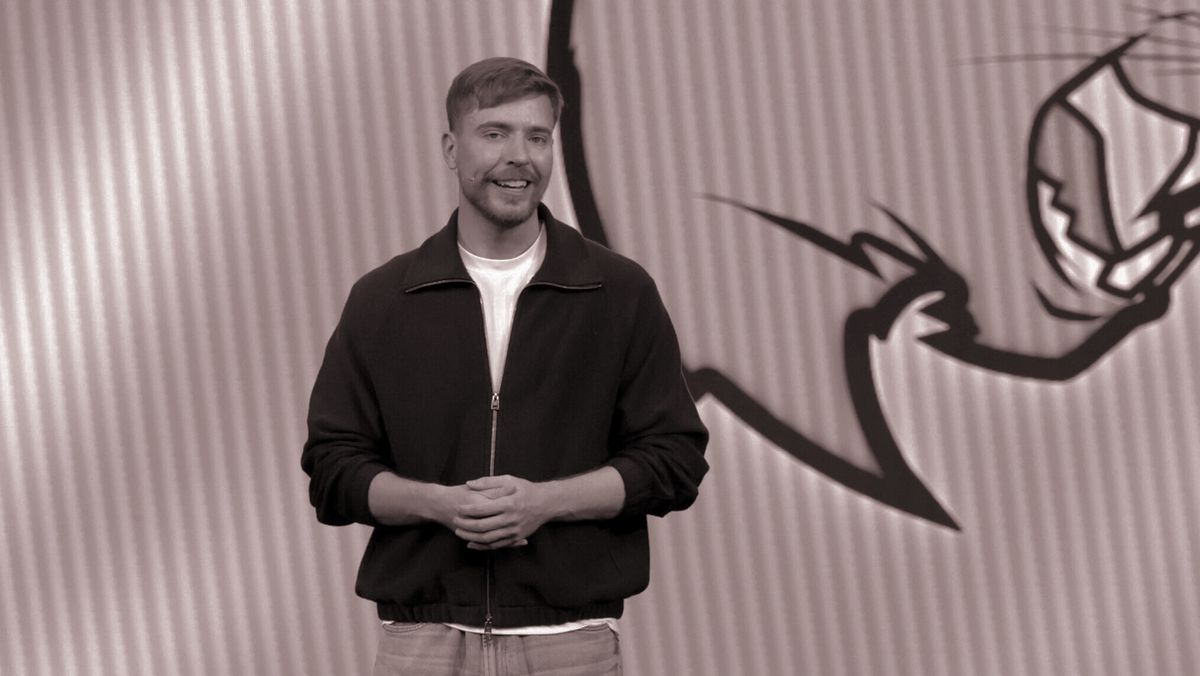
Jimmy Donaldson, a.k.a. MrBeast, is back in court this week as part of his ongoing
legal battle with Robert Earl—the cigar-chomping hospitality impresario best known for founding Planet Hollywood and, more recently, launching a ghost kitchen built to sling celebrity-branded meals. Back in 2020, Donaldson’s Beast Industries had partnered with Earl’s Virtual Dining Concepts in what seemed, at the time, like a match made in pandemic-era heaven: a YouTube star with hundreds of millions of followers, and a delivery model that didn’t require anyone to leave their
homes.
But the partnership soured quickly. Some fans complained the food was “inedible,” posting photos of undercooked meat. Donaldson publicly distanced himself from MrBeast Burger, tweeting that if he “had the ability to close it, I would have done so a long time ago sadly. Sometimes when ur young you sign [a] shit deal.” In 2023, Donaldson sued Earl to get out the deal, and Earl promptly sued him right back for breach of contract.
Donaldson, of course, has pretty lofty ambitions
for a guy who’s still 27 years old. Last week, he filed a trademark application for “MrBeast Financial,” which sounds equally plausible as either a fintech startup or the setup for a prank video involving suitcases full of cash. (Apparently it’s the former.) And why not? He’s YouTube’s number one performer, with more than 400 million subscribers—a number, he reminded lawyers in a deposition last year, that means Super Bowl–level viewership. “I mean, I buried myself alive for seven days,” he
said, deadpan. “No one else does that kind of stuff.”
But while Donaldson’s business empire—which includes restaurants and a popular snack line called Feastables—now generates about $500 million a year, he’s still a long way from hitting his internal projections for $4.78 billion in revenue by 2029. The partnership with Earl, he alleged, has been holding him back. |
“A
Very Different Person When the Cameras Are Off”
|
In summary judgment arguments this week, Donaldson, represented by veteran entertainment litigator
Steve Marenberg, is presenting a straightforward case: If you’re going to plaster my name, face, and digital footprint on a product, you’d better not screw it up. He accuses VDC of violating that basic rule—posting on Instagram without approval, flouting the agreement—and he’s trying to void the contract entirely. That would free him from exclusivity and noncompete provisions, and clear a path for a more appetizing partnership with, say, Burger King.
In its countersuit,
VDC, represented by courtroom bruiser Bill Carmody of Susman Godfrey, argues that Donaldson walked away from a promising business with strong early sales. Perhaps the juiciest part of the spat coalesces around dueling media narratives: Earl’s team points to MrBeast’s swelling subscriber count, a $300 million Series C fundraising round last year, and a $5 billion valuation as proof that the burger deal hasn’t dented the MrBeast brand. Donaldson disagrees and argues that while his
star may still be rising, it could be rising faster. In particular, he claims that his followers, investors, and long-term prospects were undermined by a poorly managed, morally off-brand venture that dinged his core identity as an icon of integrity and authenticity.
Hogwash, says Carmody. “Evidence uncovered in this case reveals that Jimmy Donaldson is a very different person when the cameras are off,” he writes in his summary judgment brief, opening with a decidedly
Machiavellian portrait of MrBeast as “singularly focused on his financial gain at the expense of everyone and everything else.”
But the more consequential point of contention has to do with MrBeast’s finances. Donaldson’s big YouTube stunts are expensive—some of his videos cost millions of dollars to produce—and his business has razor-thin margins. To make the economics work, Carmody alleges, Donaldson has had to squeeze more money from his ancillary businesses. According to his
brief, Donaldson’s investors “egged him on, insisting Beast Industries ‘needs to own at least 80 percent of each company’ to avoid ‘leaking’ profits.” In 2022, Donaldson sought to renegotiate his original deal with VDC, which included a 50-50 revenue split.
Under the proposed new structure, Beast Industries would have taken 77.5 percent—but the deal couldn’t be closed. Carmody alleges that a more favorable arrangement was not enough for Donaldson, who aspired to one day take the company
public. Donaldson’s lawyers counter that the new structure had been scuttled by VDC “kowtowing” to an investor. Regardless, the standoff featured a heated meeting between Donaldson and Earl in Florida, in January 2023, that included raised voices, slammed doors, and one broken clothes hanger.
A few weeks later, according to court documents, Donaldson admitted to his friend Trey Steiger, the co-founder of Prime Hydration, that he’d signed a “fucked deal.” Steiger texted
him some advice to raise product safety as a concern: “My middle name is leverage brother.” Donaldson responded in kind: “Tell [Earl] to give me god dam control or I’ll just let it die. Idgaf.”
Eventually, Donaldson decided the courts were his way out. His lawyers fired off a demand letter alleging contractual breaches, while internally, Donaldson shared what he called his “giga brain play”: “We win the VDC lawsuit. Then we go to Burger King/mc Donald’s etc. Offer for them to buy Beast
Burger and put it on their menu exclusively ... they can buy it for 300 to 400M and then I promote them and we have a royalty deal.”
“The Beast Parties’ own communications confirm that their concern was not quality, but money,” Carmody’s team crows in its brief. Marenberg, Donaldson’s lawyer, sees it differently, of course. He points to thousands of customer complaints about cold fries, raw burgers, and shoddy fulfillment—undisputed evidence, he argues, of VDC’s neglect. Fans were holding
Donaldson personally responsible for all of this, he stresses. As for the late 2022–early 2023 negotiations, Marenberg writes that his client was simply trying to buy Earl out “precisely so that it could impose appropriate quality control and stop the bleeding when Donaldson’s requests that Virtual Dining fix the problems went unheeded.” |
If the case continues, we could be headed to a trial next year in New York, with potential
nine-figure damages on the table. Donaldson will have to convince a jury that the botched burger rollout inflicted irreparable harm on his reputation, and that VDC’s counterclaim—for hundreds of millions in lost enterprise value from the demise of MrBeast Burger—is entirely speculative. VDC, for its part, is scoffing at the notion of reputational damage. They point to a $150 million investment check from Vincent Viola’s Three Brothers Family Office, a $7 million
endorsement deal from Zaxby’s, and the continued flood of brand suitors looking to partner with Donaldson.
Earl’s team further mocks Donaldson’s claim of reputational damage by noting that when the chips are really on the table—like when reports surfaced of old livestreams in which Donaldson used racist and homophobic slurs—the creator retained Matthew Hiltzik’s crisis P.R. firm. Likewise, when stories came out alleging workplace harassment and mistreatment of
contestants on MrBeast’s Amazon show, Donaldson commissioned consumer sentiment surveys and hired Quinn Emanuel to investigate. In a brief dripping with shade, Carmody writes: “How the Beast Parties treat a true crisis—the kind that might tarnish MrBeast’s brand—speaks volumes when those same steps are not taken in the face of what they falsely claimed was another.”
Marenberg calls that argument “outrageous” and “unfair,”
and insists that Donaldson took different steps in response to different problems. And anyway, in this instance, his response was decisive: He sued.
Indeed, this is the only time Donaldson has ever brought someone to court. And it’s hard to believe he needs the money. On the contrary, he’s exposing sensitive details about the MrBeast business, finances, and carefully managed public image. Ever the showman, Donaldson seems to have decided this public spectacle is worth
the cost. |
Thanks, Eriq. I’ll see everyone on Thursday.
Matt |
|
|
Puck founding partner Matt Belloni takes you inside the business of Hollywood, using exclusive reporting and insight
to explain the backstories on everything from Marvel movies to the streaming wars. |
|
|
Unique and privileged insight into the private conversations taking place inside boardrooms and corner offices up and
down Wall Street, relayed by best-selling author, journalist, and former M&A senior banker William D. Cohan. |
|
|
Need help? Review our FAQ page or contact us for assistance. For brand partnerships, email ads@puck.news. You received this email because you signed up to receive emails from Puck, or as part of your Puck account associated with {{customer.email}}. To stop receiving this newsletter and/or manage all your email preferences, click here. |
Puck is published by Heat Media LLC. 107 Greenwich St, New York, NY 10006 |
|
|
|