 |
|
Welcome back to What I’m Hearing+. I’m Julia Alexander.
|
|
And just like that, the holiday season has come to an end! I hope you rang in the New Year surrounded by loved ones. If you’re anything like me, you’re already stressing about keeping your resolutions.
I shared my 2024 predictions last week, but one that I didn’t get to—mostly because I wanted to dedicate an entire column to it—is the potential partnership between Amazon and Diamond Sports Group.
As I mentioned several times last year, the fate of regional sports networks (RSNs)—those small cable channels that essentially exist to broadcast local pro sports games—is likely to be one of the biggest media stories of 2024. In enormous markets, an entity like New York’s MSG can be a multibillion-dollar concern. But in Kansas City or San Diego, these channels are losing their bargaining power, and their business models make less and less sense. Amazon’s reported interest in a “strategic investment” and multiyear streaming partnership with DSG has an obvious industrial logic. Here’s why…
|
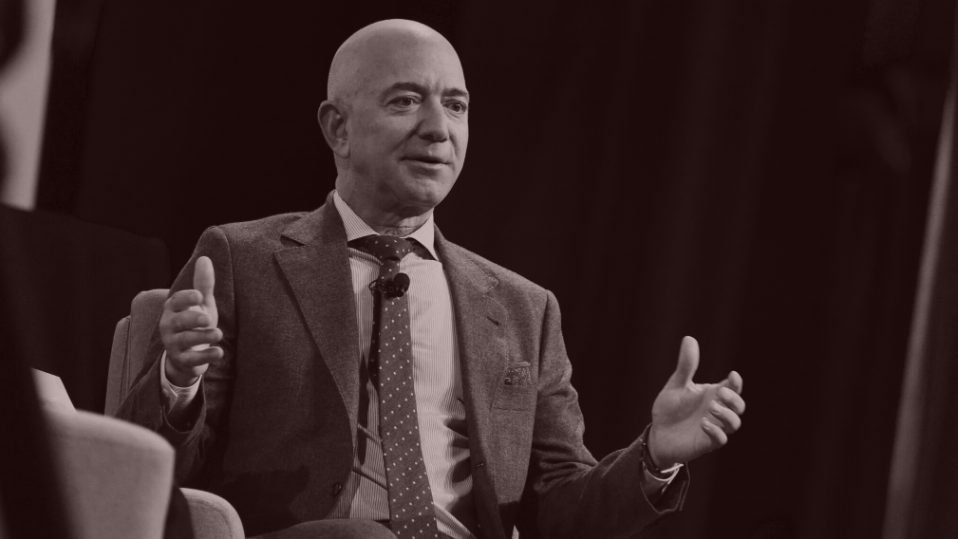 |
| Amazon’s Wide World of Sports |
| Amazon may have entered the entertainment business to sell more toilet paper and toothpaste, but it definitely sees local sports as a way to serve ads and hawk merch. |
|
|
|
| We’ve long ago discarded the notion that live sports has no place in streaming. Apple gobbled up all MLS and limited MLB rights. Peacock and Paramount+ rely on their linear NFL deals to prop up their streamers. Warner Bros. Discovery is trying to turn Max into a live sports hub using its Bleacher Report shingle. Google’s YouTube TV acquired NFL Sunday Ticket rights. And, of course, Bob Iger and Jimmy Pitaro are on the long, slow, uncertain journey to launch ESPN as its own OTT service, whenever that happens. Netflix, for its part, says it’s content to merely broadcast live sports–adjacent series like Full Swing and F1: Drive to Survive, but let’s see how long that remains the case.
And then there’s Amazon, whose sports ambitions are led by Jay Marine and Marie Donoghue. Over the last few years, Amazon not only acquired Thursday Night Football (overall ratings are down from when games aired on broadcast networks like Fox, but viewership in the 18-49 demo was up double digits in 2023, despite some dull games), it also made major sports rights acquisitions in almost a dozen countries, including the U.K., Brazil, and Australia. High-profile tournaments ranging from the UEFA Champions League to the French Open and Copa do Brasil have netted Amazon important viewership and attention in those markets.
Now, Amazon appears to be focused on the sclerotic regional sports business—the decaying but all-important piping that connects local fandoms to their teams. Last month, the Journal broke the news that the company was exploring an investment in Diamond, a subsidiary of Sinclair Broadcast Group that oversees RSNs for 42 teams across the MLB, NBA, and NHL. And while that sort of economic arrangement would be pocket change for Amazon, it is also a harbinger of profoundly more significant plans. Getting into the RSN game would allow Amazon to make itself more available and appealing for local TV advertising. (The other two ad giants of today, Meta and Google, have appealed to local and small advertisers but aren’t as focused on live video.) And it wouldn’t just attract and retain users to Prime Video, it would also keep them shopping once they landed there. |
|
|
| I don’t need to tell you how important the Regional Sports Networks were to the various leagues, teams, and cable distributors. By the mid-2000s, RSN fees were a significant portion of league and team revenues. Certain leagues, like the MLB, are also more reliant on local media deals than national leagues like the NFL. Just under 25 percent of the average revenue for MLB teams came from local media in 2022, making it the largest locally driven revenue segment for any of the major leagues in the U.S. To compare, the NBA came in at 13 percent and the NHL at 12 percent, according to Sportico. It didn’t matter if a Spectrum subscriber in Queens never watched the Knicks, he or she paid either way.
Within the past few years, of course, cord-cutting and declining viewership led some networks to miss their ad targets and/or get dropped altogether. Last March, Diamond filed for bankruptcy, which precipitated a series of cataclysmic events across the leagues. Deals for teams including the Arizona Diamondbacks and San Diego Padres were terminated, leading the MLB to secure alternate in-season viewing options. The company is currently trying to figure out how to claw back rights for more than 10 other teams whose status within DSG is up in the air. DSG’s rights to NBA games will expire after next season, and the league hasn’t said what it will do with those local rights.
Here’s where Amazon comes in, surreptitiously but also strategically. Diamond needs cash. Leagues like the MLB and NBA need security and reach. And Amazon needs local sports for advertising and e-commerce opportunities. It’s a perfect combo, as long as Amazon can secure the streaming rights (there are rumors that leagues including the MLB and NBA might want to hold on to local rights for their own D.T.C. ambitions) and if the audience follows. Neither is necessarily guaranteed, but if it comes to pass, it could be extremely lucrative. Local TV spend is projected to hit $175.6 billion in 2024, according to Insider Intelligence, in large part due to the election. Some $1.9 billion will be spent on cable TV, but connected TV (like Amazon Fire devices) will likely receive a huge increase in local ad spend, currently projected at $1.3 billion.
Prime Video has begun rolling advertising through its more than 150 million customers using an opt-out strategy rather than opt-in. Rather than a Netflix-style cheaper tier with ads, Amazon is serving ads to everyone until and unless they spend $3 more a month. Current estimates from consulting firms suggest that Amazon could retain the vast majority of its audience on an ad-supported tier, quickly surpassing every other SVOD in terms of reach for advertisers.
Amazon’s video strategy is heavily debated, and for good reason. Its shows are expensive and rarely surface on Nielsen’s weekly Top 10. Amazon’s ecosystem play, however, is more understandable. Sports are a natural entry point because of the locked-in audience and built-in ad breaks, unlike TV in the streaming age. For Amazon, the goal of getting people to watch something, which convinces them to buy something from Amazon’s retail site, and then continue to watch programming (including non-Amazon originals—have you seen recent Prime commercials that once again tout services like Warner Bros. Discovery’s Max?) was always plain and clear. RSNs, and local sports, just offer more opportunities.
That includes the small business market. Analysts estimate that Meta could be making about two-thirds of its revenue via small-business ads—and 98 percent of Meta’s total annual revenue comes from advertising. This is considered performance advertising; people are looking for something, and Facebook or Instagram serves it. Google has used similar tactics across its two big advertising generators, Google Search and YouTube.
But competitors are rising. In 2022, Google and Meta dropped below a 50 percent share of all digital ad spend in the U.S., according to Axios, in large part because of Amazon and TikTok. Amazon’s ad business now generates more than $30 billion annually for the company, and is growing by double-digit percentages year-over-year. Amazon also recently launched Sponsored TV, a self-service portal for small businesses to place ads on Amazon’s streaming platforms, including Twitch and Freevee.
While this doesn’t directly correlate to Prime Video yet, most local advertising tends to come from small businesses—car dealerships and realtors and such. We also know that sports reach some of the largest local audiences. And we know that 2024 will create a strong market for local political ad spend. Amazon is courting more dollars that would typically go to Meta and Google, and is trying to serve those ads to an engaged, easily targeted audience. The next step, and where Amazon is trying to show its advantage compared to streaming companies like Disney and Netflix, is activating its e-commerce capabilities. |
|
|
| I’ve already discussed Amazon’s schlocky Black Friday football game in this space. It was an experiment, of course—and one that suffered from a horrific Jets vs. Dolphins contest—but it also introduced the concept of shopping-while-watching to many. Scanning a QR code from your TV to order something on your phone lowers the hurdle between thinking about purchasing and actually purchasing. It isn’t difficult to see how this could work for local advertisers and sports leagues. Imagine a Padres fan, watching the team from her couch in San Diego, being served a dynamic ad for a jersey—or a medical alert bracelet, or a ridiculous grill tool—just a quick scan and click away.
Although the Black Friday game delivered weak ratings for Amazon (an average of 9.61 million viewers with a peak of 11.1 million), the “heightened commerce and data capabilities” were crucial to participating advertisers, according to Ad Age, while the actual viewership numbers “weren’t necessarily a top priority.” Indeed, those who watched the Black Friday game were nearly 80 percent more likely to search for products that were advertised than people who watched ads on other NFL broadcasts.
Industry skeptics used to joke that Amazon entered the entertainment industry to sell more toilet paper via Prime. For a long time, considering Amazon’s often confounding strategy with original programming, that takeaway was understandable. And while that’s not entirely true, it’s fair to say that Amazon’s interest in sports is similarly transactional. While so many media companies are chasing sports rights to ward off churn, Amazon views them as a means to sell more merch, serve more ads, and improve its margins. |
|
|
|
| FOUR STORIES WE’RE TALKING ABOUT |
 |
| Box Office Omens |
| On the foreboding signs for the ’24 box office. |
| SCOTT MENDELSON |
|
 |
|
 |
|
 |
|
|
|
|
|
 |
|
|
|
Need help? Review our FAQs
page or contact
us for assistance. For brand partnerships, email ads@puck.news.
|
|
You received this email because you signed up to receive emails from Puck, or as part of your Puck account associated with . To stop receiving this newsletter and/or manage all your email preferences, click here.
|
|
Puck is published by Heat Media LLC. 227 W 17th St New York, NY 10011.
|
|
|
|