 |
 |
|
Hello and welcome back to What I’m Hearing+, your Diddy-free legal supplement to What I’m Hearing. Over to Eriq, who was in court yesterday to hear TikTok’s big free speech argument, and no, it did not go well.
But first…
|
|
|
- Keep your friends close…: Francis Ford Coppola has already thrown $120 million of his own fortune into Megalopolis, his four-decades-in-the-making sci-fi vanity project, so why not toss a few million more onto the bonfire? Last week, the 85-year-old filmmaker brought a libel lawsuit against Variety for a biting article that accused him of being unprofessional on set, insisting that he bears little resemblance to the dotty director portrayed in the piece, who accidentally photobombs his own shots and gropes topless extras. The Variety story included video clips, purportedly shot by crew members, depicting the filming of a raucous nightclub scene, implying that it was evidence of Coppola’s misconduct, as well as confirmation of a prior Guardian piece that quoted sources saying the director “tried to kiss some of the topless and scantily clad female extras.”
Coppola says that the video does not capture any attempt on his part to smooch extras, but that seems to be an interpretation. Since the publication posted the video, shouldn’t readers be able to form their own opinions? Elsewhere in the complaint, Coppola suggests Variety should have been skeptical of its anonymous sources, who were under strict NDAs and forbidden from taking photos or videos on set. This is a tough one for Coppola. Even if he can demonstrate inaccuracies in the story, I doubt a judge will find that Variety acted with actual malice by relying on someone who has broken an NDA.
Given anti-SLAPP statutes, which are designed to protect free speech from litigation (and often award attorneys fees to the victor), the iconic director could be headed for an expensive legal loss. But maybe that just goes down as another budget line on the late-career opus of the Oscar-winning filmmaker, who should be more concerned that his movie is tracking to earn just $5 million in its opening weekend.
- Burgers and the Beast: Sometimes, it’s best to make a course correction after a hazardous legal foray. Just ask YouTuber Jimmy Donaldson, better known as MrBeast, who is battling Planet Hollywood founder Robert Earl over their “ghost kitchen” co-venture, alleging that the underwhelming MrBeast Burger has irrevocably harmed his brand. Several months ago, I reported that case filings revealed MrBeast’s finances and corporate structure. Now, in the wake of further discovery demands, Donaldson has told a New York judge that he’d like to drop his brand-damage claim altogether.
The move comes as the YouTube star is under scrutiny over past insensitive remarks and controversial working conditions on his forthcoming Prime Video show. Donaldson’s attorney candidly confessed to the judge that his client was exhausted by the relentless and intrusive discovery process. If the judge agrees to the change, the case will shift focus to whether Donaldson can legally exit his endorsement deal. However, by dropping the brand-damage claim, he weakens his chances of securing a big-money verdict.
Did MrBeast learn a lesson? Well, Donaldson is now joining Logan Paul to launch Lunchly, a supposedly healthier, quickie grab-and-go alternative to Lunchables. (Naturally, each package will include a Feastables bar and a bottle of Prime, Paul’s Gatorade challenger brand.) While his agreement with Earl contains a noncompete clause, it only applies to the burger section of the food pyramid, leaving him free to take another crack at feeding America.
- Murdoch trustbusters: I keep getting asked about the likely outcome of this Murdoch trust trial, which is getting a lot more attention since I detailed the court location in Reno, the name of the judge, and the timeline. Honestly, it’s tough to predict. Most of the substantive legal debate remains sealed, eluding even the most tenacious media efforts. That said, given the challenges of amending an irrevocable trust under Nevada law, and considering Rupert’s peculiar rationale—that he’s protecting James, Elisabeth, and Prudence from their own potential missteps by ensuring his politically aligned eldest son, Lachlan, stays in charge—I’d hardly bet on Rupert prevailing.
This intrigue could well lead to an appeal, with each judicial step offering a fresh chance to unearth more details about the subterranean family drama. Adding another layer of complexity, activist investor Starboard Value recently proposed eliminating the dual-class share structure at News Corp., where Murdoch’s print media assets reside. With Murdoch controlling only 40 percent of the voting shares, the scene is set for significant potential changes one way or the other. A few years down the line, it’s possible we might see no Murdoch at the helm, and look back at this trial as the beginning of the empire’s end.
|
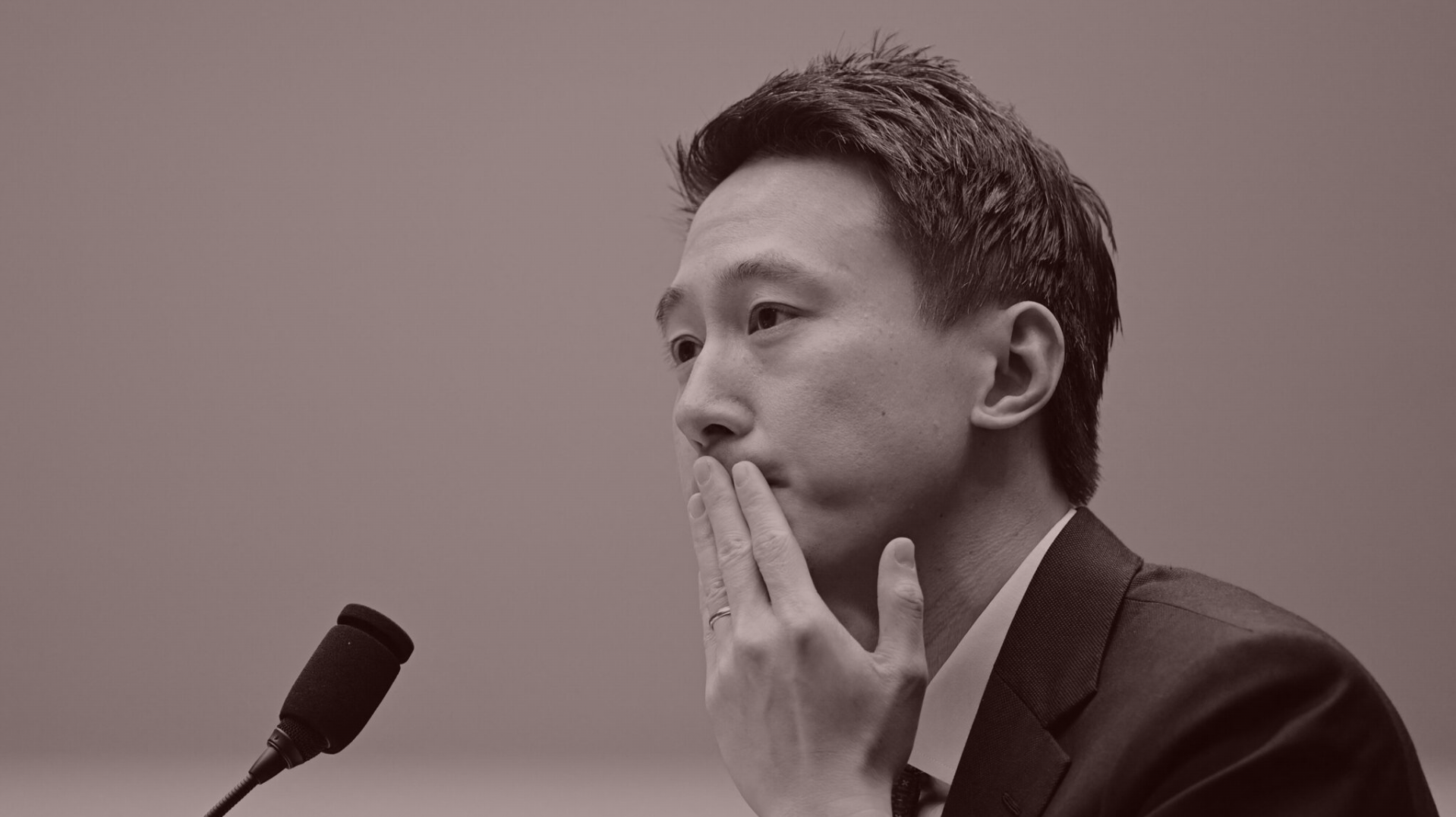 |
| TikTok’s Rough Day in Court |
| Up close and in-person at the blockbuster trial—the First Amendment angle, the NatSec concerns, the creators’ pleas, the lawyers’ moxie, and Hollywood’s reticence to get involved. |
|
|
|
| On Monday, at long last, TikTok’s lawyers marched into the D.C. Circuit Court of Appeals to challenge the much-debated law, signed by Joe Biden in April, forcing its Chinese parent company, ByteDance, to either divest or face a ban in the U.S. Before slipping in the back door to watch the proceedings, I would have said it was anyone’s guess how the chips might fall in this legal blockbuster. The judges, after all, are weighing classic freedom of expression against national security concerns, at least as whispered by the government in partly sealed briefs that demonstrate a rare example of bipartisanship on the Hill.
Of course, this isn’t quite your typical First Amendment tussle. While TikTok’s lawyers are well-versed in precedents that would seem to tip the scales in the social media giant’s favor, there are no guarantees that Judges Sri Srinivasan, Neomi Rao, and Douglas Ginsburg really care about the asserted free speech at stake—especially since Hollywood, itself, has been mum on the TikTok question. Indeed, if the judges’ aggressive questioning was any indication, they may not be sympathetic to TikTok at all. |
|
A MESSAGE FROM OUR SPONSOR
|
 |
| Get a custom-made IRA from Betterment.
Choose where and when you want to retire, and a Betterment IRA can help make your money hustle all the way there.
Learn More. |
|
|
| On Monday, TikTok’s lead attorney, Andrew Pincus at Mayer Brown, attempted to land the argument that even content manipulation deserves robust protection as a form of free expression, delving into an arcane debate over the application of strict scrutiny under the First Amendment. The judges seemed thoroughly unimpressed, however, openly musing that Pincus was wasting their time and expressing considerable skepticism about extending First Amendment protections to the activities of Chinese coders. They raised the hypothetical of a wartime scenario, and noted that U.S. regulators have traditionally set high barriers for foreign ownership of American broadcast stations. It quickly became apparent that TikTok was headed for a tough day in court.
Instead of hammering on what was frankly an unambitious and dull technocratic argument, Pincus could have tried to emotionally engage the judges by evoking a larger narrative, for example by persuading the two Republican appointees, Rao and Ginsburg, that the TikTok law is a prime example of bureaucratic overreach. Likewise, he could have tried to convince Srinivasan, the lone liberal, that TikTok is the innocent victim of unfounded moral panic, akin to the book bans making news in red states. That didn’t happen.
There was a telling moment during an exchange between the judges and Jeffrey Fisher, the Stanford law professor who is separately representing TikTok creators. Fisher declared the TikTok ban was fundamentally un-American, invoking Alexis de Tocqueville’s magnum opus. “It would be shocking if Congress banned Democracy in America because it was written by a foreign author in conjunction with a foreign government,” Fisher said. Judge Rao clapped back, “We’re not talking about banning de Tocqueville. We’re talking about banning foreign ownership potentially because they’re exerting covert influence. It’s very different.” Not everyone would agree, of course, but the exchange seemed to crystallize TikTok’s long odds.
Nevertheless, Fisher did not relent. He nodded to Politico’s German owners, Axel Springer, and Spotify’s Swedish roots. He warned that taking a suspicious approach to social app ownership could be a slippery slope, and that creators should be able to choose their platforms freely. Judge Srinivasan perked up a bit, then questioned whether such interests were merely incidental.
Leaving the courtroom, I came away with the strong sense that the Biden administration has at least two votes, possibly all three, to proceed and compel the Chinese to relinquish TikTok, regardless of the logistical headaches this would cause for the app’s current management and the howls from Gen Z. This won’t be the end of the legal saga—TikTok will likely seek an en banc rehearing at the D.C. Circuit, and a potential Supreme Court showdown could be on the horizon, too.
Meanwhile, the true political dynamics undergirding the case have yet to play out. Donald Trump has flip-flopped on TikTok, recently discarding his support for a ban, while Kamala Harris has been careful to raise national security concerns without endorsing a ban—thereby ameliorating the risk of turning off young voters. A ruling could come right around the November election. |
|
|
| As the Biden administration stands firm against TikTok, the Department of Justice is simultaneously dusting off the Foreign Agents Registration Act, a 1938 law designed to combat Nazi propaganda, to clamp down on other foreign influences. FARA requires registration for a variety of activities, ranging from lobbying to working as a publicity agent for a foreign power. Historically, FARA has been more or less a paper tiger, leading to only seven cases between 1966 and 2015, with only one reaching trial. That’s changed dramatically under Biden, with the D.O.J. throwing the book at dozens of unregistered agents, including New Jersey Sen. Bob Menendez, Fugees rapper Pras Michel, and Chinese tycoon Guo Wengui.
Now, Merrick Garland’s D.O.J. is pushing FARA’s reach into the media realm. Earlier this month, the department made headlines when it charged two executives at the Russian state-controlled news network RT, Kostiantyn Kalashnikov and Elena Afanasyeva, after they funneled $10 million through shell companies to popular conservative commentators like Dave Rubin, Benny Johnson, and Tim Pool in an effort to propagate Putin’s preferred narratives on immigration, race, and the war in Ukraine. The scheme, which involved setting up shop in Tennessee under an entity called Tenet Media, more or less worked: The influencers produced viral content mocking the Summer Olympics in Paris, from which Russian athletes were largely banned, and celebrated Tucker Carlson’s shopping spree at a Moscow grocery store, among other things. Their work captured millions of views and catapulted them onto Forbes’ “Top Creators” list. |
|
|
| The profound comedy of the situation has led to mockery on MSNBC and elsewhere, but the D.O.J.’s actions raise significant First Amendment issues. Is it constitutional to crack down on this kind of manipulation? What if the money had come from the BBC or the National Film Board of Canada? And what if the creators were simply sharing links to foreign news sources? Does that require FARA registration? And, if so, what does that mean for websites that aggregate content on a daily basis? Back in 2021, even the D.O.J. seemed to acknowledge the gray areas, asking for public feedback on how exactly FARA should apply in today’s social media-driven world.
With FARA’s broad reach and stringent registration requirements, there are growing concerns over the potential impact on free speech. While many might applaud the U.S. government cracking down on Russian electoral meddling, the recent FARA indictment of Asian policy expert Sue Mi Terry—the wife of prominent Washington Post columnist Max Boot—has been met with pronounced uneasiness among the D.C. cognoscenti.
The feds contend that Terry, who in the past worked for the C.I.A. and the White House National Security Council—and who was nominated for an Emmy on Sunday night as the producer of the documentary Beyond Utopia—acted as an unregistered agent for South Korea. The indictment reads like B-roll from Billions, featuring Dolce & Gabbana clothes, Louis Vuitton accessories, meals at Michelin-starred restaurants, and other perks that Terry allegedly used to grease her way through the corridors of power.
But the actual impact of Terry’s alleged spy craft is hardly the stuff of a John le Carré novel. The government wants to hold her to account for arranging drinks between an undercover South Korean intelligence officer and congressional staffers, sharing insights from an off-the-record group meeting with Secretary of State Antony Blinken, and promoting South Korean perspectives through op-eds and media appearances. On the latter front, prosecutors are making a stink about a Washington Post op-ed about South Korea-Japan relations she co-wrote with Boot. To many, this might sound like reporting. To the U.S. government, it’s a blatant FARA breach, exacerbated by Terry’s text to a South Korean official: “Hope you liked the article.”
Where is all this headed? Will Justice Department officials apply similar scrutiny to foreign journalists and international film producers? Have they already begun? After all, in the 1980s, the Reagan administration labeled the Oscar-winning If You Love This Planet as propaganda, hinting at FARA breaches because of its Canadian financing. With significant First Amendment issues yet unresolved, it seems inevitable that FARA’s boundaries will be judicially tested, continuing the dialogue on how the U.S. navigates covert foreign influences, well beyond the TikTok skirmish. |
|
|
| Thanks, Eriq. That’s all for today, see you on Thursday.
Matt |
|
|
|
| FOUR STORIES WE’RE TALKING ABOUT |
 |
|
 |
|
 |
| Post Malone |
| A close look at WBD’s Charter deal. |
| JOHN OURAND |
|
 |
|
|
|
|
|
 |
|
|
|
Need help? Review our FAQs
page or contact
us for assistance. For brand partnerships, email ads@puck.news.
|
|
You received this email because you signed up to receive emails from Puck, or as part of your Puck account associated with . To stop receiving this newsletter and/or manage all your email preferences, click here.
|
|
Puck is published by Heat Media LLC. 227 W 17th St New York, NY 10011.
|
|
|
|