 |
|
Happy Monday, I’m Eriq Gardner.
|
|
Welcome back to The Rainmaker, a private email about money, power, fame, and, most of all, the law. (If you’re not already a subscriber, click this link if you’d like to get this newsletter weekly.)
In this week’s edition, news and notes on some politically-flavored legal dramas: Will the Trump criminal trials be televised? And will Mike Lindell, a.k.a. “The My Pillow Guy,” be forced to pay up after losing his $5 million “Prove Mike Wrong” challenge?
Also mentioned in this email: Carl Icahn, Hunter Biden, Vivek Murthy, Louis Farrakhan, Electric Avenue, Anna Gomez, Taylor Swift, and some bad news about your homemade Star Trek movie.
But first…
|
|
|
- ConvictionGPT: The prosecution of Pras Michel has been a thrilling potboiler—so exciting, in fact, that at one point the ex-Fugees rapper tried to pay for his legal defense by selling his life story. But the latest development, following his conviction for acting as an unregistered foreign agent, is a plot twist no human could have written. And I mean that literally. Michel’s new lawyers at ArentFox want the conviction thrown out because his trial counsel, David Kenner, used an A.I. program to write a closing that “made frivolous arguments, conflated the schemes, and failed to highlight the weakness in the Government’s case.” Kenner is no spring chicken. He’s in his 80s and best remembered for helping Snoop Dogg beat a murder charge nearly three decades ago. But Michel’s lengthy post-trial brief—read here—characterizes him as lacking experience in white collar cases and argues that he should never have relied on an experimental technology where he held a financial stake (according to the brief, Kenner was invested in the A.I. company). Nothing like this has ever come up before, so it’ll make for an interesting appeal.
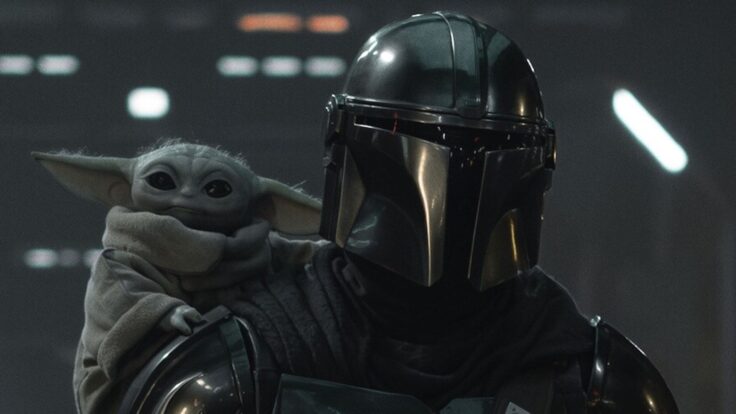
- Star Trek: The Wrath of Paramount: Back in 2015, Paramount filed a provocative lawsuit over a crowdfunded, fan-made Star Trek movie. Everyone from J.J. Abrams to director Justin Lin gave depositions in the esoteric debate over whether, say, the “Klingon” language could be copyrighted. Then, as many cases do, it settled, never to be thought about again. But wait! Paramount just filed a new action, alleging that Alec Peters breached the terms of the settlement agreement by continuing to raise funds, selling merchandise, and telling people that he was just about finished with his Star Trek fan work. Apparently, this recently went before an arbitrator, where Paramount prevailed with a $292,372 award. The studio is now looking to confirm the victory. See here.
- A Hunter Biden Subplot: The legal frenzy over Hunter Biden’s laptop has generated a noteworthy new ruling, this time concerning a side feud between entertainment lawyer Kevin Morris, who is very close friends with Hunter, and Garrett Ziegler, a former Trump staffer who helped leak the laptop’s contents to news outlets. Morris is now suing Ziegler for basically cherry-picking texts and whipping his right-wing followers into a frenzy. Last week, a Los Angeles Superior Court ruled that there’s really no civil action for doxing, but otherwise allowed Morris to proceed on claims including harassment, false light invasion of privacy, impersonation, and intentional infliction of emotional distress. The judge seems disturbed by Ziegler’s post of a Sopranos meme (“Woke up this morning, got myself a gun”) and isn’t particularly impressed with his free speech arguments. Read the ruling here. It’s likely headed to an immediate appeal.
|
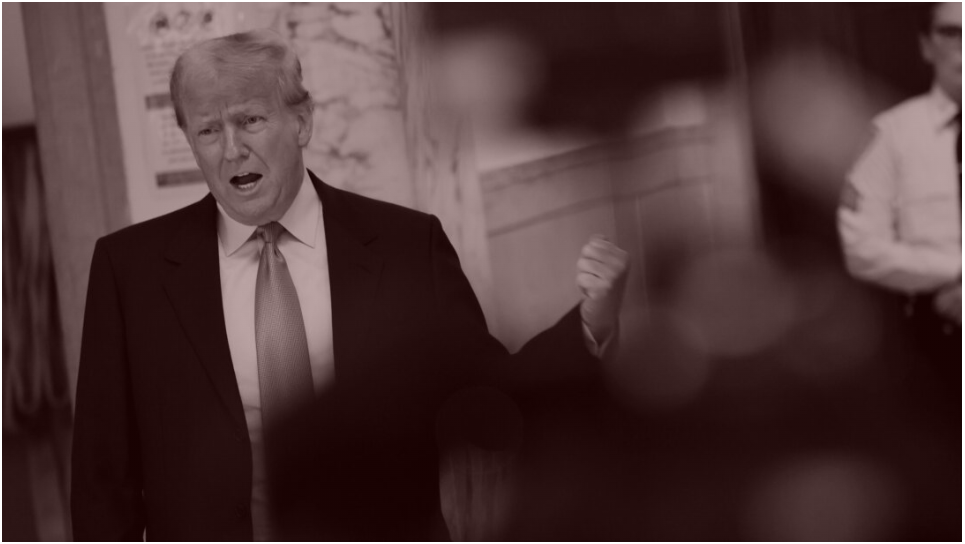 |
| Will the Trump Trials Be Televised? |
| NBC and other media companies are petitioning the court to allow cameras inside the courtroom, a move that could turn Trump’s criminal trial in D.C. into the O.J. Simpson circus on steroids. |
|
|
|
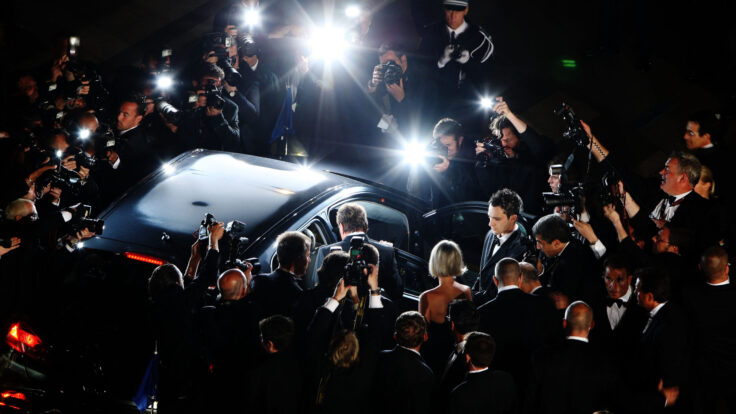
| Judge Tanya Chutkan, the former Boies Schiller rainmaker who is now overseeing the criminal trial of Donald Trump for attempting to subvert the 2020 election, has already faced multiple legal headaches: a recusal battle, a highly-charged gag order debate, multiple death threats. (“Pray for me,” Chutkan told a friend when she landed the case.) But the biggest, most consequential decision before Chutkan may be whether to allow a video broadcast of the trial, which would inevitably transform an unprecedented political spectacle into a media circus.
More than a dozen media heavyweights, including CNN, ABC, The New York Times, Washington Post, Bloomberg, and NBC, among many others, have all petitioned the judge to allow video of the proceedings, arguing that doing so would provide the public the best way to evaluate evidence of profound national importance. Sure, there’s the pesky matter of Federal Rule of Criminal Procedure 53, the provision that bars the “broadcasting of judicial proceedings from the courtroom.” But as a recent application by media groups argues, there’s technically nothing in the rulebook that precludes the placement of a pool camera to feed broadcasters outside the courtroom. Should Chutkan disagree, NBC has also presented a First Amendment challenge (read here).
Interestingly, Trump’s legal team is abstaining from the debate, I’m told. Although his attorney, John Lauro, has publicly expressed a willingness to welcome TV cameras during the trial, he has thus far ignored the government’s back-channeling. (Perhaps Chutkan herself will reach out to solicit the defendant’s input.) As for Attorney General Merrick Garland, it appears that the Department of Justice will be taking a stand against a televised Trump trial in a written brief to be unveiled on Nov. 3.
Regardless, the biggest hurdle to a televised Trump trial is the history of the judiciary, itself. For nearly a century, dating back to the 1935 Lindbergh baby trial—a sensational case that was captured on film—it’s been the prevailing (and rather snobbish) opinion of the legal community that media is nothing more than an undignified distraction. This sentiment was echoed in the Supreme Court’s 1965 decision in Estes v. Texas, where the justices overturned a conviction due to the excessive and intrusive ruckus caused by TV cameras. While the high court did later allow states to set their own broadcast rules (see Chandler v. Florida), concerns have persisted about turning the hallowed courtroom into a degenerate arena for cable news. (The O.J. Simpson trial didn’t help.)
But the culture has shifted in the last five or so years. Notably, it was Garland himself who guided the D.C. Circuit Court of Appeals into the streaming age, starting with live audio, in 2018. Soon after, all 13 federal appellate circuits, in addition to the Supreme Court, embraced similar practices. The onset of the Covid pandemic accelerated the transformation, leading the U.S. Judicial Conference to institute an emergency program to facilitate remote access to criminal, civil, and bankruptcy courts nationwide—primarily to accommodate socially-distanced older judges. (Unfortunately, this program concluded in September, disappointing reporters, courthouse aficionados, and probably Fiona Apple.)
Judge Chutkan’s forthcoming ruling on whether to permit video and audio coverage also coincides with ongoing deliberations following her decision to impose a limited gag order on Trump. She recently rejected his First Amendment argument and directed him to stop making statements about individuals in the case. Perhaps she will feel sensitive to the appearance of double standards and cautious about security risks associated with the trial.
All that said, I wholeheartedly hope she allows video of this historic event, or at the very least, considers a compromise where video recordings are made available by the end of each trial day. Despite the long history of judicial shyness, it almost seems un-American to think that something as critically significant as this trial would happen beyond the direct view of citizens. |
| Mike Lindell’s $5 Million Lesson |
|
| Meanwhile, MyPillow baron Mike Lindell faces his own reckoning for his actions and statements following the last presidential election. Lindell, of course, was previously ubiquitous in Fox News commercials and a devout spreader of MAGA conspiracy theories, but has been sidelined the last few years by financially punishing legal battles with Smartmatic and Dominion, which have accused him of smearing their election technology. Lindell was recently dropped by the law firm representing him thanks to unpaid bills; he then used that humiliation to raise funds for his WiFi-monitoring drone system, intended to safeguard the 2024 election against Chinese communists. Yes, he’s a character.
Anyway, there’s yet another legal skirmish involving Lindell that I’m feverishly following, which involves his clash with Robert Zeidman, an engineer who accepted Lindell’s public challenge to “Prove Mike Wrong” about the 2020 election. Zeidman did, in fact, prove Mike wrong, and now claims that Lindell is now doing his best to weasel out of the $5 million prize.
The saga began in the aftermath of the 2020 election, when Lindell got his hands on data that he believed demonstrated China’s interference in Trump’s supposed victory. In various public appearances, he confidently asserted that experts had authenticated the data. However, when this failed to get the desired attention, he decided to host a symposium in Sioux Falls, South Dakota in August 2021. To generate buzz for the event, he announced a contest: a $5 million reward for anyone who could provide proof that this data didn’t pertain to the election.
Zeidman journeyed to Sioux Falls, signed the contest rules, and later submitted a 15-page report that concluded that the data that Lindell furnished wasn’t really from the November 2020 election. Lindell’s team deemed the submission to be inadequate, but a three-arbitrator panel at the American Arbitration Association took a different view, declaring that Zeidman had indeed cleared the bar. (The arbitration ruling, which can be read in full here, hinged on the nuanced distinction that not all data related to the election necessarily constitutes “election data.” As an example, the arbitrators pointed to digitally-transmitted newspaper articles and broadcast news reports about an election. “If such data qualified, the Contest would not really be a contest at all,” the arbitrators remarked.)
Zeidman has since sought to obtain federal court validation of the arbitration award, prompting Lindell to file a motion to overturn the decision on October 10. According to Lindell’s memorandum (read here), the contest explicitly revolved around data authenticity rather than proving election interference. The brief posits that imposing a requirement for “valid” data on Lindell’s part effectively shifted the burden of proof, enabling Zeidman to succeed simply by highlighting flaws in the vast data presented.
Lindell’s attorneys—the same ones who recent bowed out of the Smartmatic and Dominion defamation cases—might have a point. Unfortunately for Lindell, arbitration awards hardly ever get reversed. To succeed, he must establish a faulty process, a manifest disregard of the law, or an arbitrator who exceeded the scope of authority. As one lawyer once put it to me, arbitration rulings only get vacated when arbitrators are drunk, bribed, or refuse to let in relevant evidence. Anything else, like a poor reading of the contest rules, is probably insufficient.
Given these circumstances, the “Prove Mike Wrong Challenge” may go down as a lesson on how not to hold a contest. (Really, this is one for law school textbooks.) Number one, be sure the rules are crystal clear. Number two, don’t delegate authority to decision-makers who can’t be second-guessed. If Lindell thinks challenging the results of the election was arduous, just wait till he gets a load of the Federal Arbitration Act. |
|
|
| While it’s not unusual for musicians to object to the use of their songs by politicians on the campaign trail, Trump has elevated the ritual election cycle battle to an art form. Trump really loves music. And most musicians seem to hate him. To wit: There is an entire Wikipedia page cataloging the long and growing list of performers and bands who have complained or issued legal threats in response to Trump playing their songs at his rallies.
Typically these battles spark a transient news cycle characterized by the leak of cease-and-desist letters from these musicians. Occasionally, these grievances escalate into courtroom showdowns. And only extremely rarely do they culminate in a legal judgment. Due to the plodding pace of the legal system, most politicians, in the end, acknowledge the prudence of settling and moving on.
But Trump is not one to follow convention, and now stands on the precipice of a significant legal ruling and a possible civil trial. This development may not be as significant as his many criminal cases he faces, but it nevertheless holds the promise of establishing an influential precedent. And the financial stakes could be sizable.
Back in 2021, Eddy Grant sued Trump after his campaign used Grant’s catchy 1983 track, “Electric Avenue,” as the musical backdrop for an online animated attack ad targeting Joe Biden. The video wasn’t directly produced by Trump’s campaign, but Trump tweeted the video to his millions of followers, where it garnered over 13.7 million views.
In September 2021, New York federal judge John Koeltl turned down Trump’s initial attempt to have the case dismissed. Subsequently, Trump gave a deposition, with the ex-president complaining that the video producers weren’t being sued, and of course, claiming he had a handle on copyright law.
Now, Grant’s legal team is pushing for a ruling that would establish the invalidity of Trump’s fair use defense. Trump’s attorney, Mark Peroff, counters that the use of “Electric Avenue” in the video transformed a protest message into an unflattering portrayal of a political adversary—an argument that probably doesn’t hold water in light of the Supreme Court’s recent Warhol decision. Peroff also submits that Grant has no intention of permitting the song’s use by third parties for the purpose of political gain. Nevertheless, Judge Koeltl might be disinclined to wade into the intricacies of licensing opportunities, especially as Grant’s legal team contends that the political attack advertisement had compromised the potential licensing market at large. If the judge concurs and rejects Trump’s arguments, the case is likely to proceed to trial for the determination of damages.
Though Grant has yet to specify what he thinks he’s owed, an excerpt of the damages report by the plaintiff’s economics expert, made public on Thursday, compares the audience that viewed the attack ad to the number of people who might watch a Super Bowl advertisement. Given the fees that musicians typically command for licensing their songs in Super Bowl commercials, the prospective damages could be several million dollars. |
|
|
- On Friday, the Supreme Court agreed to review Vivek Murthy v. Missouri, which concerns the government’s attempts to coerce social media platforms into moderating content. However, thanks to the speedy way this got taken up from the high court’s shadow docket, it’s a little fuzzy what’s being decided. Can Missouri really sue when its injuries seem dubious? Determine whether lower courts misinterpreted the First Amendment when imposing limits on government speech? Evaluate the breadth of the injunction? Maybe it’s all of the above, but it’s often a recipe for consternation when the justices go into a review with such unclear aims.
- Let’s hand it to Carl Icahn. At age 87, the legendary activist shareholder is still kicking up a fuss. The latest is his case against Illumina board members for allegedly breaking the law by voting in August to close the company’s acquisition of the cancer detection startup Grail. That transaction, as I’ve written, has been under enormous scrutiny by regulators, and is currently before the 5th Circuit Court of Appeals, and Icahn is no fan. His initial complaint this past week was filed under seal. Here’s the redacted copy that became available over the weekend.
- Israel is at war with Hamas, and Nation of Islam leader Louis Farrakhan is feuding with the Anti-Defamation League. Feels like the ’90s. This time around, Farrakhan has filed a lawsuit, claiming the ADL committed, well, defamation, by labeling him an anti-Semite. Here’s the complaint.
- Speaking of old wars, the F.C.C. is once again a battleground now that Democrats have gained a voting majority with Biden’s appointment of Anna Gomez and a new attempt to revive net neutrality rules. A lot has happened digitally since the agency in the Obama years first tried to enact rules to prevent blocking, throttling, and paid prioritization, but one thing that hasn’t is that Republicans hate this—even if they have tried to prevent viewpoint discrimination on social media. See Vivek Murthy v. Missouri.
- I see that CNN has just released a documentary about a copyright lawsuit against Taylor Swift over the lyrics to “Shake It Off.” I haven’t viewed it. I don’t plan to watch. And I’m going to be a hater anyway because I think it’s quite silly to focus on this very minor case that stuck around for a few years for boring reasons and eventually ended in a small settlement. If CNN wanted to exploit the mania surrounding Swift, there are better legally-themed documentaries to spin up. Her 2017 sexual assault trial against a Denver radio D.J. Her war with Scooter Braun and the terrific decision to re-record her albums. The Ticketmaster imbroglio. Happy to consult on the next one.
|
|
|
| That’s all for this week. Reply with any comments. Always love to hear from you. |
|
|
|
| FOUR STORIES WE’RE TALKING ABOUT |
|
|
|
|
|
 |
|
|
|
Need help? Review our FAQs
page or contact
us for assistance. For brand partnerships, email ads@puck.news.
|
|
You received this email because you signed up to receive emails from Puck, or as part of your Puck account associated with . To stop receiving this newsletter and/or manage all your email preferences, click here.
|
|
Puck is published by Heat Media LLC. 227 W 17th St New York, NY 10011.
|
|
|
|