 |
|
Happy Monday, I’m Eriq Gardner.
|
|
Welcome back to The Rainmaker, a private email about money, power, fame, and, most of all, the law.
In today’s edition, Sam Bankman-Fried’s blame-the-lawyers trial strategy. Plus John D. Rockefeller v. Elon Musk, Gary Gensler, Rupert Murdoch, Donald Trump, Martin Shkreli, Ashton Kutcher and Mila Kunis, Selena Gomez, Johnny Depp, Zia Chishti, and more.
But first…
|
|
|
- Fox internal affairs: Following a series of costly libel lawsuits against Fox News, it seems that Fox Corp.’s board is now receiving briefings from the company’s ethics chief, Nicholas Trutanich, regarding defamation risks within its news operation. I learned this tidbit while digging into a new 160-page consolidated shareholder complaint against the Murdoch clan, Paul Ryan, Suzanne Scott, and other officers and directors there.
You see, while a recent shareholder lawsuit from New York City and Oregon state pension funds made headlines this past week, it didn’t introduce anything groundbreaking, aside from the curious choice by a pair of Blue State comptrollers to go after Fox following its $787 million settlement with Dominion. Other pensions are already pursuing breach of fiduciary claims, including Sweden’s national pension fund. Sann! To be frank, there’s not much new in this other group’s 160-page complaint either, but there is one noteworthy story arising from these shareholders’ inspection of Fox’s books.
According to these shareholders, Murdoch’s companies were forced to implement compliance reforms in the aftermath of the News Corp. phone hacking scandal in the U.K. a decade ago. Nevertheless, they contend that the board abandoned these established compliance structures once studio assets were sold to Disney, and a new iteration of Fox emerged. It was only after facing lawsuits from Dominion and Smartmatic that the board saw the necessity of a new system to ensure Fox’s news division was operating in an ethical and non-defamatory manner. The shareholders, obviously, say that such actions should have been taken earlier.
- Rich as Rockefeller: Ever since Elon Musk changed Twitter’s blue check system for verifying notable individuals, many have been waiting for the legal fallout. Might the first test come from the descendents of John D. Rockefeller, the wealthiest man of his generation?
It seems as though a man named Mehal Darji has changed his name to Mehal Rockefeller and is operating a financial services company, or at least pretending to do so on social media. This caught the attention of the family trust responsible for safeguarding the Rockefeller brand. Four years ago, they discreetly initiated legal proceedings in a New York court, alleging trademark infringement and cybersquatting. Just a month ago, they succeeded in obtaining a court order instructing Twitter to disable Mehal Rockefeller’s X accounts (which he says he doesn’t control). However, the accounts remain active, perhaps suggesting that being a true Rockefeller may not hold the same weight as it once did. We might one day find ourselves saying the same about being a Musk.
|
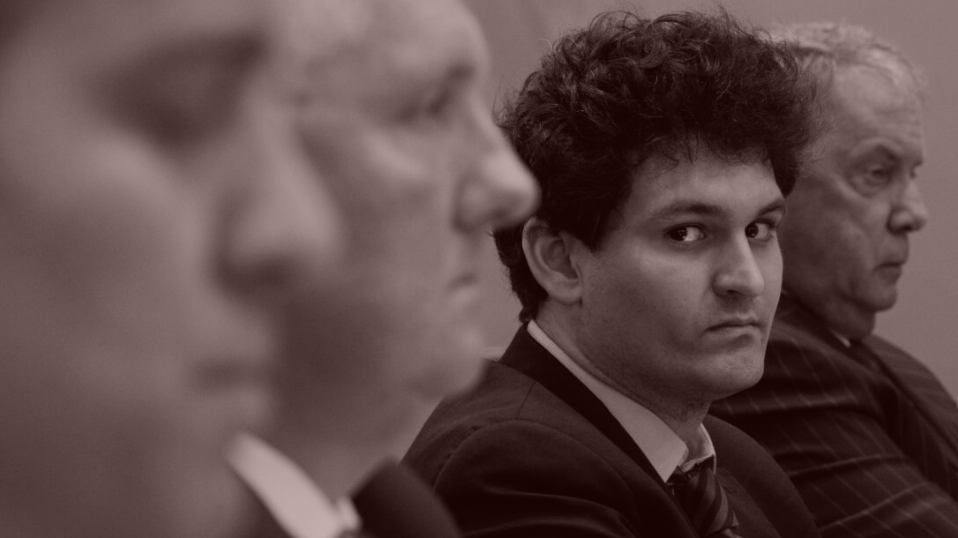 |
| S.B.F. Is Blaming It All on the Lawyers |
| Bankman-Fried is relying, in part, on a complicated and risky advice-of-counsel strategy. It might lead to one of the more dramatic courtroom moments in recent legal history. |
|
|
|
| For years, Sam Bankman-Fried carefully cultivated an image as a disheveled prodigy who cared more about using crypto to uplift the poor than enriching himself. Of course, as it turned out, S.B.F. wasn’t just playing video games, giving away his money, and driving a Toyota Corolla, as has been widely reported. He was also spending millions of dollars to hang out with celebrities and fly private, living in a $40 million penthouse and lending himself billions of dollars to acquire luxury properties across the Bahamas.
Now, ahead of a six-week trial beginning Oct. 3, federal prosecutors are determined to prevent any resurrection of the S.B.F. legend. On Friday, they highlighted Bankman-Fried’s “prior efforts to use behavioral eccentricity to his advantage” and sought to limit any references to “effective altruism” during the jury selection process. They also conveyed to Judge Lewis Kaplan that allowing Bankman-Fried to improperly cast himself in a sympathetic light shouldn’t be permitted.
Naturally, prosecutors are less worried about empaneling jurors who have been exposed to news stories dismantling the mythos of S.B.F., who is currently in a Brooklyn detention center awaiting the legal showdown. Prosecutors expressed to Judge Kaplan that the defense team’s plan to inquire whether prospective jurors can “completely ignore” what they’ve seen in the media is “unnecessarily intrusive.” Hmm. Really?
Bankman-Fried’s legal team undoubtedly needs open-minded jurors whose perspectives have not been shaped by a year’s worth of negative press. Their trial strategy is evident—shifting blame to others for the collapse of FTX. This strategy likely involves pointing fingers at Bankman-Fried’s fellow executives for disregarding his risk management nudges, an especially crucial move given how these former colleagues have now accepted plea deals and may soon testify against him.
It could also entail knocking regulators for their lax approach, scrutinizing the company’s lenders for insufficient due diligence, and even faulting customers for neglecting to read the FTX terms of service. Bankman-Fried’s recent court papers nod at the pivotal question they’ll soon address by raising all this—in effect, whether anyone was genuinely deceived when his private trading firm, Alameda Research, “borrowed” FTX funds for investments and debts.
But the even bigger flashpoint at trial may revolve around Bankman-Fried’s intent. His team has recently asked Kaplan for latitude to present how others within the crypto industry were conducting themselves. While prosecutors argue that “everyone speeds” is no defense, S.B.F.’s lawyer Mark S. Cohen counters that “if a driver does not know the speed limit because there is no posted limit… the fact that a driver matches pace with the flow of traffic is probative of the driver’s good faith belief that she is driving at a lawful speed.”
In other words, if this do-gooder with the funny hair couldn’t recognize right from wrong amidst the inadequacies of everyone around him, why should he be the one to rot in prison? Guiding jurors towards a more skeptical look at the government’s narrative is ultimately the game plan. |
|
|
| Another group poised to face intense scrutiny is FTX’s legal team, both its in-house unit, once led by Can Sun, as well as its outside counsel at Fenwick & West. Notably, this subject just triggered a private document exchange over the weekend. Typically, prosecutors disclose their evidence, but in this instance, Judge Kaplan ordered that Bankman-Fried divulge more details about his intended advice-of-counsel defense because of the significant ramifications if the defendant plays this card.
Bankman-Fried wouldn’t be the first accused swindler to blame his lawyers. White-collar defendants, particularly those grappling with unfavorable facts, frequently point to their past good faith pursuit of legal counsel, and how they naively relied upon bad advice. This defense tactic is gaining popularity, although it often works better in theory than in practice. A notable example is the case of “pharma bro” Martin Shkreli, who attempted to leverage what his ex-lawyer told him to avoid a conviction. Obviously, that didn’t work out (his ex-lawyer pointed the finger back at him). Then there is the ongoing sex trafficking trial of Backpage.com co-founder Michael Lacey, who is now endeavoring to demonstrate that he relied on the counsel provided by his lawyers regarding the First Amendment. Donald Trump is said to be contemplating a similar tactic to combat criminal charges linked to his efforts to overturn the 2020 election. (That seems problematic, of course, especially since Trump noted on Meet the Press yesterday that he essentially followed his own whims.)
Of course, the advice-of-counsel defense only carries weight in situations where lawyers have been told all relevant details for proper guidance. For instance, before drafting a loan agreement, did FTX’s lawyers understand that customer funds would be flowing to Bankman-Fried? If not, the involvement of lawyers might be rendered immaterial. His current legal team asserts that what holds significance in the analysis is S.B.F.’s state of mind—whether he acted innocently when doing things like directing employees to use ephemeral messaging apps that automatically deleted communications. Nevertheless, prosecutors convinced Kaplan of the pressing need to gain a fuller understanding of where Bankman-Fried intends to invoke the advice-of-counsel defense, along with any details about those communications with FTX’s attorneys that would support the case.
Upon hearing Bankman-Fried’s version, prosecutors may seek to cross-check with those lawyers. Since it is FTX, not Bankman-Fried, most likely regarded as the client, this endeavor probably entails securing FTX’s cooperation to waive attorney-client privilege. Should this unfold, it could lead to these attorneys testifying as formidable witnesses for the prosecution.
That highlights the risks inherent in this type of defense for Bankman-Fried, who also is grappling with the consequences of not gaining access to Fenwick & West materials during discovery. (Prosecutors suggest his legal team’s subpoenas weren’t up to snuff.) It appears that Bankman-Fried hopes to get away with using his own recollection of advice provided by FTX’s attorneys (with some precedent for him to get around the no-hearsay rule). This will ultimately be a decision left to Kaplan to make before the trial.
Finally, all this discussion surrounding Bankman-Fried’s state of mind raises an intriguing scenario. Upon reviewing recent court filings, it’s clear that his legal team not only plans to highlight how he led FTX under the watchful eye of company attorneys, but also how he genuinely believed that his actions fell within industry norms, complied with the law, and adhered to FTX’s terms of service. Additionally, Bankman-Fried’s defenders hope to present how he intended to repay customers until he was strong-armed into relinquishing control of FTX. All of these elements seem like they’d carry more persuasive weight when articulated by Bankman-Fried himself, potentially setting the stage for the former wunderkind to take the witness stand during trial. |
| Elsewhere in the Cryptoverse… |
|
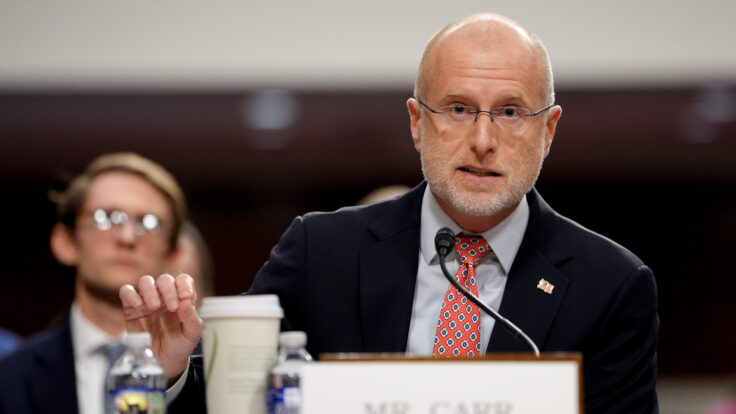
| This past week, Securities & Exchange Commission chair Gary Gensler appeared in Congress for an oversight hearing. It was his first appearance since the S.B.F. indictment, and naturally, there was tremendous interest in what he’d say about the matter. Unfortunately, Gensler dodged the intrigue by spouting generalities about crypto before offering the ultimate let down: “While I’m happy to discuss the S.E.C.’s work, I will not be able to comment on any active, ongoing litigation.”
The government, of course, was late to do anything about FTX, but regulators are now making up for it in spades with a host of actions, including one last week charging the creator of the NFT-funded animated web series Stoner Cats, starring Ashton Kutcher and Mila Kunis, with conducting an unregistered securities offering. (The parties quickly came to a $1 million settlement). Observers are eagerly watching cases that will determine the S.E.C.’s jurisdiction over crypto—in particular, an appeal over a New York judge’s major ruling last July that a token issued by Ripple isn’t a security.
Gensler has his eyes on some big fish. The S.E.C. brought an action in June alleging that crypto exchange giant Binance—FTX’s onetime rival—violated federal securities laws. Regulators quickly moved to freeze company assets in light of evidence that large amounts of money were being moved outside of the U.S. Now, Gensler’s agency is telling a judge that a recent deposition with a security officer at one of Binance’s U.S. affiliates has only heightened its concern about the custody of assets. Attorneys for Binance respond there’s no evidence that customer funds have been dissipated, commingled, or misused in any way. A developing situation, but surely Binance chief Changpeng Zhao—reportedly living in Dubai—won’t be flying to New York to attend the S.B.F. trial. |
|
|
- Besides a few reporters and a protester dressed up as the Monopoly man, the government’s landmark trial against Google has been sparsely attended. Nevertheless, the Department of Justice is making a show of Google’s internal memos and emails. The Verge had a good rundown.
- How much should you spend on lawyers while preparing for an inquisition before Congress? Twitter’s former general counsel Vijaya Gadde spent $1.15 million, and her former employer, now controlled by you-know-who, argues that’s way too much, especially compared to colleagues. Here’s X’s court papers aiming to escape reimbursing her.
- The danger of writing about a dispute on the verge of trial is a last-minute settlement. Not too long after I published last week’s piece about Selena Gomez’ still-on-the-calendar showdown with a Chinese gaming company came word the parties are finalizing a deal.
- Speaking of follow-ups, remember that story I wrote a few weeks ago about Zia Chishti, the politically-connected entrepreneur who is looking to score legal revenge against a former employee who told Congress that he sexually abused her? Well, Benjamin Chew—the lawyer who led Johnny Depp’s legal team against Amber Heard—has just been retained to represent him.
- Attention spans are pretty short, and I’m sure everyone forgot about the libel suit brought by Ryan Howard and Ryan Zimmerman against Al Jazeera America over a sports doping documentary. Howard and Zimmerman are out of baseball; Al Jazeera America is defunct; and the judge who refused to dismiss the case is now a Supreme Court justice. Anyway, that case quietly settled this week. I guess Peyton Manning won’t become a trial witness after all.
- One sports media case is over, but another begins. Jim Trotter, a former reporter for NFL Network, is now alleging in a suit that the league retaliated against him by firing him after he was a little too nosy. Here’s the complaint. Trotter is represented by Douglas Wigdor, who is representing several football coaches in a discrimination suit against the NFL. Wigdor has a history of piling on actions against a target until he gets what he wants so don’t be surprised if this isn’t his last salvo.
- Miles Cooley is the newest name partner at Freedman Taitelman + Cooley, bringing his experience representing clients including Rihanna, Jay-Z, and the Los Angeles Chargers to the Bryan Freedman-led firm that’s been cooking of late. Most recently, Cooley was chief legal officer at CMNTY Culture.
- As I (and plenty of others) have been discussing for months, the judges overseeing criminal cases against Trump have tough decisions on their hands with respect to his pre-trial behavior. I agree with my legal newsletter buddy David Lat, who writes that Judge Tanya Chutkan better have a plan if she grants a gag order and he violates it.
- Finally, it feels like everyone is having the same conversations with respect to A.I. and the law. So let me recommend a fascinating paper in the Stanford Tech Law Review by Anne Dulka, a law student who writes about A.I. becoming a tool of enforcement in international human rights law. Her paper discusses subjects like the use of machine learning to track abuse against women before evaluating the pros and cons. Check it out.
|
|
|
| That’s it for today. As always, I love hearing feedback so don’t be shy about replying. |
|
|
|
| FOUR STORIES WE’RE TALKING ABOUT |
 |
| Iger’s Buyers |
| Notes on the Disney fire sale and LVMH succession. |
| WILLIAM D. COHAN |
|
 |
| The Hunter Manhunt |
| Biden insider Michael LaRosa dishes on the ’24 messaging wars and more. |
| TARA PALMERI |
|
 |
| Elon’s Star Power |
| On Musk’s technological interventions in Ukraine and the limits of the public good. |
| BARATUNDE THURSTON |
|
 |
| Drew’s Blues |
| How the Drew Barrymore saga perfectly encapsulates the studio-streamers’ dilemma. |
| MATTHEW BELLONI |
|
|
|
|
|
 |
|
|
|
Need help? Review our FAQs
page or contact
us for assistance. For brand partnerships, email ads@puck.news.
|
|
You received this email because you signed up to receive emails from Puck, or as part of your Puck account associated with . To stop receiving this newsletter and/or manage all your email preferences, click here.
|
|
Puck is published by Heat Media LLC. 227 W 17th St New York, NY 10011.
|
|
|
|