 |
|
Welcome back to What I’m Hearing, coming at you waaay late because I did a talk last night in Laguna Niguel with my Puck colleague Peter Hamby for the California Chamber of Commerce. (Want me to speak at your event? Email Alexandra@puck.news.) Today I’m headed to TIFF, so say hi if you see me at a poutine stand, and I’m in New York next week for a little celebration for Puck’s second anniversary.
Let’s begin…
|
|
|
- Iger’s no good options, Hulu edition: Disney has been whispering to reporters this week that its Hulu+Live TV service has seen a 60 percent jump in subscribers over usual expectations during its carriage standoff with Charter. A nice little silver lining for C.E.O. Bob Iger amid this potentially disastrous Pay TV fight, right? Until you remember that any boost for Hulu only increases the value of the service when Disney is forced to buy out Comcast’s one-third stake later this year. Its C.E.O. Brian Roberts, who said this week that Hulu is “way more valuable” than the $27.5 billion floor for negotiations, is certainly watching those sign-up numbers closely.
- Wait, my showrunner was still getting paid?: Warner Bros. TV’s announcement yesterday that Bill Lawrence, Mindy Kaling, Greg Berlanti, and other top showrunners are joining the suspended WGA members came as a surprise to some of their own writers. Many assumed that the top players had been paused along with the majority of overall deals during the strike. But the TV studio chiefs have actually been pretty protective of their top writer relationships (that’s the currency for executives, after all). And many big names have been working on post-production and other non-writing duties. But as the summer ended, and post was finishing on a few shows, WBTV chief Channing Dungey had less juice to justify the deals. The tricky thing now, particularly for Berlanti and J.J. Abrams’ Bad Robot, is what to do with their large overhead. If this strike stretches into the winter, that’s gonna start to hurt.
- R.I.P., Jake: How many entertainment lawyers create an aura around themselves? Sad to see that Jake Bloom died yesterday at 81. “Jake” was a one-word name around town for decades, just like his clients Arnold, Sly, Bruce, or Johnny, and he always took my calls and playfully (if a bit caustically) answered my questions. I remember I once asked whether it was true that Depp made $100 million on one of the Pirates of the Caribbean movies thanks to the cut of Jack Sparrow merch that Bloom negotiated. “I’ll tell you when I’m retired or dead,” he said. And hung up.
- Box office over-under: I’m sorry, The Nun did how much?? (It was $365 million worldwide in Fall 2018.) I will never understand the Conjuring franchise, so for that reason I’ll take the over on the $30 million tracking for The Nun II. The less said about My Big Fat Greek Wedding 3 the better, but I’ll take the under on the $12 million tracking.
|
| Now for another big story in the representation world… |
 |
| Parlez-Vous CAA? |
| A French fashion player announces himself in Hollywood as the talent agency’s private equity backers prove that, even if the sky appears to be falling, you can still make a lot of money in this town. |
|
|
|
| It’s a great day at What I’m Hearing HQ when a monolithic private equity firm can extract billions of dollars in value from an investment in Meryl Streep. You think I’m joking, but Hollywood sort of doesn’t work unless money—both dumb and smart—continues to be attracted to a business that often makes zero sense. For every Megan Ellison, whose Annapurna lost so much of her father Larry’s money that he basically called the lawyer Skip Brittenham and staged an intervention, there needs to be a Kevin Ulrich, who pumped billions of his Anchorage Capital money into MGM, stuck around for years, and finally flipped the whole troubled studio to Amazon and made his firm $2 billion in profit.
These days, film and television production is basically shut down by labor strikes, and the bottom is falling out of both the pay TV bundle and the theatrical film business. So the fact that TPG, a P.E. firm that lost massive amounts of money on the defunct studio STX Entertainment (yikes) and endured the recent bankruptcy of Vice Media (double yikes), can buy a majority stake in CAA, stay in the very peculiar representation business for 13 years, and not merely escape but emerge with a decent exit—that’s reason to celebrate. (The usual disclosure: TPG also is an investor in Puck.)
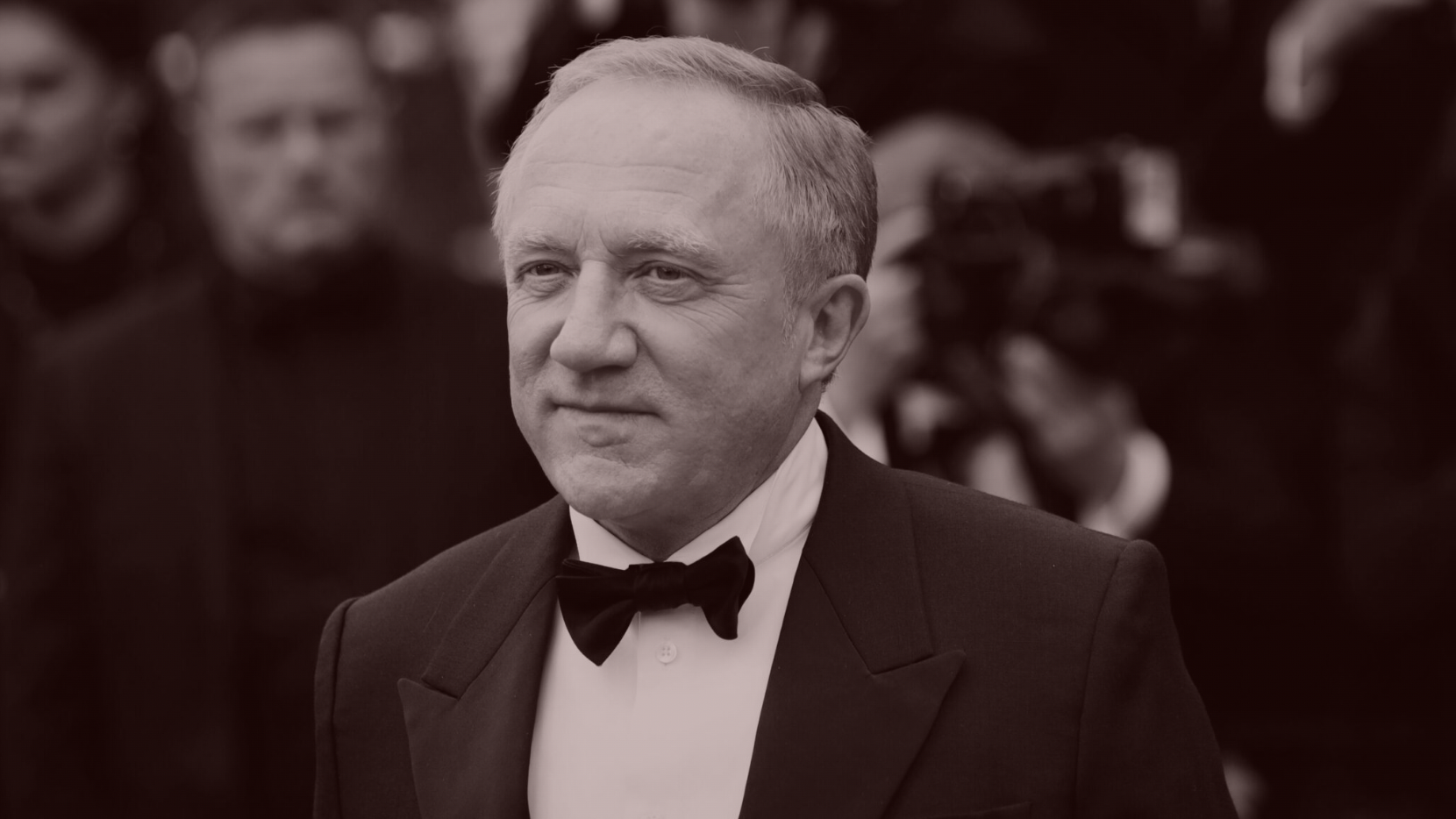
Let’s break down this deal, announced yesterday but first tipped by me back in May, right after French luxury goods mogul François-Henri Pinault started talking to TPG’s Jim Coulter and CAA’s Bryan Lourd. Pinault’s family office, Groupe Artémis, is taking over TPG’s 53 percent stake in CAA, giving the agency—with its 3,600 employees, $1.7 billion in 2022 revenue (mostly commissions), and one Death Star office layout—a valuation of a bit more than $7 billion. That’s the enterprise value, including debt, and it represents a 13x multiple of the company’s 2022 EBITDA, per the Financial Times.
It took a while, and that investment arguably could have been deployed by TPG more efficiently, but it’s still a very good outcome, especially in this market. Comparatively, CAA’s smaller rival UTA was valued at almost 15x EBITDA in its 2022 minority investment from private equity firm EQT, according to two sources close to that deal. But the UTA transaction occurred last year, when the capital markets were stronger and before the financial hellscape fully arrived in Hollywood, and this deal is structured differently. (All sides declined to comment beyond the flowery press release.)
In finding a synergistic private buyer, whose $40 billion in assets include Kering—home to Gucci, Saint Laurent, Brioni, and other luxury brands—and Christie’s, the auction house, TPG threaded a tiny needle. Pinault is wealthy enough, and sufficiently wedded to Hollywood celebrity—in Pinault’s case, literally; he’s married to CAA client Salma Hayek-Pinault—to pay a premium, and he was also sufficiently glamourous to excite the agency’s leaders, Lourd, Kevin Huvane, and Richard Lovett. Plus, as I noted a couple weeks ago, China’s CMC Capital is being bought out (though it will remain a “strategic partner”; unclear what that means), with Singapore’s sovereign fund Temasek, an existing investor, taking over that stake.
No, TPG didn’t get the I.P.O. that some had considered the preferred exit, a milestone that CAA’s arch-rival Endeavor achieved by bulking up with UFC and other more tangible assets. The firm kinda pivoted away from that strategy in 2021, when TPG moved the agency from an expiring fund to a new one designed to hold it longer. And I know that some of the TPG guys had griped in recent years about the agency’s inability to grow more significantly, and the lower profit margins, even as CAA gobbled up rival ICM Partners (Shonda Rhimes, Bill Lawrence, and Chris Rock) last summer in a $750 million deal to become the largest talent shop in town. But when TPG became CAA’s majority owner, in 2014, four years after first investing, the agency was valued at just $1.1 billion. Doing the math, and knowing the profits that CAA has thrown off, TPG was rewarded by keeping its investment way longer than P.E. usually stays in businesses.
At the same time, after years of watching rival Ari Emanuel leapfrog their ambitions (and valuation), the CAA guys can boast of a meaningful transaction without having to go into the bull riding business. They’ll take many millions off the table for themselves, much as they did when TPG invested, in 2010 and 2014. (They do plan to write checks to agents with equity and others at the company, once the deal closes later this year, I’m told, but these won’t be huge payouts; we’ll see whether they take care of people.) And despite any potential I.P.O. envy, CAA leadership probably didn’t want to endure the scrutiny of the public markets. The promise of a family-office buyer, instead of another P.E. firm, might ostensibly lessen some of the growth pressure that the CAA partners often felt under TPG.
Endeavor has been public for more than two years now, and it’s pretty clear that the market hasn’t valued the WME agency portion of that company as highly as Emanuel, Mark Shapiro, and others there would like. Despite launching a slew of ancillary businesses (a merchant bank and a brand incubator, among others), CAA is still overwhelmingly a talent agency—and proudly so, as Lourd and others like to remind us constantly, implicitly mocking Emanuel’s forays into owning downmarket combat sports. And it’s unclear if it would have flourished as a public company, anyway. It’s hard to show predictable revenue when the assets (the agents) drive their Cayenne hybrids home at night, and TV packages and profit participations are not what they once were. The Pinault deal, especially if he’s a long-term holder, is much more certain for CAA leaders, especially if they want to continue being agents and not conglomerate-builders, which has always seemed to be the case.
I was chatting today with James Andrew Miller, the author of the CAA oral history Powerhouse, and he noted how far the Formerly Young Turks have come. “It’s worth remembering a lot of people—inside CAA and out—doubted these guys when they took over in ’95,” Jim told me. “All they’ve done since is have the last laugh. And this deal is their biggest yet.” |
|
|
| So that’s the CAA side. What is Pinault, whose Artémis is paying for this transaction with cash and debt, getting for his money? Hollywood, baby! Pervasive influence, for one, and potential business synergies, and an expansion beyond the luxury and Europe-centric fashion industries while still remaining adjacent. Fashion and celebrity have been merging for years now, so this is a natural next step. Plus, the big agencies have evolved into basically investment banks for entertainment, and there’s a lot that a guy like Pinault can do with the talent, relationships, money, and the ridiculously good-looking people who flow through CAA.
I asked Puck’s Lauren Sherman, author of the Line Sheet fashion newsletter, who has covered Pinault and Kering for years, for her quick primer on what Hollywood people need to know about Pinault. She says CAA might actually expect a more active owner than the TPG guys, who were known to pressure on big-picture issues like M&A and the I.P.O. that never happened, but mainly let the agents do their thing. Lauren’s take:
“Pinault, who took over at Kering in the mid-2000s from his father, has become increasingly hands-on with all of his investments. But it’s not like they’re pushing Kering products at Christie’s auctions. Kering actually has a separate investment division where it puts money into early stage startups and technology products, and that’s where a lot of the ‘cross-pollination’ happens. The relationship with Salma has certainly embedded Pinault in the world of Hollywood more directly than his archrival, Bernard Arnault, who is more introverted. I went to a Gucci party before the Met Gala and Pinault was there with Hayek, chatting up tons of celebrities in a very casual way—many of whom were on the CAA roster.
I asked some people in Paris—people who control the budgets for advertising at luxury brands—what they thought, and they sort of brushed this off with a so-what attitude. Underneath, though, it is viewed by some as an overt power play. (Not terribly French.) The big concern in the fashion industry: Now that there’s this link between CAA and Kering, does that mean CAA talent will prioritize Kering brands, and vice versa, for sponsorship deals and other projects? (Remember that Saint Laurent is now producing movies, one of which premiered at Cannes in May.)
I’d argue that it is not in the best interest of either party to get too cozy: Arnault’s LVMH—which owns Dior, Celine, Louis Vuitton, etcetera—is way, way bigger than Kering. Chanel is almost as big as Kering on its own. Bryan Lourd still needs to play nice with LVMH. And Kering needs to keep IMG, WME, UTA, and the others in its good graces, because it’s clear CAA doesn’t have a monopoly on talent. And Pinault has his hands full with Kering, which was the target of activist investors earlier this year and is in the midst of a reorganization.”
Financially speaking, the big question for Pinault is why he would bet this big on entertainment at the exact moment the industry seems to be teetering on the brink of disaster. CAA has been a prime beneficiary of Peak TV and the run-up in streaming over the past decade—whether it’s Joe Cohen moving Ryan Murphy from Disney to Netflix for nine figures (and now back again), or Lourd himself getting Brad Pitt more than $30 million to act in and produce Apple’s F1 movie. But the non-A-list market is kinda over, or at least it has begun to retreat, and CAA recently underwent layoffs amid the labor strikes. More will happen soon if the impasse isn’t resolved. And who knows what the business will look like on the other end of the strikes?
Even sports, where CAA excels, is threatened by the collapse of the cable bundle playing out in real time. Less money for ESPN and Fox might mean less money for leagues, and hence players. If the overall pie of the entertainment industry shrinks, as expected, CAA will likely shrink, unless it finds new businesses or buys another rival. Maybe UTA. |
|
|
| Lourd, Huvane and Lovett are all designated as co-chairs, but Lourd is taking the C.E.O. title—a formal coronation Bryan has long deserved but has resisted until now. I’m told Pinault insisted on the elevation, which could create an odd dynamic among a top trio that, at least on paper, has previously presented as equals. The title and the Kering adjacency does carry the benefit of giving Lourd a larger stage in fashion, a world that he loves.
Life’s too short to speculate on what this deal means for Lovett, whose impending exit from CAA has been rumored for, what, like five years now? He’s currently the managing partner who does a lot of the day-to-day managing, a role he’s embraced as his client base has dwindled over the years. Any agent would still kill to sign Will Smith and Tom Hanks, Lovett’s two big fish, but the justification for his enormous paydays without the list that Lourd and Huvane maintain (and still sign) will always fuel that speculation. Someday it will be true, but there’s no indication from CAA that anything is changing. In fact, all the Turks, now in their 60s, signed new multi-year deals of the same length as a condition of the deal.
What’s most striking about this Pinault-CAA deal is how old school it feels. Agents make good, investors are happy, new owner seems to be the right fit—at least for now. The sky may be falling on Hollywood, but you can still come here and make a lot of money. |
|
|
See you Sunday,
Matt
Got a question, comment, complaint, or a favorite Toronto hangout? Email me at Matt@puck.news or call/text me at 310-804-3198. |
|
|
|
| FOUR STORIES WE’RE TALKING ABOUT |
|
|
|
|
|
 |
|
|
|
Need help? Review our FAQs
page or contact
us for assistance. For brand partnerships, email ads@puck.news.
|
|
You received this email because you signed up to receive emails from Puck, or as part of your Puck account associated with . To stop receiving this newsletter and/or manage all your email preferences, click here.
|
|
Puck is published by Heat Media LLC. 227 W 17th St New York, NY 10011.
|
|
|
|