Welcome back to the second Wednesday edition of What I’m Hearing+. As I mentioned last week, this data-and-analytics focused email by Julia Alexander will soon be available only to members of Puck’s Inner Circle tier (click here to upgrade), but we’re testing it by sending it to the full WIH community. Enjoy!
Tonight, Julia takes a close look at the business of Amazon’s Twitch, its other streaming service that presents some… unique challenges. Plus a new streaming milestone, a Google A.I. breakthrough, and how Netflix plans to use Sesame Street to keep kids on the platform.
|
|
|
|
A MESSAGE FROM OUR SPONSOR
|
PARADISE is Hulu’s critically-acclaimed, addictive drama series starring Sterling K. Brown, Julianne Nicholson and James Marsden. Filled with nail-biting twists and turns, The Daily Beast calls Paradise “your next TV obsession,” and the New York Times says it’s "exhilarating in all the right ways.” PARADISE is for your Emmy consideration in all categories including Outstanding Drama Series. Visit FYC.HULU.com for more information.
|
|
|
 |
Julia Alexander |
|
Rise of the Planet of the Ad-Supported Apps
|
|
One percent. That’s the tiny difference between the share of loyal streaming customers who chose an ad-supported plan (42 percent) versus ad-free (43 percent), according to Antenna. It’s good news for U.S. streamers because 75 percent of new customers are choosing to take ads when signing up. Conventional wisdom used to be that ad-supported customers might not be as loyal as those willing to pay extra for no ads. But no more, and with sub growth plateauing in the U.S., ad dollars are more welcome than ever.
|
- Netflix’s Sesame Street game play: There are obvious reasons why Netflix, which is steadily building out its children’s library, made a deal for Elmo and Big Bird. About 15 percent of its total viewership comes from kids’ content, per Ampere, and Sesame Street has a growing presence on YouTube, with videos averaging about 6.5 million views. The show is iconic, and it’s still engaging—two facets of its I.P. that excite the Netflix content planning and analysis teams.But there’s another stat that’s just as important: Time spent playing mobile games has increased by 56 percent since 2020 among kids ages 5-8, per Common Sense Media’s 2025 census. Netflix’s recent redesign puts a greater emphasis on games, and division head Alain Tascan has specifically said that kids’ games will be part of the strategy. Thus, Netflix secured Sesame Street’s mobile games business, adding to a roster that also includes Peppa Pig and Cocomelon games. In short, Netflix doesn’t just want to give kids something to watch, it wants to offer them something to do.
- Google’s next TV play: As YouTube dominates TV sets, and TikTok captures more time that used to be spent watching television, the line between tech and showbiz has blurred to the point of near-invisibility. Yesterday, Google announced a new app called Flow that will allow users to make eight-second A.I. video clips using text prompts, with additional tools to stitch clips together into longer stories. Google is also launching a $250-per-month “Ultra” subscription plan—quite a jump from its $20-per-month A.I. Pro plan—which gives users more storage space, better A.I. tools, and YouTube Premium.It doesn’t take a genius to see what happens next: Google will make creating and publishing A.I.-generated video exceptionally easy. Instagram and Meta will follow suit. More A.I.-generated video, which can now incorporate audio and is already starting to look pretty damn good, will flood social platforms. As these videos increase in length and sophistication, they will likely eat up more and more viewership time.
A.I. video probably won’t replace premium video—arguably, it’ll heighten demand for truly elite content—but the competition for attention will become even fiercer as the volume of content skyrockets. YouTube launched in 2005, but it arguably wasn’t seen as a true competitor to traditional television until more than a decade later. The threat wasn’t taken seriously until it was too late, which was obviously a mistake. Facing the A.I. threat now will require media companies to weigh proper revenue sharing for any licensed material, or perhaps even launch their own hubs for partnered, A.I.-generated creator content that builds on their I.P.
|
|
|
|
Nobody in Hollywood seems to have an answer for YouTube’s dominance in streaming video, but executives definitely don’t know what to make of Amazon’s Twitch, the world’s most popular livestreaming platform. But for all its success, why does it still live in YouTube’s shadow?
|
|
|
|
Hollywood tends to ignore paradigm shifts in real time, and then spends years playing catch-up. Look no further than YouTube, which entertainment industry executives are finally taking seriously about a decade too late: Monthly public shaming charts from Nielsen show that YouTube was the only streaming platform to grow its engagement on connected televisions over the past six months. It’s also the most popular streaming platform, measured by total U.S. viewership, even if it doesn’t have the same glamour as Netflix.
If Hollywood isn’t sure what to do about YouTube, it definitely doesn’t know what to make of Twitch, Amazon’s 14-year-old livestreaming platform. Back in December, Twitch users streamed 1.58 billion hours of content, according to StreamCharts, a remarkable figure that most major streaming services would kill for—and that was Twitch’s lowest-traffic month in four years, following a pandemic boom. (December is typically slower; even creators take time off over the holidays.) Still, the number of active Twitch channels increased by 6 percent in the same month, and average viewers per channel jumped by 3 percent.
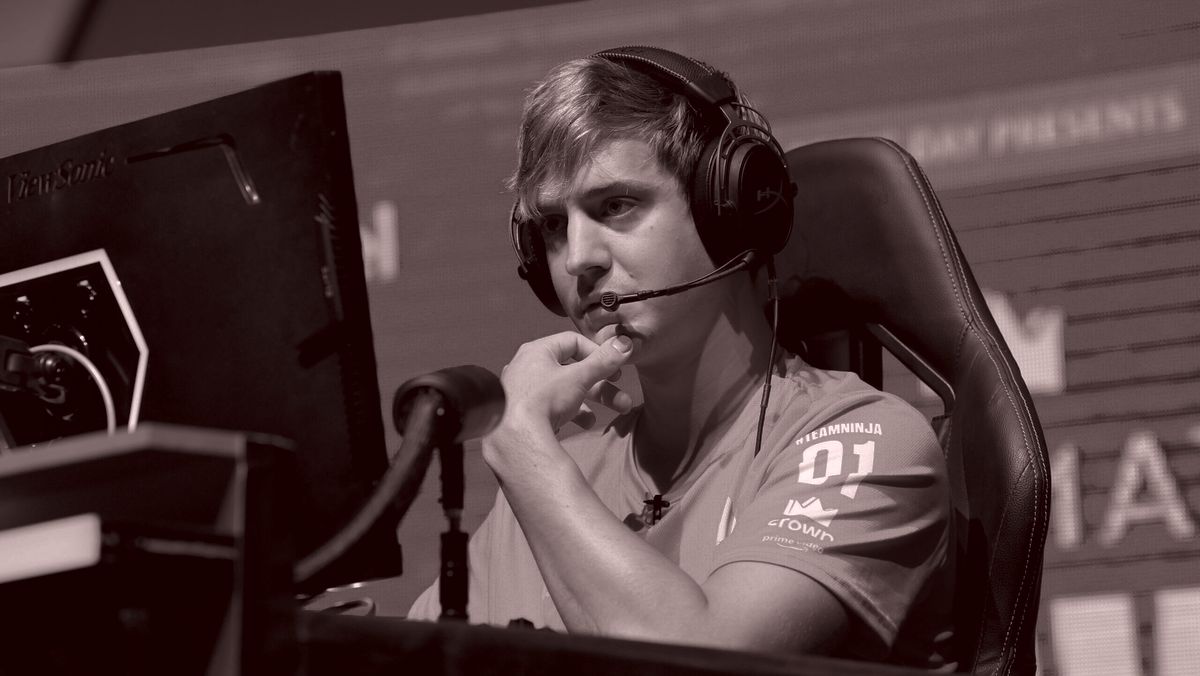
There’s no question that Twitch is a success story. When Amazon acquired the gaming-focused livestreaming company, in 2015, it had roughly 7 million monthly viewers. These days, it boasts around four times that many, and it’s no longer just a place for gamers to congregate. Twitch is also extremely global, maintaining a 60 percent share of the worldwide livestreaming landscape. And it’s home to some of the most successful creators on the planet: Kai Cenat has 17.3 million followers and shut down Washington Square Park in 2023 after thousands of fans mobbed one of his meetups; Hasan Piker, the most well-known leftist creator on the internet, appears onstage with the likes of A.O.C. and Bernie Sanders; and then there are the gaming streamers—the bread and butter of Twitch’s business—like Tyler “Ninja” Blevins, newly minted global superstars who draw millions of viewers to their streams.
Twitch doesn’t focus on its video-on-demand business, but it tops YouTube in livestreaming. Ask people inside the company, and they’ll say they’re concentrated on the service’s FOMO component: Watch it live, or miss out completely. But there are two areas where Twitch should deepen its edge over YouTube, and make itself more compelling for the creators who power its platform: Live sports simulcasting; and creating proper channel libraries for fans to catch up on streams they missed live. Otherwise, Twitch streamers will just upload their best work to YouTube, deepening Google’s own quasi-monopoly.
Still, Twitch is primarily a mobile platform (70 percent of all new viewers start on mobile, per Twitch) that accounts for only about 0.1 percent of all viewing on TVs in the U.S.… not great for a $1 billion acquisition that was pitched as Amazon’s answer to YouTube! So what does Amazon need to do to turn Twitch into a major player on TV sets, and a more lucrative part of Amazon’s advertising-focused video empire? Like seemingly everything in the streaming industry, it starts with the NFL.
|
Back when Prime Video was sharing Thursday Night Football rights with Fox and NFL Network, between 2018 and 2021, co-streaming the games on Twitch was a core part of Amazon’s strategy. It was also an exciting partnership for the league. The Twitch audience, after all, is half as old as Prime Video’s, and the free access (you didn’t need a Prime membership) would theoretically appeal to people who have never paid for cable. It seemed to work, at least for a while: Audience sizes for regular season NFL games on Twitch jumped 45 percent between 2018 and 2019, while viewership increased by nearly 35 percent, per Stream Hatchet Analytics. And most importantly for Twitch, co-streaming was responsible for 50 percent of all Thursday Night Football content on the platform. If you’re trying to pitch yourself to league partners as television’s future, not looking like everyone else is the name of the game.
|
|
|
|
A MESSAGE FROM OUR SPONSOR
|
PARADISE is Hulu’s critically-acclaimed, addictive drama series starring Sterling K. Brown, Julianne Nicholson and James Marsden. Filled with nail-biting twists and turns, The Daily Beast calls Paradise “your next TV obsession,” and the New York Times says it’s "exhilarating in all the right ways.” PARADISE is for your Emmy consideration in all categories including Outstanding Drama Series. Visit FYC.HULU.com for more information.
|
|
|
Leaning into simulcast streams for the NFL seemed to highlight Amazon’s attempt to expand its video strategy. Thursday Night Football was a Prime Video event, but encouraging Twitch audiences to watch with their favorite livestreamer was a way to reach new cohorts and collect additional advertising revenue. Both Twitch and Amazon leaned heavily into the potential Thursday night television takeover Twitch could play a part in… but that’s no longer the case. NFL games will stream on Twitch’s official Prime Video channel for free, but creators will no longer be able to carry the stream.
Although Twitch declined to comment on why it removed the feature, we only have to look at the company’s other attempts to integrate more traditional programming fare into its nontraditional platform. That same NFL strategy was applied to other general entertainment rights that Amazon shared with Twitch. In 2020, Twitch launched a feature dubbed “Watch Party,” but sunsetted it last year, citing declining use. It remains unclear whether this was due to an audience-interest problem or a product problem, but YouTube seems to be betting on the latter, and is now looking to expand its “Watch With” feature. In fact, YouTube C.E.O. Neal Mohan shouted it out during his recent appearance on The Town. YouTube will also be the exclusive home for the NFL’s season-opening game in São Paulo, making it available globally for free—a massive opportunity to grow the “Watch With” audience. Amazon, which has acquired rights to NASCAR and the NBA in addition to the NFL, now faces the prospect of YouTube beating it at its own original concept.
Whatever the reason for the demise of “Watch Party,” it underscored the central video-on-demand problem for Twitch. For YouTube, video-on-demand provides an important source of revenue for creators, who inevitably build their audience off libraries of content that live on the platform. Building off Mohan’s plan for more sports content on YouTube proper, not just carried via YouTube TV, a creator like the MLB-focused Jomboy (2.1 million subscribers), for instance, could theoretically livestream an MLB game with his audience if YouTube had the rights, but he can also turn that into stand-alone videos that users can find later, which means he can generate revenue in perpetuity. Twitch hosts V.O.D. clips, but they aren’t a significant part of the platform, and don’t seem to be a priority for Amazon. While this helps differentiate it from YouTube, it’s also driving creators to its top competitor.
|
Unsurprisingly, the incentive that matters most within the user-generated-content space is monetization, which is why YouTube pays out more than half of its revenue to creators. The case of Charles White Jr., who streams on both YouTube and Twitch, is illustrative. One of his most popular streams on YouTube peaked at around 38,000 viewers, but amassed more than $84,000 in advertising revenue, he said in January. By comparison, his most successful Twitch stream peaked at more than double the YouTube number, but only generated around $11,000 in advertising revenue and subscriptions. The difference, of course, is that 98 percent of the YouTube revenue came from replays as people discovered the video over time on his channel.
Instead of trying to realize some of that revenue potential, however, Twitch is focused on trying to compete with apps like TikTok by introducing a scrollable vertical feed, and encouraging better retention and discoverability. It’s not going particularly well: Total platform followers— i.e., the total combined followers across all channels—have steadily declined since February 2023, and fell off a cliff in January 2025, dropping to 46 million, their lowest level since before the pandemic, per Twitch analyst Zach Bussey. It’s evident that audiences on Twitch aren’t interested in an experience they can already get elsewhere.
Twitch is still one of the biggest user-generated-content platforms in the world, with more than 105 monthly visitors and streamers earning more than $1 billion in payouts last year—but what it is, and who it’s for, is the biggest question facing the company in 2025. It still registers strong viewership, and has welcomed back top creators who’d previously abandoned the platform for exclusive deals elsewhere. But outside of a few key stars, Twitch doesn’t have the cultural cachet of YouTube or its mobile competition. The company is reportedly losing money on its $2 billion-a-year revenue, and Amazon laid off 33 percent of Twitch’s employees in 2024.
Perhaps Twitch’s role in our overly abundant content world is much smaller than executives envisioned a few years ago. Maybe it remains the go-to livestreaming service for categories like gaming. But Amazon, a company whose market cap is sitting at more than $2 trillion, isn’t content with thinking small. It’s unclear whether Twitch can ever truly take on YouTube. But at a time when more people are open to nontraditional entertainment on their TV sets, it’s sure going to try.
|
|
Thanks, Julia. I’ll be back tomorrow.
Matt
|
|
|
|
Puck founding partner Matt Belloni takes you inside the business of Hollywood, using exclusive reporting and insight to explain the backstories on everything from Marvel movies to the streaming wars.
|
|
|
|
Unique and privileged insight into the private conversations taking place inside boardrooms and corner offices up and down Wall Street, relayed by best-selling author, journalist, and former M&A senior banker William D. Cohan.
|
|
|
Need help? Review our FAQ page or contact us for assistance. For brand partnerships, email ads@puck.news.
You received this email because you signed up to receive emails from Puck, or as part of your Puck account associated with . To stop receiving this newsletter and/or manage all your email preferences, click here.
|
|
Puck is published by Heat Media LLC. 107 Greenwich St, New York, NY 10006
|
|
|
|