{{ 'now' | timezone: 'America/New_York' | date: '%b %d, %Y' }} |
|
|
Welcome back to What I’m Hearing+, home in sunny Los Angeles throughout the holiday
season, so hit me up if you’re in town. Eriq Gardner was in a chilly New York courtroom this week for a rare criminal trial involving Netflix. Filmmaker Carl Rinsch has been accused of stealing money that the streamer fronted for a series and using it to buy luxury cars and a half-million-dollar mattress, and Rinsch actually took the stand in his own defense. Crazy stuff. Plus, the profit-participation fallout from the Netflix–Warner Bros. deal, and a legal
dustup involving UTA. All yours, Eriq…
Discussed in this issue: Carl Rinsch, Ted Sarandos, Keanu Reeves, Thomas Tull, Hernan Lopez, Ken Ziffren, Benjamin Zeman, Chad Fitzgerald, Cindy Holland, Dan Friedkin, James Dean, Larry McMurtry, and… a real-life Brewster’s Millions…
Not a
Puck member yet? Just click here. |
|
|
A MESSAGE FROM OUR SPONSOR |
Sentimental Value is one of the most acclaimed, profound
films of the year. Nominated for 8 Golden Globe Awards, including Best Picture, Joachim Trier's story of family, kindness and healing, has been hailed by critics as "an absolutely breathtaking piece of filmmaking."
Starring Renate Reinsve, Stellan Skarsgård, Inga Ibsdotter Lilleaas, and Elle Fanning in career-best performances, Sentimental Value is a "cinematic tour de force." For your consideration in all categories. Learn more |
|
|

| Eriq Gardner
|
|
- Welcome to the
backend business, Netflix!: If you’re an A-list star suspicious that a studio is shortchanging you, get comfortable—the audit queue at the big accounting firms already stretches nearly two years. And if Netflix succeeds in buying Warner Bros., it will inherit a mountain of legacy profit-participation contracts. Indeed, the company that upended the traditional backend will now be swimming in Hollywood accounting disputes. “I’ve never heard of a Netflix audit,” Kinsella litigator
Chad Fitzgerald told me. “They haven’t done profit participation. They’re going to have to change.”
Presuming the acquisition survives Paramount’s hostile bid and Trump’s regulatory scrutiny, the implications will be immediate and messy. Netflix, which built its empire on full ownership and streamlined deal structures, will soon have to navigate the maddening world of downstream revenue splits, audit rights, and contractual definitions of “net profits.”
That’s especially thorny if Netflix intends to license Warner content to itself. (Avatar financier TSG’s now-settled lawsuit against Disney is a good example of how self-dealing can get tricky.) Meanwhile, more than a few producers and actors with backend deals at WBD are likely lawyering up. Many will be seeking tolling
agreements to preserve their right to sue later, given the audit bottleneck and statute-of-limitations issues. And even before the merger closes, some existing deals are coming up for renewal—with Netflix suddenly a factor.
But there may be opportunities in the chaos. Consider the much-discussed question of whether Netflix will put Warners movies in theaters. Box office bonuses are baked into talent deals, which is why some producers go with Warners in the first place. Their reps won’t
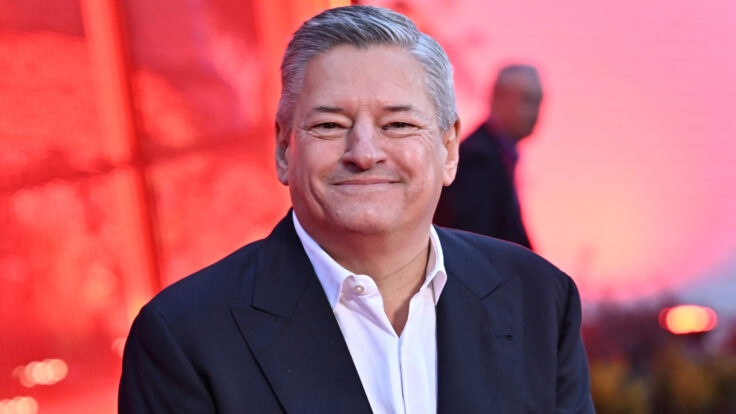
sit around hoping that Netflix honors the spirit of those terms. They’ll want co-C.E.O. Ted Sarandos to put it explicitly in writing.
Dealmaker Ken Ziffren, who’s no fan of the Netflix-WBD merger, sees it as a rare window to push the streamer toward talent-friendlier practices and is helping organize an economic study of how the deal might reshape the business. After all, while another cycle of Hollywood-accounting litigation would be painful, the
alternative could be worse: a shrinking pool of buyers—and the growing dominance of one that, until now, hasn’t shown much interest in sharing the spoils. As Ziffren put it to me: “It’s time to make lemonade.” - Larry McMurtry’s heirs v. his agent: It’s getting harder to fire your agent—even posthumously. A few months back, I flagged the oddball dispute between CMG and the James Dean estate over whether the late icon still had a talent rep. Now comes a quarrel between United Talent Agency and the estate of the late Larry McMurtry, the Pulitzer Prize–winning author of Lonesome Dove, Oscar-winning screenwriter for Brokeback Mountain, and Texas literary royalty, who died in 2021.
Earlier this year, McMurtry’s heirs reclaimed the rights to
Lonesome Dove via copyright termination and subsequently cut a deal with Thomas Tull’s Teton Ridge Entertainment for a new film or TV adaptation. (The 1989 CBS Lonesome Dove miniseries, starring Robert Duvall and Tommy Lee Jones, averaged 40 million viewers across four consecutive nights and won seven Emmys.) News of the Teton Ridge deal apparently awoke UTA, which is demanding its 10 percent commission. The agency claims it
represented McMurtry during his lifetime, continued repping the estate, and spent “countless hours” brokering the new deal, pointing to discussions with Teton Ridge dating back to 2021.
But McMurtry’s son, James, has no interest in paying the tab. In a December 3 legal filing, he disputed that UTA actually worked hard on the Lonesome Dove deal, calling the agency’s claim “a figment of [its] imagination” and noting the absence of a written agreement. James, a
respected rock and folk musician in his own right, has his own team of reps, including lawyers at Holland & Knight. “At the end of the day,” reads the motion, “[James] McMurtry inherited his father’s intellectual property rights. [He] did not inherit his father’s talent agency.” - Red card rescinded: Looks like I was right to
suspect that President Donald Trump might feel some sympathy for Hernan Lopez, as the Department of Justice is backing away from the conviction of the former C.E.O. of Fox International Channels. Lopez, you’ll recall, was swept up in the sprawling FIFA corruption probe, accused of bribing
South American soccer officials to secure lucrative broadcasting rights. He was convicted and faced decades behind bars until the trial judge tossed the verdict, citing recent Supreme Court precedent that narrowed the scope of “honest services fraud.” Then, in July, the Second Circuit reinstated the conviction, teeing up a potential showdown at the Supreme Court.
Lopez’s legal team seized the moment, asking the justices to weigh in on whether the honest services statute really extends to
foreign bribes in private-sector deals. That put the Trump administration in a tricky spot, as it has lately been pulling back on many white-collar fraud fronts. Today, Solicitor General D. John Sauer told the justices that the government was exercising its prosecutorial discretion to pursue dismissal of the case, saying it was no longer in the public interest. Translation: The conviction that once looked like a trophy from the D.O.J.’s FIFA probe may soon vanish from the books
altogether. Lopez, who is now a media analyst—and occasional guest on The Town—said he was “gratified” the ordeal is over.
|
|
|
Pardons, abandoned convictions, new policies… It might seem like Trump’s D.O.J. is
giving up on pursuing white-collar crime altogether. Well, not quite… |
|
|
The incredible saga of Carl Rinsch, who bilked Netflix for millions
that he spent on Dogecoin, a couple of Rolls-Royces, and a half-million-dollar mattress, has come to trial. Is Rinsch a “creative genius” who merely failed to deliver, or something more sinister? |
|
|
For the past week, I’ve been tucked into a sparsely attended federal courtroom watching
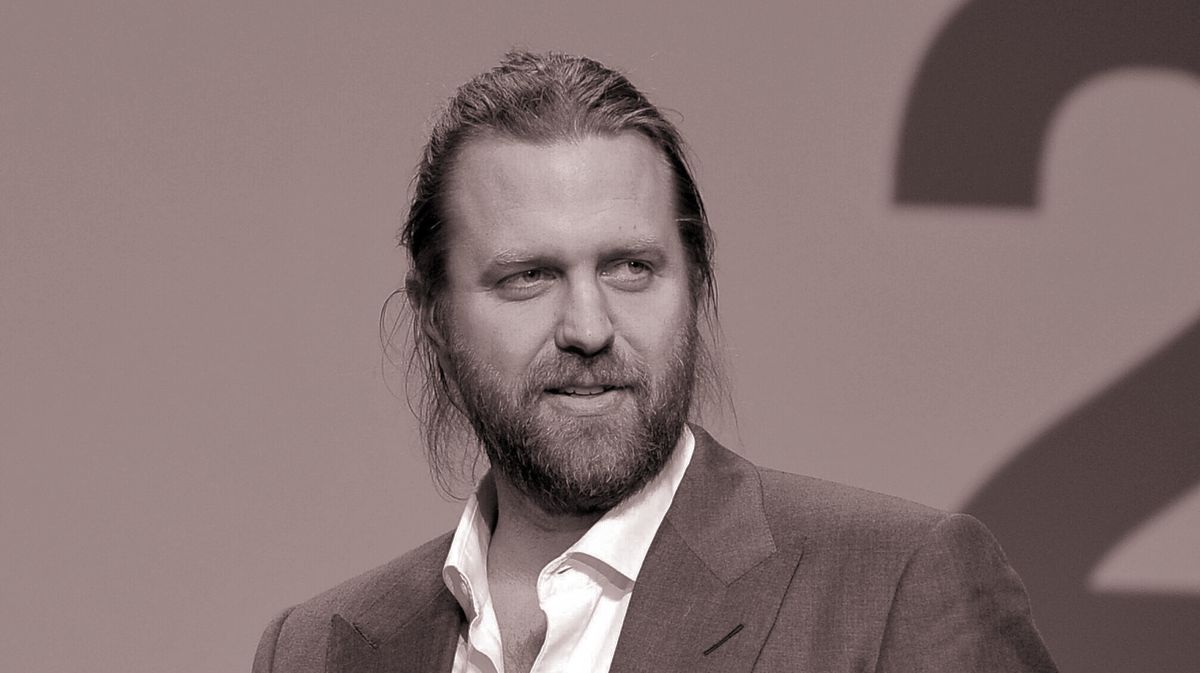
the criminal trial of Carl Rinsch—the writer-director accused of extracting a small fortune from Netflix. Rinsch, of course, was famously hired to make a big-budget sci-fi series about A.I. clones, called White Horse. Instead, he wasted millions on a Ferrari, four Rolls-Royces, really nice bedding, Dogecoin, and various other purchases that seemingly had nothing to do with the show’s production costs.
I sat through this trial to puzzle out two mysteries
that have nagged me since I first covered the case in September. First, what possessed Rinsch to torch his career and reputation so spectacularly? And second, why exactly are federal prosecutors in New York, who have charged him with wire fraud and money laundering, playing referee between Netflix and its runaway auteur?
The government’s contention is
that Rinsch deserves prison time for deceiving Netflix—which is, separately, pursuing collection from him following an arbitration win. The criminal trial, which is wrapping today after seven days in a Lower Manhattan courtroom, was tedious, poorly lawyered on all sides, and—above all—bizarre. The Netflix witnesses, including then-vice president of original content Cindy Holland (now at Paramount overseeing streaming), came off alternately irritable and foggy. Everyone spoke
into microphones tuned so low that the jurors practically leaned out of the box.
And then came the digressions, like prosecutors demanding a Beverly Hills salesman explain what’s so great about a $439,000 mattress. (“It’s Swedish and handmade!” he replied.) Judge Jed Rakoff, living up to his reputation as the most idiosyncratic federal judge in New York, couldn’t restrain himself: “The government is wasting time,” he declared. It wouldn’t be the last time he expressed
that sentiment.
Eventually, I began to get a portrait of Rinsch. He’s hardly a petty fraudster, even by the government’s telling. He was repped by CAA and backed by Texas billionaire Dan Friedkin and Keanu Reeves, whom he befriended after directing 2013’s 47 Ronin, with a script that had sparked a bidding war. Rinsch shot hundreds of hours of footage around the globe for the new show, and Netflix was apparently so eager to work with him that they
granted him final cut. And even though he was overbudget and behind schedule, Rinsch somehow persuaded Netflix to give him another $11.2 million, in March 2020, to finish White Horse—bringing the total project cost to $55 million. |
|
|
A MESSAGE FROM OUR SPONSOR |
Sentimental Value is one of the most acclaimed, profound
films of the year. Nominated for 8 Golden Globe Awards, including Best Picture, Joachim Trier's story of family, kindness and healing, has been hailed by critics as "an absolutely breathtaking piece of filmmaking."
Starring Renate Reinsve, Stellan Skarsgård, Inga Ibsdotter Lilleaas, and Elle Fanning in career-best performances, Sentimental Value is a "cinematic tour de force." For your consideration in all categories. Learn more |
|
|
Then Covid hit, and Rinsch split with his wife—who was also producing the series.
(They’re technically still married; she testified for the government at trial.) Amid the chaos, Rinsch appears to have become distracted and largely stopped working. His attorney Benjamin Zeman told the jury that Rinsch was a “creative genius” who merely failed to deliver.
According to evidence presented at trial, Rinsch later began fretting about the tax implications of the Netflix funds and apparently developed a theory that luxury goods would hold their value through
the pandemic. So he told an assistant to buy, buy, buy. “See Brewster’s Millions?” he texted this individual, referring to the 1985 Richard Pryor movie in which a man attempts to spend $30 million in 30 days. “Gotta spend like it’s on fire.”
Does that make sense? Not especially. Does it excuse what he did? Hardly. Holland testified that Netflix never would have handed him the money had it known how he would spend it. As for whether he committed wire fraud, that
question is now with the jury. |
How did Rinsch even end up on the D.O.J.’s radar? After all, for the feds to prosecute a
fraud case isn’t an easy matter. Was it because The New York Times ran a splashy feature by a celebrated investigative journalist—or something else? For a moment, I thought it was because he’d approached an attaché, and then the F.B.I., while living abroad, over the failure of a Paris furniture shop to deliver chairs he’d
bought during a spending spree. He’d introduced himself as “the Dogecoin whale.” (He sank some of Netflix’s money into Elon’s favorite cryptocurrency.) But no: At trial, one F.B.I. agent involved in that case admitted he’d never even heard of White Horse.
So why was Rinsch prosecuted? I’m not the only one asking. During breaks in testimony—outside the jury’s earshot—Judge Rakoff kept prodding prosecutors to explain their fraud theory. Arguably, these were the
trial’s most illuminating moments. He even ordered up a mid-trial briefing, invoking a case from a decade ago in which the Second Circuit reversed him, wiping out a $1.2 billion jury verdict against Countrywide Home Loans over the subprime mortgage disaster. In that ruling, the appeals court held that
the government had proven, at most, an intentional breach of contract—not criminal fraud. Why wasn’t Rinsch’s situation the same—merely a private dispute between Netflix and an unreliable filmmaker?
In opening statements, prosecutors suggested that Rinsch saw an “opportunity to make a killing” in the markets at the start of the pandemic and “deceived” Netflix to get money. But the evidence for that interpretation was lackluster, so the government fell back on another theory: Even if
Rinsch didn’t take the $11.2 million with plans to misuse it, prosecutors argued, he made subsequent misrepresentations that frustrated Netflix’s ability to enforce its rights and allowed him to keep the money. He had “lulled” them, the prosecutors said, by telling the streamer that White Horse was “moving forward diligently” and that everything looked “awesome.”
Is that really the new standard? Are the feds going to police creative relationships and delivery promises
this way? It’s hard to believe D.O.J. attention is shifting in that direction—especially in the Trump era. Then again, last week, when U.S. Attorney for the Southern District Jay Clayton was asked whether immigration crackdowns would divert resources from financial crimes, he promised there would be plenty of white-collar work ahead, adding with a straight face: “The defense bar shouldn’t worry about the breadline.” |
On Tuesday, the trial delivered its most unexpected spectacle yet: Rinsch himself took
the stand to explain what happened. Could this entire saga be one massive misunderstanding—an overreach by zealous prosecutors? Rinsch certainly tried to make that case. And while the standard defense-bar wisdom is to never put your client on the stand unless things have gone completely fubar, there are slightly different rules for white-collar cases because prosecutors must prove intent to secure a guilty verdict.
Rinsch’s explanation boiled down to this: He had spent vast sums
of his own money filming White Horse, and Netflix owed him reimbursement. He insisted he had completed principal photography, which under the terms of his contract triggered an $11.2 million payment. In his telling, Netflix wasn’t fronting money for production—it was simply paying him back. And when he and his Hollywood lawyer told the streamer they needed the extra funds for things like reserving actors and locations, he meant that after being reimbursed, he would go out of pocket to
begin work on a sequel. “I wanted to make a franchise,” he testified. “It wasn’t about one season. I saw five.”
It’s true that Rinsch had final cut, a fact he repeatedly emphasized on the witness stand at his lawyer’s prodding. But it’s also worth remembering that he tried this very line of reasoning in arbitration with Netflix, arguing that he didn’t need to deliver everything scripted, that he could save some material for Season 2. That claim was rejected. Yes, an arbitration over
contract obligations differs from a criminal fraud trial, and the burdens of proof aren’t the same. Still, prosecutors pounced on inconsistencies between Rinsch’s prior testimony and today’s, even implying that he was performing a lie. “Your testimony is you didn’t need to spend $11 million [on the show]?” one asked. “You’ve acted before, right?”
The only thing this trial hasn’t offered is footage from White Horse itself. Netflix seems to have given up after Holland’s departure,
telling Rinsch it was scrapping the series. On the stand, he held up a thumb drive allegedly containing the episodes, and it was entered into evidence. So perhaps the jurors will be treated to an exceedingly rare privilege: the chance to judge a Netflix show that might not ever see the light of day. |
Thanks, Eriq. Send him feedback and tips at
Eriq@puck.news or at EriqG.99 on Signal. I’ll be back in your inbox tomorrow,
Matt |
|
|
Puck founding partner Matt Belloni takes you inside the business of Hollywood, using exclusive reporting and
insight to explain the backstories on everything from Marvel movies to the streaming wars. |
|
|
Ace media reporter Dylan Byers brings readers into the C-suite as he chronicles the biggest stories in the
industry: the future of cable news in the streaming era, the transformation of legacy publishers, the tech giants remaking the market, and all the egos involved. |
|
|
Need help? Review our FAQ page or contact us for assistance. For brand partnerships, email ads@puck.news. You received this email because you signed up to receive emails from Puck, or as part of your Puck account associated with {{customer.email}}. To stop receiving this newsletter and/or manage all your email preferences, click here. |
Puck is published by Heat Media LLC. 107 Greenwich St, New York, NY
10006 |
|
|
|