Welcome back to What I’m Hearing+ on this momentous day in entertainment. First, a big
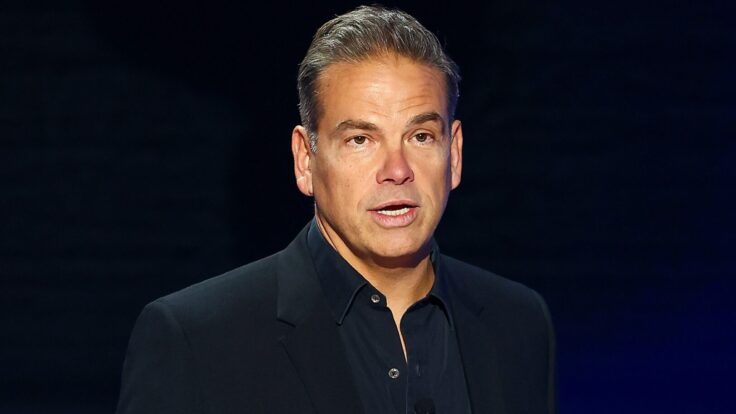
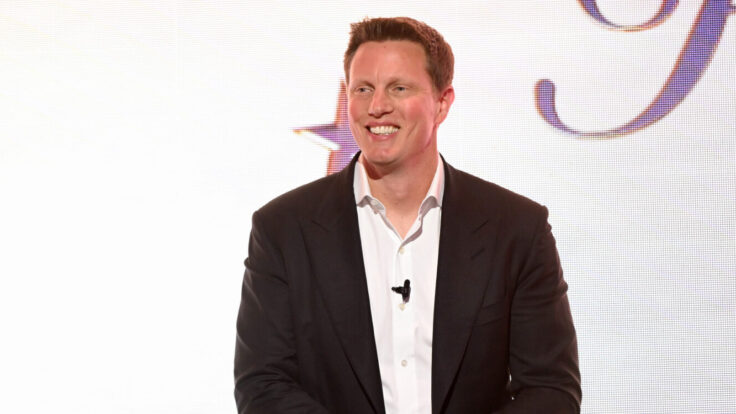
welcome to Hollywood for Josh D’Amaro, the newly anointed C.E.O. of The Walt Disney Co. (Pro tip: Take Fountain.) I’ll have more on D’Amaro on Thursday, but today I debated his hiring and biggest challenges with analyst Rich Greenfield on The Town. Listen or watch here.
Second, Eriq Gardner
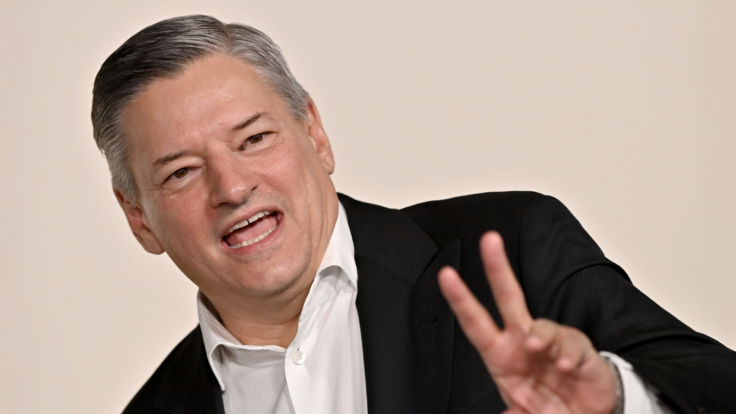
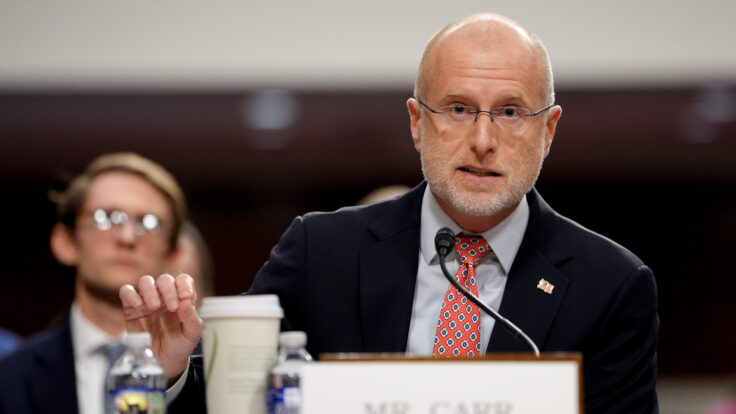
was in D.C. this afternoon for the big U.S. Senate grilling on Netflix’s proposed acquisition of Warner Bros. and HBO Max. Sadly, Eriq was unable to identify the Mr. Monopoly Man seated behind Netflix’s Ted Sarandos and Warner Discovery’s Bruce Campbell (or Mrs. Monopoly Man?), but he left with some smart (and kinda depressing) takeaways for how this antitrust review might go down with the Trump regulators.
All yours, Eriq…
Not a Puck member yet? Never too late. Just click here.
Mentioned in this issue: Ted Sarandos, Brad Pitt, Bad Bunny,
Angelina Jolie, Josh Hawley, Yuri Shefler, Dave Chappelle, MrBeast, Ted Cruz, Robert Earl, Jennifer Schecter, Steely & Clevie, Shabba Ranks, Daddy Yankee, Luis Fonsi, Pitbull, Stephen Doniger, André Birotte Jr., Ken Freundlich, Ehud Yonay, and… Kid
Rock’s alternative halftime show.
Let’s begin… |
|
|

| Eriq Gardner
|
|
-
Netflix takes a body blow on Capitol Hill: I wasn’t surprised to see Netflix co-C.E.O. Ted Sarandos get roughed up at today’s packed Senate Judiciary hearing over the proposed Warner Bros. acquisition. (From the reporters’ seating area in the cheap seats, it was impossible to verify if Ted was as sweaty in the room as he appeared on TV.) After all, lawmakers on both sides have been telegraphing their unease with the $83 billion deal since it was announced. What was
surprising, however, was just how far afield from traditional G.O.P. talking points some of the Republican senators wandered.
Netflix, of course, would prefer to litigate this merger on the familiar turf of market definition: Does combining Netflix and HBO Max give one company too much control over streaming? Or does competition from YouTube, which is dominating the fight for the same eyeballs and ad dollars, render all the antitrust posturing moot? It’s not an automatic win for Netflix’s
lawyers, but it’s a known playbook, one that could be resolved by agreeing to a simple divestiture of HBO Max.
Things get trickier when the topic shifts from monopoly to monopsony—i.e., dominance not over viewers, but creators. That’s where Missouri’s Josh Hawley stepped in, reading a Teamsters letter into the record and needling Sarandos on “residuals.” (I’m pretty sure he meant profit participations or “backend,” not guild-mandated residuals, which
Netflix pays based on whatever is negotiated industry-wide every three years.) Sarandos responded by touting Netflix’s buyout model of up-front payments. Hawley seemed unimpressed, then became decidedly animated over a claim that “almost half” of Netflix’s content supports a transgender ideology. (Apparently Hawley is not familiar with the comedy of Netflix star Dave Chappelle.) Sarandos replied that he didn’t know where the claim came from, and that it was
inaccurate, anyway.
Then came the culture war cavalry. Eric Schmitt, the other gentleman from Missouri, blasted the idea of giving “a monopoly to the company with the wokest content in the history of the world.” Texas’s Ted Cruz labeled Netflix a “left-wing propaganda company” and started complaining about the political speeches on the Grammys, which aired on CBS, not Netflix. And several of their colleagues resurfaced the Cuties controversy from
2020 for good measure. In short: We’re light-years removed from G.O.P. orthodoxy that antitrust is solely about consumer prices. Today’s Republicans are worried about vertical foreclosure—not just whether Sarandos controls eyeballs, but whether he controls the pipeline.
These senators won’t decide the merger’s fate, but if their line of attack reflects how Trump’s D.O.J. might think about blocking the deal, Netflix may want to spend less time talking about competition
from YouTube and more time explaining why it shouldn’t be viewed as the only game in town for hiring writers, editors, and soundstages. - Keep the Miraval rosé on ice: It’s been a decade since Brad Pitt and Angelina Jolie split, but somehow, the litigation over their vineyard in Provence, Château Miraval, is still going strong. As you may
recall, Pitt sued Jolie back in 2022 for selling her interest in the vineyard to Stoli vodka billionaire Yuri Shefler without consulting him, or even giving him an agreed-on right of refusal. Jolie argued that the sweeping, expanded N.D.A. that Pitt had insisted on for a mutually agreeable deal would have unfairly muzzled her from ever speaking out about the abuse
she alleges to have suffered during their marriage.
The case is technically on track for a February 2027 trial, but Jolie is asking California’s Second District to weigh in on a sleeper issue with potentially broader legal implications: whether a client’s emails with non-lawyers—business managers, financial advisors, even foreign policy experts—can be shielded under attorney-client privilege. At issue are 22 emails and texts Jolie sent around the time of the Stoli deal.
The trial judge, calling the documents “business gossip,” wants Jolie to turn them over. Jolie says they’re privileged since they involve discussions of legal advice, and her team is urging the appellate court to clarify what counts as privileged communication—a potentially complicated question in the high-profile legal fight between parties who employ their own public policy consultants. For now, the appeals court has stayed the case and asked Pitt to weigh in. -
MrBeast Burger fiasco served medium-well: Is MrBeast, a.k.a. Jimmy Donaldson, really going to risk a public trial over lousy hamburgers? Even the judge isn’t convinced this is the smartest move.
As I’ve reported, YouTube’s top star, who boasts around 460 million subscribers these days, wants out of a 2020 licensing deal with
Robert Earl, the Planet Hollywood impresario turned ghost kitchen magnate. Donaldson claims their MrBeast Burger venture damaged his brand due to bad quality and brutal online reviews. Earl’s team says that Donaldson is just angling to take control of the business and flip it to Burger King.
At a summary judgment hearing last week in New York, Justice Jennifer Schecter said she was “skeptical” that nasty Yelp comments amount to a breach so severe that it
justifies Donaldson blowing up the contract. But she also said there’s enough of a factual dispute to warrant a jury. Then she raised the obvious question: Wouldn’t it make the most sense for Donaldson to buy out Earl? Earl’s lawyer agreed, but argued that Donaldson’s goal all along was to scoop up the venture “on the cheap.” To which Schecter shot back, “To be clear, I’m not suggesting this can be done on the cheap.” For the record, Earl is claiming $290 million in damages for breach of
contract—not exactly value-menu territory.
|
|
|
And now, on to the main event... |
|
|
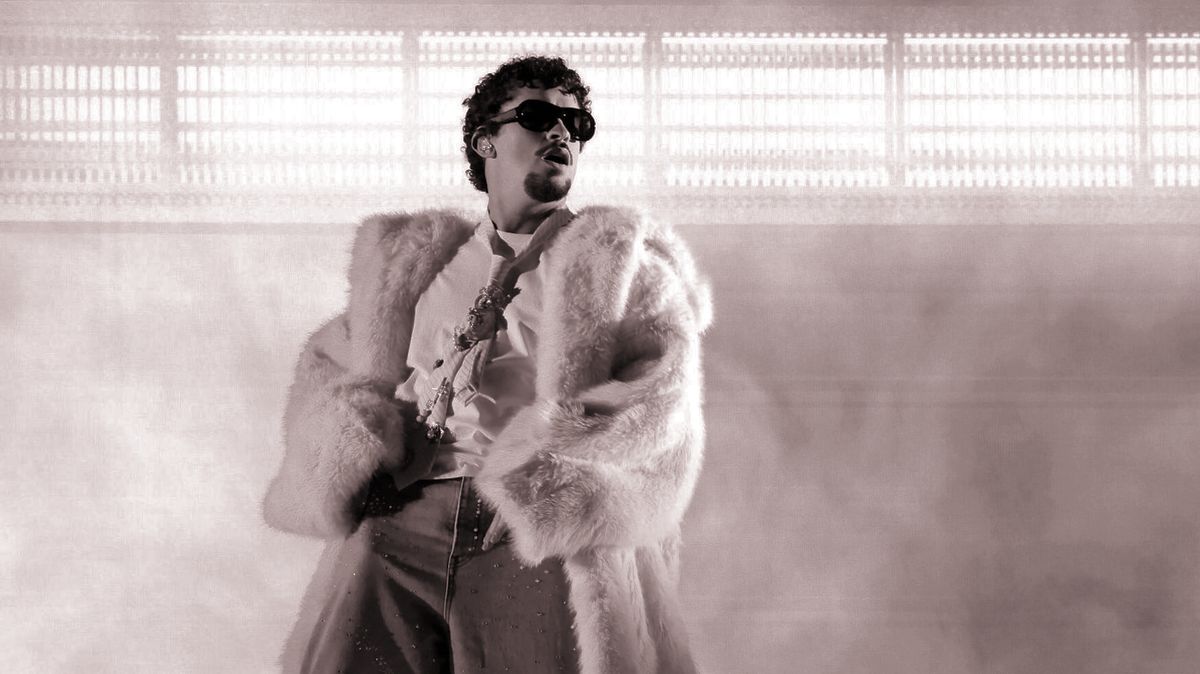
As the Grammy-winning artist prepares for the Super Bowl, a copyright suit
including Daddy Yankee, Luis Fonsi, and Pitbull claims that the entire Latin urban music phenomenon was built on top of stolen beats. A ruling on the case could change the industry forever. |
|
|
When the NFL announced that Puerto Rican megastar Bad Bunny would headline this
weekend’s Super Bowl halftime show, the outrage from the political right was immediate. Donald Trump called the choice “terrible” and “ridiculous,” and Turning Point USA, the late Charlie Kirk’s political organization, announced an “All-American” halftime alternative (starring Kid Rock, of course, who, unlike Bad Bunny, doesn’t sing in Spanish).
In addition to being a vocal critic of Trump’s immigration policies—the Grammys crowd roared
when he took an acceptance-speech dig at ICE—Benito Antonio Martínez Ocasio is also the most famous face of reggaeton, the global music phenomenon filling stadiums and topping charts. Now, a group claiming ownership of the genre’s beginnings is pursuing a blockbuster infringement suit that could impact the stars of Latin urban music. Representatives of the Jamaican production team Steely & Clevie are alleging that well over a hundred reggaeton hits borrow wholesale from the
duo’s pioneering 1989 B-side “Fish Market” and two related tracks—Shabba Ranks’s “Dem Bow,” and “Pounder Dub Mix II.” The list of defendants reads like a Latin Grammys roll call: Daddy Yankee, Luis Fonsi, Pitbull,
and Bad Bunny himself, represented by Ken Freundlich.
Reggaeton emerged in the U.S. in the club scene in the 1990s, when Puerto Rican producers fused Jamaican dance hall beats with Spanish-language rap, anchored by the syncopated backbone of dembow. Stars like Don Omar, Karol G, and Ozuna consistently rack up 50 million or so monthly listeners each on Spotify. Steely & Clevie’s copyright infringement case
has been simmering since 2022, when a California federal judge consolidated several lawsuits and authorized discovery on a key threshold question: Is Steely & Clevie’s claimed musical innovation sufficiently original, and protectable enough, to support a copyright claim?
After years of quiet discovery, we’re now in the critical summary judgment phase. The plaintiffs say the defense has failed to identify any other recognizable musical ancestor of their so-called “holistic music design.”
Lawyers for the artists counter that Steely & Clevie are simply claiming authorship over a combination of commonplace habanera grooves and surf beats, not the sort of thing the Copyright Act was built to protect. That prompted a pointed rebuttal from plaintiff’s attorney Stephen Doniger at a recent hearing; Doniger argued that treating rhythm as inherently unoriginal was indulging in a “Eurocentric” framework, one that privileges melody while discounting non-Western
musical traditions.
If the plaintiffs prevail, the consequences could be seismic: hundreds of millions in damages, a licensing reshuffle across the reggaeton ecosystem, and a new blueprint for claiming rights over rhythmic patterns. Others, of course, would see such a ruling as the privatization of what has long been shared musical infrastructure. The decision will land any day now. |
The reggaeton case centers on a notoriously tricky corner of copyright law, “selection and
arrangement”—a term we’ll be hearing more often, thanks to all the A.I. suits on the horizon. (One unresolved legal question with A.I. is how to evaluate pattern learning, when the output isn’t a literal copy of any single work but a complex echo of what came before.) The idea is that while the individual building blocks of a work may be unprotectable, the way they’re curated and combined can be. Steely & Clevie, for instance, claim their music’s rhythmic architecture qualifies as
protectable expression.
At a recent hearing on the reggaeton case, Judge André Birotte Jr. repeatedly pressed counsel to articulate what precisely Steely & Clevie claim to own. After all, the judge noted, the asserted rhythmic structure is not contained neatly within a single work, but instead spread across three different songs. That prompted Freundlich, on behalf of Bad Bunny, to complain that the plaintiffs were “basically trying to create Frankenstein,”
stitching together a protectable work out of noncontiguous parts.
Birotte’s ruling may turn on the legal precedent demanding that courts filter out non-protectable elements, such as, say, generic grooves, instrumentation choices, and two-bar repeating loops, before deciding whether copying occurred. The defendants argue for removing the unprotectable pieces first, then deciding whether the remaining expression is sufficiently original to deserve copyright protection. The plaintiffs
counter that such early pretrial filtering amounts to impermissible “splintering,” destroying the very structure they say the law should protect.
A fresh opinion from the Ninth Circuit may influence whether the reggaeton case reaches a jury. At the very least, it boosts the odds of Bad Bunny and other defendants. In the summer of 2022, the family of
journalist Ehud Yonay, whose 1983 magazine article inspired Top Gun, sued Paramount, the producer of Top Gun: Maverick, for failing to license Yonay’s work for the sequel. But the judges ruled that when faced with shared but unprotectable elements—pilots in a communal world, grueling training, barroom bravado, etcetera—the leftover overlapping territory couldn’t sustain an infringement claim. Crucially, the panel explained that even under a
selection-and-arrangement theory, courts must first strip away unprotected ideas, facts, and stock elements before asking whether the remainder reflects a protectable pattern or design.
Defendants in the reggaeton case rushed that opinion to Birotte, though trying to claim ownership over an entire genre’s rhythmic backbone was always a long shot. Still, if Birotte lets the case through, it would mark one of the most consequential expansions of music copyright in decades. That’d be a remix
worthy of the Super Bowl stage. |
Thanks, Eriq. I’ll be back on Thursday evening.
Matt |
|
|
Puck founding partner Matt Belloni takes you inside the business of Hollywood, using exclusive reporting and insight
to explain the backstories on everything from Marvel movies to the streaming wars. |
|
|
Unique and privileged insight into the private conversations taking place inside boardrooms and corner offices up and
down Wall Street, relayed by best-selling author, journalist, and former M&A senior banker William D. Cohan. |
|
|
Need help? Review our FAQ page or contact us for assistance. For brand partnerships, email ads@puck.news. You received this email because you signed up to receive emails from Puck, or as part of your Puck account associated with {{customer.email}}. To stop receiving this newsletter and/or manage all your email preferences, click here. |
Puck is published by Heat Media LLC. 107 Greenwich St., New York, NY 10006 |
|
|
|