 |
|
Welcome back to What I’m Hearing+, live from Brooklyn before the last weekend of the summer heralds the return of rambunctious school kids on the subways and embittered junior bankers riding along in their quarter zips.
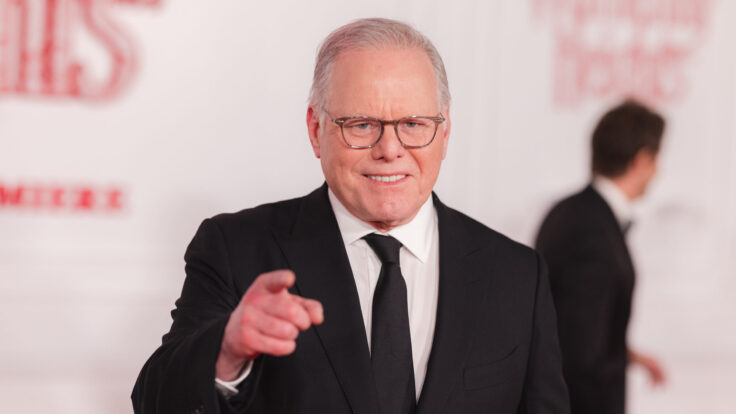
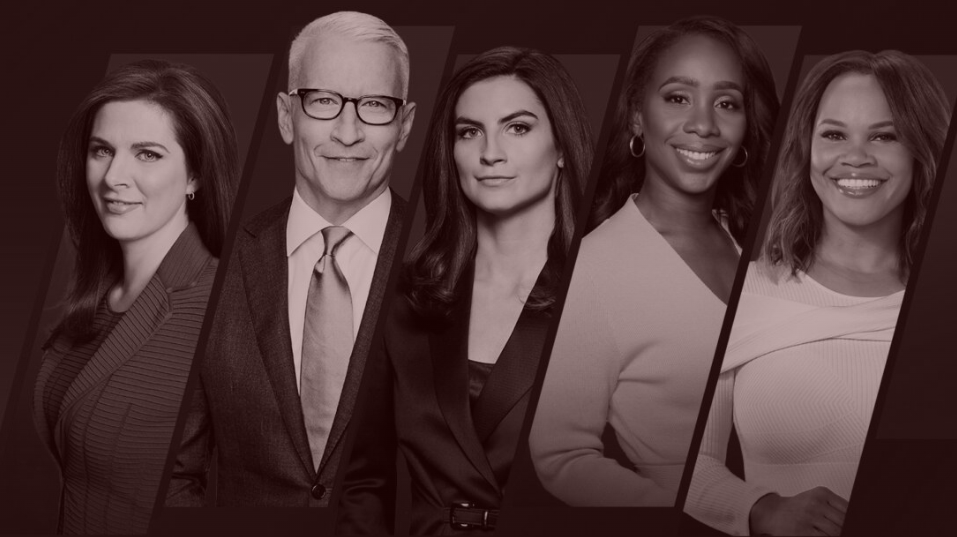
Last week, Warner Bros. Discovery C.E.O. David Zaslav conveyed his strategy to make CNN a viable draw on Max with international content, HLN-style news filler, and (notably) some simulcasting from the cable network, which once seemed heretical. Is it a budget-friendlier CNN+ or a real product innovation that can revive the brand for the next generation. Let’s dive in…
|
 |
| Zaz’s New CNN++ |
| CNN, as we know it, may not make the transition to Max, especially as a 24/7 news source. It’s the perfect opportunity for WBD executives to reimagine the news product and format for a new generation. |
|
|
|
| In a 1991 letter to shareholders, Warren Buffett articulated a sea change in the media landscape that was undergirding his investment thesis—a transition from the halcyon days of a few high-margin cable fiefdoms to an increasingly fragmented news and entertainment ecosystem, one in which “500 million American eyeballs and a 24-hour day are all that’s available.”
On some level, Buffett’s observation reflected the impact of Ted Turner’s then decade-old Cable News Network, which rewired audiences’ expectations about news consumption. For generations, most people read a newspaper in the morning, maybe tuned out some radio during their drive to work, and then checked back in with Brokaw or Jennings or Rather in the evening. CNN changed all that, as Buffett presciently noted.
These days, as media endures the latest sea change to streaming, competition is in overdrive, margins are thinning, costs are unbalanced, and even the most hegemonic companies are desperately searching for creative ways to differentiate from the slush pile. And CNN, which aborted its $300 million+ streaming pure play a year ago, is once again trying to revamp itself for a brave new world. Last week, my Puck partner Dylan Byers reported that Warner Discovery is planning to launch CNN on its Max streaming platform, including live simulcasts of primetime shows—Tapper! Blitzer! Anderson!—that have only been available on Pay TV.
In a way, WBD C.E.O. David Zaslav’s decision has some precedent. Former New York Times Company C.E.O. Mark Thompson re-imagined that business as essentially a lifestyle-first bundle where the core news product is increasingly supported by “peripheral” content, such as word games and recipes, which captures more attention and drives daily user habits. The results speak for themselves: the average revenue per user for the unified Times bundle is $13.50 per month, whereas the news-only service brings in just under $10 per customer. No wonder Zaz is recruiting Thompson to become the next C.E.O. of CNN.
Thompson proved that news and entertainment could not only coexist under the Times brand, but create symbiosis. Zaz hopes that CNN can be similarly leveraged to drive engagement and push audiences to other titles on Max, all while boosting subscriber retention. Max executives are already thinking about how to interrupt non-CNN programming with breaking news. (Here’s a gratis idea: CNN could also use push notifications outside of Max, treating it like the main CNN app during high visibility moments to bring in outside audiences for free during big breaking news, and ideally convert them into subscribers.)
Of course, harnessing these benefits requires being clear-eyed about the limitations of streaming. In our fragmented media ecosystem, merely having the “best” news isn’t enough, especially for audiences under 40, who get their news from X, YouTube, TikTok, Twitch and so forth. To maximize its potential, CNN must feel necessary for streaming audiences, which would then allow Zaz to increase prices with a lower risk of users churning out.
With Pay TV declining, Warner Bros. Discovery’s long term goal is likely to find a way to make CNN reach profit margins close to what it does within the current linear bundle. That’s doubtful. What’s also doubtful is whether the transition of a cable news product to streaming keeps a consistent source of high demand. The current format, as it exists, may not make it, especially as a 24/7 news source. Therefore, it’s paramount that CNN executives think about the programming format and the product pieces equally. |
|
|
| No CNN journalist would want its streaming product to emulate YouTube’s controversial but undeniably habit-producing phenomenon of “rabbit holes.” YouTube has been rightly criticized for radicalizing viewers by directing them into progressively intensifying loops of loony far-right content. But that very addictiveness offers several key lessons for WBD developers—namely, that audiences are hungry to learn more about subjects labeled as news, and their voracious interests can be serviced by a product that constantly feeds them videos that reflect their interests.
In short, CNN streaming needs to build that sort of stickiness, too. As Richard Irving, Hulu’s former V.P. of product strategy, recently told me, “So much of media companies’ internal conversations about YouTube and TikTok focus on being better than the recommendation algorithm—but how the format supports storytelling, and vice versa, are just as important.” It’s true: The key to YouTube’s success has as much to do with its product and formatting as it does with the recommendation algorithm. Most importantly, YouTube makes it easy for users to explore a topic at length without ever having to leave the platform.
On a linear network, creating a deep-dive experience requires booking the right guests and scheduling related segments across a number of series. But the streaming format, for all its flaws, is not bound by these same conventions. Imagine, for example, if users streaming CNN on Max could switch from live reporting on the war in Ukraine to other related segments or features, rather than losing inquisitive viewers to YouTube. Right now, CNN generates fresh programming 20 hours a day; why not find ways to recirculate and monetize that content on streaming?
Pity the executive producer who has to explain to CNN’s top talent that they need to rethink their hourly shows to suit the needs of this format. On the other hand, none of this is entirely new. Explainer videos have existed for years, picking up speed in the U.S. around 2013, according to Google Trends data, and exploding in popularity a few years later. CNN is already chopping up live segments to promote on social platforms, like YouTube, or to embed inside web articles to generate more ad impressions.
Consumers increasingly expect this sort of interactivity, whether it’s pulling up a statistical overlay during a Yankees game (as you can do on the YES app), or toggling between different cameras or audio feeds (as you can do on the F1 app), or even watching two games simultaneously using picture-in-picture. The idea is to provide the CNN-branded information during a telecast to prevent fans from looking at a second or third screen. Think of how vital this could be for a younger viewer watching political debates on CNN. Best of all, these features would be optional, so traditional viewers who are already overwhelmed by John King’s “magic wall” need not mess around with the remote. |
|
|
| Creating news habits is excruciatingly difficult, but also incredibly lucrative. And for decades now, those profits have been flowing from traditional media outlets to digital disruptors. For example, a recent McKinsey study found that more than 60 percent of teens now get their news exclusively from push notifications. Not only were subscription offerings (newspapers) disrupted by free publications (aggregation websites), but destinations (homepages) have been disrupted by device homescreens. Now, “always-on” displays from companies like Apple mean that iPhone users (roughly 57 percent of the smartphone marketplace in the U.S.) don’t even have to open their phone to get news. It just appears.
Of course, mobile consumption also provides several intriguing opportunities for CNN as it moves to build its new streaming product. One idea is to introduce a “vertical mobile feed” with a portrait-mode option that situates video at the top of the screen, but is supported with a feed of related content underneath that people can scroll through to keep attention in one place. Or there could be stories from CNN that open inside the actual Max app, giving the consumer a way to explore a news topic in greater depth (and providing more advertising inventory, of course). Indeed, the CNN interface on Max could be designed to look like a hybrid of YouTube and Twitter, something that would be more intuitive for younger consumers, whose experience with news content is primarily mobile-first.
Social media already reinvented this wheel, and CNN doesn’t have to reinvent it again, but it can borrow social and mobile-optimized elements that lean into a competitive advantage: quality. I realize this is an ambitious project. Up until a year ago, Max was mostly known for its relatively poor tech stack and ambitious U.I. But the reality of news in 2023 is that it has to be extraordinary if it’s going to differentiate. |
|
|
| CNN is known for its global reporting, yet Americans also want local news. A report from Pew in 2021 found that U.S. households spent just as much time watching local news as they did cable news during the day and off-peak hours. (After establishing a national brand, Axios has leaned into this trend with its Local product, which features newsletters for news-starved U.S. cities, like Denver.)
Offering a subscriber the ability to choose from a local feed emanating from an affiliate partner—similar to what CBS does with Paramount+ and NBC with Peacock—would make the product feel even more specific, necessary, and habitual. CNN has never been thought of as a local news purveyor, but if it wants to transform an otherwise walled-garden ecosystem into something that can be everything for everyone, everyday, local news could be the missing piece. (All within Max, of course!)
Streaming, after all, is increasingly deploying the tactics of cable. This is one reason why virtually every service is bidding for sports rights, and why YouTube TV, with its analog-era menu guide, has been so successful. During its heyday on linear, CNN delighted consumers as a place to tune in for breaking news, casual background chatter, morning updates, and so forth. To become a meaningful habit on Max, it must serve all those functions in a media landscape that has become more fragmented than even Buffett could have imagined. The stronger the habit, the more pricing power CNN will enjoy, too. It’s the blueprint for a walled garden that can begin to flourish as the Pay TV system wilts. |
|
|
|
| FOUR STORIES WE’RE TALKING ABOUT |
|
|
|
|
|
 |
|
|
|
Need help? Review our FAQs
page or contact
us for assistance. For brand partnerships, email ads@puck.news.
|
|
You received this email because you signed up to receive emails from Puck, or as part of your Puck account associated with . To stop receiving this newsletter and/or manage all your email preferences, click here.
|
|
Puck is published by Heat Media LLC. 227 W 17th St New York, NY 10011.
|
|
|
|