|
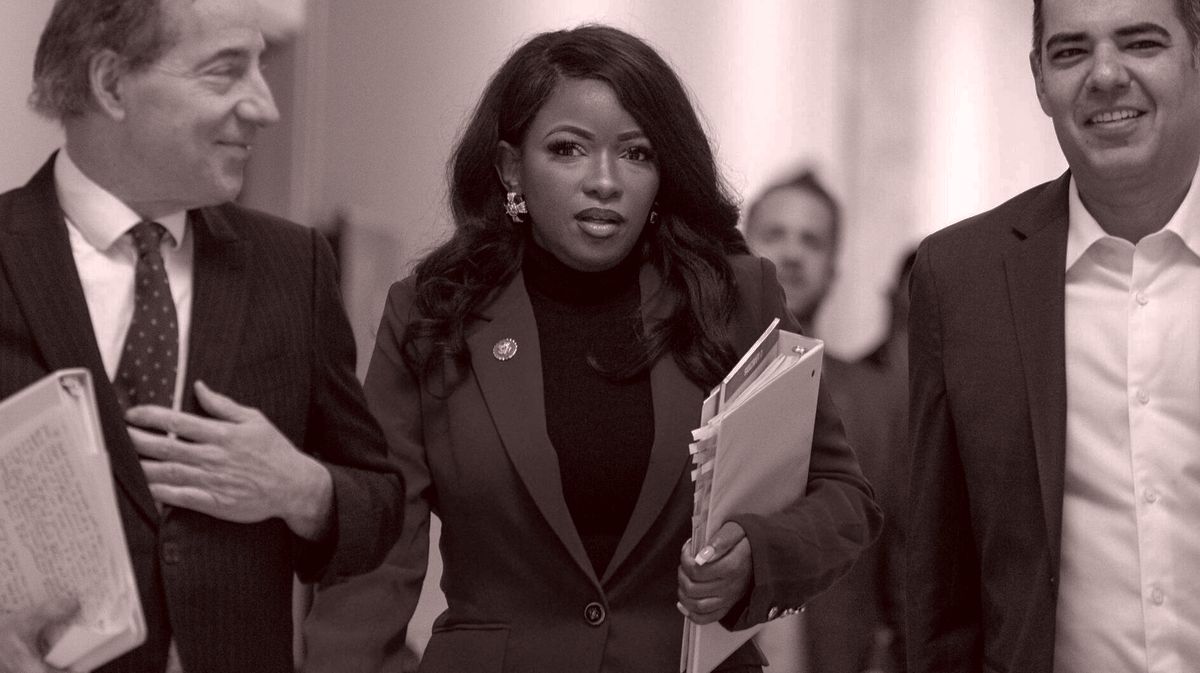
Welcome back to The Varsity, I’m John Ourand, still digesting today’s sports hearing on Capitol Hill. I expected Senator Ted Cruz to take the NFL to task for some of its streaming deals. But Cruz’s mild scolding—referencing “a growing concern,” accusing the NFL of “tiptoeing” up to violating the 1961 Sports Broadcasting Act—was hardly the fire and brimstone I anticipated. More on that in a future email, but it seems unlikely that Washington will be going after the NFL’s antitrust exemption anytime soon.
In tonight’s issue: the fate of the skinny bundle. Once upon a time, network groups thought the best way to grow was to claim as much real estate as possible: Distributors couldn’t buy ESPN unless they also bought Freeform and BabyTV and a bunch of other garbage. Today, that trend has completely reversed: Bloated, thousand-channel packages are out; the skinny bundle is in.
In yet another must-read, can’t-miss Inner Circle report, my colleague Julia Alexander explains why the skinny bundle, which was slow to catch on, is beginning to show signs of promise.
Now, here’s Julia…
|
Stat of the Week: 21.8 Million
|
|
That’s the number of Nielsen viewers who tuned in during the peak of this weekend’s very muddy Kentucky Derby, making it the most watched staging of the event since 1989—and marking the second straight year of strong year-over-year growth. Is horse racing suddenly in with Gen Z? Not exactly. But as media fragmentation continues, major tentpoles are gaining in relevance as the social capital value of participating in the conversation around them increases—think of all the equestrian illiterates who posted on Instagram or TikTok about Sovereignty and those silly hats. That said, as betting becomes more foundational to the fan experience, the popularity of horse racing should continue to grow.
|
Trend I’m Watching: Sports Inside Games
|
I was pleasantly surprised by yesterday’s announcement of a deal between the MLS and EA Sports that will allow EA Sports FC Mobile players to watch four live matches inside the app. This dovetailed with a recent conversation I had with a media analyst about how leagues can best reach audiences where they are—which is often playing video games. Media guys may be able to recite all manner of Nielsen data and rights deal points, but they have a harder time coming to terms with the quirks of Gen Alpha and Gen Z. To wit: More than 70 percent of teens play video games daily, primarily as a social activity, according to Pew Research. Trying to convince them to spend their time elsewhere is much more difficult than finding ways to meet them on their own turf.
|
|
|
|
A MESSAGE FROM OUR SPONSOR
|
The game will never be the same. The luxurious, powerful, and fully electric BMW i7. Learn more at
BMWUSA.com
|
|
|
- Streamers feel tariff tremors: The president’s declaration that films made overseas will be subject to a 100 percent tariff has roiled the entertainment industry, as my partner Matt Belloni detailed last night. Although just about every expert on the topic says the proposed tariff will be nearly impossible to enact, anxiety levels are rightfully elevated. Indeed, ever since Trump announced his first round of tariffs three months ago, analysts have suggested the possibility of retaliatory levies or other punitive measures aimed at U.S. streaming platforms, up to and including blocking those services from operating in foreign markets. If international growth and engagement stalls for companies like Disney, Warner Bros. Discovery, and Paramount—at a time when domestic growth has all but slowed to a halt—you can expect some scary guidance on the D.T.C. side as earnings start to roll in next week.
- Another Fubo headache: Eriq Gardner has an update on his scoop about the D.O.J. reviewing Disney’s deal with Fubo TV—a deal he describes as “the one that would give the entertainment giant a majority stake in the company, and simultaneously end an antitrust standoff over Disney’s own planned (and since scrapped) sports streaming joint venture.” Here’s Eriq’s note: “No, the D.O.J. isn’t ready to go to court just yet. But that hasn’t stopped a group of consumer class-action lawyers, already suing over Disney’s grip on the sports TV market, from trying to seize the moment. Citing reports of the government probe, the lawyers told a federal judge in California late last week that they intend to file a motion to block the Disney-Fubo deal themselves. Disney has not responded.”
- FanDuel heats up: Writing about the state of streaming can feel bleak, so it’s nice to see a positive story emerge—especially one pertaining to the regional sports market. As John reported yesterday, Main Street Sports (formerly Diamond Sports Group) reported 650,000 subscribers across its 15 FanDuel Sports Network streaming offerings, up from 203,000 in May 2023. Main Street expects to double that figure by the end of the year. Does this mean the R.S.N. ecosystem is on the rebound? Not quite. But there’s clearly an audience that desperately wants access to local live sports, and is willing to pay for it—if providers are willing to meet them where they are. More good news: FanDuel’s streaming viewers are 12 years younger, on average, than their cable channel viewers, per the company, though partnerships with appealing pay TV providers, like Fubo, have certainly contributed to FanDuel Networks’ scaling efforts overall. Cable is dead… long live cable?
|
|
|
|
If Disney’s struggling Fubo TV can figure out how to be the destination aggregator for sports, and attract a significant portion of the 50 million-strong customer base still addicted to cable, it may yet be a viable business.
|
|
|
|
When Dish Network launched Sling TV and introduced consumers to the “skinny bundle,” in 2015, the concept was dismissed by analysts and industry watchers as a panicked reaction to cord-cutting disguised as innovation—a less expensive, if imperfect, product to keep price-sensitive digital natives in the fold. A decade later, the skinny bundle endures, but it has hardly proven immune to the erosion impacting its more robust brethren. To wit: For the past three years, Hulu + Live TV has hovered between 4 million and 4.8 million subscribers; Sling’s subscribers currently stand at 2 million, down from a peak of 2.7 million in 2019; and just last week, Fubo’s stock slipped on guidance that sub numbers could decline by 14 percent year over year, with revenue projected to drop 10 percent in the same period.
It’s easy to write these off as secular trends, but new pay TV data offers a glimmer of hope for companies—both traditional and virtual—that are pursuing skinny bundles to attract cord-cutters or cord-nevers. After nearly three years of steady declines in subscribers, Charter at least managed to slow the rate of cord-cutting in Q1, losing less than half the number of video subscribers as in the same quarter last year. This was due, in part, to successful and once-unthinkable partnerships with pure play streamers: Disney+ gained more than 8 million subscribers when the service was made available to Charter subscribers.
In January, likewise, DirecTV introduced “Genre Packs”—a feature that allows subscribers to effectively build their own bundles of channels around different interests, especially sports. The packs account for a growing percentage of signups, per Antenna. In March, roughly 10 percent of new DirecTV customers chose the Genre Pack option, up seven percentage points from its January debut.
At the center of all these packages is sports, obviously, and this is where Fubo TV shines. Fubo carries more regional sports networks and more niche sports channels, like the Surf Network, than YouTube TV. After Disney bought a majority stake in Fubo for $220 million in January, it became easy to imagine a platform, within the Disney portfolio, that offered a plethora of live sports alongside general entertainment content, potentially simplifying the sports streaming sector for the 130 million sports fans in the U.S. Indeed, Fubo TV extends the reach of a network like ESPN, and with access to networks from Fox, Paramount, NBCUniversal, and Warner Bros. Discovery, it could turn Disney into a one-stop shop for sports content.
|
Pitaro’s “Parallel Paths”
|
|
Fubo TV’s strong focus on being the go-to place for almost every sport, and its partnership with Disney, align it with one of the modern media strategies of our age: aggregation theory, as made famous by the tech-media philosopher king Ben Thompson. Aggregators, like Google or Apple, according to Thompson, create a direct relationship with a customer by offering an easy access point to many destinations (apps, websites, etcetera) in a super-fragmented ecosystem. These days, however, streaming services are both destinations and platforms.
|
|
|
|
A MESSAGE FROM OUR SPONSOR
|
The game will never be the same. The luxurious, powerful, and fully electric BMW i7. Learn more at
BMWUSA.com
|
|
|
|
App aggregators, like Roku and Prime Video Channels, aggregate streamers as part of a larger system, which helps with the ongoing issue of discovery. Platforms, like Fubo TV and Netflix, aggregate content. But Fubo TV is one of the few platforms in the U.S. that carries the majority of sports content.
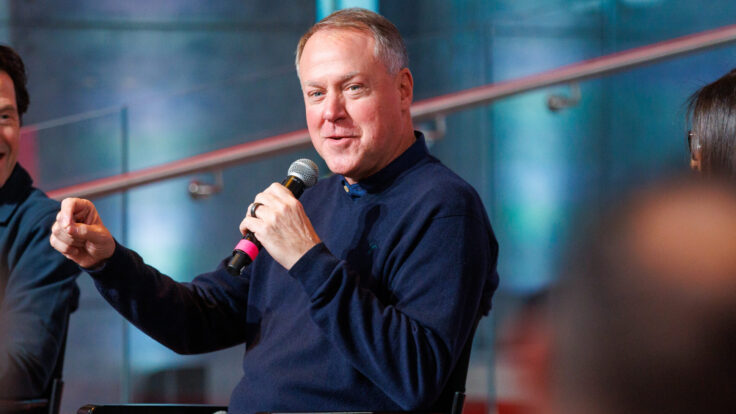
Now, with Disney’s help, Fubo TV has the potential to be the content and app aggregator for a large segment of sports fans. It’s a relatively simple philosophy, even if its execution is a steep climb: After years of investing in exclusive rights, the next challenge will be on the distribution side. Jimmy Pitaro has embarked on a “parallel paths” structure, which places equal emphasis on tech and interface issues, and the live sports offerings themselves. Pitaro is leaning into unique product features for Flagship, the still-unnamed ESPN D.T.C. streamer, while maintaining his still-sizable linear audience, which relies on audiences discovering content within one place. (Disclosure: I used to work for Disney.)
If Fubo can become the go-to aggregator for sports fans—a place to tune into ESPN offerings or simply catch a Rangers game on MSG—there’s a chance it can be a real distribution competitor to Amazon and Google, given ESPN’s resources and the likelihood that other streaming services, like Max and Paramount and Peacock, opt into streaming partnerships with Fubo.
|
Destination Aggregator Theory
|
|
Of course, Fubo doesn’t have anywhere near the scale of Amazon or Google. Even though the company surpassed guidance for Q1 additions, its total subscriber count still dropped by 3 percent. Joining forces with Hulu + Live TV will help, of course, but those combined 6.7 million customers may not be enough to convince NBCU, WBD, and Paramount to participate in the skinny bundle part of the equation. While NBCU and Paramount have carriage deals with the larger, virtual pay TV component of Fubo TV, being included in a skinny sports bundle—one that helps Disney, but potentially harms their own businesses, including Peacock and Paramount+—may be unenticing. (Remember that neither Paramount nor NBCU participated in the late Venu sports streaming joint venture.) Meanwhile, there’s no real incentive for Netflix or Amazon to place their exclusive sports within Fubo’s ecosystem, either. They already leverage scale and active engagement.
The current pay TV business, with its 50 million customers, is still incredibly valuable, however. Cable executives can’t afford to ignore their linear channels, even as they build their streaming businesses, and Fubo offers them exposure and a check. This is all playing out while legacy media companies are banding together to challenge Big Tech’s continued eradication of the space. And yet, while Amazon, Roku, and Google are battling it out in the distribution wars, they also carry Fubo TV. That means if Fubo TV can be the destination aggregator for sports, and peel off a significant portion of cable’s remaining 50 million customers, then it may become a viable add-on to people’s Netflix and Amazon subscriptions. And given the realities of streaming, that would be a great outcome.
|
|
Thanks, Julia. We’ll be back in your inbox on Thursday.
John
|
|
|
|
Puck sports correspondent John Ourand and a rotating cast of industry insiders take you inside the executive suites and owners boxes where the decisions that shape the entire sports business are made. You’ll hear interviews with players, network execs, and everyone in between. The Varsity is an extension of John’s private email for Puck by the same name. New episodes publish every Wednesday and Sunday.
|
|
|
|
Ace media reporter Dylan Byers brings readers into the C-suite as he chronicles the biggest stories in the industry: the future of cable news in the streaming era, the transformation of legacy publishers, the tech giants remaking the market, and all the egos involved.
|
|
|
Need help? Review our FAQ page or contact us for assistance. For brand partnerships, email ads@puck.news.
You received this email because you signed up to receive emails from Puck, or as part of your Puck account associated with . To stop receiving this newsletter and/or manage all your email preferences, click here.
|
|
Puck is published by Heat Media LLC. 107 Greenwich St, New York, NY 10006
|
|
|
|