 |
 |
|
Welcome back to What I’m Hearing from Los Angeles, where the guy who sent a death threat to the IATSE union on Friday, and said he knows how to make bombs, is still on the loose. “No arrests yet,” the Burbank P.D. rep told me tonight. Yikes.
A reminder to Emmy voters: cast your ballots by tomorrow at 10 p.m.… and get excited about learning the results in 2024… or 2025… or maybe never? Who knows!
Programming note: I’m back on CNBC’s Squawk Box at 6:50 a.m. Eastern tomorrow. This week on The Town: Lucas Shaw and I donned yacht attire to predict September Surprises, Shirley Halperin defended Scooter Braun amid the client exodus, and Julia Alexander examined the Messi Effect at Apple TV+. Subscribe here.
Was this email forwarded to you? Click here to become a Puck member.
Discussed in this issue: David Zaslav, Ted Sarandos, Molly Levinson, John Malone, Tom Rothman, Scooter Braun, Reid Hoffman, Mark Thompson, Casey Bloys, Michael Mulvihill, Ron DeSantis… and the wisdom of Bob Barker.
But first…
|
| Who Won the Week: Oliver Anthony |
|
| The red-bearded unknown’s Rich Men North of Richmond dethroned Morgan Wallen atop the Billboard Hot 100 thanks to big support from right-wing politicians, whom he then rejected by saying of Wednesday’s G.O.P debate: “That song’s written about the people on that stage and a lot more, too—not just them, but definitely them.”
Runner up (spin of the week): Congrats to Sony’s Tom Rothman, who leveraged a last-minute two-week delay of the Gran Turismo release to conduct five weeks and $5.3 million worth of preview screenings, which he quietly added to its opening weekend gross to get to $17.5 million, beating Barbie. And he got the trades to pretend it all was totally normal. Masterful manipulation by a seasoned pro, but Warner Bros. is justifiably pissed.
Now for the second part of the latest Official Streaming Service Hierarchy… |
| Max Lost the HBO Name But Kept the Brand Halo |
|
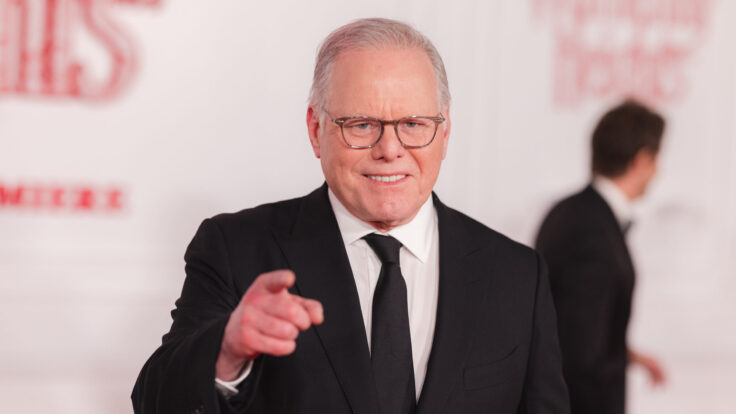
| Warner Bros. Discovery C.E.O. David Zaslav has certainly taken heat for removing HBO from the name of the Max service after it combined with Discovery+ in May. Rolling Stone recently dubbed the Max relaunch as the 34th worst decision in the history of television. (Worse than Cop Rock? Really?) But what if consumers don’t actually care that much? What if the perception of quality and trust in Max are actually higher than for HBO Max just six months ago?
That’s what the new Puck Official Streaming Service Hierarchy survey found. Our study, conducted by The Quorum and its pollsters, measured how 2,000 consumers feel about each of the services. Part One is here, and Part Two, focusing just on Max, shows the brand equity metrics adhere much closer to HBO Max than to Discovery+, both of which were measured separately in our first study, in January. |
|
|
| Net Promoter Score: When it comes to the N.P.S.—which is not a Doogie Howser, M.D. actor but rather a metric that asks consumers to rank brands 1-10 based on how likely they will evangelize about them—Max actually held up the best of all the streamers, despite the name change. Max didn’t grow its N.P.S., but the score dropped only from 41 percent to 38 percent, far less than most rivals surveyed. It’s never great when an N.P.S. declines, and the conventional wisdom in branding circles is that an N.P.S. of 50 is considered good for a company or product. But this is a win for Max in the current environment.
Quality: Among subscribers, the perceived “quality” for Max is at 55 percent, the same as in January—even as all the other streamers dropped, and well above the 43 percent of Discovery+. So Max is benefitting from the HBO association, despite dropping the HBO brand from the name. Casey Bloys might need to hold his nose when he sees tiles on Max for My Feet Are Killing Me, Dr. Pimple Popper, or What’s in Guy Fieri’s Flavor Saver (I made that one up), but the Discovery+ schlock doesn’t seem to be diluting the perception of the Max service. And with certain audiences, that stuff may actually be helping.
Trust: The “trust” metric—consumers were asked whether they trust that the service will have something good to watch—also improved in the Max transition, rising to 55 percent from 53 percent for HBO Max in January, and way above the 44 percent for Discovery+ in January. Again, 1 plus 1 seems to be equaling 3 here.
Admiration: Max did drop to 42 percent in “admiration” from 47 percent for HBO Max in January—closer to Discovery+’s 40 percent from back then. So perhaps that’s where we’re seeing the impact of all that unscripted crap. It’s hard to say you “admire” a service that pushes 25 versions of 90 Day Fiancé. But all streamers dropped in this survey from January levels of “admiration,” thanks to the reasons I outlined last week.
Familiarity: Max has a 41 percent familiarity score now, well above the 32 percent for Discovery+ in January, but lower than 48 percent for HBO Max. That makes sense; it’s a new name, and it doesn’t have that familiar HBO branding. Keeping the Max from the previous service certainly helped—rather than if it were called Warner+ or, my personal suggestion, Zaz+.
It’s still too early to determine whether Max is working, as we in the media like to say. But while Max ranks well below Disney+, Amazon Prime Video and Hulu in “familiarity” and subscribers, it still leapfrogs those three to rank No. 2 behind Netflix in most equity and attachment metrics. As always, there’s a lot of upside in whatever service has HBO. |
|
|
“If we apply the Twitter standard, in which 2 seconds constitutes a ‘view’ and the same person can be counted multiple times, last night’s debate generated over 46 billion views, which seems pretty good for a planet of 8 billion people!”
—Michael Mulvihill, the Fox insights and analytics chief, comparing the 12.8 million viewers for Fox News’ G.O.P. debate with Twitter’s ridiculous claim that Trump’s interview with Tucker Carlson generated 100 million ‘views.’
Now Jonathan has his take on this week’s release of the studios’ latest offer to the Writers Guild… |
|
|
| After 100 days of striking writers—plus about a month of picketing performers—the Hollywood C.E.O.s decided to get hands-on with the industry’s labor crisis, presenting a counteroffer to the WGA on Aug 11. That didn’t elicit the desired result—the guild described it as “neither nothing, nor nearly enough”—and this week, the studio/streamer alliance brought in crisis P.R. consultant Molly Levinson, who’s spun for everyone from the U.S. Women’s National Soccer Team to the legal team of Theranos founder Elizabeth Holmes.
Whether Levinson can help the AMPTP image is debatable, but there’s no question that the organization and its eight key members—Disney, Universal, Warner Bros., Sony Pictures, Paramount, Apple, Amazon, and Netflix—is facing a crisis, and it’s primarily of the member companies’ own making. So what did the executives bring to the table after 100 days? Let’s take a closer look at the counteroffer and the process, itself. There are nine issues, several of them potentially fatal. |
|
A MESSAGE FROM OUR SPONSOR
|
 |
| |
|
|
|
|
| 1. Slow Going. The Aug. 11 counteroffer was publicly released eleven days later, suggesting that the counteroffer underwent little or no change during the negotiating sessions that the industry hoped were marking progress. The apparent lack of urgency—or the willingness to keep butting heads—should be of concern to everybody.
2. Ditching the Process. The counterproposal’s release, itself—though welcome from a journalistic standpoint—was nonetheless yet another unforced error, since it was inevitably interpreted by the guild and its key members as an attempt to undermine union negotiators by creating dissension in the ranks. Perhaps the AMPTP is playing the long game, hoping to erode member support, bit by bit, by at least letting rank-and-file writers know what gains their negotiating committee is rejecting. But, if so, this tactic comes close to circumventing the union itself, in violation of labor law.
3. Success-Based Residuals. Equally ham-handed was the counteroffer’s proposal on success-based streaming residuals, which is simply an effort to provide the guild with quarterly viewership data, in confidence, on shows made for streaming, but not make any additional payments related to that data. That doesn’t address the guild’s demand for a success-based overlay to the residuals formulas, and it also keeps the data secret, meaning that only a few guild staffers, and not the writers themselves, will have access.
“This increased transparency,” the AMPTP breezily notes, “will enable the WGA to develop proposals to restructure the current SVOD residual regime in the future.” Translation: Come back in three years when you don’t have the leverage of an historic dual strike and then we’ll laugh at you.
4. Minimums. Also in the you’ve got to be kidding category is the AMPTP’s self-congratulatory description of its basic wage increase proposal as “the highest wage increase for the WGA in 35 years.” It gets a little tiresome to have to again point out that the reason the increases are larger than in recent decades is that inflation was much larger than in recent decades. It should impress nobody to read boastful exaltations that are unmoored from everyone’s economic reality. These increases are just one percentage point away from what the WGA is demanding, so this issue shouldn’t be insurmountable; but SAG-AFTRA is asking for an 11 percent increase in the first year (the AMPTP is offering five percent; the WGA wants six percent) and if you want to preview next year’s labor negotiations, I expect that IATSE and Teamsters demands will more closely resemble the actors’ than the writers’.
5. A.I. In the not nearly enough category, the guild no doubt includes the counteroffer’s A.I. proposal, which would allow the studios to train A.I. on WGA writers’ scripts and make movies based on A.I. scripts without writers at all. And no, it’s not a given that those movies and TV series could not be registered for copyright. Although the scripts themselves would be ineligible under recent decisions by the copyright office and a federal court, the resulting audiovisual product, if made with human directors, would probably be subject to copyright.
In addition, although the A.I. proposal appears to protect writers economically if they are assigned to rewrite a script created by a studio executive using generative A.I., it could turn WGA members into rewrite artists whose primary job is to spruce up the output of Silicon Valley bots. That could make Hollywood’s current obsession with I.P.-driven sequels gleam like a golden age of original thinking and storytelling innovation. What’s the sense in saving the profession by ruining it?
6. Mini Rooms. Finally, among the major roadblock issues are mini writers rooms and the staffing levels and duration of employment these entail. Here, it feels like the studio proposal has moved a bit in the writers’ direction, but this too is not nearly enough in the WGA’s view. The issue seems as intractable as ever.
7. High Budget Streaming Residuals. Some of the other key aspects of the proposal, such as in SVOD and AVOD residuals, are straight from the June 3 Directors Guild deal, which isn’t a bad thing, but prompts one to ask why the studios and streamers engaged in 114 days of Kabuki theater before revising their offer.
8. Other Issues. The AMPTP has moved on a number of other issues, albeit not as far as the WGA would like. For example, certain first writers of original screenplays would be guaranteed the right to do (and get paid for) a rewrite, but the guild complains that this is a statistically small subset of screenwriters. Here, the obvious question for both sides is why such an issue wasn’t negotiated more thoroughly months ago, before contract expiration. But that’s a probably futile finger-pointing exercise.
9. Cost of the Package vs. Its Contents. At the end of the day, the companies care about the cost of the WGA package—the cost of improvements in the new contract once a deal is reached—while the union cares about the contents of the package. Those aren’t exactly the same thing and are a source of some of the difficulty of Hollywood collective bargaining. A press report suggests that the AMPTP values its latest proposal at about $500 million, but if it doesn’t include enough of what the WGA demands, that figure isn’t going to impress a union still in fighting mode and enjoying significant solidarity.
And that really could be the coda for all of this so far. We can expect the studios to turn from the WGA to SAG-AFTRA soon—I’m told they haven’t yet, so probably after Labor Day. But there’s little sense that the AMPTP Eight understand that painful compromise on their part is likely the only road to a deal with either the WGA or SAG-AFTRA. And if the dealmaking on the company side remains as inept as to date, we can expect labor summer to continue into fire season and beyond. |
|
|
|
|
| Lucas Shaw gets into the behind the scenes C.E.O. politicking in the strike negotiations, and who would very much like to emerge as the hero (cough, Ted Sarandos, cough). [Bloomberg]
More: Carol Lombardini gets the Times write-around profile treatment, where we learn she’s a Dodgers and Red Sox fan, and that her husband is William Cole, the longtime Mitchell Silberberg & Knupp labor lawyer. [NY Times]
P.S. If you’re still not following Fake Carol on Twitter/X, do it now! [X]
More follow-ups to my coverage of the Scooter Braun implosion: Was Scooter actually a good manager? [Daily Beast]
Clare Malone’s “David Zaslav, Hollywood Anti-Hero” hits all the beats from the past year, with fun details like Zaz having personally taken about $750 million out of John Malone companies since they began working together. [New Yorker]
More Zaz: Dylan Byers has good intel on the plan for CNN Max and the effort to court ex-NYT-er Mark Thompson to run it. [Puck]
Yes, we’re gonna see news coverage whenever Disney takes a meeting with companies like Amazon about what to do with ESPN. [Information]
Ronan Farrow and Puck’s William Cohan joined Kara Swisher for an amusing Elon Musk dissection. [On with Kara Swisher]
I’m sure Ted Sarandos also shows up to make pizzas at L.A.’s Netflix Bites pop-up on days the New Yorker writer isn’t there. [New Yorker]
Iger’s ultimate leverage: Employees of the former Reedy Creek district in Florida are begging Ron DeSantis’s board not to end perks like free Disney World passes. [Orlando Sentinel]
Finally! The list of “Power Publicists” that literally nobody (except publicists) asked for. [Billboard]
If Reid Hoffman and Marc Andreessen are starting their own utopian city in the Bay Area, maybe the studio heads could just uproot Hollywood to their own SoCal desert Xanadu with no unions. [NY Times]
R.I.P. Bob Barker, whose “What I’ve Learned” remains my favorite celebrity interview I’ve ever done: “Cars and money. Everyone wants cars and money.” [Esquire] |
|
|
| My inbox was like a bike shop this week: Scooters everywhere, thanks to my coverage of his client exodus. Some of the more thoughtful (and non-Taylor Swift-related) feedback:
“Managers derive their power from their clients, and Scooter exploited this power to behave horribly, burn bridges, and extract huge financials for himself. Without those clients, he’s now just another music executive. Now he has a boss and shareholders of a publicly traded company. He’s become worse than a faded music manager. He’s become boring.” –A music executive
“The question is whether the music media will fawn the same way over Scooter on his way down as it did on his way up.” –A journalist
“In a very short time, Hybe has gotten huge. It now runs half of the groups in K-Pop. BTS is now in the Korean military, but Hybe is planning a big play in the American market (and there’s suspense, no one knows how ambitious it'll be, but they've already teed up the next big global girl group). So it would make sense that Braun is not only tiring of managing but that he sees his American clients as ‘sunset assets.’ He thinks Korea-based Hybe can become a genuine peer competitor to UMG, Warner, etc. When your story broke about a talent exodus, many assumed you were hinting at some sort of personal scandal about to drop. I know nothing about that. But a pivot for business reasons would make sense.” –A writer and former music consultant
“You forgot to mention one thing about Scooter Braun: He has failed as a movie and TV producer. He had that CBS show [Scorpion], kissed himself into the Lil Dicky show [Dave]… and what else? His Amazon deal was a flop. With that level of talent, he should have had a far bigger producing career.” –An agent
“He’s a billionaire. He’s the one laughing. Why would he want to rep these terrible people.” –Another agent
“Please cover the music business more! Billboard and the others are just lap dogs for the executives, they can’t cover a story like Scooter Braun, and all of us are worse off because of it. We need Puck!” –A recording artist |
|
|
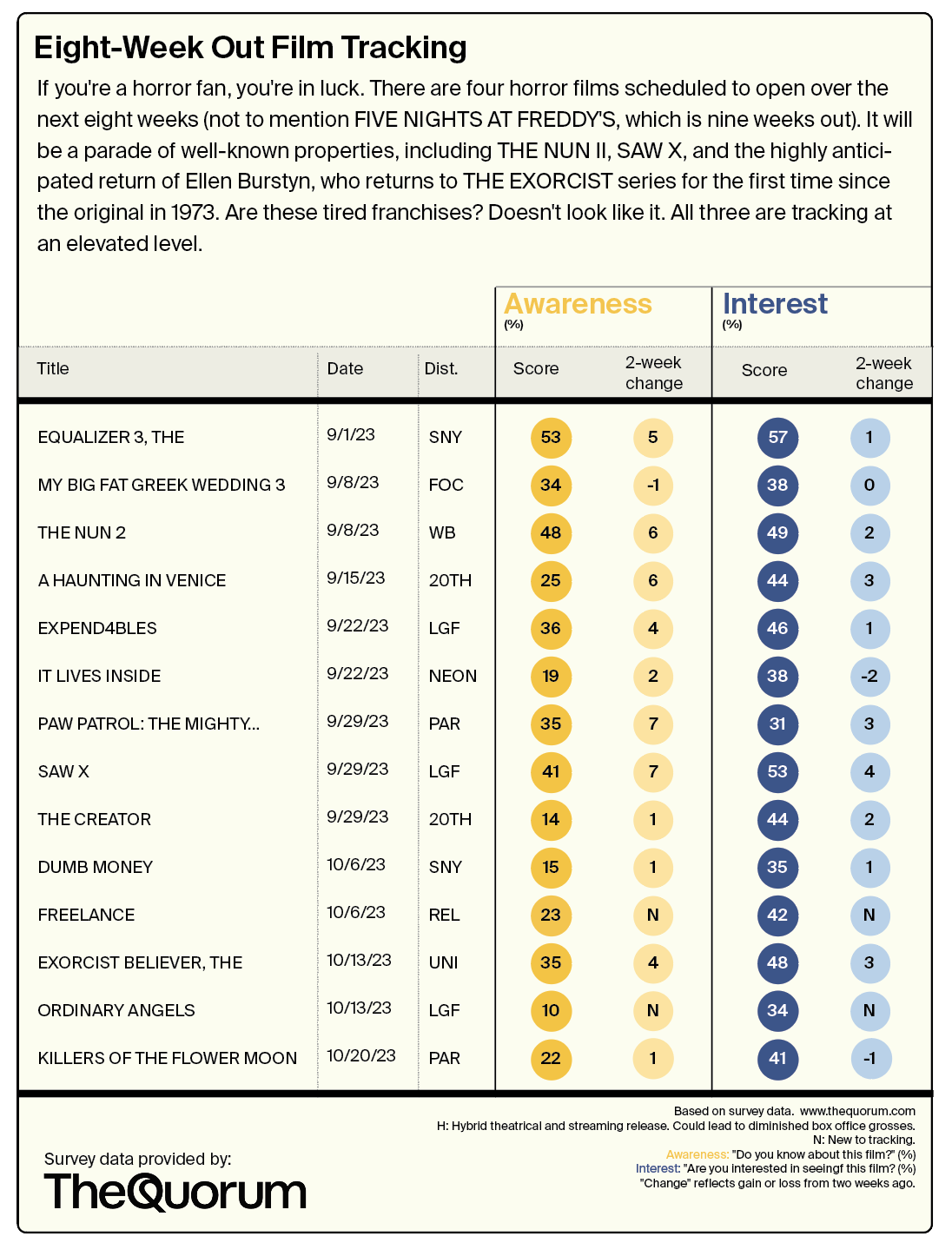
| The fall horror movie bonanza is showing early promise on The Quorum’s tracking chart… |
|
|
Have a great week,
Matt
Got a question, comment, complaint, or Scooter Braun fan art that’s better than the drawing tweeted at me this week? Email me at Matt@puck.news or call/text me at 310-804-3198. |
|
|
|
| FOUR STORIES WE’RE TALKING ABOUT |
|
|
|
|
|
 |
|
|
|
Need help? Review our FAQs
page or contact
us for assistance. For brand partnerships, email ads@puck.news.
|
|
You received this email because you signed up to receive emails from Puck, or as part of your Puck account associated with . To stop receiving this newsletter and/or manage all your email preferences, click here.
|
|
Puck is published by Heat Media LLC. 227 W 17th St New York, NY 10011.
|
|
|
|