{{ 'now' | timezone: 'America/New_York' | date: '%b %d, %Y' }} |
|
|
Welcome back to What I’m Hearing+, the final issue of the year in the WIH Extended Universe.
Eriq Gardner is very good at predicting what’s coming on the Hollywood docket, and he’s here with his big 2026 forecast. From the Trump libel assault to the fallout from the Warner Bros. auction to the resolution (maybe? hopefully?) of CAA’s years-long holy war on defecting agents, it’s all here. So over to you, Eriq…
Not a Puck member yet? Seriously, just click here.
Mentioned
in this issue: Nicole Kidman, Rupert Murdoch, David Zaslav, Cher, Pete Micelli, Sandra Bullock, Margot Robbie, Sam Altman, George H. Wu, Keira Knightley, Elon Musk, Bob Iger, Lewis Liman, Trump, Jay Penske, Carl Rinsch,
Marc Toberoff, Tom Hardy, Obama, David Ellison, Trey & Matt, Brendan Carr, and many more…
Let’s begin… |
|
|

| Eriq Gardner
|
|
- Warner Bros. may have to live
with Alcon: The year ends with a legal whimper for Warner Bros., which has been trying to stop Alcon Entertainment from becoming its new co-financing partner. As I’ve reported, Alcon acquired the rights to participate in major franchises like The Matrix and Mad Max from bankrupt Village Roadshow, prompting a vigorous objection from Warners. The studio accused Alcon of being unfit for the job—claiming it couldn’t stay liquid, keep secrets, or play nice. That led to an
evidentiary hearing in Delaware bankruptcy court, where Warner executives took the stand and made their case. The judge didn’t buy it and sided with Alcon, rejecting the premise that the two companies were too incompatible to work together.
Well, Warner Bros. appealed to the district court, seeking to block Alcon’s purchase of Village
Roadshow’s assets. That also failed. Then came an “emergency motion” to the Third Circuit. Denied! (And on Christmas Eve, no less…) As of now, the studio hasn’t filed an emergency application to the Supreme Court. So, unless something unexpected happens, Alcon is Warners’ co-financing partner going forward, sharing credit on next year’s Nicole Kidman–Sandra Bullock sequel Practical Magic 2, a potential Mad Max HBO series, and maybe
even the next Matrix. Let the awkward cohabitation begin! - Don’t mess with Cher: Speaking of uncomfortable bedfellows, there’s a noteworthy development in the fight over royalties from “I Got You Babe” and other hits from the Sonny & Cher catalog. You may recall that Mary Bono, Sonny’s widow and a former congresswoman—who successfully championed the so-called “Sonny Bono Act” in 1998, which
extended existing copyright protection by 20 years—has been trying to cut Cher out of the royalty pie. Her theory? Sonny’s half-century-old divorce agreement granting Cher 50 percent of the couple’s royalties could be canceled under the Copyright Act’s termination provision, which allows authors (and their heirs) to reclaim control of their works decades after originally granting them away.
That theory didn’t fly in district court. Cher won a judgment that Mary’s termination notice
had no effect on the 1978 marital settlement agreement. Even better for Cher, the judge awarded her $187,534 in withheld royalties.
But it’s not over. Mary Bono just appealed to the Ninth Circuit. As I’ve noted, this is one to watch—not only because of, well, Cher, but also the possible implications for the entertainment industry, whose artists often
commingle their assets with loved (and formerly loved) ones.
|
|
|
And now for the main event… |
|
|
A look ahead at the most consequential media lawsuits and legal crises that will come to
their conclusion in 2026. |
|
|
A couple of weeks ago, I
highlighted a few of the blockbuster A.I.-related legal developments I’ll be tracking in the new year. But astonishingly, not everything that matters in 2026 will fall within the ambit of Sam Altman, Elon Musk, Bob Iger, or the “Magnificent Seven” [sic] tech companies. The new year promises a
docket stuffed with thorny court battles, personal grudge matches, and unpredictable decisions from the bench—all of which, of course, I’ll be covering in real time as they unfold. Herewith, an early peek behind the curtain… |
Is anyone else amused by how casually Donald Trump’s lawsuits against media outlets are
labeled billion-dollar cases? Some members of the fourth estate will gladly go to court to defend the right to call the body of water south of Louisiana the Gulf of Mexico, and thereby risk being frozen out of the White House press corps. But when Trump pins a cartoonishly large damages figure to one of his libel claims, the press just repeats it—no scrutiny, no caveats, no serious effort to assess whether the number has any basis in reality. |
|
|
A MESSAGE FROM OUR SPONSOR |
Transform Movie Fandom into Business Impact 🎬
The real magic of movies goes far beyond the screen, extending to purchasing behaviors beginning during the pre-release excitement and ending in ongoing fandom. New research from Amazon Ads and Crowd.DNA reveals the untapped potential of this, finding that fans maintain 10+ year connections with their favorite films and 81% actively participate in
movie-related purchases. These purchases aren’t limited to merchandise or music from the film. Moviegoing is driving cross-category spending, from dining to retail and beyond. Amazon Ads full-funnel solutions allows brands to engage fans all along the journey, creating opportunities for content
discovery, engagement, and continued fandom. Visit Amazon Ads to learn more. |
|
|
Of course, slapping a ludicrous number on a complaint is easy—and makes for good copy. Extracting a sum that
could imperil a media company’s existence is another story. This coming year in particular will test how far Trump, the first sitting president to file libel claims, can really get. Even if he clears the familiar hurdles—anti-SLAPP motions, proving falsity, satisfying the actual malice standard for public figures, etcetera—there remains the not‑so‑small matter of proportionality. Damages must bear some relationship to the economic harm caused by the alleged lie. So far, there’s no sign
the president’s legal team has done that math.
Still, Trump marches on. There’s his suit against The Wall Street Journal over its article about the bawdy birthday letter to Jeffrey Epstein that Trump swears he never wrote. U.S. District Judge Darrin Gayles, an Obama appointee, recently held a hearing on the Journal’s motion to dismiss. (The timing was awkward for Trump: It coincided with a government release of Epstein
files that included the very letter at issue.) Arguing for dismissal is the fact that the House Oversight Committee also published the letter, not to mention the lack of defamatory sting and the implausibility that WSJ reporters knowingly published a fake. But there’s always the possibility that owner Rupert Murdoch—named as a co‑defendant—decides to placate the president and cut a settlement check, similar to ABC News’s $15 million donation to the Trump Presidential
Library a year ago.
Trump may have a slightly better shot with his newly filed case against the BBC—if he can convince a Florida judge to hear a dispute over how the British broadcaster edited his January 6, 2021, speech to make it sound like he told the crowd he would walk with them to the Capitol and “fight like hell.” The BBC has acknowledged it should have better handled edits, and the botched report has triggered a mini-uproar in the U.K. about the BBC’s editorial standards.
But was anyone in the state of Florida, where Trump filed the suit, actually misled? The program never aired in the venue, and Trump’s lawyers can only hypothesize that some Floridian might have used a VPN to bypass the BBC’s geoblocking. That’s an awfully small hook to hang personal jurisdiction on (see also: a Cosby Show copyright case against the Beeb that
flamed out a few years ago).
Then there’s Trump’s case against his hometown bête noire, The New York Times. That’s the one targeting Times coverage that dared question his business acumen, including how much of his wealth was inherited, his alleged involvement in questionable tax schemes, and his use of The
Apprentice to burnish his brand. A federal judge swiftly tossed the president’s original complaint in September, calling it too unmoored to survive. “A complaint is not a public forum for vituperation and invective—not a protected platform to rage against an adversary,” wrote U.S. District Judge Steven Merryday, a George W. appointee. Undeterred, Trump refiled an amended complaint that is marginally more coherent
(you be the judge). The revised salvo is the subject of a pending motion to dismiss, which the court will take up shortly.
If Trump manages to survive dismissal motions, he’ll enter discovery, where the Times will ask how he arrived at damages figures in the billions. That’s already playing out in his case against the Pulitzer board over prizes awarded
to the Times and Washington Post for their reporting on Trump’s ties to Russia. Three years in, Trump has survived initial dismissal attempts and upheld those wins on appeal. Now, before summary judgment and any possible trial, the Pulitzer board is seeking a decade of tax returns and medical records to assess whether Trump has actually suffered the harm he claims. His response is due soon. In the meantime, I’ll offer a modest New Year’s resolution for reporters: Stop calling
these billion‑dollar cases until Trump shows his work. |
How Nasty Will CAA v. Range Media Get?
|
Any day now, a JAMS arbitration panel will issue a final award in the increasingly personal war between CAA
and the former agents who defected to help launch Range Media. At issue: the value of the equity shares that CAA canceled when Jack Whigham, Dave Bugliari, Michael Cooper, and Mick Sullivan joined Pete Micelli at his well-financed startup—and whether any payout should be docked for alleged disloyalty on the way out.
But don’t expect the ruling to end matters. Both sides could haul the arbitration award
into open court, provided they have the stomach for public scrutiny. Meanwhile, CAA has sued Range separately, accusing Micelli & Co. of aiding and abetting client poaching and operating as a thinly veiled, unlicensed agency. Range counterclaims that CAA is flouting California’s competition laws by enforcing noncompetes and threatening defectors. So far, no one’s publicly asked Margot Robbie, Keira Knightley, or Tom Hardy to choose sides, but
they’re among the big Hollywood names surfacing in discovery. |
Legal Fallout From WBD, Netflix &
Paramount
|
I don’t know whether Netflix or Paramount Skydance will ultimately win Warner Bros., but I do know litigation
is coming. Even in the relatively clean scenario where Paramount sweetens its offer, Netflix walks away with a $2.8 billion breakup fee, and the Trump administration hands David Ellison the keys to CNN, there will be legal drama. Think state A.G.s, consumer class actions, and even European regulators, if they’re feeling bored.
And if David Zaslav and the Warner Discovery board stick with Netflix? That path all but guarantees shareholder litigation, as
I’ve previously laid out, and the Justice Department coming in hot. I’ve been trying to game out the timeline for the inevitable D.O.J. complaint that consolidation in the streaming market violates antitrust law. Best I can tell, it will come next fall, though it could surface as early as a WBD shareholder vote this spring or summer—especially if Netflix and the feds decide there’s
no point pretending this ends anywhere but a courtroom. |
One of the surreal subplots in the Warner Bros. Discovery bidding war is the South Park litigation
between WBD and Paramount. Back in 2023, WBD sued its current suitor for interfering with HBO Max’s $500 million South Park deal by broadcasting Covid-era South Park “specials” on Paramount+. WBD is claiming north of $500 million in damages, which, if taken seriously, would make this one of the largest contractual disputes in Hollywood history. |
|
|
A MESSAGE FROM OUR SPONSOR |
Transform Movie Fandom into Business Impact 🎬
The real magic of movies goes far beyond the screen, extending to purchasing behaviors beginning during the pre-release excitement and ending in ongoing fandom. New research from Amazon Ads and Crowd.DNA reveals the untapped potential of this, finding that fans maintain 10+ year connections with their favorite films and 81% actively participate in
movie-related purchases. These purchases aren’t limited to merchandise or music from the film. Moviegoing is driving cross-category spending, from dining to retail and beyond. Amazon Ads full-funnel solutions allows brands to engage fans all along the journey, creating opportunities for content
discovery, engagement, and continued fandom. Visit Amazon Ads to learn more. |
|
|
A trial-readiness conference is scheduled for May in New York state court, likely landing just as WBD
shareholders vote on a merger. So yes, there’s a very real possibility that the two companies could be tangling over South Park in open court just as regulators and investors prepare to go nuts over the acquisition. Hard to imagine Trey Parker and Matt Stone leaving this one alone in the writers room. |
Who’s Ready for a Live-Music Antitrust
Trial?
|
No, not that one—the Justice Department’s tentpole case to unwind the Live Nation–Ticketmaster
empire, which isn’t expected to go to trial until January 2027. But we will get a warm-up act: a newly certified class action that could bring millions of concertgoers into court against Live Nation next year to challenge Ticketmaster’s long-term exclusive venue contracts.
U.S. District Judge George H. Wu in Los Angeles certified a class on December 12 in Heckman, basically clearing the way for trial. This follows the Supreme Court’s refusal to let Live Nation
push the matter into arbitration, meaning the plaintiffs, led by Quinn Emanuel, are likely heading to trial. (The schedule will become clearer in the coming weeks.) And while class actions often settle (especially with billions on the line), this one could force Ticketmaster to publicly defend the “pro-competitive” nature of its business model. That might involve throwing concert venues under the bus. And maybe even the artists themselves. |
Will the Supremes Take the NFL Sunday Ticket
Case?
|
From NASCAR to trading cards, the sports world is awash in antitrust litigation. The trend picked up steam
after the Supreme Court held in American Needle that NFL teams could conspire with one another over licensing. That apparel case led, most famously, to the Sunday Ticket class action over out-of-market game telecasts, resulting in a $4.8 billion verdict—which a trial judge unexpectedly overturned after finding the plaintiffs’ economic experts lacking.
That ruling is now on appeal to the Ninth Circuit. I think it’s very possible the panel revives the verdict or orders a new trial.
If so, expect the NFL to ask the Supreme Court to step in and weigh whether some cooperation among rival teams is simply necessary in sports broadcasting. I suspect the justices would bite. It’s been a few years since they last took up sports antitrust—the Alston case over the NCAA’s limits on compensation in 2021—and this would be the perfect occasion to reset the framework. Don’t be surprised if the Super Bowl of sports law gets scheduled for 2026. |
Is Lively v.
Baldoni Going to Trial, Really?
|
Is there anyone—besides those billing by the hour—who thinks this case was ever a good idea? (I’m sure even
the lawyers have their doubts at this point.) A year into the messy litigation over what went down during and after the production of It Ends With Us, and the ensuing media pissing match, it’s still unclear what exactly justifies the enormous legal spend.
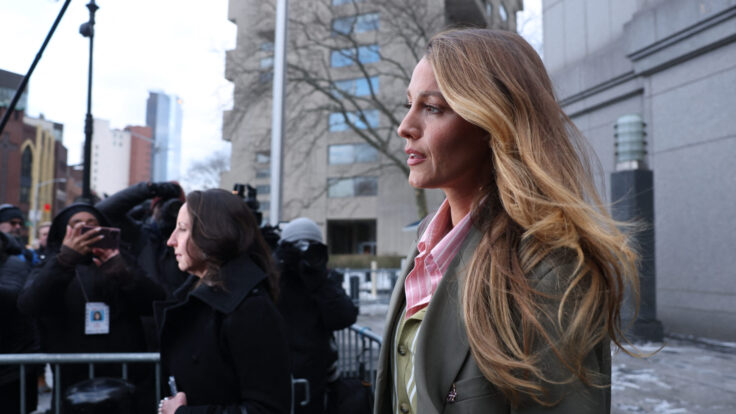
That said, Blake Lively has notched more pretrial wins than Justin Baldoni, and the case may yet deliver on its early promise to peel back the curtain on the dark arts of celebrity P.R.
(Even if it’s hard to imagine a revelation at this point that would shock anyone.) Judge Lewis Liman, in a wry comment just before Christmas, wrote that “the public has a right to know how taxpayer dollars are being used.” In other words, much of the sealed material is about to see daylight. A trial is currently set for May. Then again, maybe the parties will ask themselves the obvious: Is anyone going to come out of this looking like a winner? |
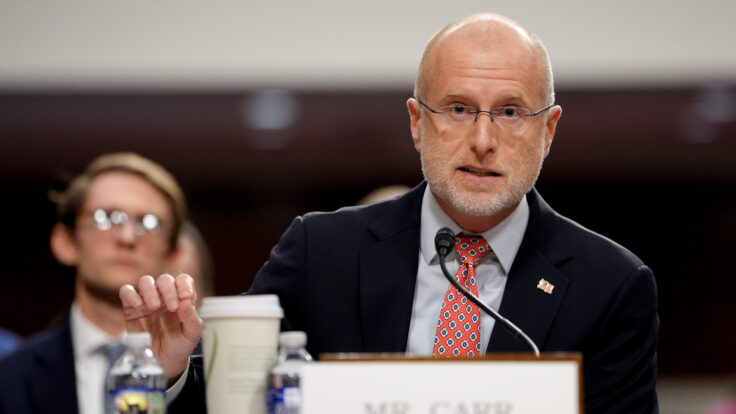
Brendan Carr continues to play tough guy. … Netflix inches toward
its first libel trial. … Diddy gets sentenced. … Carl Rinsch, too. … Top Gun: Maverick faces a sequel of its own—this time starring Marc Toberoff. … The streaming industry’s
patent migraine intensifies. … Bravo navigates more offscreen legal drama. …Trump tries to kill PBS and NPR. … Chris
Ruddy takes on the Murdochs. … Jay Penske makes a last stand against Google. … The Walking Dead litigation refuses to die. … TikTok’s government headaches linger. … And then there’s everything that hasn’t hit the docket. Happy New Year!
Did I forget anything? Is there something I should pay more attention to? Email me at Eriq@puck.news. |
Thanks, Eriq. See you all next Monday.
Matt |
|
|
Puck founding partner Matt Belloni takes you inside the business of Hollywood, using exclusive reporting and insight to explain
the backstories on everything from Marvel movies to the streaming wars. |
|
|
The ultimate fashion industry bible, offering incisive reportage on all aspects of the business and its biggest players.
Anchored by preeminent fashion journalist Lauren Sherman, Line Sheet also features veteran reporter Rachel Strugatz, who delivers unparalleled intel on what’s happening in the beauty industry, and Sarah Shapiro, a longtime retail strategist who writes about e-commerce, brick-and-mortar, D.T.C., and more. |
|
|
Need help? Review our FAQ page or contact us for assistance. For brand partnerships, email ads@puck.news. You received this email because you signed up to receive emails from Puck, or as part of your Puck account associated with {{customer.email}}. To stop receiving this newsletter and/or manage all your email preferences, click here. |
Puck is published by Heat Media LLC. 107 Greenwich St., New York, NY 10006 |
|
|
|